

Fast Rust Stain Removal for Mall Walkways
For effective concrete rust stain removal for malls, first stop the moisture and metal source, then test a small area with a concrete-safe rust remover. Light surface stains may respond to an oxalic-acid-based treatment and gentle scrubbing. Deep stains, spalling concrete, or rust streaks coming from drains, railings, or exposed rebar need professional inspection before cleaning continues.
Rust on an exterior mall walkway is more than a curb-appeal problem. It can come from wet metal furniture, corroded drain parts, cleaning equipment, or embedded steel. If the source stays active, the stain will return – and may point to moisture intrusion or concrete damage beneath the surface.
For busy shopping centers, the right process protects pedestrians, avoids slippery residues, contains wastewater, and prepares the concrete for sealing or coating. Skipping preparation can create adhesion problems later; inadequate surface preparation is linked to many coating failures.
I’m Jana Hanson, and I lead Klean Sweep, a family-owned Southern California exterior maintenance company built on more than 55 years of hands-on service. Our experience with concrete rust stain removal for malls helps property managers restore commercial walkways while keeping curb appeal, safety, and long-term maintenance in view.
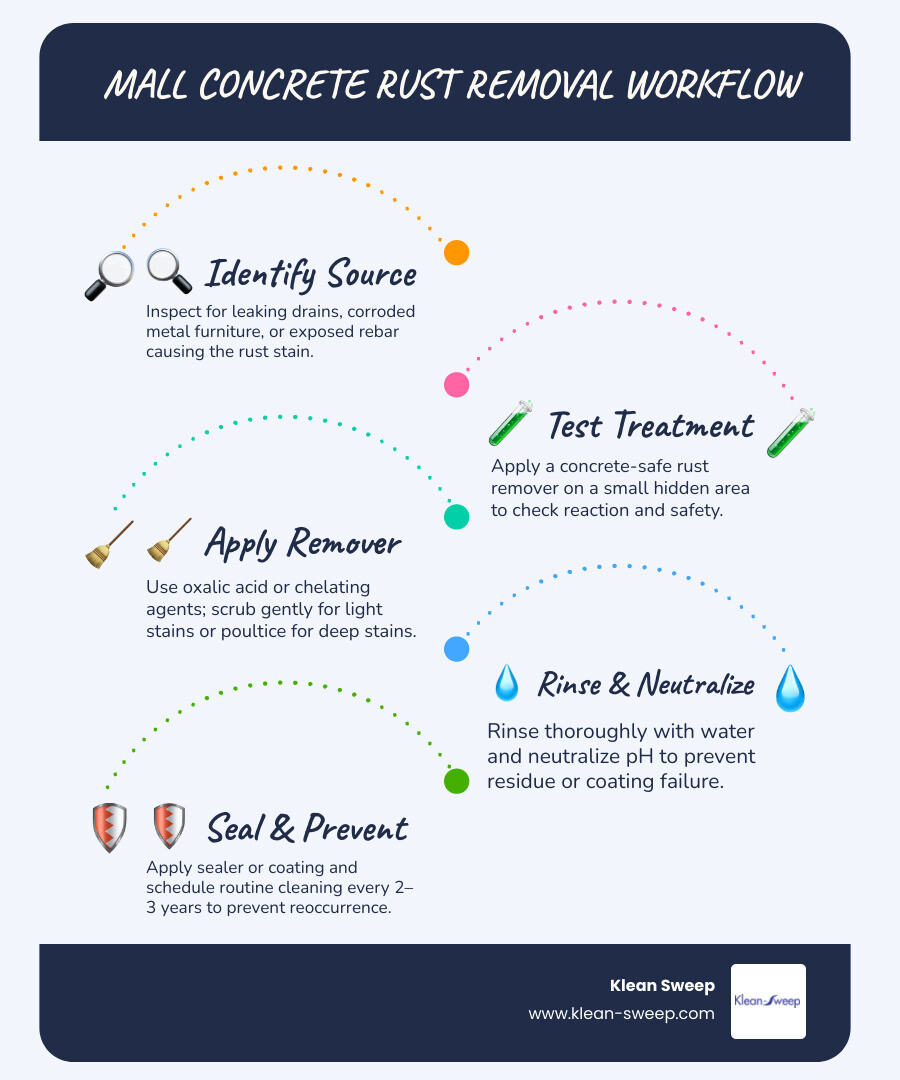
Identifying Rust Sources on Mall Concrete: Surface Stains vs. Structural Corrosion
Retail centers sustain heavy daily wear, making shopping center flatwork vulnerable to unsightly rust marks. When shoppers visit outdoor shopping centers in Los Angeles or Pasadena, dirty or stained concrete walkways immediately diminish their impression of retail quality.
To choose the right remediation method, facility managers must first isolate where the orange-brown discoloration originates. Rust stains on mall flatwork generally fall into two categories: external surface contamination or internal structural corrosion.
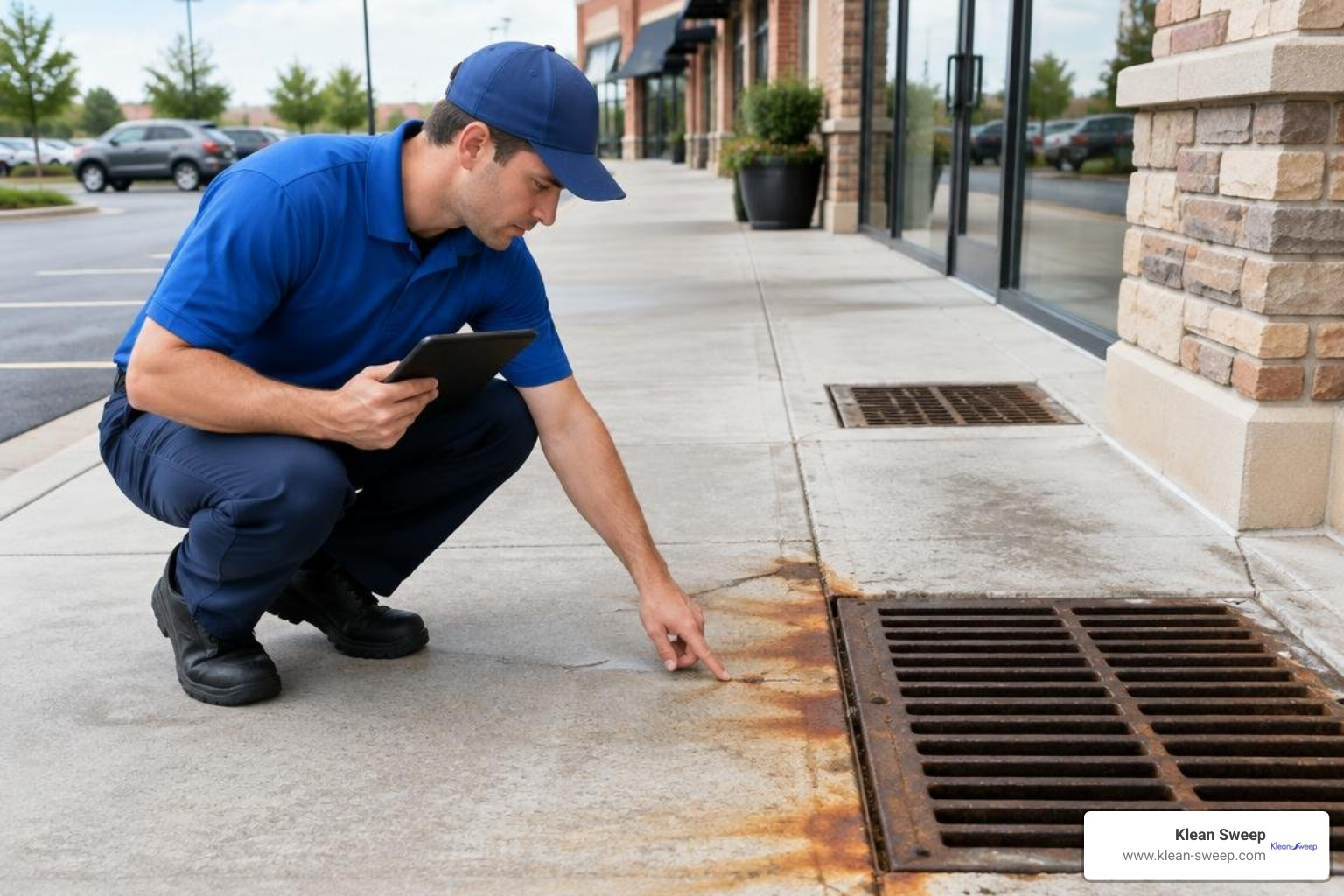
External surface rust happens when iron particles or exterior metal objects contact damp concrete. Common culprits include:
- Corroded metal patio furniture, trash receptacles, or directional sign posts
- Outdoor irrigation runoff carrying high mineral or iron deposits onto concrete aprons
- Leaking stormwater components, rusty roof downspouts, and perimeter fence hardware
- Steel wheels or leaking components from commercial floor scrubbers parked outdoors
In contrast, structural corrosion happens beneath the surface. Moisture and salts penetrate the porous concrete matrix, reaching the reinforcing steel rebar or wire mesh inside the slab. As the embedded steel oxidizes, it expands up to several times its original volume. This pressure cracks the surrounding concrete, resulting in structural delamination and exterior staining.
Evaluating Surface Discoloration and Subsurface Metal Spalling
Telling the difference between a minor cosmetic blemish and deep structural damage requires systematic analysis. Surface rust stains tend to replicate the outline of the object that caused them—such as a circular ring under a planter or a streak running directly below a corroded handrail anchor.

When evaluating stains, our technicians check for structural warning signs:
- Stain Pattern Analysis: Isolated stains with distinct boundaries point to localized metal contact. Linear rust tracks emerging directly from expansion joints or radiating hairline cracks suggest internal rebar corrosion.
- Surface Sounding and Spalling Detection: Tapping the concrete with a hammer or dragging a chain across the slab reveals subsurface hollow spots. If the concrete is crumbling, flaking, or lifting (spalling), the rust is pushing the slab apart from within.
- Moisture Testing: Elevated moisture levels indicate ongoing water ingress that will continue feeding internal oxidation if left unsealed.
Treating structural rebar corrosion with surface cleaners alone will not resolve the issue. If the slab shows signs of structural failure, a concrete restoration contractor must repair the rebar and patch the concrete before cosmetic cleaning and sealing begin. For a broader understanding of how rust interacts with concrete chemistry, the National Association of Corrosion Engineers provides technical resources on corrosion mechanisms in reinforced concrete.
Comprehensive Techniques for Concrete Rust Stain Removal for Malls
Removing iron oxide from concrete requires specialized chemistry. Concrete is naturally alkaline and porous, and rust bonds tightly with calcium hydroxide in the cement paste. Standard alkaline pressure washing soaps cannot break these bonds. Effective remediation requires targeted acidic cleaners or chelating agents to dissolve the iron without destroying the concrete profile.
For commercial mall properties, investing in professional concrete floor cleaning services ensures chemical treatments are matched correctly to the substrate.
Oxalic acid remains an industry standard for widespread surface rust. A standard solution of 1 lb of oxalic acid per 1 gallon of warm water is applied evenly across the contaminated zone. The solution requires a dwell time of 2 to 3 hours, keeping the concrete damp so the acid can chelate the iron particles. For historic shopping centers or specialized decorative flatwork, applying technical procedures such as those outlined in historical preservation standards for Poulticing Iron Rust Stains From Concrete provides deep lifting without heavy surface etching.
Chemical Treatments and Poultice Methods for Deep Stains
When rust has penetrated deep into porous, unsealed exterior concrete walkways, liquid treatments may evaporate before reaching the bottom of the stain. In these situations, an industrial poultice creates an effective drawing action.
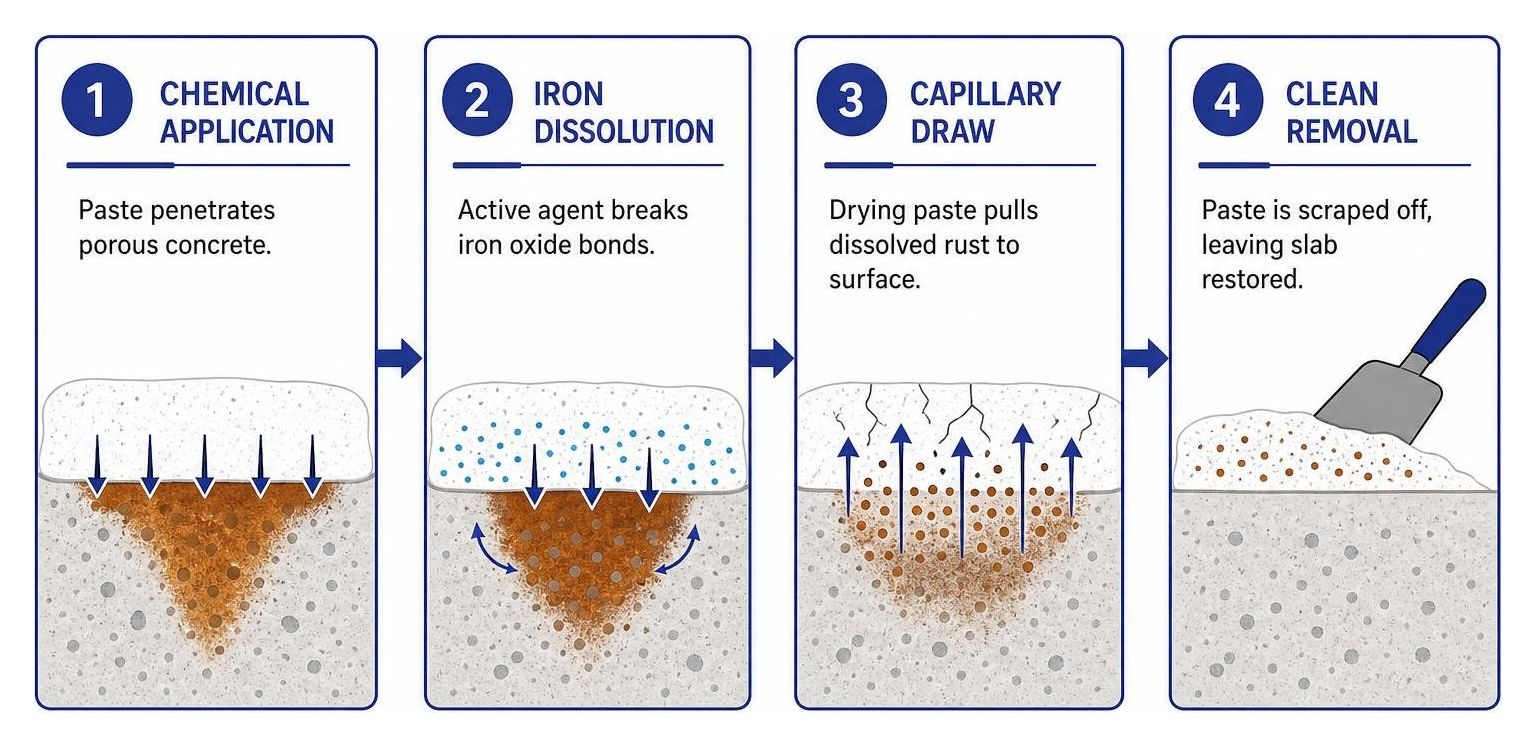
To create a commercial poultice:
- Absorbent Medium: Blend diatomaceous earth, talc, or industrial clay into a thick paste using the chemical cleaner (such as an oxalic or phosphoric acid solution).
- Application: Spread a 1/4-inch to 1/2-inch layer of the paste over the rust stain, extending slightly beyond its edges.
- Dwell and Extraction: Cover the paste with plastic sheeting to slow evaporation for 12 to 24 hours. As the poultice dries, capillary action draws the dissolved iron up into the absorbent powder.
- Rinse and Neutralize: Scrape up the dry powder and neutralize the area with an alkaline rinse, such as sodium bicarbonate (baking soda) or a dedicated concrete wash, to halt the acid reaction.
For high-volume retail hubs in Beverly Hills or Brea, modern biodegradable chelating agents and thick phosphoric acid foams offer rapid alternatives. These cling to sloped flatwork, curbing runoff into surrounding retail landscape beds.
Mechanical Cleaning and Pressure Washing Protocols in Concrete Rust Stain Removal for Malls
Chemical rust removers loosen iron oxide, but specialized commercial washing equipment is required to rinse the slab thoroughly. Deploying specialized commercial pressure washing services helps maintenance directors utilize high-pressure systems effectively alongside surface cleaners.
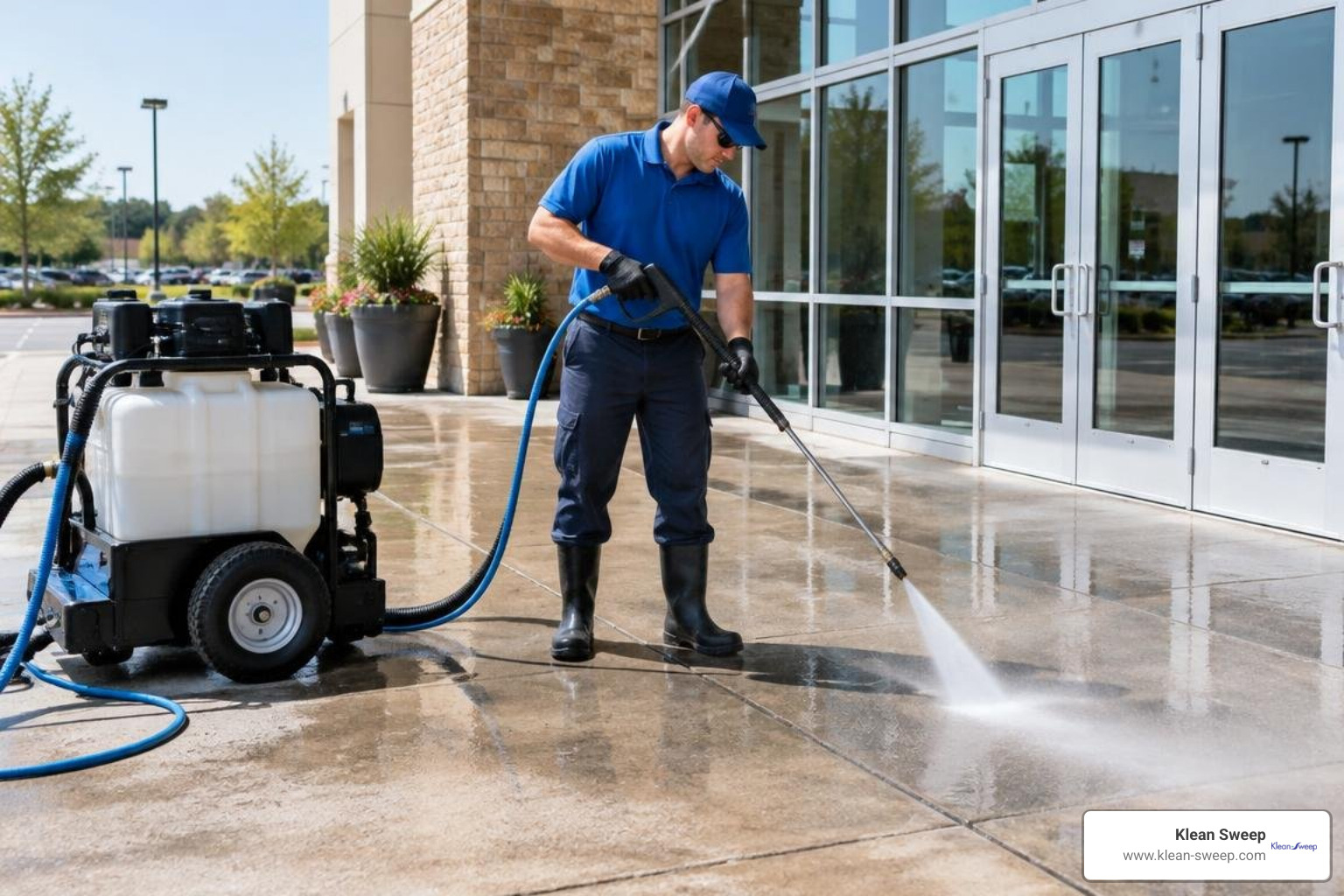
When performing commercial pressure washing after rust remediation, our crews follow strict parameters:
- Nozzle Selection: Use 25-degree or 40-degree wide fan tips or rotating surface cleaners. Never use zero-degree pinpoint nozzles, which can permanently etch and streak commercial walkways.
- Pressure Calibration: Maintain operating pressure between 2,500 and 3,500 PSI for standard flatwork to protect the concrete cream layer.
- Wastewater Containment: California stormwater regulations strictly prohibit chemical and wash water runoff from entering storm drains. Crews deploy containment berms, drain covers, and vacuum recovery systems to reclaim and filter all wash water.
Mall Facility Safety Protocols During Rust Removal Operations
Shopping centers and retail plazas host steady pedestrian traffic, making safety management a critical priority during maintenance. Using chemical agents and industrial pressure washers requires clear safety protocols to protect shoppers, retail staff, and property assets.
Ventilation, Chemical Handling, and Pedestrian Safety Standards
To minimize retail disruption, rust removal should be scheduled during overnight hours or early morning windows before stores open. Even in open-air retail centers, close proximity to storefronts requires strict safety measures:
- Customer Access Control: Secure work zones using interlocking barricades, high-visibility hazard tape, and bilingual caution signage placed well outside the active work perimeter.
- Personal Protective Equipment (PPE): Technicians handling acidic cleaners must wear chemical-splash goggles, full-face shields, chemical-resistant nitrile gloves, vapor respirators, and slip-resistant boots.
- Vapor and Air Flow Management: When working near exterior alcoves, overhangs, or parking structures, run spark-proof commercial air movers to disperse chemical fumes away from HVAC fresh-air intakes.
- Slip-and-Fall Mitigation: Chemical application and power washing create temporary slip hazards. Wet surfaces must be extracted, neutralized, and allowed to dry completely before public barricades are removed. Maintaining clean, balanced surfaces is key to effective concrete floor cleaning that preserves long-term durability.
Substrate Preparation, Warranty Protection, and Rust Prevention
Rust stains represent a chemical breakdown of surface integrity that directly threatens future coatings, sealers, and overlays. Industry data shows that up to 80% of all coating failures trace back to inadequate surface preparation, including unaddressed rust contamination.
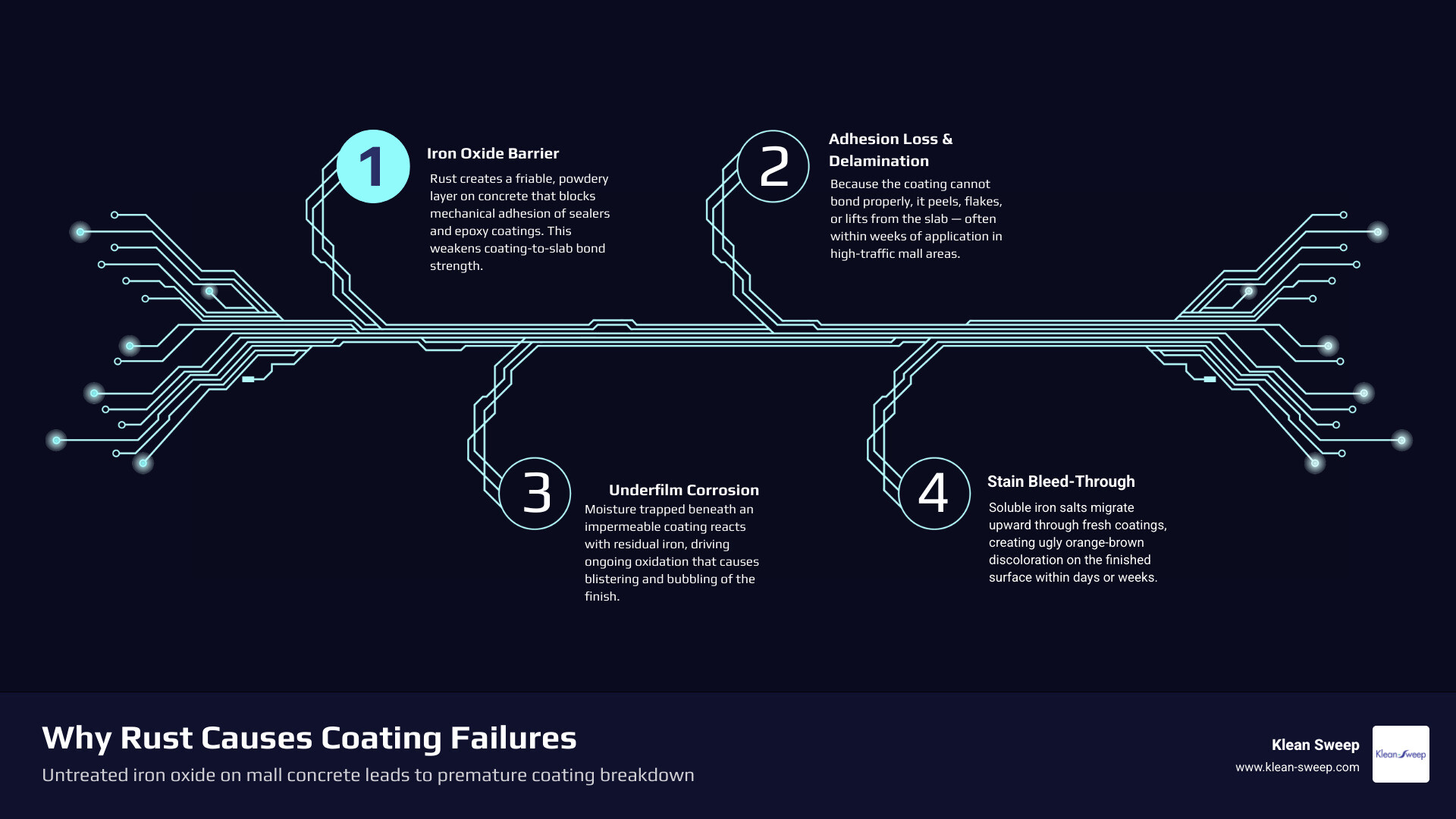
When property managers apply sealers, epoxy coatings, or decorative overlays directly over untreated rust, several failures quickly occur:
- Adhesion Loss and Delamination: Iron oxide creates a friable, powdery barrier that prevents coatings from bonding to the concrete matrix, causing premature flaking.
- Underfilm Corrosion: Trapped moisture beneath an impermeable coating accelerates underlying oxidation, causing blister formations and bubbling.
- Stain Bleed-Through: Soluble iron salts migrate upward through fresh coatings and sealers, discoloring the finished surface within weeks.
| Remediation Method | Target Stain Type | Typical Dwell Time | Substrate Impact | Recommended Application |
|---|---|---|---|---|
| Oxalic Acid Solution (1 lb/gal) | Broad surface rust, light irrigation stains | 2 to 3 hours | Mild chemical cleaning; preserves slab profile | High-traffic retail walkways, open courtyards |
| Chemical Poultice (Talc/Acid Paste) | Deep penetrating oil/rust marks, localized spots | 12 to 24 hours | Non-abrasive; draws deep mineral deposits out | High-end retail entrances, historic plazas |
| Phosphoric Acid Foam | Medium vertical/horizontal structural marks | 15 to 45 minutes | Controlled micro-etch; cleans rapidly | Parking structure ramps, curb aprons |
| Mechanical Diamond Grinding | Heavy structural rust crust with concrete spalling | Immediate mechanical action | Profiles concrete (CSP 2–3); removes top layer | Pre-coating surface preparation |
Why Concrete Rust Stain Removal for Malls Protects Floor Coatings and Warranties
Most commercial coating manufacturers explicitly void warranties if premature peeling or blistering stems from unmitigated substrate contamination.
To maintain warranty protection during capital improvements, mall operators should document every stage of surface preparation:
- Log pre-treatment moisture levels using calcium chloride or relative humidity probes.
- Record chemical formulas, application dwell times, and neutralization methods used.
- Perform pH testing across the slab (aiming for a neutral pH between 7.0 and 8.5) before primer application.
- Maintain a comprehensive maintenance log showing recurring professional cleaning and protective sealing.
After cleaning, sealing the slab with a penetrating silane/siloxane water repellent every 2 to 3 years prevents moisture and iron from re-entering concrete pores, extending the life of your retail flooring.
Frequently Asked Questions About Commercial Mall Rust Removal
Can power washing alone eliminate embedded rust from mall concrete walkways?
No. High-pressure water washing alone cannot dissolve the chemical bond between iron oxide and concrete paste. While pressure washing removes loose surface dirt and mud, embedded rust requires a targeted acidic cleaner or chelating agent to break the bond, followed by washing to rinse the dissolved minerals away. Regular exterior maintenance with a power washed concrete floor removes daily buildup, but stubborn chemical stains always require specialized chemistry.
How often should mall exterior walkways be cleaned to prevent recurring rust?
Exterior walkways in commercial shopping centers should receive deep cleaning and inspection at least once every quarter, with high-traffic entrances maintained monthly. Reapplying commercial-grade penetrating sealers every 2 to 3 years establishes a strong barrier against moisture and iron intrusion. Maintaining a rust free concrete floor relies on continuous preventative maintenance, routine sweeping, and prompt repair of leaking drainage hardware.
Why is bleach ineffective for concrete rust stain remediation?
Standard chlorine bleach (sodium hypochlorite) is a strong alkaline oxidizer, not a rust remover. When applied to rust stains, bleach oxidizes the iron further, often turning the stain darker orange or setting it permanently into the concrete pores. Additionally, bleach alters concrete surface pH without removing metal particles. Effective removal requires acidic cleaners or chelating solutions that dissolve the iron oxide.
Conclusion
Rust stains on commercial shopping center walkways create slip risks, detract from curb appeal, and can indicate underlying moisture intrusion or rebar corrosion. Protecting your retail center requires a structured maintenance program: identifying the source, applying targeted chemical treatments, and neutralizing the slab before resealing.
Since 1969, Klean Sweep has delivered dependable exterior commercial property maintenance across Southern California, serving Torrance, Los Angeles, Carson, Pasadena, and Brea. Our skilled crews use state-of-the-art equipment to handle sweeping, pressure washing, stormwater cleaning, and concrete restoration.
Applying proven rust removers for your concrete surfaces keeps commercial walkways spotless, safe, and welcoming for every visitor.