

Why Concrete Rust Stains Are Harder to Remove Than They Look
Concrete rust stain cleaning is one of the most common — and most frustrating — challenges for property managers trying to maintain curb appeal in Los Angeles.
Here’s a quick answer to what works:
| Method | Best For | Effort Level |
|---|---|---|
| White vinegar or lemon juice | Light, fresh surface stains | Low |
| Commercial oxalic/phosphoric acid remover | Moderate, set-in stains | Medium |
| pH-balanced chemical lifter (non-acidic) | Deep stains on porous concrete | Medium |
| Muriatic acid (1:1 dilution) | Heavy, stubborn stains | High |
| Professional pressure washing + chemical treatment | Large areas, recurring stains | Low (DIY effort) |
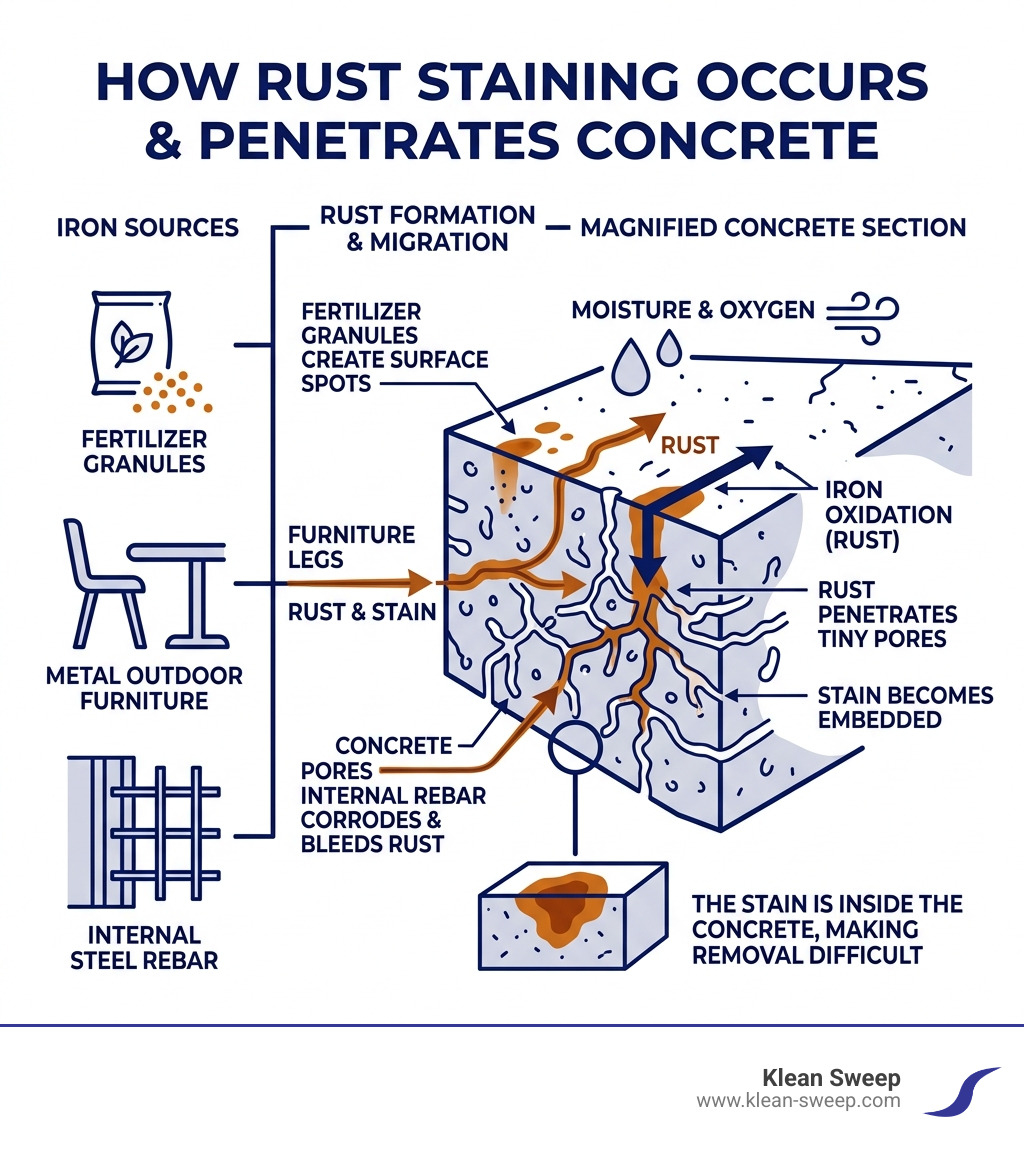
Rust stains look bad from day one — and they get worse if you ignore them. The reason they’re so stubborn is simple: concrete is porous. When iron-containing materials — fertilizers, metal furniture, vehicles, or even internal rebar — come into contact with moisture and oxygen, they oxidize. That rust then migrates deep into the tiny pores of the concrete surface, making it nearly impossible to lift with water or soap alone.
The stain isn’t just sitting on top. It’s inside the concrete.
That’s why choosing the right remover matters more than scrubbing harder.
I’m Jana Hanson, and I’ve led Klean Sweep’s exterior maintenance operations across greater Los Angeles for over a decade, giving me experience with concrete rust stain cleaning on everything from parking structures to commercial driveways. In this guide, I’ll walk you through the top-rated products and methods so you can make the right call for your property.
Identifying the Source of Concrete Discoloration
Before we grab the scrub brushes for some concrete rust stain cleaning, we have to play detective. If you don’t stop the source of the rust, those orange streaks will be back before the concrete even dries. In our experience serving Torrance and the wider Los Angeles area, we see a few usual suspects:
- Iron-Rich Fertilizers: This is perhaps the most common cause of “mystery” orange spots. Many lawn fertilizers contain iron. If granules bounce onto your driveway or sidewalk and then get hit by a sprinkler or morning dew, they can create dozens of tiny rust spots within 24 hours.
- Leaking Metal Furniture and Tools: That patio set might look great, but if the protective feet wear down, the exposed metal will weep rust every time it rains. Similarly, leaving a garden shovel or a pair of shears on the driveway overnight is a recipe for a permanent orange outline.
- Corroding Internal Rebar: Sometimes the problem comes from the inside out. If the steel reinforcement bars (rebar) were placed too close to the surface during the pour, moisture can reach them through tiny cracks. As the metal expands and rusts, it “bleeds” through to the surface.
- Irrigation Sprinkler Overspray: If your well water has a high iron content, your sprinklers are essentially painting your concrete orange every time they run.
- Battery Acid Leaks: While not technically “rust,” battery acid from golf carts or vehicles creates a stain that looks remarkably similar but is much more corrosive.
- Gutter Runoff: Rusted gutters or metal roof flashings can channel iron-rich water onto specific spots on your walkways, leading to deep, localized staining.
According to the Concrete Network, identifying whether the stain is on the surface or coming from within the slab is crucial for choosing the right treatment.

Top Commercial Products for concrete rust stain cleaning
When household remedies aren’t enough, it’s time to look at commercial-grade solutions. Most professional-grade concrete rust stain cleaning products fall into two categories: acid-based and non-acidic chemical lifters.
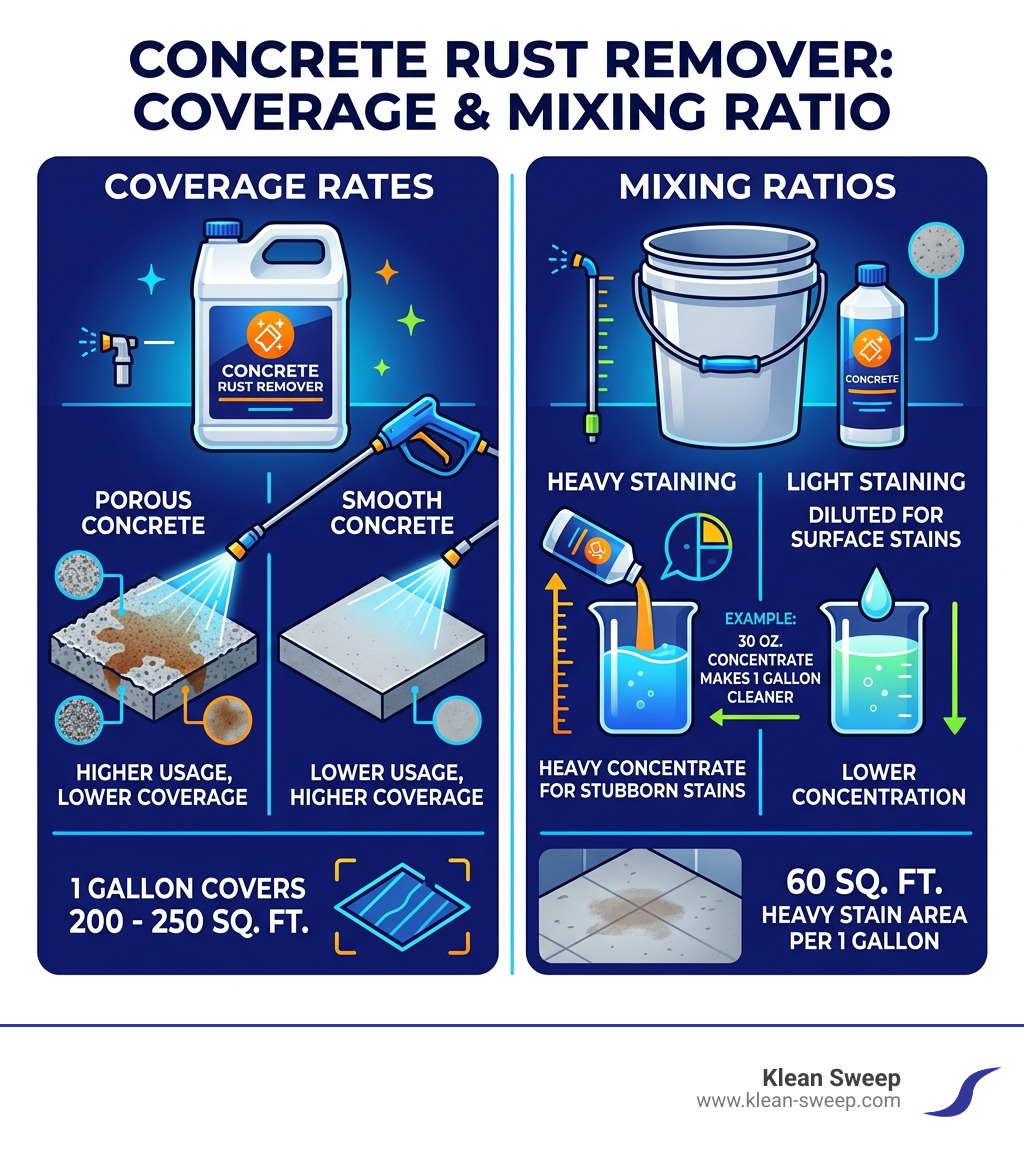
A standard gallon of concrete rust remover typically covers between 200 to 250 square feet. However, this varies wildly based on the texture of your concrete (porous vs. smooth) and how deep the stain has penetrated. For larger jobs, we often look at concentrates where a 30 oz. bottle can make a full gallon of cleaner, covering about 60 square feet of heavily stained area.
Maintaining your surfaces with Concrete Floor Cleaning for Long-Lasting Durability is the best way to ensure these products work efficiently when you do need them.
Selecting the Right Formula for concrete rust stain cleaning
Not all acids are created equal. If you choose one that is too aggressive, you might remove the rust but end up “etching” or eating away the surface of the concrete, leaving a permanent white scar.
- Oxalic Acid: This is the primary ingredient in most high-quality commercial rust removers. It is highly effective at “lifting” the iron oxide without being as destructive as harsher acids.
- Phosphoric Acid: Often found in products like CLR, this works well for light to moderate stains but requires careful monitoring of dwell time.
- Biodegradable Gels: These are fantastic for vertical surfaces like stucco walls or concrete steps. Because they are a gel, they “cling” to the surface rather than running off, allowing the chemicals more time to react with the rust.
- pH-Balanced Chemical Lifters: These are the newest innovation in the industry. Instead of using acid to eat the stain, they use a chemical process to bond with the rust and pull it out of the pores.
As noted by The Spruce, the key to success with any of these is “dwell time”—letting the product sit long enough to work, but not so long that it dries or damages the slab.
Advantages of Non-Acidic Chemical Removers
In April 2026, environmental standards in Southern California are stricter than ever. That’s why many property owners are moving toward non-acidic removers.
The main advantage here is vegetation safety. Traditional acids can kill the grass or expensive landscaping bordering your driveway. Non-acidic, phosphate-free formulas are much safer for the environment and won’t compromise the structural integrity of the concrete. They usually require about a 10-minute dwell time before being rinsed away. For those looking for eco-friendly options, our Steam Cleaning & Pressure Washing Services Near You utilize methods that balance power with environmental responsibility.
Professional Methods and Acid-Based Treatments
For the most stubborn, “set-in” stains that have been there for years, professional methods are often required. This usually involves a combination of high-heat pressure washing and carefully diluted acid treatments.
One of the heavy hitters in the industry is muriatic acid. However, this is not a “beginner” DIY product. It must be used at a maximum 1:1 dilution ratio (one part water to one part acid). If the solution is too strong, it will eat through the “cream” or the smooth top layer of your concrete, exposing the aggregate underneath and leaving it feeling like sandpaper.

When we perform Steam Cleaning and Pressure Washing in Torrance, CA, we follow a strict protocol:
- Pre-wetting: We soak the concrete and surrounding plants with plain water first. This prevents the concrete from “gulping” down the acid too quickly.
- Application: The solution is applied evenly.
- Scrubbing: We use stiff-bristled nylon brushes (never metal!) in circular scrubbing patterns to reach into the irregular pores.
- Neutralization and Rinsing: The acid must be neutralized and rinsed thoroughly to stop the chemical reaction.
Best Practices for concrete rust stain cleaning with Pressure Washers
A pressure washer is a powerful tool, but in the wrong hands, it can do more harm than rust ever could. For concrete rust stain cleaning, we recommend a pressure setting between 2,000 and 3,000 PSI.
- Nozzle Choice: Always use at least a 15-degree nozzle. A “0-degree” red tip acts like a laser and can actually carve permanent lines into your concrete or strip the surface cream.
- Technique: Keep the wand moving in steady, overlapping strokes.
- Chemical Integration: Pressure washing is most effective when used after a rust remover has had time to break the bond between the iron and the concrete pores.
As SlabCalc points out, the goal is to lift the stain, not to blast away the concrete itself.
Safety Precautions and Prevention Strategies
Safety isn’t just a suggestion when dealing with concrete rust stain cleaning—it’s a requirement. If you’re tackling this yourself, you need the right gear:
- Nitrile Gloves: Heavy-duty, chemical-resistant gloves.
- Safety Goggles: Wraparound protection is best to prevent splashes.
- Respirator Masks: Essential if you are using acid-based cleaners in a garage or area with poor airflow.
Beyond safety, the best way to handle rust is to prevent it from ever happening. According to Angi, sealing your concrete every 2 to 3 years is the single most effective prevention strategy. A high-quality sealer fills those tiny pores we’ve been talking about, so when iron-rich water hits the surface, it stays on top where it can be easily wiped away.
Other prevention tips include:
- Plastic Glides: Add plastic or rubber feet to all metal patio furniture.
- Crack Repair: Seal cracks immediately to prevent water from reaching internal rebar.
- Careful Fertilizing: Always sweep your driveway and sidewalks after fertilizing your lawn.
Frequently Asked Questions about concrete rust stain cleaning
Will bleach remove rust stains from concrete?
No! This is a very common mistake. Bleach is an oxidizer. Since rust is the result of oxidation, adding bleach can actually “lock” the stain in or make it even darker and more permanent. Bleach is great for mold and mildew, but it is the enemy of rust removal.
Can I use household vinegar for light rust stains?
Yes, for minor surface stains, white vinegar (which contains acetic acid) is a great starting point. Pour it undiluted on the stain, let it sit for 10 to 20 minutes, scrub with a stiff brush, and rinse. It’s a safer, “beginner-friendly” way to start your concrete rust stain cleaning journey.
When should I hire a professional for rust removal?
If the stains cover a large area, if you suspect internal rebar corrosion (recurring stains in the same spot), or if you are dealing with delicate surfaces like stamped or colored concrete, it’s time to call in the pros. Industrial equipment and professional-grade chemicals can achieve results that are often impossible with store-bought tools.
Conclusion
At Klean Sweep, we’ve been a family-owned staple in the Southern California community since 1969. We know that the appearance of your property is a reflection of your business or home, and we take that seriously. Whether you need a one-time deep clean or ongoing maintenance, our team uses state-of-the-art equipment and environmentally friendly methods to keep your surfaces looking their best.
If you’re struggling with stubborn orange streaks and need expert help with Concrete Floor Cleaning in Torrance, CA, give us a call. We serve Torrance, Los Angeles, and the surrounding areas with the same dedication to quality we’ve had for over five decades. Let us handle the heavy lifting so you can enjoy a clean, rust-free property.