
Why Bubbles Power Washing Gives Commercial Surfaces a Deeper Clean
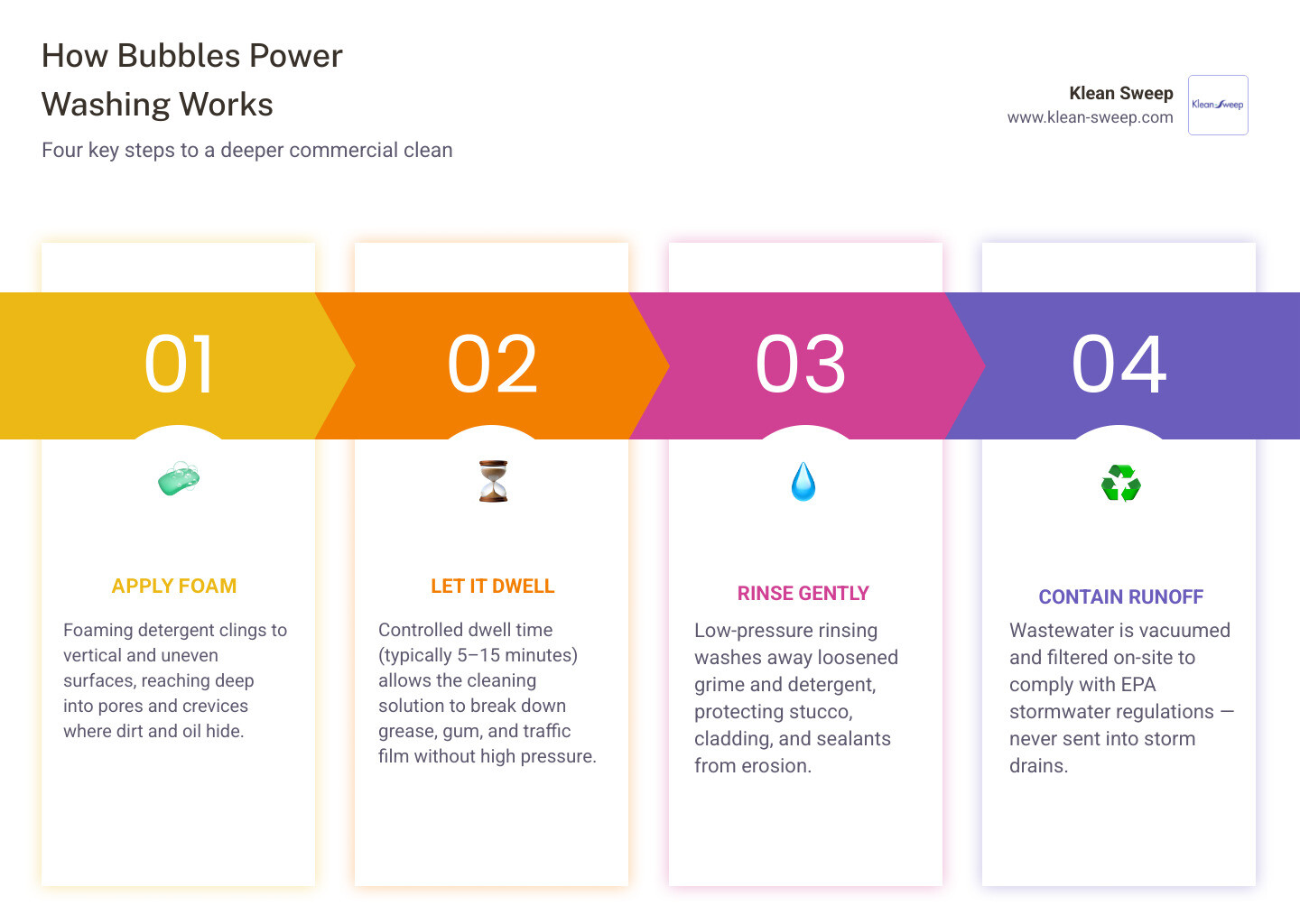
Bubbles power washing combines controlled water pressure with foaming detergent to loosen grime before rinsing it away. For a commercial property, the smart approach is to match the pressure, detergent, and dwell time to the surface – then contain and manage wastewater rather than letting it enter storm drains.
This method can be especially useful for parking structures, sidewalks, loading areas, exterior walls, and heavy-traffic concrete where oil, gum, dust, and traffic film build up. Foam helps cleaning solution cling to vertical and uneven surfaces, giving it time to break down contaminants. That often reduces the need for overly aggressive pressure that can wear down finishes, joints, cladding, and delicate stucco.
For Los Angeles-area property managers, a professional service should assess the site first, test a small area when needed, protect nearby landscaping and drains, and use appropriate runoff controls. Routine cleaning also supports curb appeal, safer walking areas, and long-term exterior maintenance.
I am Jana Hanson, and I lead Klean Sweep, a family-run exterior maintenance company built on more than 55 years of practical service experience in Southern California. Our work across commercial properties has shown why bubbles power washing, when paired with responsible site practices, can help maintain hard-working exterior surfaces.
Important bubbles power washing terms:
- Generac Power Washer Models Compared
- The Real Cost of Cheap Power Washing
- Find Reliable Pressure Washing Services
Understanding Bubbles Power Washing and Foam Injection Technology
Commercial properties face relentless exposure to automotive exhaust, grease, atmospheric soot, food spills, and mineral buildup. Traditional water blasting relies purely on mechanical kinetic force to dislodge these substances. However, high-velocity water alone often shears over oily films without lifting the underlying binders.
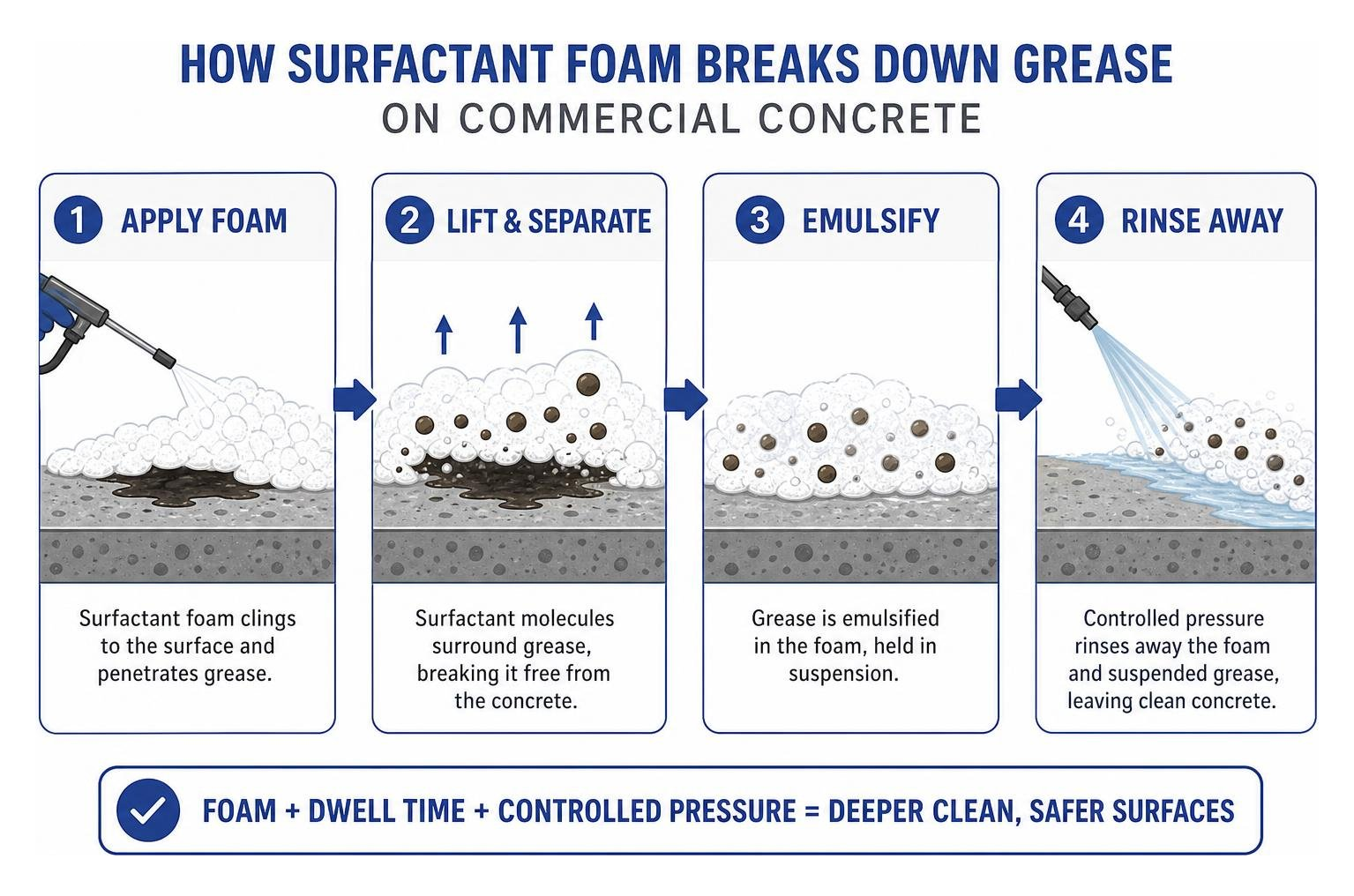
Foam injection technology introduces specialized surfactants into the water stream at calibrated ratios. When aerated at the nozzle, the solution generates a dense micro-bubble matrix. These bubbles reduce water surface tension, allowing active cleaning agents to penetrate the microscopic pores of masonry and concrete substrates. Understanding the underlying science is essential; as detailed in the ultimate guide to commercial pressure washing services, combining proper chemistry with optimized physical agitation lifts stubborn industrial grime far more effectively than untreated water.
High-Pressure Blasting vs. Bubbles Power Washing Methods
Relying exclusively on extreme water pressure creates significant liabilities for commercial assets. Excessive pressure (often exceeding 3,500 to 4,000 PSI) can lead to irreversible structural damage:
- Surface Degradation: High PSI blasts away the cream coat of cured concrete, exposing porous aggregate beneath.
- Mortar and Sealant Failure: Concentrated streams erode expansion joint sealants, pointing mortar, and window caulking.
- Substrate Etching: Soft exterior claddings, exterior insulation finishing systems (EIFS), and stucco can be permanently scarred.
Bubbles power washing shifts the heavy lifting from destructive mechanical pressure to chemical emulsification. By coating contaminated surfaces in a rich, biodegradable active foam, technicians can drop water pressures to safe, controlled levels while achieving a deeper, uniform clean.
How Bubbles Power Washing Enhances Chemical Dwell Time
Standard liquid detergents applied via low-pressure spray rapidly sheet off vertical walls and sloped commercial ramps due to gravity. The solution runs into gutters before it can dissolve tough traffic films or embedded greases.
Dense foam bubbles counteract gravitational runoff by creating mechanical cling. The bubbles hold active surfactants against vertical concrete panels, structural support pillars, and architectural facades for an extended dwell time. During this contact window, industrial emulsifiers encapsulate oily hydrocarbons, suspending them within the foam lather for rapid, low-pressure rinsing that minimizes overall wastewater volume.
Commercial Surfaces and Structural Applications
Modern commercial facilities encompass a broad range of building materials, each requiring tailored cleaning approaches. Our team works across diverse architectural surfaces throughout Los Angeles, Carson, Pasadena, and Beverly Hills.

Applying the correct technique ensures thorough sanitation without compromising material longevity. Property managers can review our guide to professional concrete floor cleaning services to learn how substrate porosity impacts chemical selection and rinse pressures.
Commercial Roof Drainage and Gutter Systems
Commercial flat roofs, multi-story office complexes, and retail centers rely on parapet scuppers, internal drainage lines, and perimeter gutters to divert massive volumes of stormwater. In high-density areas across Southern California, atmospheric dust and tree debris collect around these collection points:
- Scupper Maintenance: Debris blockages create standing water, accelerating roof membrane decay and adding dangerous dead weight.
- Downspout Flushing: Foaming action breaks down accumulated sludge inside commercial downspouts without dislodging joints.
- Runoff Protection: Clearing roof drainage zones prevents overflow from cascading down commercial facades, eliminating unsightly mineral streaking and stucco staining.
Heavy Traffic Concrete and Paved Surfaces
Loading docks, drive-thrus, dumpster pads, and parking structure ramps endure severe chemical exposure. Hydraulic fluid leaks, engine oil puddles, and discarded chewing gum bond strongly to porous concrete.
| Surface Condition / Contaminant | High-Pressure Cold Water Blasting | Foaming Detergent / Bubbles Power Washing |
|---|---|---|
| Embedded Motor Oil & Grease | Spreads oil film; leaves chemical shadows in pores | Emulsifies petroleum bonds; pulls oil to the surface |
| Chewing Gum Residue | High risk of concrete pitting and surface etching | Softens adhesion matrix for clean thermal lifting |
| Vertical Cladding & Stucco Soot | Causes water intrusion behind wall assemblies | Clings via foam dwell; rinses clean at low PSI |
| Wastewater Volume Generated | High water volume; difficult containment | Lower total water volume; superior pickup control |
Environmental Compliance and Professional Execution
Commercial exterior cleaning in Southern California requires strict adherence to environmental regulations. Property managers and facility directors face significant liabilities if cleaning contractors allow wash water to enter municipal storm sewer systems.

Under the Clean Water Act and National Pollutant Discharge Elimination System (NPDES) standards, commercial wash water containing petroleum hydrocarbons, heavy metals, or chemical detergents must be captured. Our commercial power washing guide outlines the exact containment protocols necessary to keep commercial properties fully compliant with local regional water quality control boards.
Site Assessment and Square Footage Verification
Before deploying equipment, our technicians complete a systematic site evaluation to ensure safety, efficiency, and surface protection:
- Drain Isolation: All storm drain inlets are sealed with impermeable berms and drain covers.
- Surface Tolerance Testing: A test strip is conducted on an inconspicuous section to calibrate chemical concentrations and water temperatures.
- Square Footage Calculation: Accurate surface measurement ensures precise application of eco-friendly detergents without oversaturation.
- Risk Mitigation: Delicate architectural lighting, entry sensors, and sensitive landscape beds are shielded prior to cleaning.
Understanding these protocols helps property owners recognize the real cost of cheap power washing, as budget operators often skip vital recovery and containment measures.
Establishing Maintenance Schedules for Commercial Properties
Commercial exterior maintenance is not a one-time event; it is an ongoing asset preservation strategy. High-traffic commercial facilities require customized service intervals based on foot traffic, vehicle movement, and environmental exposure:
- High-Volume Retail Entrances & Walkways: Monthly to quarterly cleaning to eliminate slip hazards, grease, and beverage stains.
- Parking Structures & Loading Docks: Semi-annual deep cleaning to remove industrial tire marks and hydraulic fluid buildup.
- Building Facades & Exterior Walls: Annual or bi-annual soft wash treatments to clear atmospheric dust and marine layer fallout.
For property directors managing assets in Los Angeles, Brea, or Torrance, coordinating a structured maintenance schedule for exterior cleaning in Los Angeles keeps facilities clean, compliant, and welcoming year-round.
Frequently Asked Questions about Commercial Power Washing
How frequently should high-traffic commercial concrete be serviced?
For heavy-use commercial areas—such as shopping center sidewalks, drive-thru lanes, and busy parking structures—we recommend a routine cleaning schedule at least semi-annually (twice per year). Lower-traffic perimeter flatwork typically requires comprehensive annual cleaning. Consistent service prevents oil from deeply penetrating the concrete matrix, reducing slip-and-fall hazards and maintaining property aesthetics.
Can foam washing protect delicate commercial facades and stucco?
Yes. Bubbles power washing and low-pressure soft washing techniques are specifically designed to protect delicate building envelopes. By relying on foaming agents to break down grime rather than brute water pressure, this method cleans painted surfaces, exterior insulation finishing systems (EIFS), cladding, and architectural stucco without causing surface gouging, paint chipping, or water intrusion behind the building barrier.
Why is professional wastewater reclamation required for commercial cleaning?
Federal, state, and local environmental regulations prohibit untreated commercial wastewater from entering municipal storm drains, which lead directly to local waterways and the Pacific Ocean. Professional maintenance teams use vacuum recovery berms, surface cleaners with integrated suction, and filtration units to capture and legally dispose of all runoff, protecting property owners from severe municipal fines. Verified contractors operating across the region must align with regional commercial exterior cleaning standards to maintain regulatory compliance.
Conclusion
Maintaining a pristine, safe, and code-compliant commercial facility requires more than high-pressure water. Bubbles power washing merges advanced surfactant chemistry with controlled water delivery to remove embedded contaminants while safeguarding delicate structural substrates.
From multi-level parking garages in Torrance to commercial retail centers across Carson and Beverly Hills, proper exterior care protects substantial real estate investments and enhances tenant satisfaction. Klean Sweep brings more than 55 years of specialized expertise, advanced equipment, and full environmental compliance to every job site.
Contact our team today to schedule an on-site property evaluation and explore our full range of solutions, including steam cleaning and pressure washing in Torrance, CA.