

The Best Way to Clean Painted Concrete Floors
The best way to clean painted concrete floors is to remove grit first, then clean gently. Sweep or vacuum the floor, test a pH-neutral cleaner in a hidden spot, and mop with a lightly damp microfiber pad. Rinse away any cleaner residue, remove standing water, and let the floor dry before traffic returns.
For commercial floors and parking structures, clean spills promptly. Avoid wire brushes, bleach, and high-pressure spray, which can damage the coating.
I’m Jana Hanson. I’ve led Klean Sweep, our family-owned commercial maintenance company serving greater Los Angeles, since 2012. My experience overseeing concrete floor cleaning shapes this guide to the best way to clean painted concrete floors.
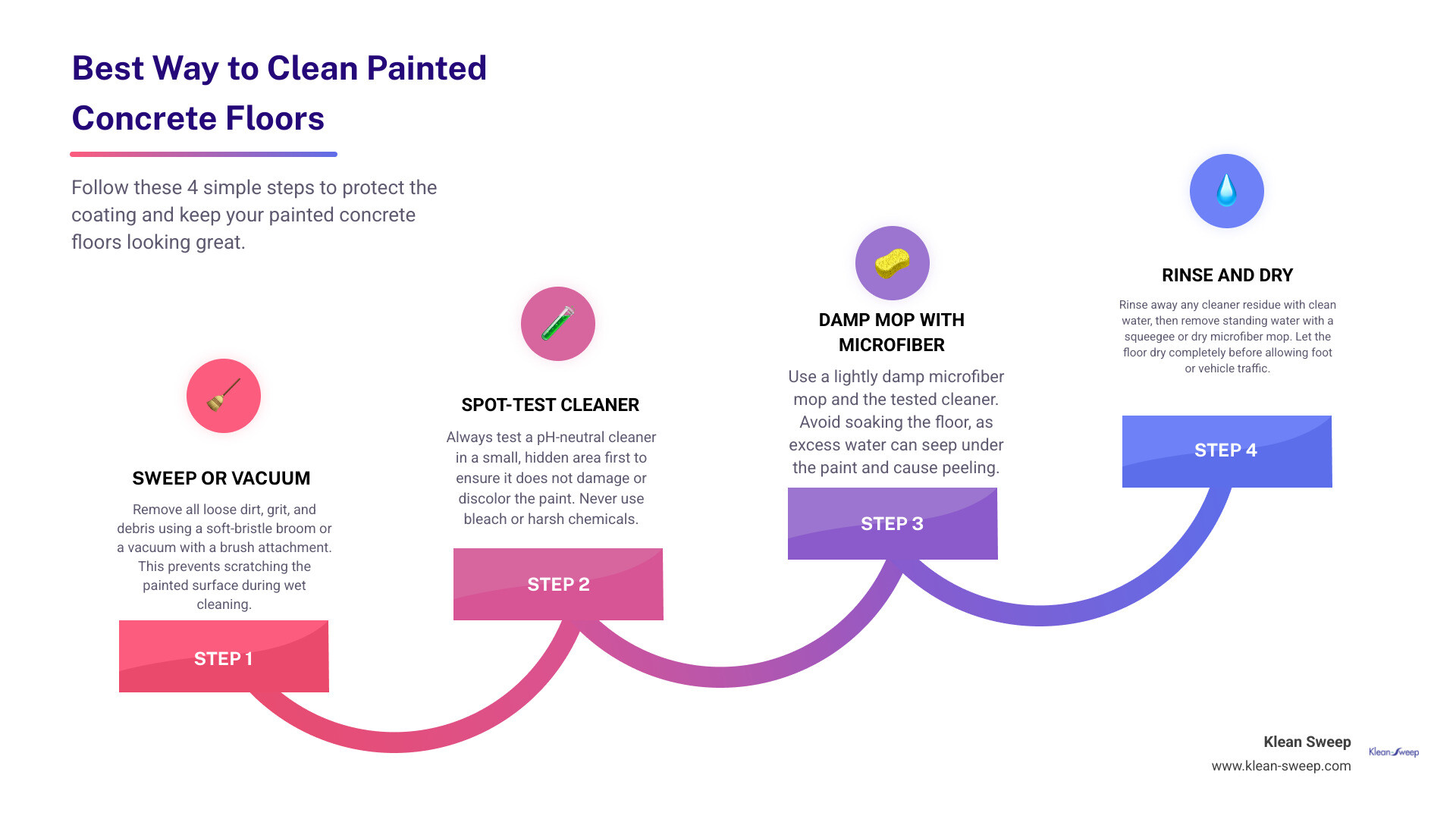
Quick best way to clean painted concrete floors terms:
Assessing Commercial Painted Concrete Surfaces Before Cleaning
Before applying any cleaning equipment or chemistry to a commercial painted concrete floor, evaluating the existing condition of the surface is essential. Painted decks in parking structures, loading bays, and commercial facilities undergo continuous mechanical stress. Over time, heavy vehicular movement, pedestrian foot traffic, and environmental deposits degrade the bond between the paint layer and the underlying concrete substrate. Cleaning an already compromised coating with aggressive liquids or abrasive pads can quickly turn minor hairline fractures into widespread peeling.
Proper assessment begins with an inspection of the topcoat. Look for signs of micro-cracking, blistering caused by trapped hydrostatic vapor, and surface chalking. Inspecting structural expansion joints, vehicle turn radius zones, and drainage slopes will reveal whether the coating is intact or if localized delamination has begun. Identifying these factors helps facility managers choose the correct agitation level, dwell time, and chemistry needed for a safe, thorough clean.
Water Drop Test for Sealed Versus Unsealed Paint
Understanding whether a painted deck has an active protective clear coat or is an unsealed topical paint layer dictates how moisture should be managed during routine upkeep. Unsealed coatings are porous, meaning they readily absorb liquid spills and dirty wash water, leading to deep staining or moisture entrapment.
To perform a reliable water drop test:
- Locate a clean, representative section of the floor, ideally near an edge or low-wear zone.
- Place several drops of clean water onto the painted surface.
- Observe the liquid for 3 to 5 minutes.
If the water beads tightly on the surface without changing the color of the paint, the floor is adequately sealed with a protective topcoat. If the water slowly spreads, flattens, or soaks in—causing the paint to darken—the coating is unsealed or worn thin. Knowing this distinction allows maintenance teams to optimize concrete floor cleaning for long-lasting durability by limiting water volume, avoiding prolonged soaking, and preventing structural water saturation.
Evaluating High-Traffic Commercial Wear and Paint Adhesion
In busy commercial parking facilities across Los Angeles and Carson, vehicular tires create localized shear stresses that test paint adhesion daily. Facility managers should routinely evaluate coating integrity in high-wear zones before undertaking extensive mechanical scrubbing.

A standardized field method for evaluating coating bond strength is the cross-hatch adhesion test. Maintenance crews make a small, shallow X-cut (roughly 3 cm by 3 cm) through the paint film using a utility knife in an inconspicuous area. A strip of specialized pressure-sensitive tape is applied firmly over the incision and pulled away swiftly at a 45-to-90-degree angle. If the paint remains firmly attached to the concrete, the floor has strong mechanical adhesion and can withstand standard mechanical scrubbing pads. If flakes of paint lift off with the tape, the floor coating is failing and requires low-pressure washing methods and prompt recoating rather than aggressive mechanical agitation.
The Best Way to Clean Painted Concrete Floors in Commercial Facilities
Commercial painted concrete demands a balanced maintenance philosophy: aggressive removal of abrasive particulate coupled with non-destructive chemical cleaning. Dirt, sand, and fine road aggregate act like liquid sandpaper under heavy vehicle tires. When tires roll over uncleaned aggregate, they grind down the paint resin, stripping away gloss and creating micro-pores that harbor automotive fluids.
Preserving these surfaces requires proactive surface protection, rigid preventative protocols, and carefully selected cleaning products. Facilities that implement systematic cleaning schedules drastically cut long-term restoration costs while maintaining clean, professional aesthetics that enhance property value and safety.
Essential Tools and Equipment for Commercial Floor Maintenance
Cleaning large commercial square footage efficiently without abrading painted surfaces requires specialized industrial machinery. Standard manual mops simply spread suspended dirt across textured coatings, leaving unsightly streaks and oily films behind.

- Industrial Sweepers: High-dump sweepers and vacuum sweepers capture dry sand, road grit, and fine debris before any wet cleaning takes place.
- Walk-Behind and Ride-On Auto Scrubbers: These machines apply cleaning solutions, agitate the deck using controlled brush pressure, and instantly vacuum the dirty slurry into recovery tanks.
- Non-Abrasive Cleaning Pads: Scrubbers should be fitted with soft white buffing pads, light-duty red scrubbing pads, or non-abrasive microfiber cylindrical rollers. Avoid aggressive black or brown stripping pads, which will immediately tear through painted films.
- Soft-Bristle Polypropylene Brushes: Ideal for textured non-slip paint coatings where flat pads cannot reach low crevices.
For complex commercial decks, deploying our commercial concrete floor scrubbing services guarantees that equipment pressure and pad selection are matched exactly to the age and thickness of your facility’s coating.
Safe Cleaning Solutions and pH-Neutral Detergents
The chemical makeup of your cleaning detergent determines whether your painted coating lasts for years or fails prematurely. Painted concrete finishes are vulnerable to extreme chemical swings. High-pH alkaline chemicals can saponify certain paint binders, making them soft and sticky, while low-pH acids chemically etch the concrete underneath any micro-pinholes, causing catastrophic coating failure.
The safest, most effective daily cleaning solutions are pH-neutral detergents formulated specifically with a pH between 6.5 and 7.5. These detergents lift surface grime, suspend oils, and leave zero sticky residue without degrading the chemical bonds of acrylics, polyurethanes, or epoxy paints. When selecting specialized cleaners, reviewing Clean Slate Your Guide to Concrete Floor Cleaners provides valuable insight into chemical properties and environmental safety.
| Cleaner Type | pH Level | Safe on Painted Concrete? | Primary Use Case |
|---|---|---|---|
| pH-Neutral Detergent | 6.5 – 7.5 | Yes (Daily/Weekly) | General dirt, dust removal, everyday upkeep |
| Citrus-Based Solvent | 7.0 – 8.0 | Yes (Diluted) | Rubber tire marks, light grease spots |
| Heavy-Duty Alkaline Degreaser | 9.0 – 11.5 | Yes (High Dilution Only: 1:10 to 1:16) | Heavy motor oil, hydraulic fluid ponding |
| Trisodium Phosphate (TSP) Alternate | 9.0 – 10.0 | Caution (Spot Test First) | Deep industrial grime, pre-recoat preparation |
| Acid Cleaners (Muriatic/Phosphoric) | 1.0 – 3.0 | No (Never Use) | Etches raw concrete; destroys paint coatings |
| Chlorine Bleach Solutions | 11.0 – 13.0 | No (Never Use) | Flakes paint layers, discolors pigments |
Step-by-Step Guide for Routine and Deep Cleaning
A successful cleaning program separates routine preventative cleaning from periodically scheduled deep restorative cycles. By establishing clear standard operating procedures, commercial facility teams can keep painted decks pristine year-round.
Best Way to Clean Painted Concrete Floors for Daily and Weekly Upkeep
Routine maintenance focuses on dry sediment removal and gentle damp cleaning to ensure dust and grit do not act as abrasives under foot and vehicular traffic.
- Perform Dry Dust Removal: Clear all loose gravel, leaves, and trash using an industrial vacuum sweeper or dust mop. Dry sweeping is the single most critical preventative step because removing gritty aggregate prevents abrasive wear. Maintenance managers often rely on the easiest way to clean concrete floors effectively to train internal crews on daily dry-sweeping discipline.
- Apply Diluted pH-Neutral Solution: Mix your neutral cleaner with clean, lukewarm water according to label specifications. For auto scrubbers, maintain a lean solution mixture to prevent soapy residue build-up.
- Low-Moisture Mechanical Scrub: Run the auto scrubber equipped with red or white pads across the surface. Ensure the squeegee blades and vacuum recovery system are functioning at full suction to immediately pull moisture out of textured low spots, as outlined in educational resources like How to Clean Concrete Floors (with Pictures) – wikiHow .
- Inspect and Air Dry: Verify that no standing wash water remains in corners or low areas. Allow the floor to dry fully before reopening the area to commercial traffic.
Deep Scrubbing Methods to Remove Heavy Grime and Dirt
Over time, road salt, automotive soot, and atmospheric pollutants settle into the texture of painted commercial decks. Removing this embedded film requires controlled dwell time and rotary agitation.
- Pre-Treat High-Soil Lanes: Apply a diluted neutral or mild citrus-based cleaner directly over heavily soiled driving lanes using a low-pressure spray applicator.
- Allow Controlled Dwell Time: Let the cleaning solution sit on the surface for 5 to 10 minutes. This allows the surfactants to break the bond between the grime and the painted coating. Never allow the cleaning solution to dry on the paint; mist lightly with water if ambient temperatures cause rapid evaporation.
- Rotary Floor Scrubbing: Use a slow-speed rotary floor machine (175 RPM) or an industrial ride-on scrubber fitted with soft polypropylene brushes. Work in overlapping passes to ensure complete coverage. Mastering how to scrub concrete floors without streaks requires maintaining balanced water delivery and keeping vacuum squeegees clean.
- Clean Water Rinse and Vacuum Extraction: Immediately follow agitation with a clean water rinse cycle and high-powered squeegee extraction to remove suspended particulates.
Removing Tough Industrial Stains Without Damaging the Paint
Industrial parking structures and commercial docks inevitably suffer from harsh hydrocarbon leaks and tire friction deposits. Removing these stains without stripping the paint requires patience, chemistry, and targeted techniques.
Best Way to Clean Painted Concrete Floors with Grease and Oil Spills
Fresh motor oil and transmission fluids must be addressed immediately. When hydrocarbons sit on painted concrete, they soften the paint film, making it easy to scuff away under tire torque.
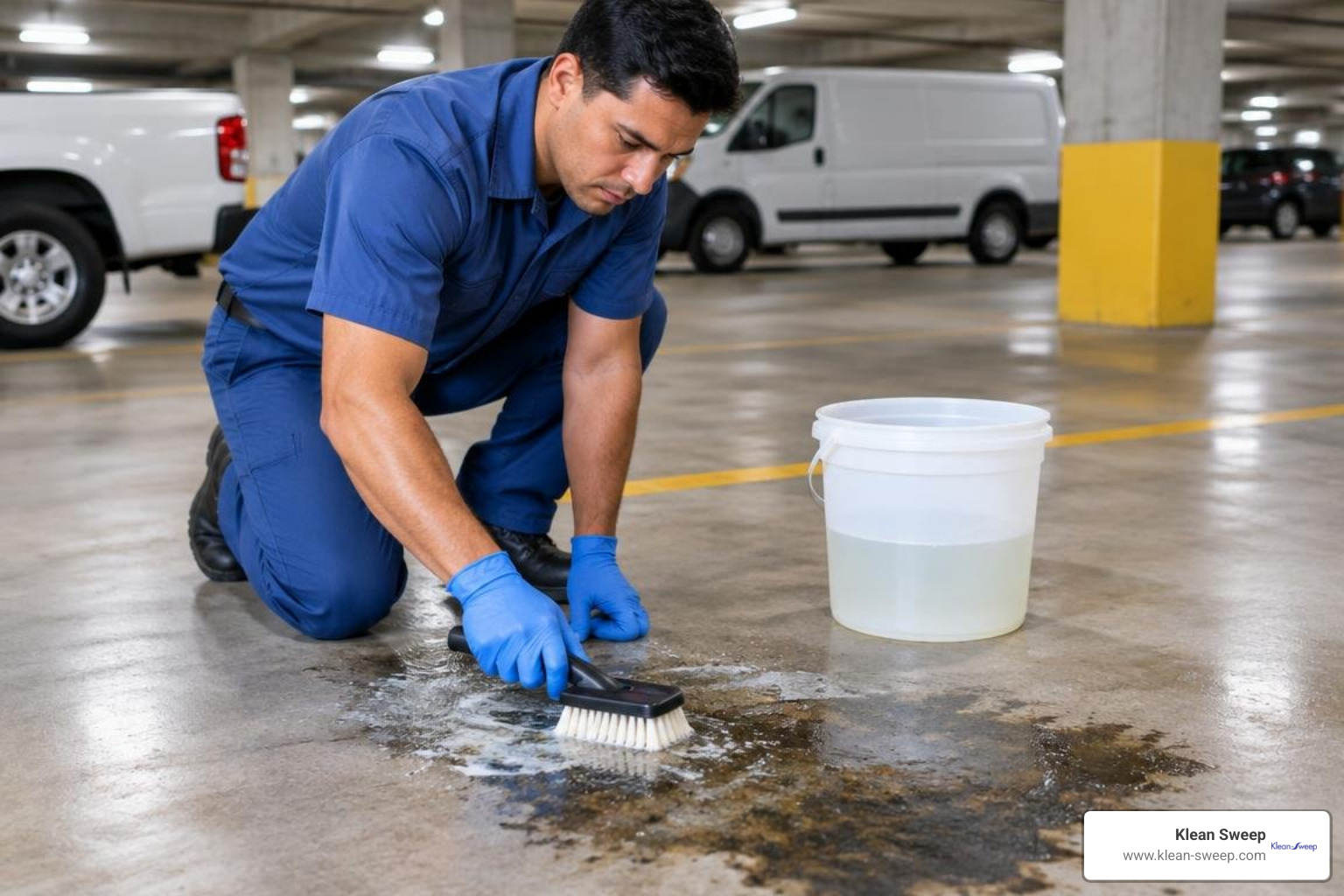
- Absorb Liquid Oil: Cover fresh spills with an absorbent commercial clay, diatomaceous earth, or organic spill compound. Allow the material to absorb the standing pooling oil for 15 to 30 minutes, then sweep it up and dispose of it in accordance with local environmental regulations.
- Apply Diluted Degreaser: For remaining oily residues, mix a concentrated commercial degreaser like Rust-Oleum Concrete Prep & Accessories Heavy-Duty Degreaser – Rust-Oleum . When working on painted surfaces, dilute the heavy-duty degreaser at a ratio of 1:16 (1 cup of degreaser per 1 gallon of warm water) or 1:10 for regular maintenance degreasers. Never use full-strength industrial degreasers on paint, as undiluted solvents can lift the coating.
- Gentle Manual Agitation: Use a medium-soft nylon scrub brush to work the diluted solution into the stain using circular motions.
- Rinse and Extract: Rinse the spot thoroughly with clean water and wipe or vacuum it dry. Facilities managing extensive vehicle areas can learn advanced spill response by reviewing how to clean parking garage concrete floors.
Eliminating Black Rubber Tire Marks from Parking Garages
Tire scuffing occurs when hot tires transfer plasticizers and polymerized rubber onto painted surfaces under friction. These dark black marks are physically bonded to the paint and will not wash away with standard soap and water.
To remove tire marks safely:
- Apply a natural, citrus-based (d-limonene) solvent diluted with water to the scuff mark. Citrus solvents soften the synthetic rubber compounds without dissolving underlying epoxy or acrylic paints.
- Allow a dwell time of 5 to 8 minutes.
- Agitate the mark with a handheld white non-scratch scouring pad or a soft-bristled deck brush.
- Wipe away the emulsified rubber residue with a clean microfiber cloth and rinse the area with fresh water.
Pressure Washing Protocols and Mistakes to Avoid
Pressure washing is an invaluable tool for exterior maintenance, but when used improperly on painted concrete, high-velocity water acts like an industrial cutting tool that will blast coatings right off the slab.
Safe Pressure Washing and Steam Cleaning Guidelines
When pressure washing painted commercial slabs, water volume (GPM) is far more important than extreme pressure (PSI). High water volume floats dirt away safely, whereas excessive pressure chips and etches paint edges.
- Pressure Limit: Keep operating pressure below 1,200 to 1,500 PSI.
- Nozzle Selection: Always use wide fan nozzles (40-degree white tips or 25-degree green tips). Never use 0-degree red pencil-jet tips or aggressive rotary turbo nozzles on painted decks, as they will cut through paint layers instantly.
- Spray Distance and Angle: Maintain a consistent distance of 12 to 18 inches between the nozzle tip and the floor, holding the spray at a 45-degree angle to lift dirt without driving water under paint seams.
- Controlled Hot Water & Steam: Commercial hot water washing and steam cleaning provide exceptional cleaning power with minimal chemical use. Utilizing stop the grime with a power washed concrete floor techniques along with specialized steam cleaning pressure washing services near you allows operators to melt grease and lift dirt at safe, low hydraulic pressures.
Common Cleaning Mistakes That Ruin Painted Coatings
Preventing coating failure means avoiding common field mistakes:
- Using Acid-Based Cleaners: Muriatic, hydrochloric, and aggressive phosphoric acids attack the calcium carbonate inside concrete. If acid seeps through pinholes in paint, it chemically reacts underneath, producing gas bubbles that cause wide-scale paint delamination.
- Scrubbing with Wire Brushes or Abrasive Pads: Steel wire brooms, abrasive grit-impregnated brushes, and black stripping pads create deep micro-scratches in the paint, destroying its gloss and allowing dirt to embed permanently.
- Applying Chlorine Bleach: While bleach is commonly used on exterior unpainted concrete, using it on painted decks causes coatings to become brittle, discolor, and flake away over time, as explained in the Guide to Cleaning Concrete with Bleach – Pros, Cons & Safety – Concrete Network .
- Neglecting Clean Water Rinsing: Allowing dirty, detergent-laden wash water to puddle and evaporate leaves a slick chemical film that attracts rapid re-soiling and creates slip hazards.
Frequently Asked Questions About Cleaning Painted Concrete
Can I Use Bleach or Harsh Chemicals on Painted Concrete?
No. Chlorine bleach and harsh alkaline chemicals should never be used on painted concrete floors. Bleach breaks down the chemical resins and organic pigments inside concrete paints, leading to premature flaking, chalking, and loss of color. Additionally, harsh chemicals damage protective clear coats and can corrode underlying expansion joint sealants. Always stick to dedicated pH-neutral cleaners or properly diluted mild degreasers.
How Often Should Commercial Painted Concrete Floors Be Cleaned and Recoated?
Commercial painted floors should be dry swept daily to remove abrasive grit and damp-scrubbed with an auto scrubber on a weekly or bi-weekly basis depending on traffic volume. Painted concrete floors in commercial properties typically need repainting or clear-coat reapplication every 3 to 5 years to maintain their protective barrier and visual appeal. High-performance epoxy finishes last roughly 5 to 10 years, whereas professionally polished concrete installations can endure up to 20 years with consistent routine maintenance.
What PSI Is Safe for Power Washing Painted Concrete Surfaces?
The maximum safe pressure for washing painted concrete is between 1,200 and 1,500 PSI. Always use a broad 25-degree or 40-degree fan nozzle held at least 12 to 18 inches away from the surface. Operating at higher pressures or using narrow 0-degree tips risks penetrating microscopic coating fissures, which will peel the paint off the slab.
Conclusion
Keeping commercial painted concrete floors clean and durable requires routine dry sweeping, balanced pH-neutral chemistry, soft agitation tools, and low-pressure rinsing. By eliminating abrasive grit before it grinds into coatings and treating automotive fluid spills quickly with properly diluted degreasers, commercial property owners can protect their investments, enhance safety, and extend the lifespan of their painted decks.
When your commercial parking decks, loading bays, or exterior facilities require industrial-grade care, partnering with an experienced maintenance provider makes all the difference. Klean Sweep has proudly served the greater Los Angeles area, including Torrance, Carson, Pasadena, and Beverly Hills, with environmentally friendly property solutions since 1969. Contact our team today for professional concrete floor cleaning in Torrance, CA and keep your commercial property looking fresh and new.