
Why the Right Concrete Mop Cleaner Makes or Breaks Your Floors
A concrete mop cleaner is a cleaning solution specifically formulated to cut through the dirt, grease, and grime that builds up on hard concrete surfaces — and it works best when paired with the right mop for the job.
Quick answer: Best concrete mop cleaners by use case
| Use Case | Recommended Cleaner Type | Best Mop Type |
|---|---|---|
| Daily maintenance | pH-neutral concentrated cleaner (e.g., dilute 2–4 oz/gal) | Microfiber spray mop |
| Heavy-duty industrial | Industrial degreaser (e.g., dilute 1 oz/gal) | Looped-end wet mop or auto scrubber |
| Polished/sealed concrete | pH-balanced, no-rinse formula | Microfiber mop |
| Large commercial areas | Bulk concentrated cleaner | Walk-behind automatic scrubber |
Concrete floors are tough — but they’re not invincible. In commercial and industrial settings, the wrong cleaner (or the wrong mop) can leave residue behind, damage a sealed finish, or simply fail to remove heavy soils. For property managers in Los Angeles, where compliance with stormwater runoff regulations adds another layer of complexity, choosing the right product matters more than most people realize.
The good news? Getting it right is straightforward once you know what to look for.
I’m Jana Hanson, and I’ve led Klean Sweep’s exterior and concrete maintenance operations across greater Los Angeles for over a decade — giving me experience with every type of concrete mop cleaner on the market. Whether you’re managing a warehouse floor or a polished retail space, this guide will help you cut through the noise and choose with confidence.
Defining the Industrial Concrete Mop Cleaner
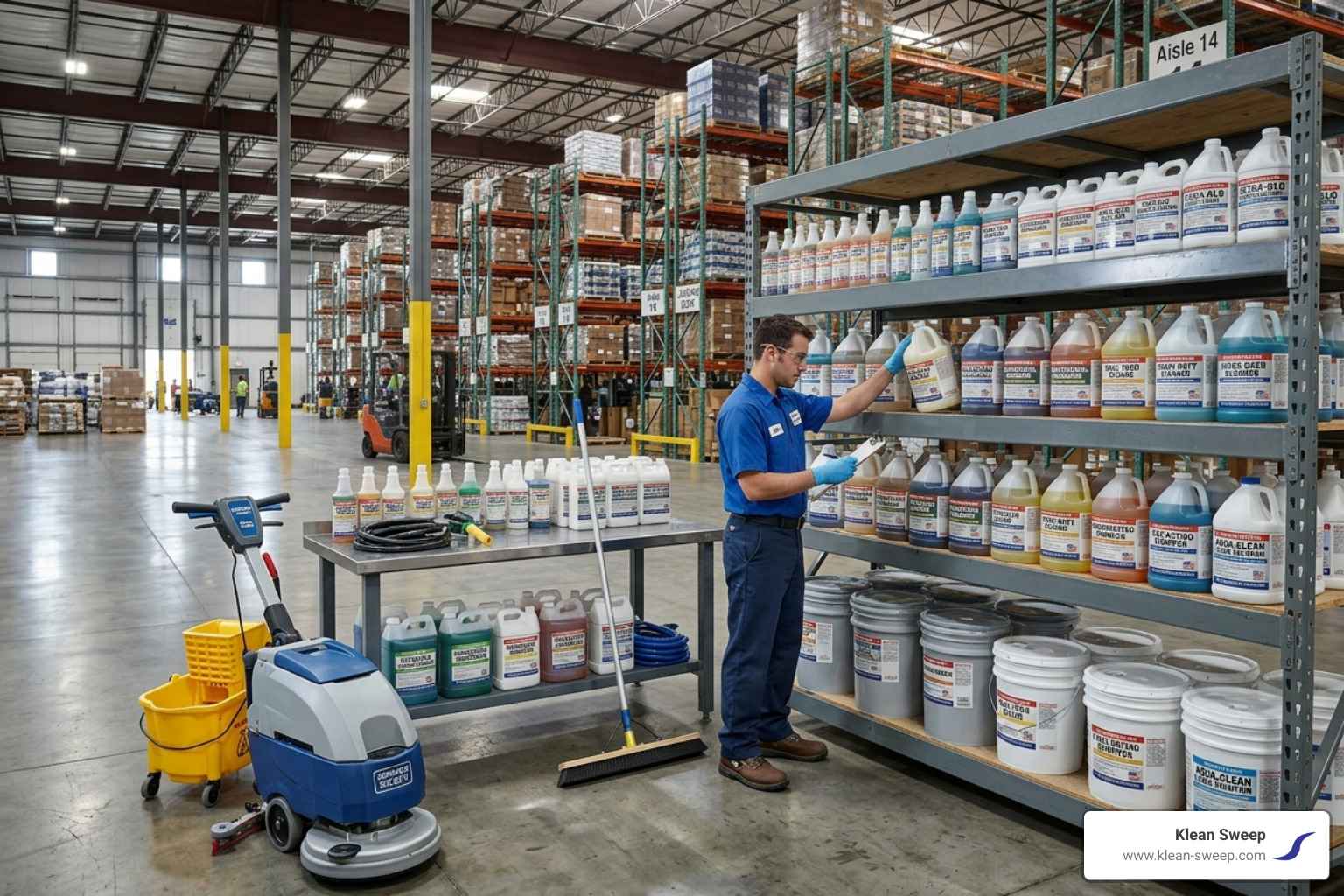
When we talk about an industrial concrete mop cleaner, we aren’t just talking about a bucket of soapy water. These solutions are engineered chemical tools designed to interact with the unique physics of concrete. As of April 2026, the industry has moved toward highly concentrated, specialized formulas that allow for massive cost savings without sacrificing cleaning power.
Concrete is naturally porous. It acts like a hard sponge, soaking up oils, inks, and carbon soot. A standard floor cleaner might sit on the surface, but a true industrial cleaner uses chemical surfactants to penetrate those pores and lift the grime to the surface.
pH-Neutral vs. Degreasers
The biggest distinction you’ll face is between daily maintenance cleaners and heavy-duty degreasers.
- pH-Neutral Formulas: These are essential for polished or sealed concrete. They clean without eating away at the protective finish or the densifiers that keep the floor shiny.
- Degreasers: Products like Zep Extra Industrial Concrete and Masonry Floor Cleaner are high-alkaline powerhouses. They are designed to break the molecular bonds of grease and heavy soil.
Porous vs. Non-Porous Surfaces
While we often think of concrete as one-size-fits-all, the way you use your concrete mop cleaner depends on the surface texture. Unsealed concrete is “open” and requires more dwell time for the cleaner to work. Non-porous surfaces, like those treated with epoxy or high-gloss sealants, require low-foaming cleaners that won’t leave a sticky film.
Industrial Degreasers vs. Daily Cleaners
| Feature | Industrial Degreaser | Daily Maintenance Cleaner |
|---|---|---|
| Primary Goal | Remove grease, oil, and ink | Remove dust and light scuffs |
| Typical Dilution | 1 oz to 10 oz per gallon | 2 oz to 4 oz per gallon |
| Rinsing Required | Yes, absolutely | Often no-rinse |
| Surface Safety | May dull polished finishes | Safe for all finishes |
| Example | Zep Extra Industrial | ShineCrete Cleaner |
Selecting Mops for Heavy-Duty Surfaces
You can have the most expensive concrete mop cleaner in the world, but if you’re using a cheap string mop from a big-box store, you’re likely just moving dirt from point A to point B. For Southern California warehouses and industrial hubs, the mop hardware is just as critical as the chemistry.
Looped-End Construction
Standard cut-end mops tend to fray and snag on the rough texture of industrial concrete. We always recommend a Concrete Wet Mop | The Mop Bucket with looped-end construction. The loops resist tangling and cover more surface area with each pass. Look for mops with a single woven tailband; this keeps the yarn spread wide for even coverage and prevents the “streaking” effect common with cheaper mops.
Yarn Durability and Tailbands
In a high-traffic Torrance facility, a mop takes a beating. Quality mops use double-wrapped mesh headbands for longevity. If you are applying sealants or heavy degreasers, you need a mop that won’t disintegrate when it hits harsh chemicals.
The Role of Dust Mops
Before the wet concrete mop cleaner ever touches the floor, you must remove the abrasive grit. A Concrete Dust Mop | The Mop Bucket is designed for this. Modern versions use “Infinity Twist” yarn to prevent fraying and are often date-coded so you can track the lifespan of your equipment.
Best Concrete Mop Cleaner Tools for Daily Maintenance
For retail spaces in Los Angeles or offices with decorative concrete, a heavy bucket and wringer might be overkill. This is where microfiber technology shines.
- Microfiber Spray Mops: These are the “secret weapon” for daily care. Models like the Rejuvenate Click n Clean (rated 4.4/5 by users) or the O-Cedar ProMist MAX offer refillable reservoirs. You can mix your own diluted concrete mop cleaner directly in the bottle.
- Swivel Head Maneuverability: Look for mops with 360-degree swivel heads. Concrete floors often have tight corners around machinery or shelving; a swivel head ensures you don’t leave “dust bunnies” in the hard-to-reach spots.
- Washable Pads: Sustainability is a big deal for us at Klean Sweep. Using reusable microfiber pads that can be laundered hundreds of times is far more eco-friendly than disposable alternatives.
Proper daily maintenance is the key to Concrete Floor Cleaning for Long-Lasting Durability, ensuring that your investment doesn’t lose its luster within the first year.
Choosing Between Manual Mops and Automatic Scrubbers
When does a manual concrete mop cleaner stop being enough? Generally, once you cross the 5,000-square-foot mark, labor costs make manual mopping inefficient.
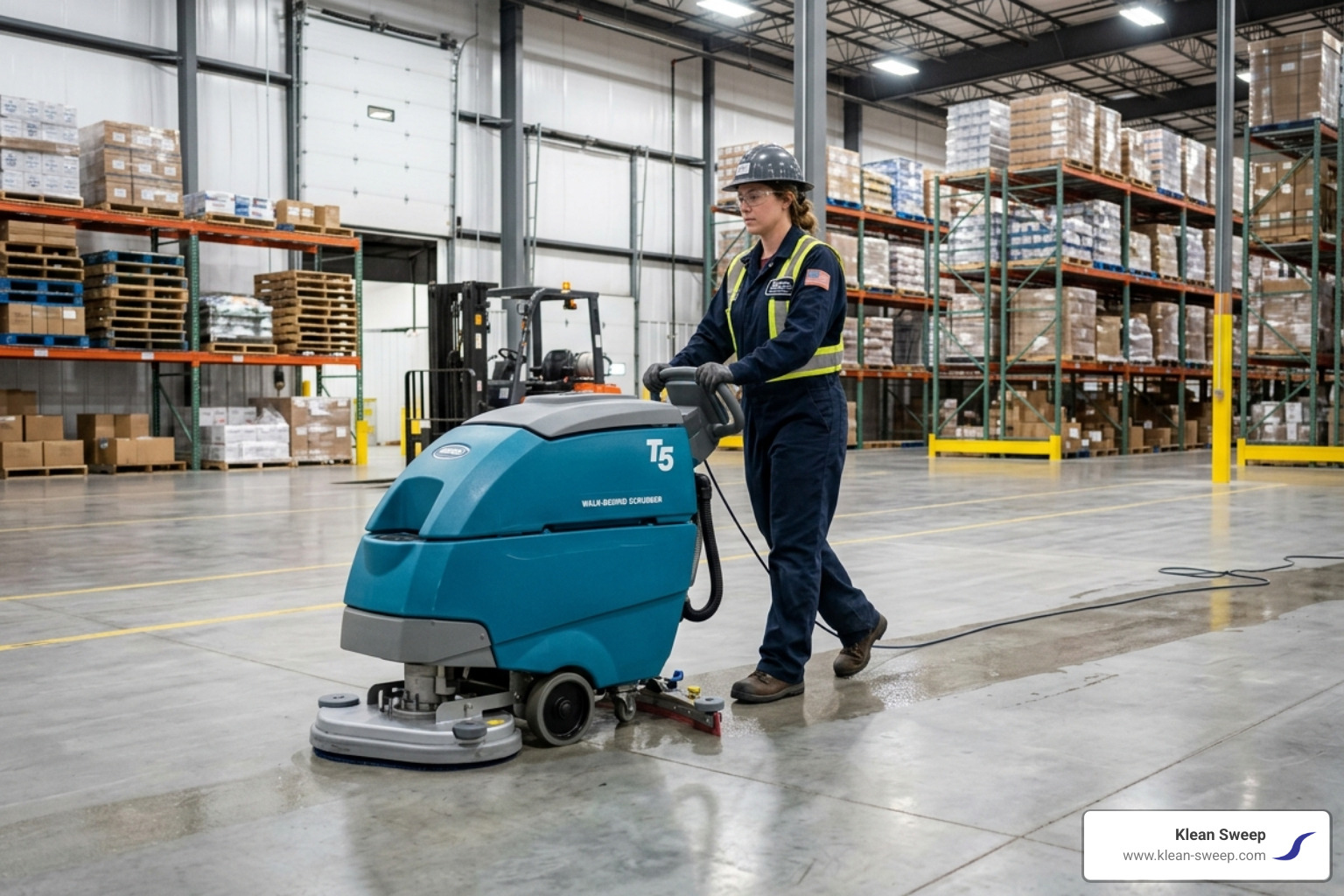
- Walk-Behind Scrubbers: For medium-sized warehouses, compact machines like the Doodle Scrub or the Genie Magic Duo are fantastic. They provide consistent pad pressure that a human with a mop simply can’t match.
- Battery-Powered Operation: Modern scrubbers like the Wrangler series allow for cord-free cleaning, which is a major safety plus in active work environments.
- Soil Extraction: The biggest advantage of a machine over a mop is that the machine vacuums up the dirty water immediately. A mop, no matter how clean, eventually starts spreading a thin layer of dirty “gray water” back onto the floor.
Professional Application and Dilution Methods
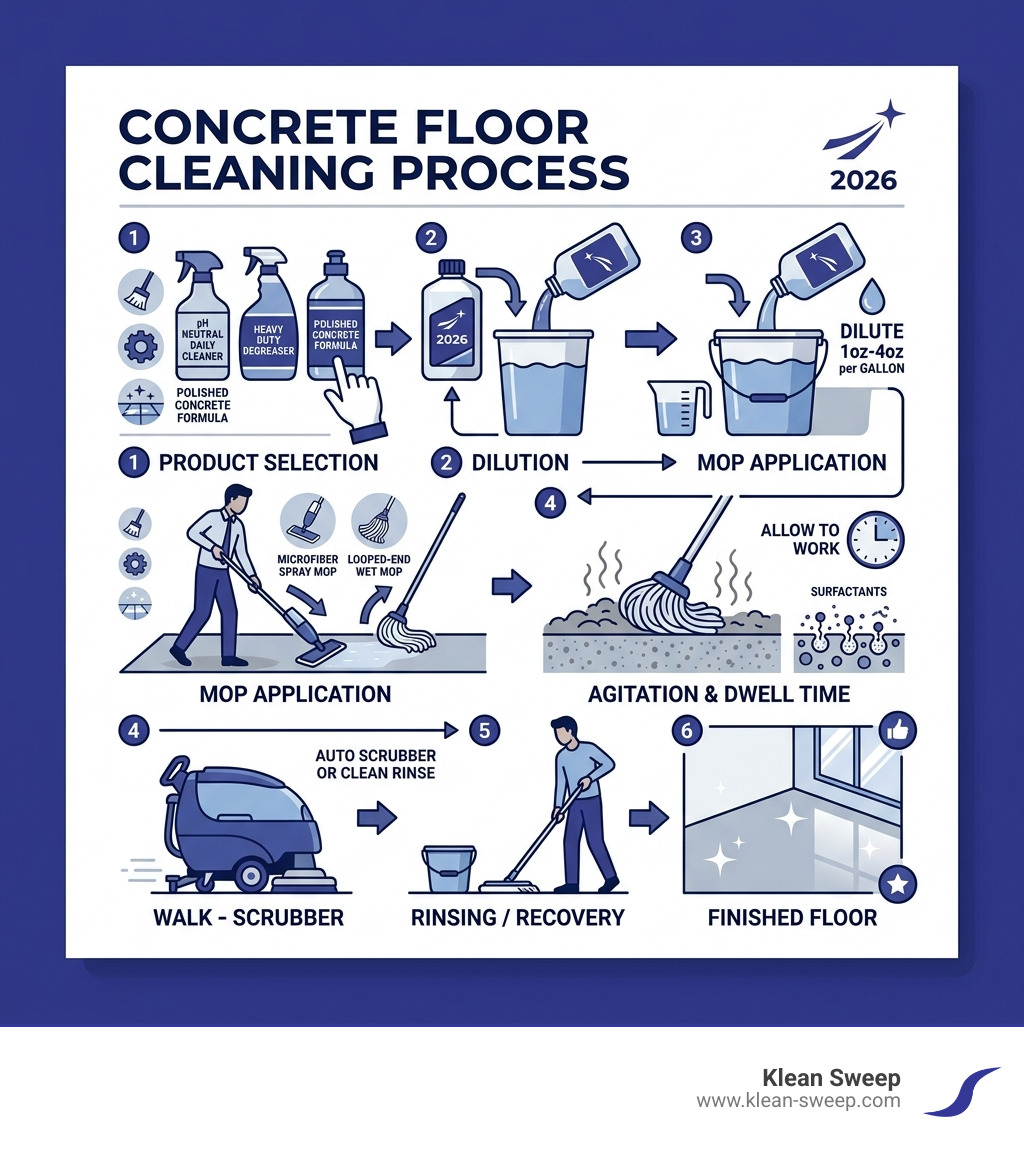
One of the most common mistakes we see in Southern California facilities is “over-pouring.” More chemical does not mean a cleaner floor; in fact, it usually means a stickier floor that attracts more dirt.
The Science of Dilution
Many professional products are incredibly concentrated. For example, Zep Heavy-Duty Concrete Cleaner can be diluted up to 1 oz per gallon for large-scale industrial cleaning. This makes it highly economical — a single gallon can treat thousands of square feet.
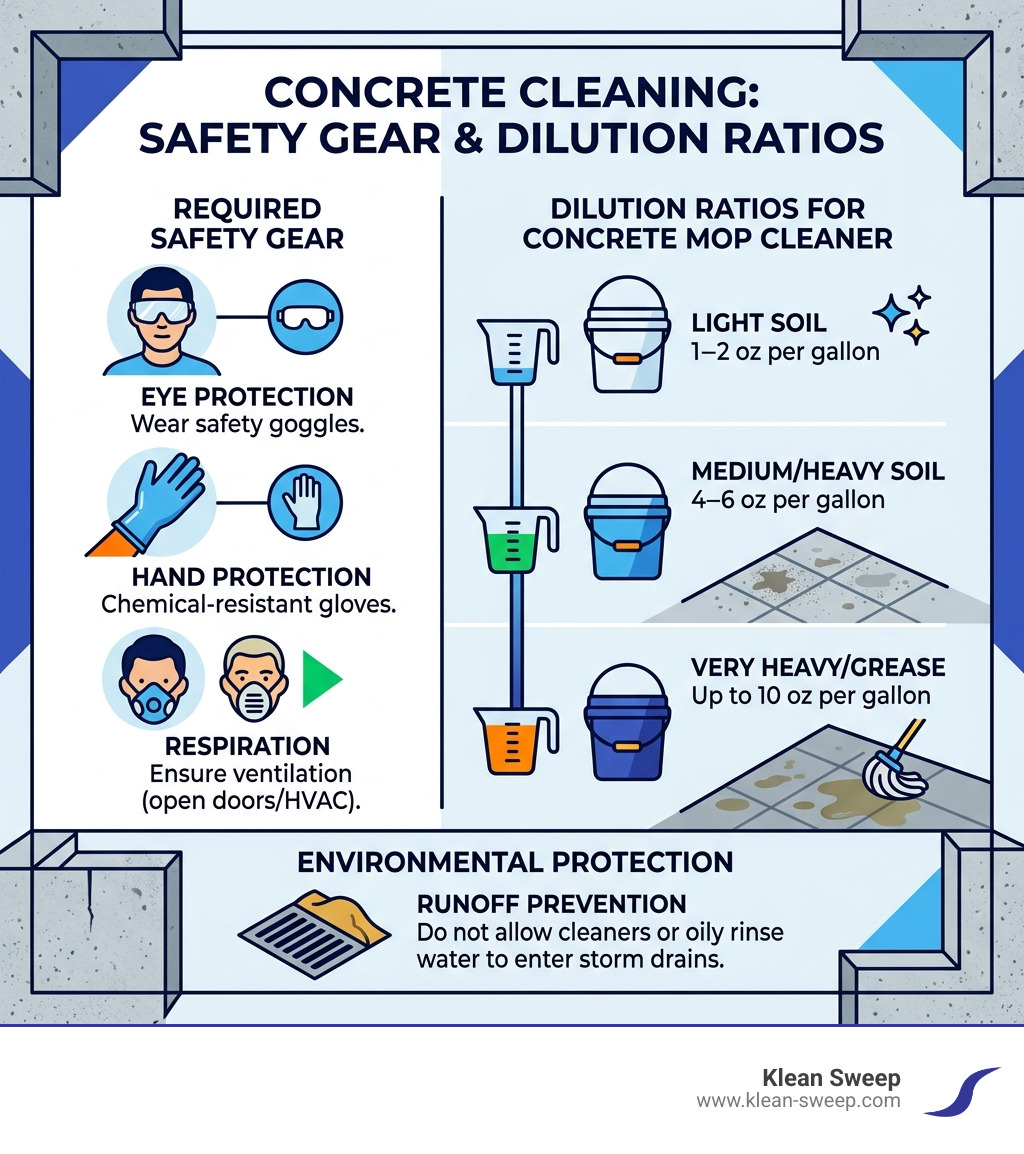
- Light Soil: 1–2 oz per gallon.
- Medium/Heavy Soil: 4–6 oz per gallon.
- Very Heavy/Grease: Up to 10 oz per gallon (or use undiluted for spot treatment).
Dwell Time and Agitation
If you are dealing with a stubborn stain, let the concrete mop cleaner sit (dwell) on the surface for 5 to 10 minutes. This gives the surfactants time to penetrate the pores. After the dwell time, agitate the area with a stiff-bristled brush or a heavy-duty mop before rinsing.
For those managing complex facilities, you can find more info about concrete floor care on our specialized service pages.
How to Apply a Concrete Mop Cleaner Safely
Safety isn’t just a suggestion; in California, it’s a regulatory requirement. When using industrial-strength cleaners, you must protect both your staff and the environment.
- Personal Protective Equipment (PPE): Always wear chemical-resistant gloves and safety goggles. Industrial degreasers can cause skin irritation or chemical burns if handled improperly.
- Ventilation: Many fast-acting cleaners have strong vapors. Ensure warehouse doors are open or HVAC systems are running.
- California Prop 65 Warnings: Many industrial cleaners contain chemicals flagged by California. Always check the label and maintain a Safety Data Sheet (SDS) on-site.
- Runoff Prevention: This is crucial for us in Los Angeles. You cannot allow cleaning chemicals or oily rinse water to enter the storm drains. Use berms or vacuum extraction to contain the waste.
- Food-Safe Compliance: If you’re cleaning a food processing plant, ensure your cleaner is approved for federally inspected meat and poultry plants. Zep Extra Industrial, for instance, meets these stringent requirements.
Effective Cleaning for Masonry and Tile
The beauty of a high-quality concrete mop cleaner is its versatility. Most industrial formulas are also safe for masonry, brick, and unglazed tile.
- Brick and Stone: These surfaces are even more porous than concrete. Use a slightly more diluted solution to avoid “bleaching” the natural color of the brick.
- Ink and Soot Removal: In printing shops or manufacturing facilities, carbon soot and ink spills are common. Industrial cleaners are specifically formulated to break down these pigments.
- The “Composition Floor” Warning: Never use heavy-duty concrete cleaners on composition floors (like VCT or linoleum). The high pH will melt the wax and can permanently damage the floor material.
Maintenance for Polished and Sealed Concrete
Polished concrete is the “diva” of the flooring world. It looks stunning, but it requires a specific touch to maintain that high-gloss finish.
The pH Balance Factor
Polished concrete is treated with densifiers (like lithium or sodium silicates) that react with the concrete to create a hard, glass-like surface. If you use an acidic cleaner, you will “etch” the surface, turning that beautiful shine into a dull, cloudy mess.
Professional cleaners like ShineCrete maintain a pH between 11.0 and 12.0. This is alkaline enough to clean but balanced enough to protect the densified surface.
Gloss Retention Tips
To keep your floors looking like a mirror, follow these April 2026 best practices:
- Daily Dusting: Use a microfiber dust mop every single day. Dust acts like sandpaper under foot traffic.
- No-Rinse Formulas: Use a cleaner that dries streak-free. ShineCrete is a popular choice because it leaves no sticky residue and features a light apple scent that’s pleasant for retail environments.
- Buffing: Occasionally, after using a concrete mop cleaner, use a high-speed burnisher with a diamond-impregnated pad to “pop” the shine back into the floor.
- Slip Resistance: Contrary to how they look, polished floors aren’t necessarily slippery. However, using a cleaner that leaves a film can reduce slip resistance. Stick to residue-free, professional-grade solutions.
Conclusion
Choosing the right concrete mop cleaner is about more than just aesthetics; it’s about protecting your facility’s infrastructure and ensuring a safe environment for your team. From the heavy-duty degreasing needed in a Torrance warehouse to the delicate pH-balanced care required for a Los Angeles showroom, the right combination of chemistry and hardware makes all the difference.
At Klean Sweep, we’ve been the trusted partner for Southern California property managers since 1969. As a family-owned business, we pride ourselves on using state-of-the-art equipment and eco-friendly methods to keep your floors in peak condition. Whether you need the right products for your in-house team or you’re looking for professional intervention to restore a neglected floor, we are here to help.
Don’t let dirt and grime degrade your investment. Schedule Professional Concrete Floor Cleaning in Torrance, CA today and let us give your facility the “Clean Slate” it deserves.