What Is Commercial Power Washing — and Why It Matters for Your Property
Commercial power washing is the use of high-pressure, often heated water to deep-clean exterior surfaces on commercial and industrial properties. Here’s a quick breakdown of what that means for you as a property manager:
What commercial power washing covers:
- Parking lots, parking structures, and concrete floors
- Building exteriors, sidewalks, and walkways
- Dumpster pads, loading docks, and graffiti removal
- Stormwater drainage areas and storm drain surrounds
Why it matters:
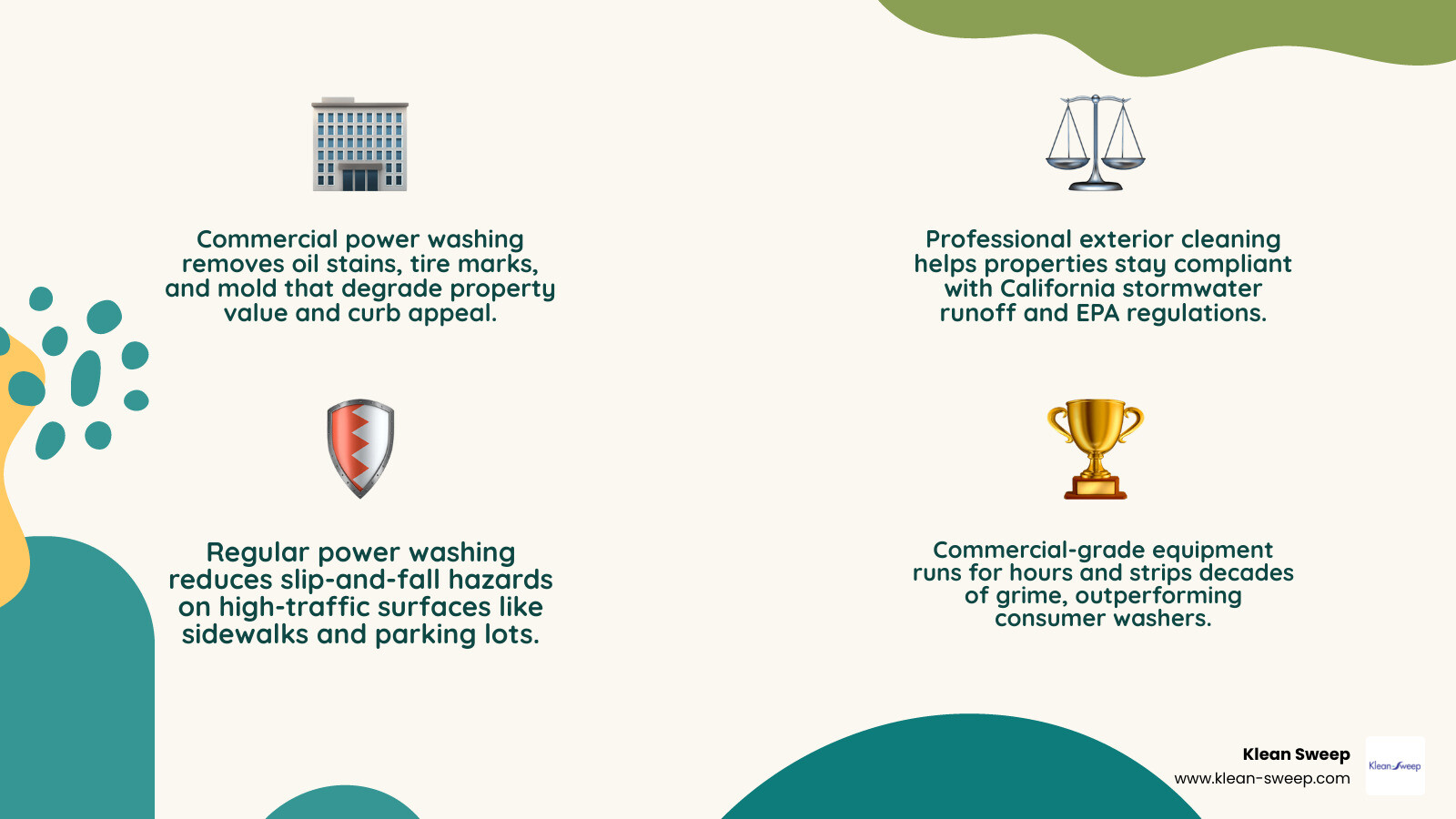
- Removes oil stains, tire marks, mold, and grime that standard cleaning can’t touch
- Helps properties stay compliant with California stormwater runoff regulations
- Protects property value and improves curb appeal for tenants and clients
- Reduces slip-and-fall hazards on high-traffic exterior surfaces
The exterior of a commercial property is the first thing visitors, tenants, and clients notice. Dirt buildup, oil stains, and graffiti don’t just look bad — they signal neglect, create liability risks, and can put you in violation of local environmental codes.
The right power washing service isn’t just about clean surfaces. It’s about protecting your investment, staying compliant, and keeping your property competitive in a demanding Los Angeles market.
I’m Jana Hanson, and I’ve been overseeing exterior maintenance operations at Klean Sweep — the company my father Norm Basmajian founded in 1969 — since taking over in 2012, growing it into one of the largest exterior maintenance companies in the Los Angeles area. Commercial power washing has been a core part of what we do for decades, and this guide reflects everything we’ve learned from real-world experience on commercial and industrial sites across Southern California.
The Technical Specs of Commercial Power Washing Equipment
When you are looking to hire a professional service or understand what goes into a serious commercial-grade cleanup, you need to know about the machinery. A standard light-duty pressure washer simply won’t cut it. Commercial equipment is built to run for hours on end, stripping away decades of grime without breaking a sweat.
To help you understand the difference, let’s look at how commercial-grade machines stack up against standard light-duty models:
| Feature | Light-Duty / Standard | Heavy-Duty / Commercial |
|---|---|---|
| Water Pressure (PSI) | 1,500 – 2,500 PSI | 3,000 – 5,000+ PSI |
| Water Flow (GPM) | 1.2 – 2.0 GPM | 4.0 – 10.0+ GPM |
| Pump Type | Axial | Triplex |
| Water Temperature | Cold Water Only | Hot Water & Steam Capable (up to 200°F+) |
| Drive Type | Direct Drive | Belt Drive or Gear Drive |
| Lifespan | 50 – 100 hours | Thousands of hours with proper maintenance |
If you want to understand the basics of how water pressure works before diving into heavy industrial specs, check out our Beginners Guide to Pressure Washing.
Understanding PSI, GPM, and Pump Types
In commercial power washing, two metrics rule supreme: PSI (Pounds per Square Inch) and GPM (Gallons per Minute).
- PSI (Pounds per Square Inch): This is the stripping force of the water. It represents how hard the water hits the surface. High PSI is great for stripping paint, clearing tough graffiti, or blasting through hardened deposits.
- GPM (Gallons per Minute): This is the volume of water flowing through the machine. While many people focus on PSI, industry professionals know that GPM is actually the more critical number. GPM dictates how fast the machine rinses away the dirt. A machine with high PSI but low GPM will leave you cleaning a tiny patch of concrete for hours. High GPM allows our crews to sweep large areas clean in a fraction of the time.
The heart of any pressure washer is its pump. Light-duty machines use axial pumps, which are directly connected to the engine drive shaft. They run hot, wear out quickly, and are usually cheaper to replace than repair.
Commercial machines utilize triplex pumps. These pumps feature ceramic plungers and operate much cooler and more efficiently. A triplex pump is designed for continuous, daily use and can be rebuilt and serviced for decades, making it the industry standard for commercial durability.
Hot Water vs. Cold Water Systems
The choice between hot and cold water depends entirely on what you are trying to clean.
- Cold Water Systems: These are excellent for removing standard dirt, mud, loose paint, and sand. They are highly efficient, require less maintenance, and are perfect for general building rinses.
- Hot Water Systems: If you are dealing with grease, oil, fuel spills, or gum, cold water won’t do much more than push the mess around. Hot water pressure washers use a heating coil (usually diesel-fired) to heat the water up to 200°F or more. Just like washing greasy dishes in a sink, hot water melts oil and grease on contact, lifting it out of porous concrete floors and parking structures.
Additionally, the drive system matters. Direct drive pumps are compact and cost-effective, but they spin at high speeds, transferring engine heat directly to the pump. Belt drive pumps use a pulley system to run the pump at a much lower RPM. This reduces vibration, keeps the pump cool, and dramatically extends the lifespan of the equipment.
Essential Accessories and Eco-Friendly Chemicals
A professional commercial power washing setup is more than just a pump and a motor. To tackle massive parking structures in Pasadena or commercial plazas in Beverly Hills efficiently, crews rely on specialized accessories and target-specific chemicals.
Professional Nozzles, Hoses, and Surface Cleaners
Using the wrong nozzle can ruin a commercial exterior. Professional setups use quick-connect color-coded nozzles to adjust the spray angle:
- 0-Degree (Red): A concentrated pinpoint beam. Rarely used on concrete as it can easily gouge and damage the substrate.
- 15-Degree (Yellow): Used for heavy-duty stripping and concrete cleaning.
- 25-Degree (Green): The standard for washing down masonry, brick, and general commercial surfaces.
- 40-Degree (White): A wide, gentle spray ideal for rinsing windows or delicate facades.
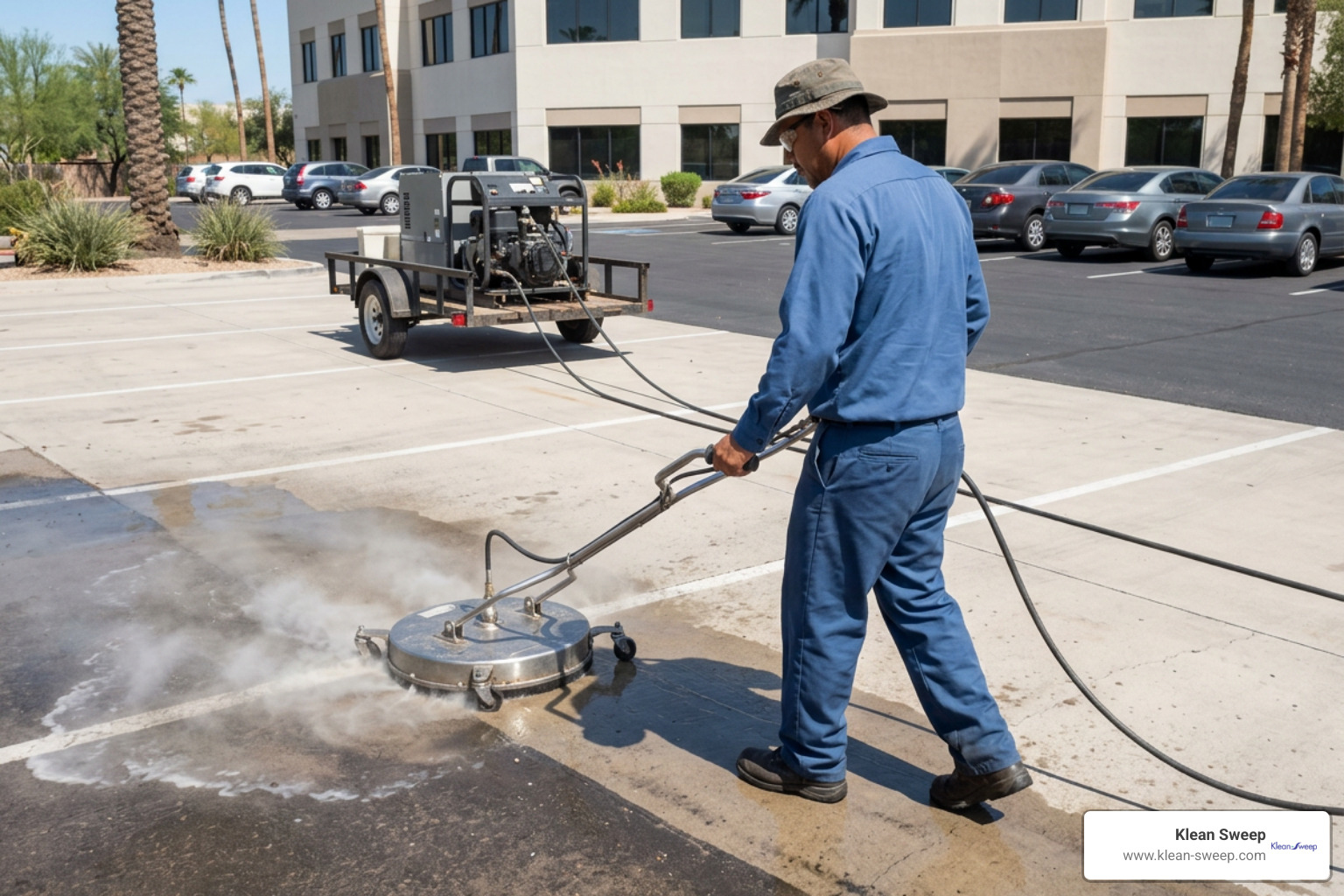
For large-scale flatwork, relying on a handheld wand alone is a recipe for disaster. It takes forever and often leaves behind “zebra striping”—unsightly, uneven clean lines. To combat this, we use flat surface cleaners. These are round, dome-like attachments with rotating spray bars underneath. They glide across concrete, distributing high-pressure hot water evenly to clean large areas up to ten times faster than a standard wand.
To protect your property, our crews use high-quality, non-marking gray rubber hoses. Standard black hoses can leave dark scuff marks across freshly cleaned concrete floors, defeating the purpose of the wash. If you want to see how a professional clean transforms your surfaces, take a look at how to Stop the Grime with a Power Washed Concrete Floor.
Safe Detergents and Wastewater Reclamation
In Southern California, you cannot simply wash grime down the storm drain. Doing so violates the federal Clean Water Act and local municipal regulations, which can result in thousands of dollars in fines for property owners.
Our approach to chemical cleaning and water management includes:
- Biodegradable Degreasers: We use environmentally safe, EPA-compliant detergents that break down oils without harming local landscaping or ecosystems.
- Wastewater Reclamation Systems: This is where professional services differ from amateur operations. We utilize specialized vacuum recovery systems. As the hot water cleans the surface, our reclamation tools vacuum up the dirty water, filtering out oils and solids so it can be safely discharged or recycled according to strict local guidelines.
Commercial Exterior Maintenance Applications
Commercial properties take a beating from heavy vehicle traffic, pedestrian use, and environmental pollutants. Regular maintenance keeps your facility looking pristine and prevents long-term degradation.
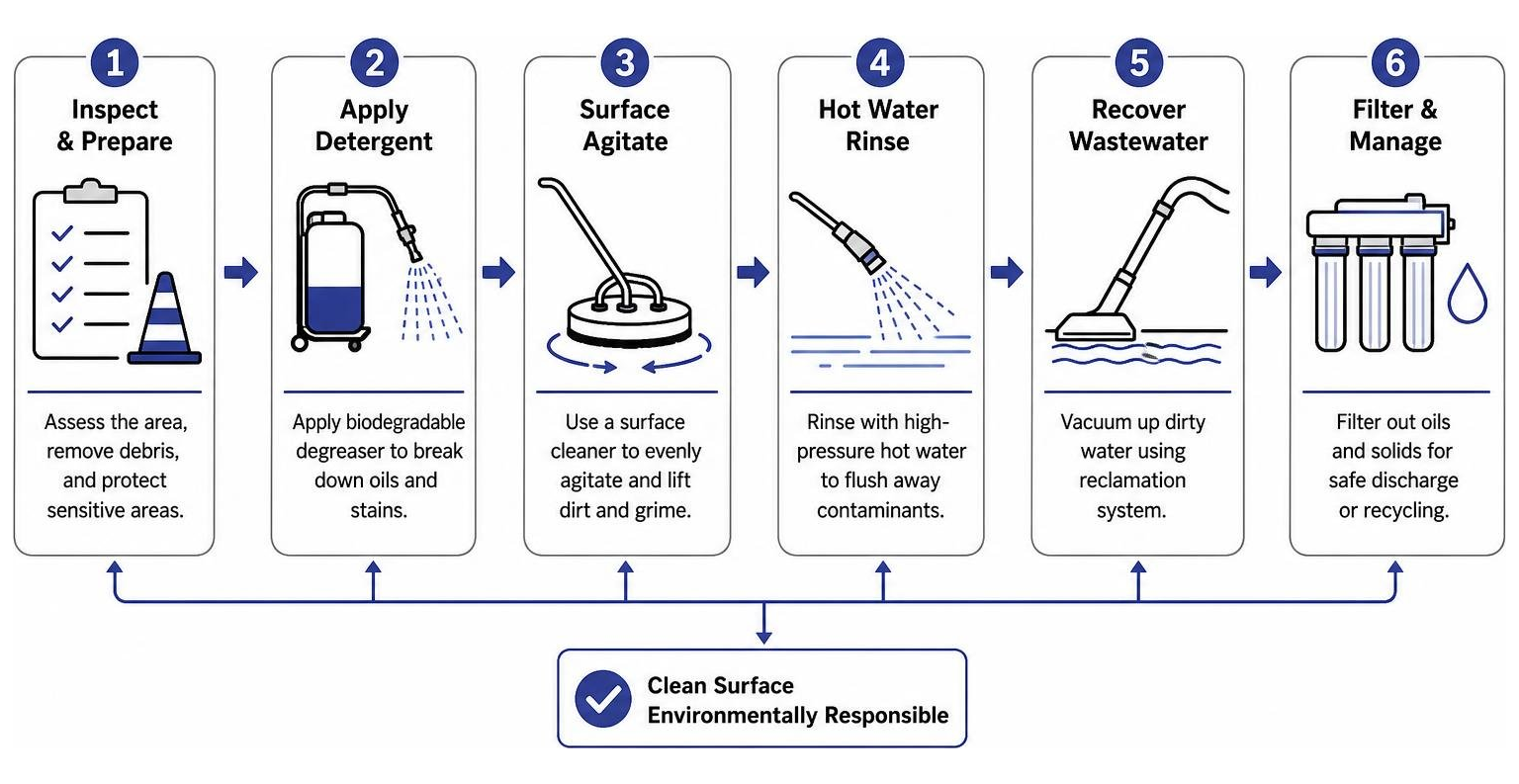
Key Applications of Commercial Power Washing
Different areas of your property require distinct cleaning approaches:
- Parking Structures and Lots: Oil leaks, tire marks, and exhaust soot build up quickly. Regular hot water pressure washing prevents these contaminants from penetrating deep into the concrete and wearing down structural sealants.
- Sidewalks and Walkways: High-pedestrian zones in areas like Torrance, CA, and Carson, CA, accumulate spilled drinks, dropped food, and discarded chewing gum. Keeping these clean prevents slip-and-fall hazards and presents a welcoming entryway.
- Dumpster Pads: These are prime breeding grounds for bacteria, pests, and foul odors. Regular sanitizing with hot water and heavy-duty degreasers is essential for health code compliance.
- Graffiti Removal: Tagging can ruin the professional look of a building overnight. Using specialized hot-water setups, we can peel graffiti off brick, concrete, and metal without damaging the underlying surface.
For a deeper look into our specialized cleaning solutions, explore our Steam Cleaning Pressure Washing Services Near You.
Why Professional Commercial Power Washing Outperforms DIY
It can be tempting to buy a pressure washer and task an on-site janitor with cleaning your sidewalks. However, DIY commercial cleaning often leads to unexpected headaches:
- Equipment and Maintenance Costs: Professional-grade rigs cost thousands of dollars, and their pumps and unloader valves require strict maintenance schedules to prevent costly field breakdowns.
- Safety Hazards: High-pressure water (up to 5,000 PSI) can easily slice through boots, inject water into skin, or shatter glass windows if handled incorrectly.
- Property Damage: An inexperienced operator can easily etch concrete, strip paint off structural beams, or ruin delicate historical masonry.
- Environmental Compliance: In cities like Los Angeles and Brea, CA, environmental inspectors actively monitor commercial properties for illegal runoff. Professional teams come equipped with the reclamation gear needed to keep you compliant.
To see how we tailor our services to local businesses, visit Our Services Steam Cleaning and Pressure Washing in Torrance CA.
Frequently Asked Questions About Commercial Exterior Cleaning
What is the difference between pressure washing and power washing?
While the terms are often used interchangeably, the key difference is heat. Pressure washing uses cold water under high pressure to blast away dirt. Power washing uses heated water (often turning to steam) to break down organic matter, grease, and oil. For industrial concrete and parking structures, power washing is highly recommended. Learn more about preserving your concrete with our guide on Concrete Floor Cleaning for Long Lasting Durability.
How often should a commercial parking structure be power washed?
For most high-traffic commercial parking structures in Southern California, we recommend a thorough power wash at least twice a year. Properties with extremely high traffic or those near industrial zones may require quarterly cleanings to manage oil buildup and safety hazards.
What are the environmental regulations for wastewater runoff in California?
Under the Clean Water Act and California’s regional water quality control boards, it is illegal to discharge non-stormwater runoff into the storm drain system. This means all wash water containing soap, oil, grease, or heavy dirt must be captured, filtered, and reclaimed. Professional companies use specialized vacuum systems to remain fully compliant. You can read more about our eco-friendly practices on Our Services page.
Conclusion: Partnering with the Right Exterior Maintenance Experts
Maintaining a clean, safe, and compliant commercial property is a continuous job. Partnering with an experienced exterior maintenance provider ensures your property remains in top tier condition year-round without the stress of managing equipment, safety risks, or environmental fines.
At Klean Sweep, we have been family-owned and operated since 1969. Based in Torrance, CA, we proudly serve the greater Los Angeles area, including Carson, Beverly Hills, Pasadena, and Brea. We don’t just stop at power washing — our state-of-the-art fleet handles street sweeping, day porter services, stormwater cleaning, and comprehensive concrete floor care.
Ready to elevate your property’s curb appeal and stay environmentally compliant? Explore The Ultimate Guide to Commercial Pressure Washing Services or contact us today to build a customized maintenance plan for your facility.