

Why Choosing the Right Mop for Polished Concrete Floors Actually Matters
The best mop for polished concrete floors is a flat microfiber mop — used damp, not wet — paired with a pH-neutral cleaner. Here’s a quick breakdown:
| Priority | Best Choice |
|---|---|
| Everyday home use | Flat microfiber mop (e.g., O-Cedar or Rejuvenate) |
| Large commercial spaces | Walk-behind scrubber (e.g., Mopit Mid) |
| Sealed floors with spills | Cordless spin mop (e.g., BISSELL SpinWave) |
| Mop material | Microfiber — holds up to 7x its weight in water |
| What to avoid | Sponge mops, steam mops, soaking-wet string mops |
Polished concrete looks sharp and lasts for decades — but only if you maintain it correctly. The wrong mop can dull the finish, leave streaks, or even damage the sealer over time.
Unlike tile or hardwood, polished concrete has a surface that reacts badly to excess moisture, abrasive fibers, and harsh chemicals. That means your standard string mop or steam cleaner could be doing more harm than good every time you clean.
The good news? Once you know what to look for, keeping polished concrete looking its best is straightforward and affordable.
I’m Jana Hanson, and I’ve spent years growing Klean Sweep — a family business my father Norm started in 1969 — into one of the largest exterior and floor maintenance companies in the Los Angeles area. Finding the best mop for polished concrete floors is something our teams deal with across dozens of commercial properties every week. In the sections below, I’ll walk you through exactly what works, what doesn’t, and how to choose the right tool for your specific space.

What Makes the Best Mop for Polished Concrete Floors?
When we talk about the best mop for polished concrete floors, we aren’t just looking for something that moves water around. We need a tool that respects the delicate mechanical shine of the concrete. Polished concrete isn’t just “shiny cement”; it’s a surface that has been refined through progressively finer diamond grinding segments.
Microfiber: The Gold Standard
The most critical feature of a concrete mop is the material. Microfiber is the undisputed king here. Why? Because microfiber can hold up to seven times its weight in water, allowing you to damp-mop effectively without leaving puddles. On a polished surface, excess water is the enemy—it can react with sealers or penetrate tiny pores, eventually leading to dulling or even micro-cracks.
Microfiber is also non-abrasive. While a stiff-bristled brush or a rough cotton mop might seem “heavy-duty,” they can actually create microscopic scratches that scatter light, making your floor look foggy over time.
Maneuverability and Design
A swivel head is a non-negotiable feature. Polished concrete often spans large, open areas but also tucks into tight corners and around kitchen islands or warehouse racking. A 360-degree swivel allows you to maintain the “figure-8” mopping motion that professionals use to trap dirt rather than pushing it into the corners.
Water Volume Control
The best mop for polished concrete floors must allow for precise moisture control. Whether it’s a spray mop with an on-demand trigger or a spin mop with a high-speed wringing bucket, you want the pad to be damp to the touch, not dripping.
Top Mop Types for Maintaining Concrete Finishes
In April 2026, the market for floor care has evolved to include everything from simple manual sticks to high-tech robotic scrubbers. Depending on whether you are cleaning a trendy Torrance loft or a massive industrial warehouse in Los Angeles, your “best” choice will vary.
Flat Microfiber Mops
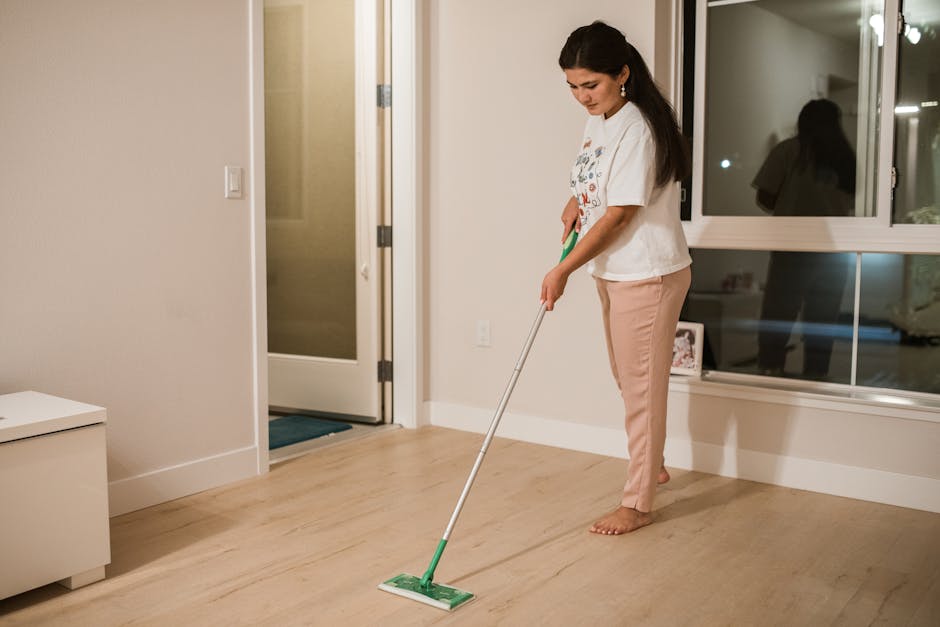
These are the workhorses of the industry. They consist of a wide, flat plastic or metal frame with a Velcro-attached microfiber pad. They are incredibly lightweight and allow you to swap out dirty pads for clean ones as you move from room to room. This prevents “cross-contamination”—the fancy term for spreading bathroom dirt into your living room.
Spray Mops
Spray mops, like the Rejuvenate Click n Clean, are perfect for quick spills. They feature a refillable bottle attached to the handle. On polished concrete, this is great because it ensures you only use a fine mist of cleaner, preventing the “soaking” effect that ruins the gloss.
Spin Mops
The O-Cedar EasyWring system is highly rated (4.3/5 stars) for frequent cleaning. The foot-pedal spin bucket allows you to wring the microfiber head until it’s nearly dry, which is exactly what polished concrete needs.
Cordless Spin Mops
For those who want the machine to do the work, the SpinWave Cordless Hard Floor Spin Mop uses rotating pads to scrub away sticky messes. It provides about 20 minutes of runtime, which is usually plenty for a standard residential floor.
Industrial Walk-Behind Scrubbers
If you’re managing a commercial space, a manual mop isn’t going to cut it. The Mopit Mid Floor Scrubber is a game-changer. It can clean up to 15,500 square feet on a single charge. It applies fresh water, scrubs with a brush, and vacuums up the dirty water all in one pass, leaving the floor bone-dry and streak-free.
Choosing the Best Mop for Polished Concrete Floors in Residential Settings
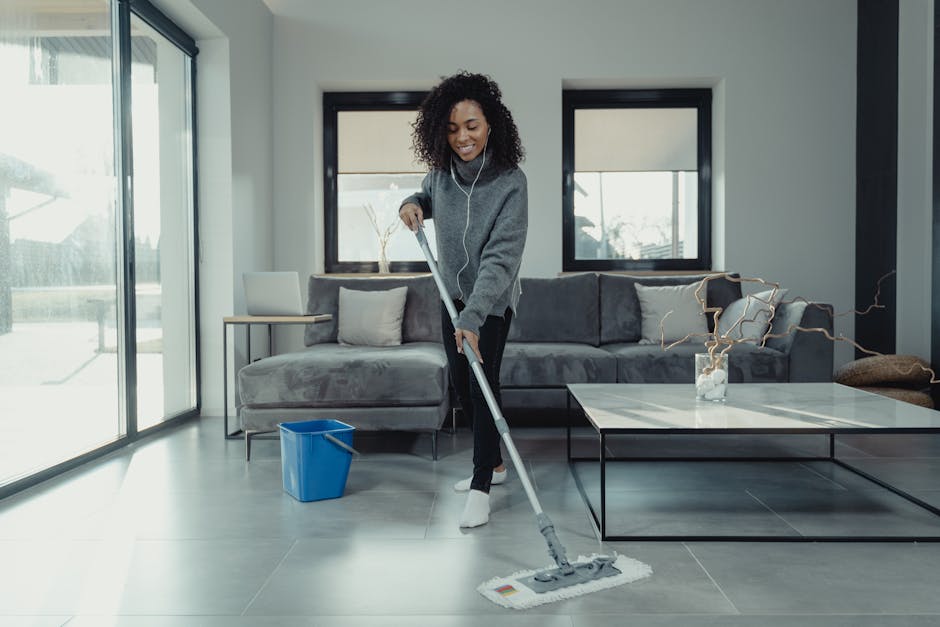
For home use in Southern California, you want something that fits in a broom closet. A high-quality microfiber flat mop with a telescoping handle is usually the best mop for polished concrete floors in a house. Look for pads that are machine-washable; some high-grade microfiber can withstand hundreds of washes, making them much more eco-friendly than disposable alternatives.
The Best Mop for Polished Concrete Floors in Commercial Spaces
In commercial environments, efficiency is everything. We often recommend a combination of tools. A wide-path dust mop (up to 36 inches) is used daily to remove grit, while an automatic scrubber handles the weekly deep clean.
| Feature | Manual Flat Mop | Automatic Scrubber |
|---|---|---|
| Coverage Speed | Slow (1,000 sq ft/hr) | Fast (12,000+ sq ft/hr) |
| Water Recovery | Manual/Evaporation | Vacuum Suction (Immediate) |
| Agitation | Human Power | Motorized Brush |
| Best For | Small offices, homes | Warehouses, retail stores |
For specific maintenance, tools like the Ameripolish SmartFloor Maintenance EZ Mop are designed to work with specific “grit” pads that actually help maintain the floor’s refinement as you clean.
Essential Cleaning Solutions and Methods
You can have the most expensive mop in the world, but if you fill it with the wrong chemicals, you’ll ruin your floor. Polished concrete is chemically sensitive.
The pH-Neutral Rule
Always use a pH-neutral cleaner. Polished concrete is alkaline by nature. If you use an acidic cleaner (like vinegar or lemon juice), it will “etch” the surface—essentially a tiny chemical burn that eats away at the polish. If you use a high-alkaline cleaner (like bleach or ammonia), it can leave a cloudy residue and weaken the sealers.
For a gentle, eco-friendly option, many homeowners find that a tiny bit of Castile soap or mild dish soap works wonders. However, for the best results, look for specialized concrete cleaners that contain silicate densifiers. These products actually deposit a small amount of hardening minerals back into the floor as you mop, helping to keep the surface dense and stain-resistant.
Avoiding the “Sticky” Floor
One of the most common complaints we hear at Klean Sweep is that floors feel “tacky” or “sticky” after mopping. This is usually caused by surfactant residue. Many all-purpose cleaners are loaded with soaps that stay on the floor and act like a magnet for dust. This is why proper concrete floor cleaning for long-lasting durability requires using the correct dilution ratios—less is almost always more.
Step-by-Step Guide to Mopping Polished Concrete
Proper technique is just as important as the tool. If you mop a dirty floor without prepping it, you’re essentially just rubbing sandpaper (dirt and grit) into your beautiful finish.
Step 1: Dry Dust Mopping (The Most Important Step!)
Before a drop of water touches the floor, you must remove all loose debris. We recommend using a dedicated microfiber dust mop or a vacuum with a soft brush attachment. This prevents grit from scratching the floor during the wet mopping phase. In high-traffic Los Angeles commercial spaces, this should happen daily.
Step 2: Prepare Your Solution
Mix your pH-neutral cleaner with cool water. Avoid hot water, as it can cause some cleaners to evaporate too quickly, leaving streaks. If you aren’t using a spray mop, use the “two-bucket” method: one bucket for your cleaning solution and one with clean water to rinse your mop.
Step 3: The Figure-8 Pattern
Don’t mop in straight lines or random circles. Use a “figure-8” motion, keeping the leading edge of the mop forward. This traps the dirt in the fibers of the microfiber pad rather than just pushing it around. As you work, move backward so you never step on the wet floor you just cleaned.
Step 4: Buffing for Shine
If you notice any water spots or streaks as the floor dries, go back over the area with a clean, dry microfiber pad. This “buffing” action removes any remaining minerals from the water and restores that high-gloss “wet look.” For professional-grade results, especially for concrete floor cleaning in Torrance, CA, we sometimes use high-speed burnishers to “pop” the shine after a deep clean.
Frequently Asked Questions about Concrete Mopping
Can I use a steam mop on polished concrete?
We generally advise against it. While steam mops are great for sanitizing tile, the intense heat can cause the sealers and densifiers on polished concrete to expand and contract at different rates than the concrete itself. Over time, this can lead to “spalling” or a breakdown of the protective top layer, leading to a dull, hazy appearance. Stick to damp mopping with cool or lukewarm water.
How often should I mop my floors?
It depends on the “footfall.”
- Residential: Dust mop every 2 days; damp mop once a week.
- Commercial (Low Traffic): Dust mop daily; damp mop 1–2 times per week.
- Commercial (High Traffic): Dust mop multiple times daily; damp mop (or use an auto-scrubber) every night. The goal is to keep grit off the floor, as grit is the primary cause of loss of shine.
What mops should be avoided on polished concrete?
- Sponge Mops: These tend to push dirty water into the pores of the concrete and leave heavy streaks.
- String Mops (Cotton): They hold too much water and often leave behind lint.
- Abrasive Scrubbing Pads: Never use green or black scrubbing pads on a polished surface unless you are intentionally trying to strip the finish. Stick to white or red pads for light cleaning.
Conclusion
Choosing the best mop for polished concrete floors doesn’t have to be complicated. By sticking to microfiber, using pH-neutral cleaners, and avoiding the temptation to “soak” the floor, you can keep your concrete looking like a mirror for years to come.
At Klean Sweep, we’ve been a family-owned staple in the Southern California community since 1969. We know that polished concrete is a significant investment for any property owner in Torrance or Los Angeles. That’s why we use state-of-the-art equipment and environmentally friendly methods to ensure your floors don’t just look clean—they stay protected.
If your floors have lost their luster or you’re looking for a professional maintenance partner to take the guesswork out of your cleaning schedule, we’re here to help. From pressure washing to industrial-scale Professional Concrete Floor Cleaning Services, our team has the experience to handle it all. Give us a call today and let’s keep those floors shining!