What Is Pressure Washing — and Why It Matters for Commercial Properties
Pressure washing is the use of high-pressure water spray to remove grease, grime, mold, dirt, and stains from hard surfaces — and for commercial and industrial property managers, it’s one of the most effective tools for maintaining safe, compliant, and professional-looking exteriors.
Quick answer:
| What you want to know | The short answer |
|---|---|
| What is pressure washing? | High-pressure water (750–30,000 PSI) used to clean hard surfaces |
| How is it different from power washing? | Power washing heats the water; pressure washing uses cold water |
| Best for commercial use? | Parking lots, loading docks, concrete walkways, dumpster pads |
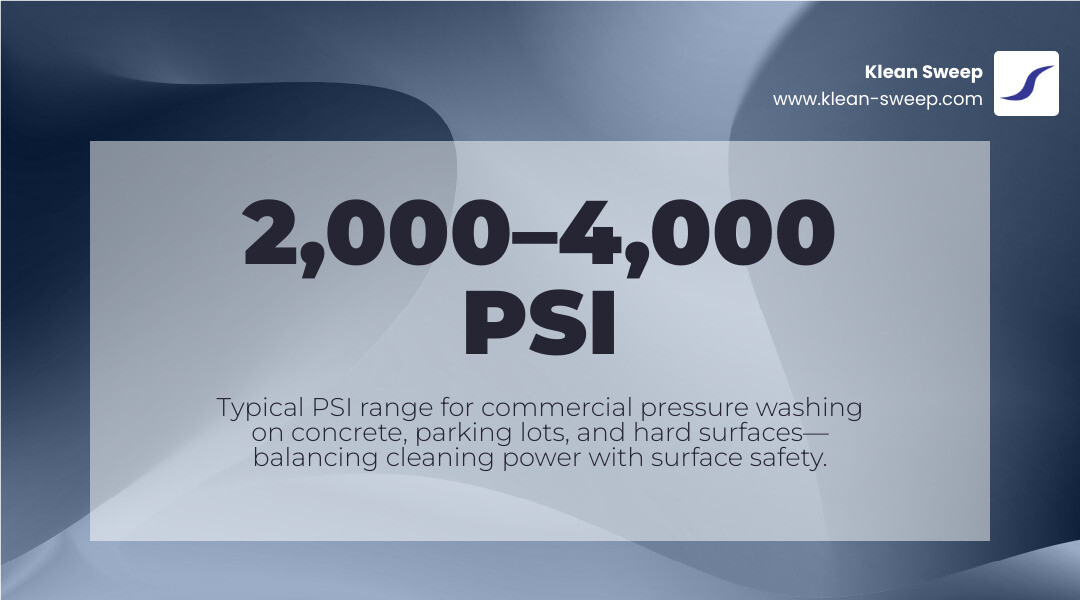
| Typical commercial PSI range | 2,000–4,000 PSI depending on the surface |
| Water efficiency vs. garden hose? | Uses 1.5–2.5 GPM vs. 10.5+ GPM for a standard hose |
For property managers in Los Angeles, pressure washing isn’t just about appearances. It directly affects regulatory compliance, slip-and-fall liability, and long-term pavement health.
A dirty parking structure or loading dock isn’t just an eyesore — it can trap contaminants that accelerate surface deterioration and create stormwater runoff violations under California’s strict environmental standards.
I’m Jana Hanson, and after over a decade running Klean Sweep — one of LA’s largest exterior maintenance companies — I’ve seen how the right pressure washing approach protects commercial assets and keeps properties inspection-ready. In this guide, I’ll walk you through everything you need to know to make smart decisions about pressure washing for your commercial site.
Understanding Pressure vs. Power Washing for Commercial Use
While many people use the terms interchangeably, in the professional world of commercial maintenance, there is a distinct difference between pressure washing and power washing. As we head into the summer of 2026, understanding these nuances is key to protecting your property’s surfaces.
Pressure washing typically uses cold water delivered at high pressure. It is incredibly effective at “blasting” away loose debris, dirt, and organic growth like mildew. It’s the go-to for general surface cleaning of walkways and building exteriors.
Power washing (often synonymous with steam cleaning in industrial contexts) adds a heating element. By heating the water, we can emulsify grease and oil far more effectively than with cold water alone. Think of it like cleaning a commercial kitchen—cold water just moves the grease around, while hot water melts it away. For parking garages, drive-thrus, and loading docks where oil leaks are common, power washing is the gold standard.
According to Pressure washing resources, the use of hot water is specifically designed for “flatwork” like commercial driveways and parking structures where heavy petroleum-based stains reside. In our experience serving the greater Los Angeles area, using steam or hot water also helps in removing stubborn chewing gum—a constant battle for commercial storefronts in places like Beverly Hills and Pasadena.
Essential Equipment for Commercial Pressure Washing
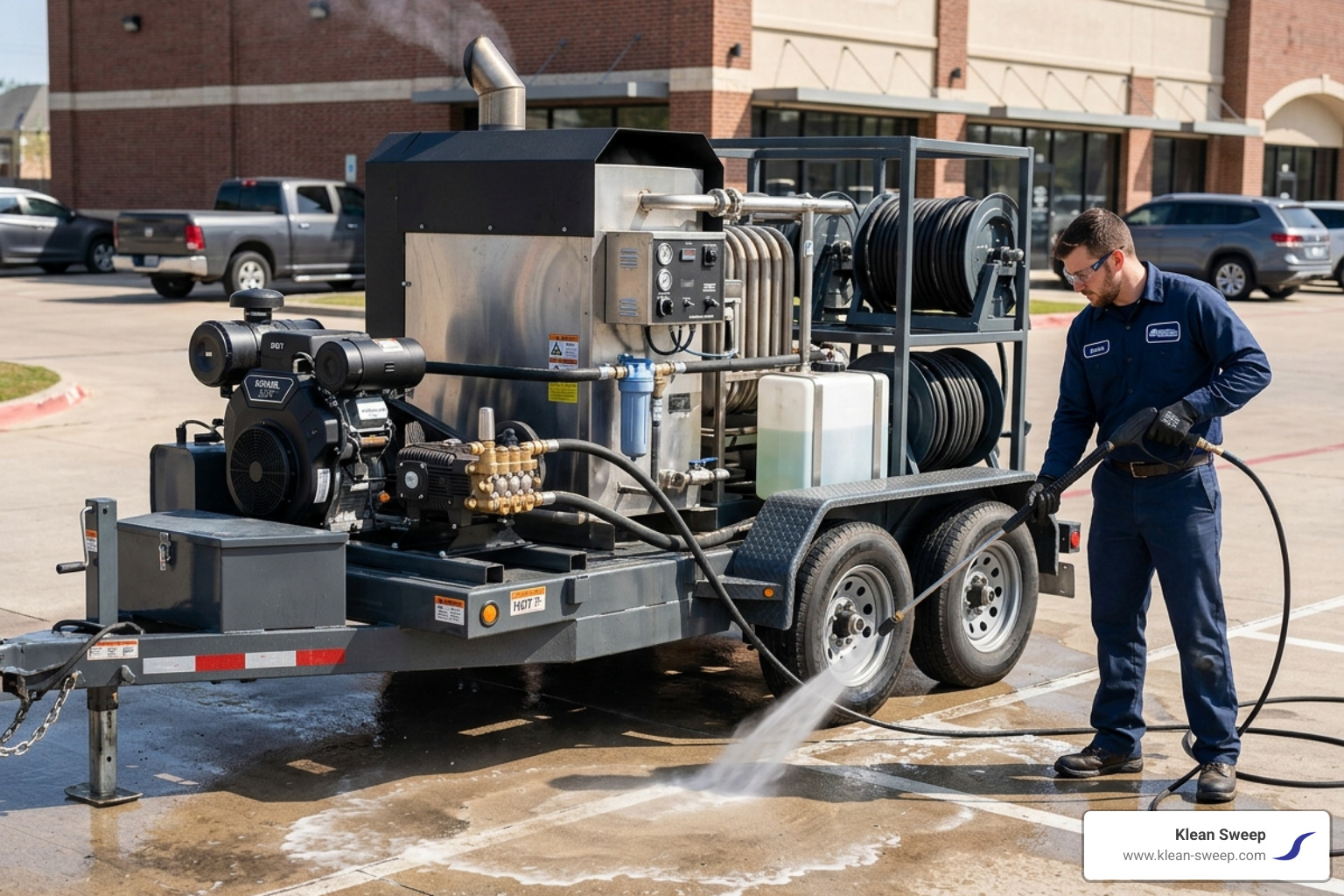
When we talk about commercial-grade equipment, we focus exclusively on industrial-strength machinery. For a commercial property in Carson or Brea, you need high-performance systems. The two most important metrics to understand are PSI (Pounds per Square Inch) and GPM (Gallons per Minute).
- PSI (Pressure): This is the “stripping” power. It determines how hard the water hits the surface to break the bond between the grime and the substrate.
- GPM (Flow): This is the “rinsing” power. High GPM is what actually moves the debris away. In a commercial setting, high GPM is often more important than high PSI because it allows the technician to work faster and more efficiently.
Commercial Surface Requirements (2026 Standards)
| Surface Type | Recommended PSI | Recommended GPM | Primary Goal |
|---|---|---|---|
| Commercial Concrete | 3,000 – 4,000 | 4.0 – 8.0 | Oil/Gum Removal |
| Brick & Masonry | 1,500 – 2,500 | 3.0 – 5.0 | Surface Grime |
| Painted Surfaces | 1,200 – 1,800 | 2.0 – 4.0 | Prep for Paint |
| Parking Structures | 3,500+ (Hot) | 5.0 – 10.0 | Petroleum Emulsification |
To ensure the best results, we utilize gas-powered engines that provide consistent high-pressure output. One of our most essential tools is the rotary surface cleaner. Instead of a single wand that can leave “zebra stripes” or uneven cleaning marks, a surface cleaner uses a rotating bar with multiple nozzles housed under a deck. This ensures a uniform clean across large expanses of concrete.
If you are looking for professional results, it is often worth exploring Steam Cleaning & Pressure Washing Services Near You to ensure the equipment used is capable of handling industrial-scale tasks without damaging the substrate.
Choosing the Right Nozzles for Pressure Washing
The nozzle is the business end of the machine. It dictates the spray pattern and the intensity of the water. Using the wrong nozzle on a commercial building in Torrance can lead to permanent surface etching. Nozzles are color-coded for easy identification:
- Red (0-degree): The most dangerous. It produces a pinpoint “pencil jet” of water. We almost never use this on commercial surfaces as it can cut through concrete or cause severe injury.
- Yellow (15-degree): Used for heavy-duty stripping. Great for removing paint or stubborn stains from hard concrete.
- Green (25-degree): The standard for commercial cleaning. It provides a good balance of pressure and coverage for walkways and loading docks.
- White (40-degree): A wider, gentler spray. Ideal for rinsing away detergents or cleaning more delicate masonry.
- Black (65-degree/Soap): A low-pressure nozzle used specifically to pull detergents through a chemical injector.
Selecting Commercial Detergents and Surfactants
Water alone doesn’t always cut it. In the commercial world, we use a variety of specialized chemicals to achieve a deep clean.
- Surfactants: These reduce the surface tension of the water, allowing it to penetrate deeper into the pores of the concrete.
- Emulsifiers: These “wrap” around oil and grease molecules, allowing them to be lifted and rinsed away.
- Degreasers: High-alkaline solutions designed to break down heavy carbon and oil deposits found in parking lots and dumpster pads.
We prioritize biodegradable and pH-balanced solutions to remain compliant with California’s environmental regulations. Most of these are applied via “downstream injection,” meaning the chemical is introduced to the water stream after it leaves the pump, protecting the machine’s internal components.
Safe Surfaces and Industrial Applications
Commercial pressure washing is incredibly versatile, but it requires an expert eye to determine which surfaces can handle the heat and pressure.
Concrete Walkways and Storefronts: This is the most common application. High-traffic areas in shopping centers or office parks accumulate dirt, spilled soda, and gum. Regular cleaning keeps these areas looking sharp and prevents “tracking” of dirt into the building interior.
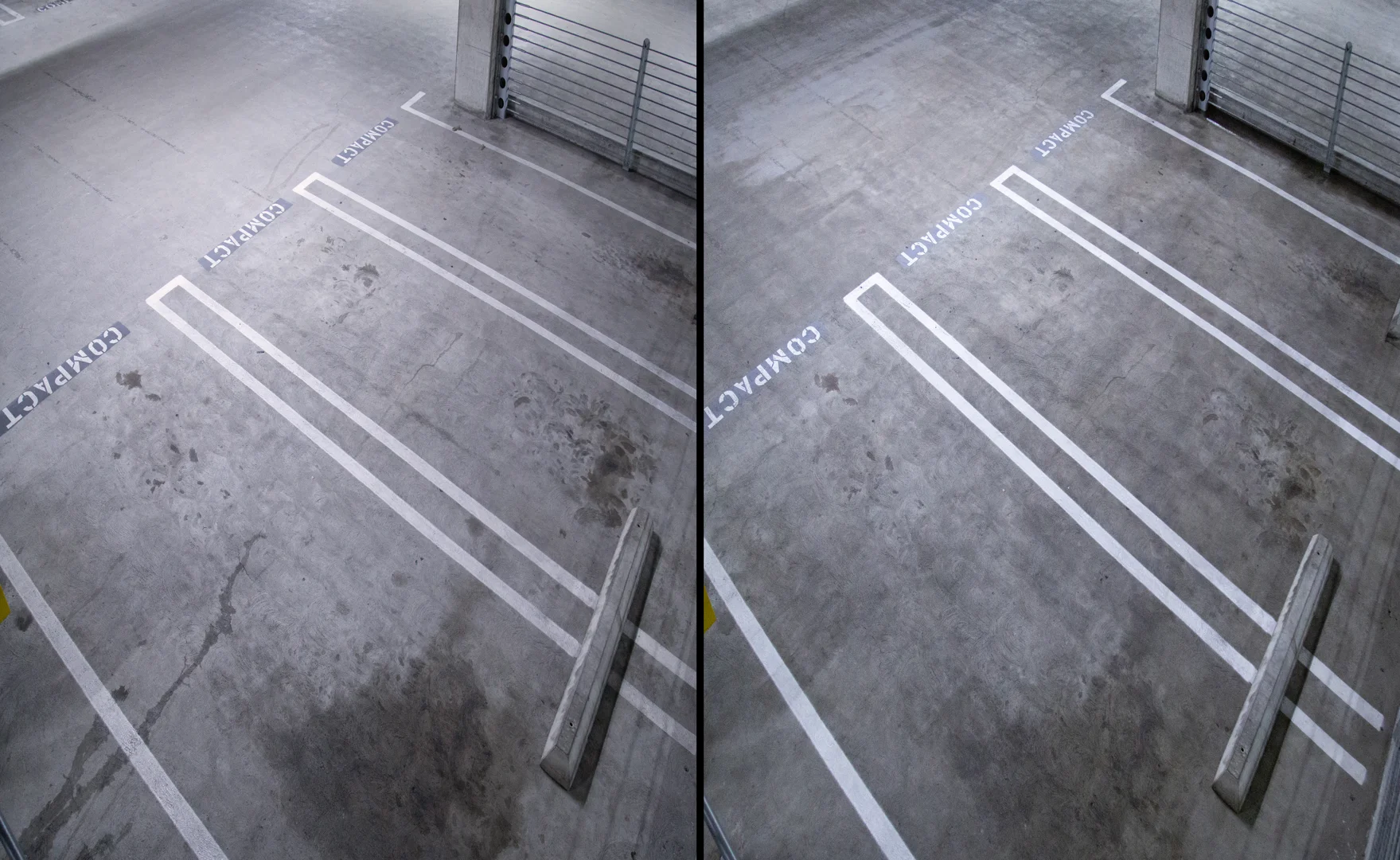
Parking Garages and Structures: These are high-liability areas. Oil and coolant leaks create slip hazards. Using hot water pressure washing is essential here to pull those oils out of the porous concrete. For those in our local service area, you can learn more about Steam Cleaning and Pressure Washing in Torrance, CA and how we tackle these massive structures.
Loading Docks and Dumpster Pads: These are often the filthiest parts of a property. They require heavy degreasing and high-pressure rinsing to manage odors and prevent pest infestations.
Brick and Masonry: While durable, brick requires a lower PSI than concrete. According to Pressure washing technical guides, using too much pressure on old brick can blast away the mortar or the protective outer “skin” of the brick, leading to water intrusion.
Best Practices for Pressure Washing Concrete and Masonry
To achieve that “like-new” look without damaging the property, we follow a strict set of best practices:
- Uniform Paths: We use overlapping strokes to ensure there are no missed spots or “tiger stripes.”
- Gum Removal: We use low-pressure steam to melt the gum rather than high-pressure cold water, which can leave “ghosting” or circular etch marks on the concrete.
- Efflorescence Treatment: That white, powdery substance often seen on masonry is salt. It requires a specific acidic cleaner and low pressure to remove without causing the salt to return immediately.
- Expansion Joints: We take care not to blast directly into expansion joints, which can dislodge the sealant and lead to structural issues.
For specialized needs, such as Concrete Floor Cleaning in Torrance, CA, we often combine pressure washing with industrial scrubbers for a truly polished finish.
Safety Protocols and Environmental Compliance
Safety is our absolute priority. A commercial pressure washer is a powerful tool—at 4,000 PSI, the water jet is strong enough to penetrate skin or cause “injection injuries.”
Our technicians always wear:
- Safety Goggles/Face Shields: To protect against flying debris.
- Hearing Protection: Industrial gas engines are loud!
- Steel-Toed Boots: To protect feet from the high-pressure spray.
- High-Visibility Vests: Essential when working in active parking lots or near traffic.
Environmental Compliance in Southern California
Operating in Los Angeles and the surrounding areas means we must be hyper-aware of stormwater regulations. In California, it is illegal to allow wash water containing detergents, oils, or heavy grime to enter the storm drain system.
We utilize Best Management Practices (BMPs), which include:
- Drain Blocking: Using berms and “pigs” to prevent water from entering the drain.
- Vacuum Recovery: Our state-of-the-art equipment can suck up the wastewater as we clean.
- Filtration and Disposal: The recovered water is filtered and disposed of at an approved treatment facility.
During periods of drought, we also focus on water efficiency. A pressure washer uses significantly less water than a standard garden hose (up to 75% less!) because the pressure does the work, not the volume.
Frequently Asked Questions about Commercial Cleaning
What PSI is needed for commercial concrete?
For most commercial concrete surfaces, 3,000 to 4,000 PSI is the sweet spot. This provides enough power to remove deep-set stains and gum without “etching” or damaging the surface of the concrete. If the concrete is relatively new (less than a year old), we use lower pressure to avoid damaging the curing surface.
Why is hot water better for parking lot maintenance?
Hot water acts as a catalyst for chemical reactions. It breaks the molecular bonds in oils and greases much faster than cold water. In a parking lot context, this means a cleaner finish in less time, using fewer chemicals. It’s the difference between a surface that “looks” clean and one that actually is free of slippery residues.
How often should commercial properties be pressure washed?
It depends on the foot traffic and usage. Generally, we recommend:
- Storefront Walkways: Monthly or Quarterly.
- Parking Structures: Bi-annually or Annually.
- Dumpster Pads: Monthly to prevent odors and pests.
- Loading Docks: Quarterly.
Conclusion
Pressure washing is an indispensable part of commercial property maintenance. It preserves the lifespan of your surfaces, reduces liability, and ensures your property makes a great first impression. Since 1969, Klean Sweep has been a family-owned leader in the Los Angeles area, providing state-of-the-art exterior maintenance services.
From Torrance and Carson to Beverly Hills and Pasadena, we bring the expertise and equipment needed to keep your commercial assets in peak condition. We don’t just “spray water”—we provide a comprehensive cleaning solution that respects the environment and your bottom line.
Ready to see the difference professional maintenance can make? Schedule professional steam cleaning and pressure washing in Torrance, CA today and let us help you keep your property looking its best for years to come.