
Why Commercial Pressure Washing Services Matter for Your Property
Pressure washing services are one of the most effective tools commercial property managers have for maintaining clean, compliant, and professional-looking facilities. Here is a quick overview of what you need to know:
- What they are: High-pressure or low-pressure water cleaning systems that remove dirt, oil, mold, algae, grease, and grime from exterior surfaces
- Who needs them: Property managers of commercial sites, parking structures, retail centers, and industrial facilities
- Key surfaces cleaned: Parking lots, loading docks, dumpster pads, building facades, sidewalks, and concrete floors
- How often: Most commercial properties benefit from cleaning at least once a year, with high-traffic areas needing bi-monthly service
- Why it matters: Protects property value, supports stormwater compliance, and keeps curb appeal strong
Managing a commercial or industrial property in the Los Angeles area is not simple. Parking lot debris builds up fast. Grease and oil stains spread across concrete. Mold and algae creep up building facades. And all of it can put you on the wrong side of local stormwater regulations if left unchecked.
The good news: professional exterior cleaning — done right — solves all of these problems at once.
This guide walks you through everything you need to know about commercial pressure washing, from choosing the right cleaning method to staying environmentally compliant.
I’m Jana Hanson, daughter of Klean Sweep founder Norm Basmajian and head of the company since 2012 — and over the years, I’ve seen how the right pressure washing services can transform a commercial property’s safety, compliance, and curb appeal. Whether you manage a single storefront or a multi-level parking structure, the sections below will give you the practical knowledge to make smarter decisions about exterior maintenance.
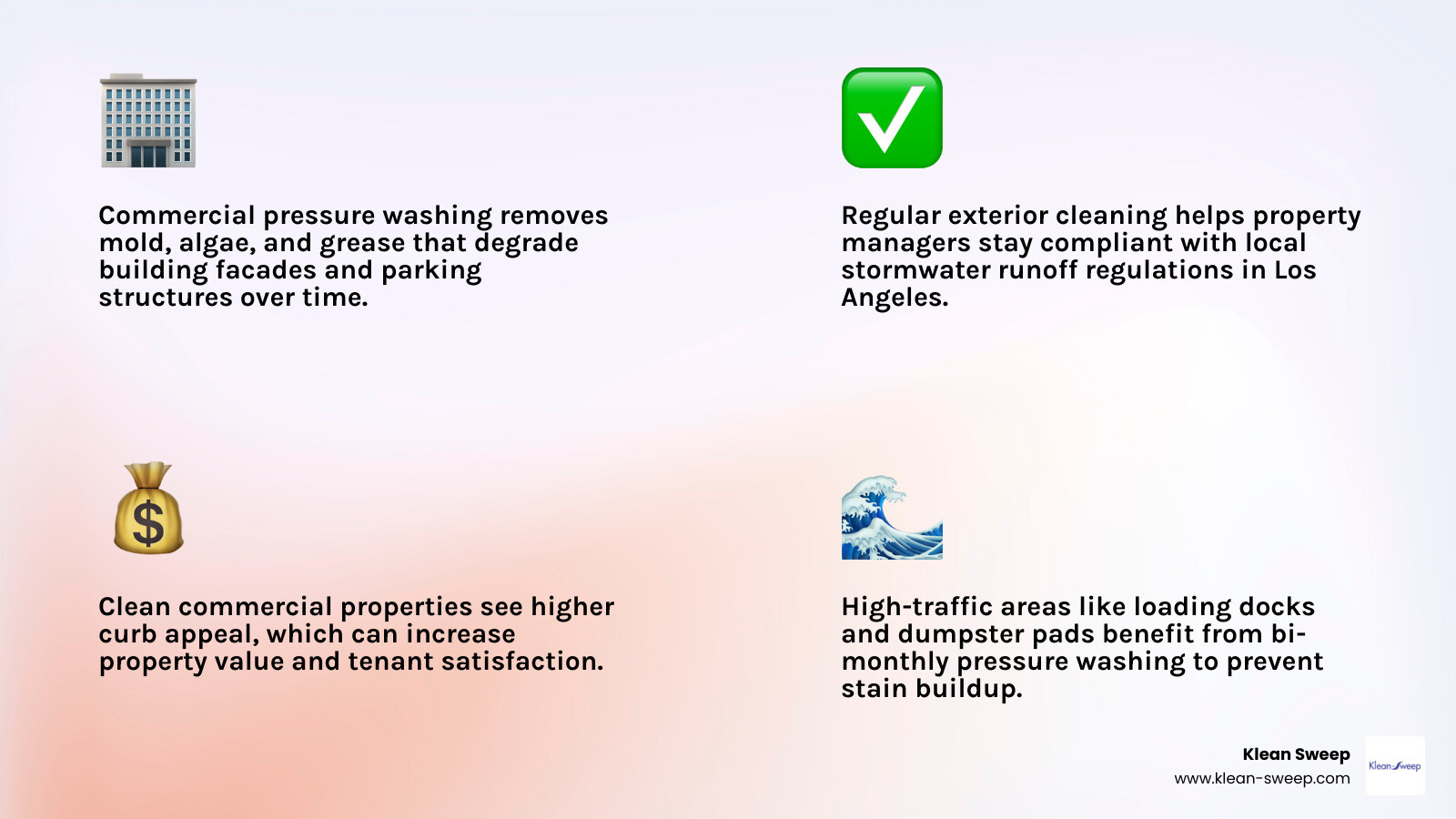
The Role of Commercial Pressure Washing Services in Property Maintenance
In Southern California, our commercial properties face a unique set of environmental challenges. From the constant sunshine baking oil stains into concrete in Pasadena to the heavy coastal salt and smog settling on building facades in Torrance, keeping a commercial facility clean requires a proactive approach. Professional pressure washing services do not just make your property look inviting; they are a fundamental component of structural preservation.
When soot, vehicle emissions, and organic growth are allowed to sit on building materials, they cause gradual degradation. Over time, these contaminants can eat away at protective coatings, leading to expensive repairs. Whether you are managing a high-end retail plaza in Beverly Hills or a bustling warehouse distribution hub in Carson, maintaining clean surfaces is essential for protecting your real estate investment.
Further, first impressions are everything. A clean, well-maintained exterior signals to tenants, customers, and visitors that your business operates with a high standard of quality. To understand how professional exterior cleaning fits into a broader facilities management plan, you can explore The Ultimate Guide to Commercial Pressure Washing Services.
Choosing Soft Washing vs. High-Pressure Pressure Washing Services
Not all exterior surfaces are built to withstand the same level of water pressure. Using the wrong technique can lead to chipped paint, cracked masonry, or water intrusion behind building facades. That is why professional technicians distinguish between high-pressure washing and soft washing.
High-pressure washing typically operates between 2,500 and 4,000 PSI (pounds per square inch). This method relies on pure mechanical force to strip away tough, embedded contaminants from hard, durable surfaces like concrete walkways and parking structures.
Conversely, soft washing operates at a much lower pressure—typically under 500 PSI. Instead of relying on high water pressure to blast away dirt, soft washing uses specialized, surface-safe cleaning solutions to break down organic matter, dirt, and dust. This technique is ideal for delicate commercial building facades, stucco, commercial roofing, and even commercial solar panels. In fact, keeping commercial solar panels clean is highly beneficial; dust and grime buildup can block sunlight, whereas professional cleaning can boost energy output by up to 25%.
To help you choose the right approach for your facility, let’s break down the key differences:
| Cleaning Method | Typical PSI | Best Suited For | Key Benefits |
|---|---|---|---|
| High-Pressure Washing | 2,500 – 4,000 PSI | Concrete, asphalt, loading docks, metal surfaces | Strips away tough grease, oil, tire marks, and embedded dirt |
| Soft Washing | Under 500 PSI | Stucco, painted commercial facades, commercial tile roofs, solar panels | Cleans safely without damaging delicate surfaces or seals |
For a deeper dive into how these water pressure levels are managed safely, check out our Beginners Guide to Pressure Washing.
Key Commercial Surfaces Safely Cleaned by Pressure Washing Services
To keep a commercial property running smoothly and looking its best, several key areas require regular attention. Each surface presents its own challenges:
- Concrete Walkways and Entryways: These high-traffic zones accumulate gum, spilled drinks, and tracked-in dirt. Regular cleaning prevents these surfaces from becoming unsightly and slippery.
- Loading Docks: As the functional hubs of industrial facilities in Carson and Brea, loading docks are prone to heavy exhaust soot, hydraulic fluid spills, and tire marks.
- Dumpster Pads: These areas are prime breeding grounds for bacteria, pests, and foul odors. Regular pressure washing combined with sanitizing agents is critical for health and safety compliance.
- Parking Structures: Multi-level structures in busy urban centers like Los Angeles collect immense amounts of motor oil, brake dust, and tire residue that must be cleaned systematically.
To learn more about finding local cleaning solutions tailored to these surfaces, read about Steam Cleaning & Pressure Washing Services Near You.
Maximizing Durability with Concrete Floor Cleaning and Steam Cleaning
Concrete is incredibly tough, but it is also highly porous. When motor oil, transmission fluid, and diesel grease drip onto a parking structure floor or warehouse corridor, they do not just sit on top—they sink deep into the pores of the concrete. Over time, these fluids break down the concrete’s internal structure, leading to premature cracking, scaling, and costly structural repairs.
Professional concrete floor cleaning combines high-pressure water with thermal power (hot water or steam) to lift these deeply embedded petroleum products. Cold water pressure washing often just spreads grease around; hot water steam cleaning melts the oils, allowing them to be extracted completely.
Maintaining clean concrete floors also vastly improves safety. Oil slicks and tire marks reduce traction, creating serious slip-and-fall hazards for employees and visitors. By investing in routine concrete maintenance, you protect your business from liability while extending the lifespan of your physical assets. You can discover more about these protective benefits in our articles on how to Stop the Grime with a Power Washed Concrete Floor and the science behind Concrete Floor Cleaning for Long Lasting Durability.
Steam Cleaning Retail Center Walkways
Retail centers in Beverly Hills, Torrance, and Pasadena see thousands of visitors every week. With that foot traffic comes a relentless wave of discarded chewing gum, dropped food, and spilled coffee. If left untreated, these small messes quickly turn into dark, sticky stains that ruin your property’s aesthetic.
This is where steam cleaning shines. Traditional cold-water pressure washing struggles to budge hardened chewing gum without using excessive pressure that can damage the concrete’s finish. Steam cleaning, however, uses water heated to over 200°F. The intense heat instantly liquefies gum and breaks down stubborn grease, allowing the technician to rinse the surface clean without leaving scars on the pavement. For a comprehensive look at maintaining shopping centers, refer to The Definitive Guide to Steam Cleaning Retail Center Walkways.
Environmental Compliance and Stormwater Runoff Management
In Southern California, environmental regulations are incredibly strict. The Federal Clean Water Act, enforced locally by the California Regional Water Quality Control Boards, prohibits anything other than clean stormwater from entering municipal storm drains. This means that when you perform pressure washing services, you cannot simply let the dirty wash water run down the gutter.
Wash water from commercial cleaning contains oils, heavy metals, surfactants, and toxic chemicals. Letting this runoff enter the storm drain system can result in massive fines from local environmental agencies.
To stay compliant, professional companies utilize advanced water reclamation systems. These setups involve placing berms or vacuum booms around the work area to capture all waste water. The water is then vacuumed up, filtered, and either recycled or discharged safely into the sanitary sewer system in accordance with local permits. Additionally, using biodegradable, non-toxic cleaning chemicals ensures that any minor overspray does not harm local landscaping, employees, or visitors.
Integrating Street Sweeping and Stormwater Cleaning
The most effective way to manage environmental runoff is to stop debris from reaching the washing stage in the first place. If a parking lot is covered in heavy leaves, trash, and loose dirt, pressure washing it immediately will create an unmanageable slurry of mud and waste.
By integrating professional street sweeping with your pressure washing routine, you remove the bulk of dry debris first. This makes the subsequent pressure washing faster, more efficient, and far easier to manage from a water reclamation standpoint. Regular stormwater cleaning also ensures that catch basins are clear, preventing localized flooding during our seasonal Southern California rains. To see how these services work in harmony, explore our full suite of solutions on Our Services page.
Frequently Asked Questions about Commercial Exterior Cleaning
How often should commercial properties schedule pressure washing?
The ideal frequency depends entirely on traffic volume and the specific area of your property:
- Dumpster Pads and Loading Docks: These high-risk zones should be cleaned monthly or bi-monthly to manage odors, grease buildup, and bacteria.
- Retail Sidewalks and Main Entryways: High-traffic retail areas benefit from bi-monthly or quarterly cleanings to keep gum and spills at bay.
- Parking Structures and Lots: A thorough wash every 12 to 18 months is generally sufficient to prevent oil accumulation from damaging the concrete.
- Building Facades: Most commercial facades only require cleaning every 1 to 2 years to wash away dust, soot, and atmospheric grime.
What certifications and insurance should a professional company have?
Never hire an uninsured contractor to work on your commercial property. A reputable company must carry:
- Commercial General Liability Insurance: Typically at least $1,000,000 to protect against accidental property damage.
- Workers’ Compensation Insurance: To protect you from liability if a worker is injured on your site.
- Active Business Licensing: Appropriate municipal licenses for the cities they operate in (such as Los Angeles, Torrance, or Pasadena).
- Environmental Permits: Verification that they are certified to discharge reclaimed wash water legally.
Can pressure washing remove tough commercial oil and grease stains?
Yes, but it requires the right equipment. Standard cold-water pressure washers will not remove deep oil stains. Eliminating baked-on automotive fluids requires commercial-grade hot water pressure washers (steam cleaning) combined with specialized, biodegradable degreasers. While complete removal of ancient, deeply set stains can sometimes be challenging, professional hot-water treatment will dramatically fade the discoloration and restore the concrete’s safety and appearance.
Conclusion
Keeping your commercial property clean, safe, and environmentally compliant is a continuous job. From the busy shipping bays of Carson to the pristine storefronts of Beverly Hills, professional pressure washing services are essential for protecting both your brand image and your physical structures.
At Klean Sweep, we have been helping Southern California businesses put their best foot forward since 1969. As a family-owned commercial property maintenance company based in Torrance, CA, we utilize state-of-the-art equipment—including advanced water reclamation systems—to deliver spotless results while keeping your facility fully compliant with local stormwater regulations.
Ready to restore your concrete, revitalize your storefronts, or clean up your parking structures? Schedule Professional Steam Cleaning and Pressure Washing in Torrance CA with us today, and let our experienced team handle the grime so you can focus on running your business.