

The Best Way to Clean Stained Concrete Floors at Commercial Sites
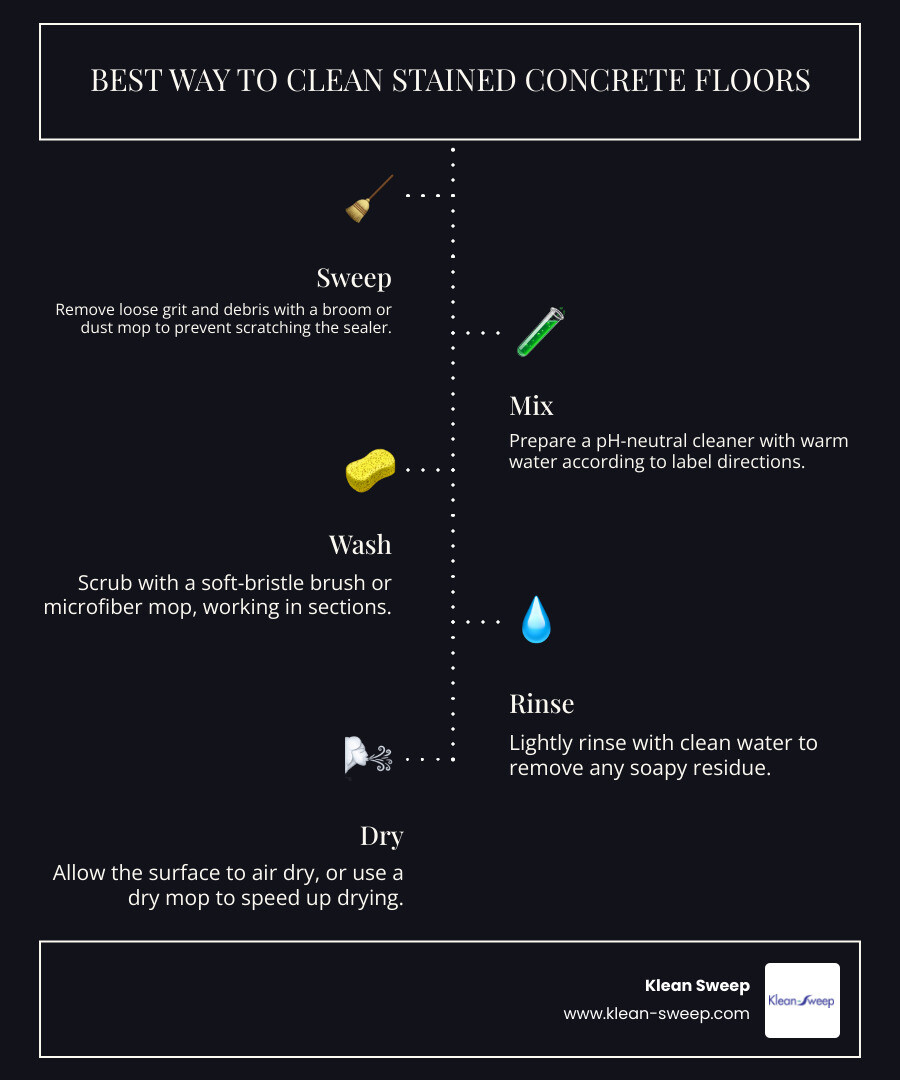
The best way to clean stained concrete floors is to sweep away grit, wash with a pH-neutral cleaner and a soft brush or mop, rinse lightly, and let the surface dry. Clean spills promptly. Avoid vinegar, bleach, abrasive pads, and steam mops, which can damage or dull the protective sealer.
For commercial entryways and parking structures, regular sweeping matters as much as washing. Grit tracked across the floor can wear down the finish.
I’m Jana Hanson, and I’ve led Klean Sweep, our family’s Los Angeles-area exterior maintenance company, since 2012. That experience informs this guide to the best way to clean stained concrete floors at commercial properties.
Terms related to best way to clean stained concrete floors:
Understanding Commercial Concrete Types and Surface Finishes
To choose the right washing method, you first need to identify the exact concrete surface installed across your commercial property. Exterior plazas, perimeter walkways, breezeways, and open-air parking structures often feature distinct surface finishes, each requiring a tailored maintenance protocol. Treating a decorative stained slab like plain broom-finished pavement is one of the fastest ways to destroy a costly architectural finish.
Concrete is inherently porous, functioning much like a dense mineral sponge. When moisture hits unfinished concrete, it soaks directly into the open pores. Stained concrete, by contrast, relies on either an acid chemical reaction or water-based penetrating dyes to introduce rich earth tones into the cement paste. To lock in those pigments and protect the color from pedestrian friction, vehicular traffic, and sun exposure, professionals coat stained concrete with a protective topical film, such as an acrylic, polyurethane, or polyaspartic sealer.
Polished concrete achieves its high gloss through mechanical grinding with fine diamond abrasives paired with chemical densifiers (like lithium or sodium silicates). Polished slabs harden the surface itself rather than relying on a thick topical coating.
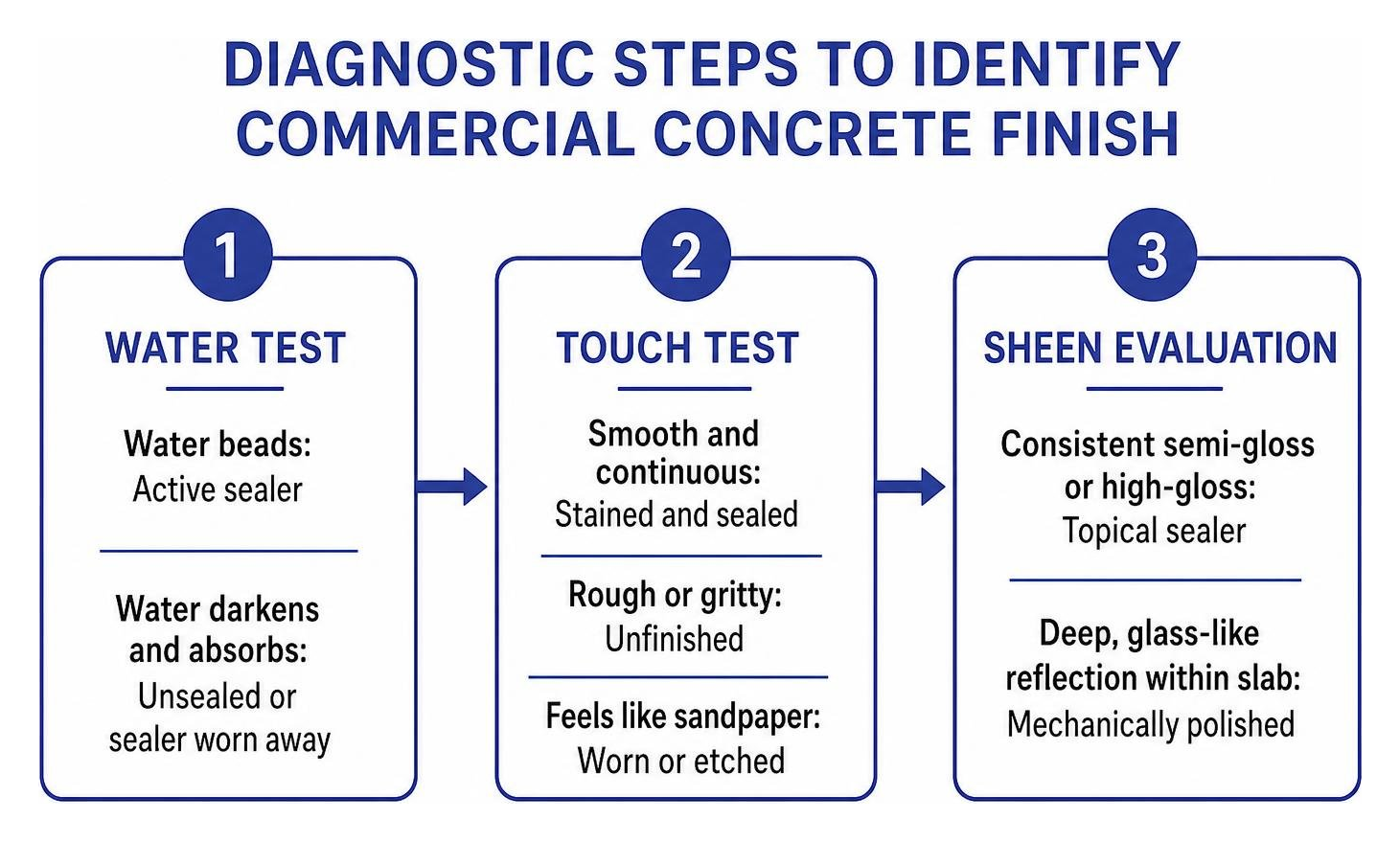
You can quickly evaluate your exterior commercial concrete using three simple field diagnostics:
- The Water Droplet Test: Sprinkle a few drops of clean water onto the dry surface. If the liquid beads into tight droplets without darkening the slab, you have an active protective sealer over stained concrete. If it darkens and absorbs within three to five minutes, the surface is either raw, unsealed concrete or the existing sealer has completely worn away.
- The Sheen Check: Stand at an angle to daylight. Topical sealers over stained concrete provide a consistent semi-gloss or high-gloss sheen that sits directly on top of the surface. Mechanical polishing creates a deep, glass-like reflection within the slab matrix itself without a distinct plastic film layer.
- The Texture Evaluation: Rub your fingers across a clean section of the floor. Stained and sealed slabs feel smooth and continuous. Unfinished slabs feel rough or gritty, and worn etched concrete feels like fine sandpaper.
| Concrete Finish | Surface Characteristics | Protective Layer Used | Primary Maintenance Vulnerability |
|---|---|---|---|
| Unfinished Exterior | Flat, gritty, absorbs water readily | None (raw concrete pores) | Deep oil absorption, moisture cracking |
| Stained Concrete | Translucent color variations, smooth | Topical film (Acrylic/Polyurethane) | Chemical etching, abrasive scuffing |
| Polished Concrete | High-gloss reflection, dense surface | Liquid hardener / densifier | Acid attack, micro-scratch dulling |
Identifying Stained Concrete vs. Polished Concrete
Telling stained decorative slabs apart from true polished concrete helps prevent disastrous cleaning mistakes. Stained concrete derives its protection from a sacrificial topical barrier. When harsh chemicals, excessive friction, or heavy dirt degrade this barrier, the stain underneath is exposed to direct damage and fading.
Polished concrete derives its resilience from densification, meaning there is no topical skin to peel or flake away. However, it remains vulnerable to acidic chemical etching that strips away its mechanical sheen.
If you manage commercial properties in Los Angeles, Torrance, or Pasadena, identifying these differences ensures you never deploy aggressive strip-and-scrub pads on delicate stained sealers.
Safe Cleaning Products vs. Harsh Chemicals to Avoid
Choosing the right cleaning chemistry determines whether your stained concrete lasts for decades or degrades within months. Because decorative exterior concrete relies on its clear topical sealer, any chemical that weakens, softens, or dissolves polymers will permanently ruin the finish.
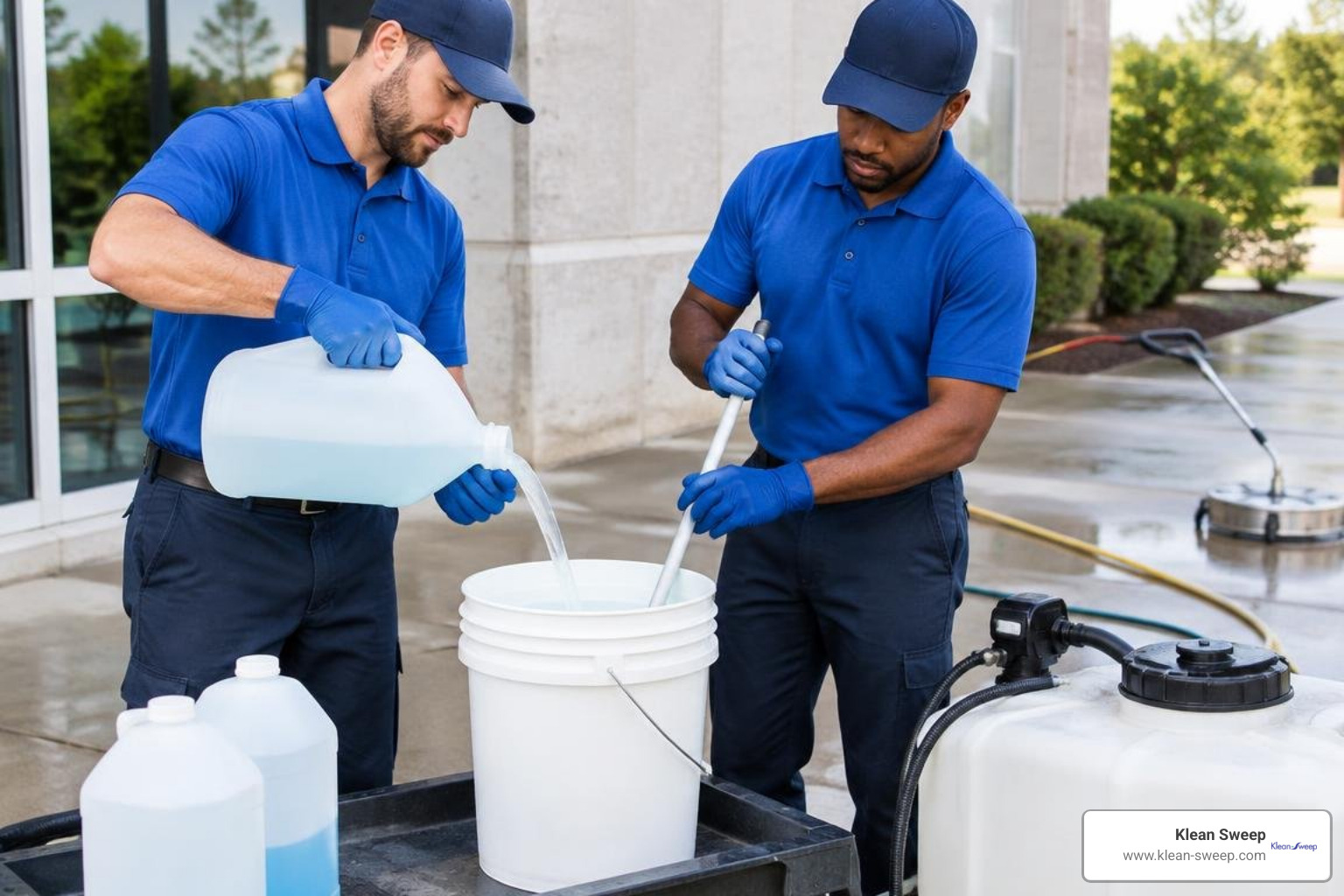
The safest cleaning solution for stained concrete is a dedicated pH-neutral cleaner rated between 7.0 and 9.0 on the pH scale. Neutral cleaners emulsify surface grease, lift airborne soot, and suspend tracked-in soil without chemically reacting with the acrylic or polyurethane resin. For comprehensive facility care strategies, you can explore how to care for stained concrete floors in 5 simple steps to establish consistent preventative guidelines.
When dealing with heavy grime on non-sensitive exterior zones, commercial teams often use specialized professional solutions; understanding the full range of options outlined in industrial guides on How to Clean Concrete Floors helps facilities balance cleaning strength with substrate safety. For stained exterior areas, always prioritize biodegradable, free-rinsing detergents that leave zero sticky surfactant residue behind.
Harmful Cleaners That Strip Sealers and Stains
Many everyday commercial cleaning chemicals are destructive when applied to sealed, decorative surfaces. Avoid the following products on stained concrete:
- Vinegar and Citrus Cleaners: While popular for general cleaning, acetic and citric acids instantly attack the alkalinity of concrete. Even diluted vinegar chemically etches the protective sealer, creating cloudy, permanent micro-pitting.
- Bleach and Sodium Hypochlorite: High concentrations of bleach oxidize and discolor topical sealers, turning clear coatings yellow and breaking down decorative dye pigments.
- Ammonia and High-Alkaline Strippers: Strong alkaline agents (pH above 10.0) soften acrylic coatings, leaving the surface tacky, dull, and prone to picking up black shoe scuffs and tire rubber.
- Harsh Solvents (Acetone, Xylene, MEK): Unless you are intentionally stripping a floor prior to resealing, solvent degreasers melt topical sealers on contact, causing uneven melting and peeling.
- Abrasive Scouring Powders: Granular abrasive compounds physically scratch the clear topcoat, transforming a brilliant gloss into a hazy matte finish.
The Best Way to Clean Stained Concrete on Commercial Exterior Surfaces Step-by-Step
Maintaining large exterior commercial properties requires a systematic cleaning workflow. High-traffic walkways, outdoor dining plazas, and decorative parking structure landings endure heavy foot traffic, wind-blown grit, beverage spills, and vehicle fluids.
Following a structured procedure protects your capital investment and maintains curb appeal across your property. Implementing professional concrete floor cleaning for long-lasting durability prevents prematurely wearing down your high-performance coatings.
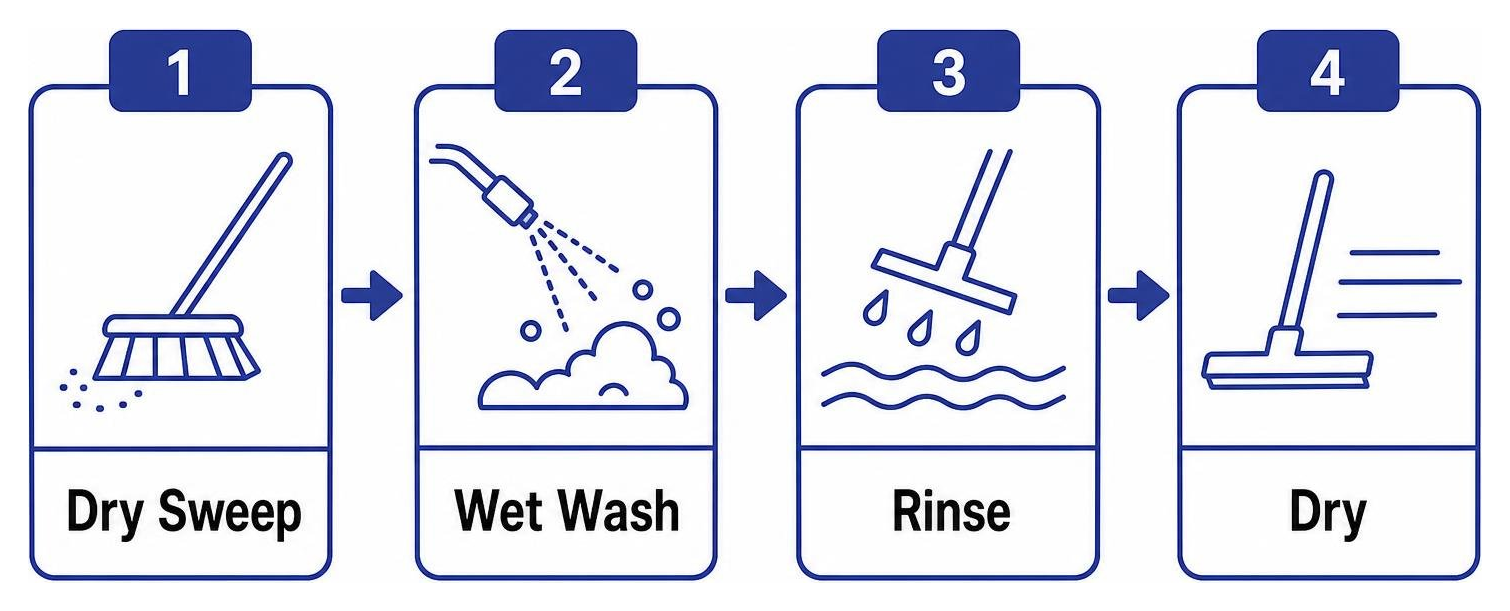
Routine Sweeping and Washing: The Best Way to Clean Stained Concrete Daily
Routine cleaning prevents coarse dirt particles from acting like sandpaper beneath pedestrian shoes. Follow these steps for daily and weekly upkeep:
- Dry Sweep and Debris Removal: Begin by thoroughly removing all dry surface contaminants. In outdoor plazas and parking facilities, fine quartz dust, windblown sand, and landscape detritus settle continuously. Use a commercial sweeping unit or an industrial soft-bristled push broom to clear the area. Never apply wet cleaning solutions over un-swept grit, as wet agitation turns dirt into an abrasive grinding paste.
- Apply Diluted pH-Neutral Cleaner: Mix your neutral cleaner with clean water according to the manufacturer’s dilution ratios. Apply the solution evenly across the stained concrete using a clean commercial microfiber mop system or an automatic floor scrubber equipped with soft, non-abrasive red buffing pads.
- Agitate Gently: Allow the cleaning solution a dwell time of three to five minutes to break down grease and bind surface dirt. Agitate the surface using a soft nylon bristle brush or a low-RPM machine buffer. Avoid aggressive black or brown stripping pads, which strip away the sealer.
- Clean Water Rinse: Rinse the area with clean, cold water. Removing spent cleaning chemical is vital; detergent residues left on exterior concrete attract fresh airborne soil and create a slippery hazard when damp.
- Thorough Surface Drying: Exterior commercial areas should be allowed to air dry naturally in the sun or dried using high-velocity air movers in covered parking structures and breezeways before reopening to foot or vehicle traffic.
Removing Stubborn Oil, Rust, and Chemical Spills
When petroleum spills, metal corrosion, or food grease contaminate your decorative slab, spot treatment must occur immediately to prevent penetration through the sealer.
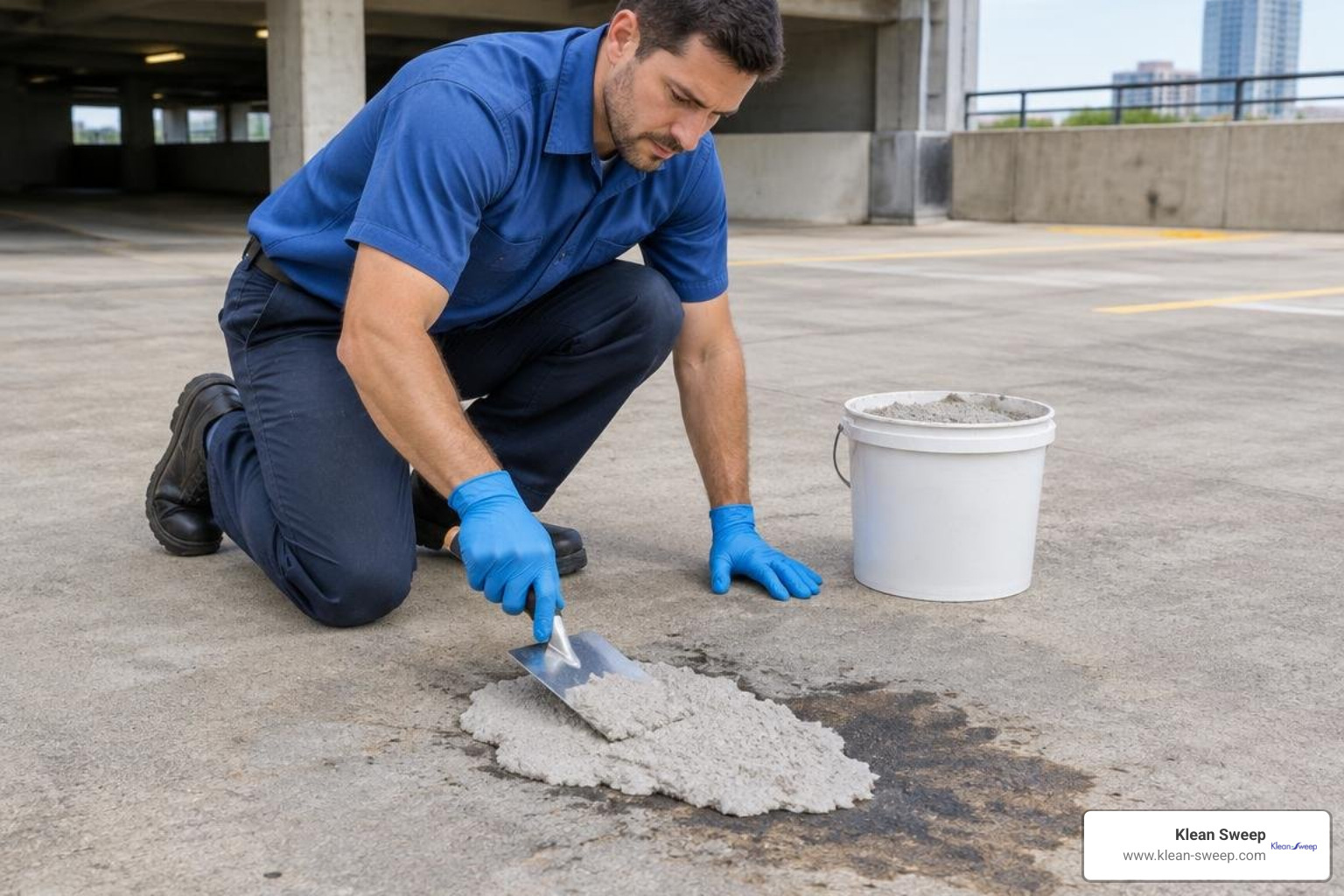
Oil and Grease Stains
Automotive drippings and kitchen grease require prompt chemical emulsification. For fresh automotive drips, reviewing techniques for removing oil off concrete effectively ensures you extract deep hydrocarbons without damaging surrounding sealers.
For stubborn, embedded spots, create an absorbent poultice using diatomaceous earth or baking soda blended with a concentrated pH-neutral degreaser. Apply the paste 1/4-inch thick over the stain, cover it with plastic sheeting to slow evaporation, and let it draw the oil upward for 24 hours before sweeping it away and rinsing.
Rust Spots
Rust from exterior metal railings, patio furniture, or irrigation runoff binds tightly to concrete. Avoid harsh muriatic acid rust removers, which eat directly through concrete. Instead, focus on eliminating rust on concrete with oxalic acid-based gels or pH-neutral chemical rust converters designed for sealed masonry. Apply the gel directly to the rust spot, agitate with a soft brush, and rinse thoroughly before the gel dries.
Maintenance Schedules, Sealer Reapplication, and Climate Factors
A successful preventative maintenance strategy balances daily cleaning routines with seasonal deep cleaning and periodic protective resealing.
To maintain clean decorative surfaces, implement a structured operational schedule:
- Daily: Perform dry dust mopping or mechanical sweeping across primary retail entryways, commercial plazas, and parking structure walkways to remove abrasive particulates.
- Weekly / Bi-Weekly: Conduct wet cleaning using pH-neutral detergents and soft-pad auto-scrubbers or damp microfiber mopping systems.
- Monthly / Quarterly: Schedule deep exterior pressure washing using moderate pressure and cold water to eliminate embedded atmospheric pollutants, food spills, and tire marks.
- Semi-Annually: Perform an in-depth inspection of high-wear pedestrian paths, expansion joints, and vehicular drive aisles to detect sealer thinning or moisture blush. For high-traffic commercial facilities, scheduling dedicated concrete floor scrubbing services clears embedded soils from textured concrete without compromising the underlying sealer.
Resealing Timelines and Environmental Protection
Topical sealers are sacrificial coatings that naturally erode under friction, UV radiation, and environmental exposure. In high-traffic commercial environments—such as busy retail centers in Carson, office complexes in Beverly Hills, or distribution facilities in Brea—reapplying a compatible acrylic or polyurethane sealer is recommended every 2 to 3 years. Lightly trafficked perimeter walkways may stretch this window to 4 or 5 years.
Local climate conditions directly dictate how your exterior concrete behaves:
- Coastal Marine Air: Commercial properties in coastal Southern California communities experience constant salt air exposure. Airborne chlorides settle on concrete slabs, accelerating sealer breakdown. Regular fresh-water rinsing prevents salt crystals from scratching the sealer under foot traffic.
- Intense UV Exposure: Direct, year-round sunlight breaks down low-grade acrylic sealers through photodegradation, turning them brittle and hazy. Always specify non-yellowing, pure acrylic or aliphatic polyurethane sealers with built-in UV blockers.
- Efflorescence and Moisture Vapor: In coastal valleys, subterranean moisture vapor migrates upward through the concrete slab. As moisture evaporates, it deposits soluble white salts beneath the topical sealer—a phenomenon known as efflorescence. Proper sub-slab moisture barriers and breathable topical sealers prevent this unsightly chalking.
Can High Heat or Pressure Be the Best Way to Clean Stained Concrete?
Property managers often ask if heavy industrial steam cleaning or high-pressure blasting (over 3,500 PSI) is the fastest, best way to clean stained concrete floors on exterior grounds. The short answer is no.
While high-temperature steam washing is exceptional for raw concrete pads and asphalt parking lots, excessive thermal shock softens and delaminates clear topical sealers on stained surfaces. Extreme heat causes topical acrylics to blush, turning milky white and losing adhesion to the underlying concrete.
Similarly, ultra-high-pressure washing tips held close to decorative slabs cut right through the thin sealer coat, creating permanent gouges, visible wand stripes, and stripping the color. For stained concrete, exterior cleaning should always utilize moderate water pressures (under 1,500 PSI), wide 40-degree fan spray tips, or rotary surface cleaning tools equipped with soft-bristle splash skirts.
Frequently Asked Questions About Cleaning Stained Concrete
Can you use vinegar or dish soap to clean stained concrete?
No, you should never use vinegar to clean stained concrete. Vinegar is an acid (pH ~2.5) that chemically reacts with the cementitious compounds in concrete and rapidly dissolves topical sealers, leaving dull, etched, chalky patches.
Standard dish soaps should also be avoided for large-scale commercial exterior cleaning. While mild dish soaps are chemically non-corrosive, they contain heavy surfactants and conditioning agents designed for food-service ware and grease removal. On concrete floors, these soaps leave behind a sticky, invisible film that dulls the natural gloss and actively attracts airborne dirt, creating a recurring slip hazard when wet. Always choose a professional, free-rinsing, pH-neutral commercial floor cleaner.
Why does stained concrete look cloudy or hazy after cleaning?
Cloudiness (also called “blushing” or “hazing”) on stained concrete floors is typically caused by one of three issues:
- Detergent Residue: Inadequate rinsing allows soap surfactants to dry on the surface, leaving a dull, white micro-film. This can be resolved by rewetting the area with clean, warm water.
- Hard Water Mineral Deposits: Allowing hard rinse water to pool and evaporate under direct sunlight leaves calcium and magnesium scale on top of the sealer.
- Trapped Moisture: If moisture rises from beneath an exterior slab or penetrates through microscopic fissures in the sealer, it becomes trapped beneath the coating. The water interferes with light refraction through the clear polymer, creating a milky white appearance. Resolving this often requires gentle solvent re-emulsification or stripping and resealing with a breathable coating.
How often should commercial stained concrete be resealed?
Under standard commercial operational conditions, exterior stained concrete should be resealed every 2 to 3 years. High-volume entryways, drive-through lanes, and open-air retail corridors subject to constant foot traffic and shopping cart friction may require a fresh maintenance coat every 12 to 18 months. Conversely, shaded, low-traffic courtyards can remain well-protected for up to 5 years.
You can determine if resealing is necessary by performing the water drop test: if water darkens the concrete within minutes rather than beading tightly on the surface, your sacrificial sealer has worn away and resealing is required immediately to prevent color loss.
Conclusion
Preserving the beauty, rich color tones, and structural durability of exterior stained concrete requires consistent, knowledgeable maintenance. By establishing a routine of daily grit removal, using only pH-neutral cleaning chemistry, avoiding harsh acids and thermal steam shock, and maintaining a strict 2-to-3-year resealing schedule, commercial property managers can keep decorative hardscapes looking pristine.
Partnering with an experienced exterior commercial maintenance team eliminates the guesswork from facility upkeep. Klean Sweep brings state-of-the-art sweeping, scrubbing, and eco-friendly washing equipment to commercial facilities throughout Southern California. To protect your property’s architectural flatwork, explore our specialized commercial concrete floor cleaning in Torrance, CA to schedule a comprehensive exterior maintenance assessment today.