

Find Street Sweeping Times Before You Park
To find out when crews are sweeping the street near your commercial property, check the posted curb signs, then confirm the date and time on your city’s street sweeping map or public works page. Check the side of the street as well as the hours, and move parked vehicles before the restriction starts. Do not assume parking is allowed as soon as the sweeper passes.
Clear curbs give sweepers room to collect litter and sediment before rain carries them into storm drains. Schedules and holiday rules vary by city, so use the rules for the exact block where you park.
I’m Jana Hanson. Since taking over my family’s sweeping and exterior maintenance business in 2012, I’ve helped carry forward its work sweeping the street and maintaining commercial properties across greater Los Angeles.
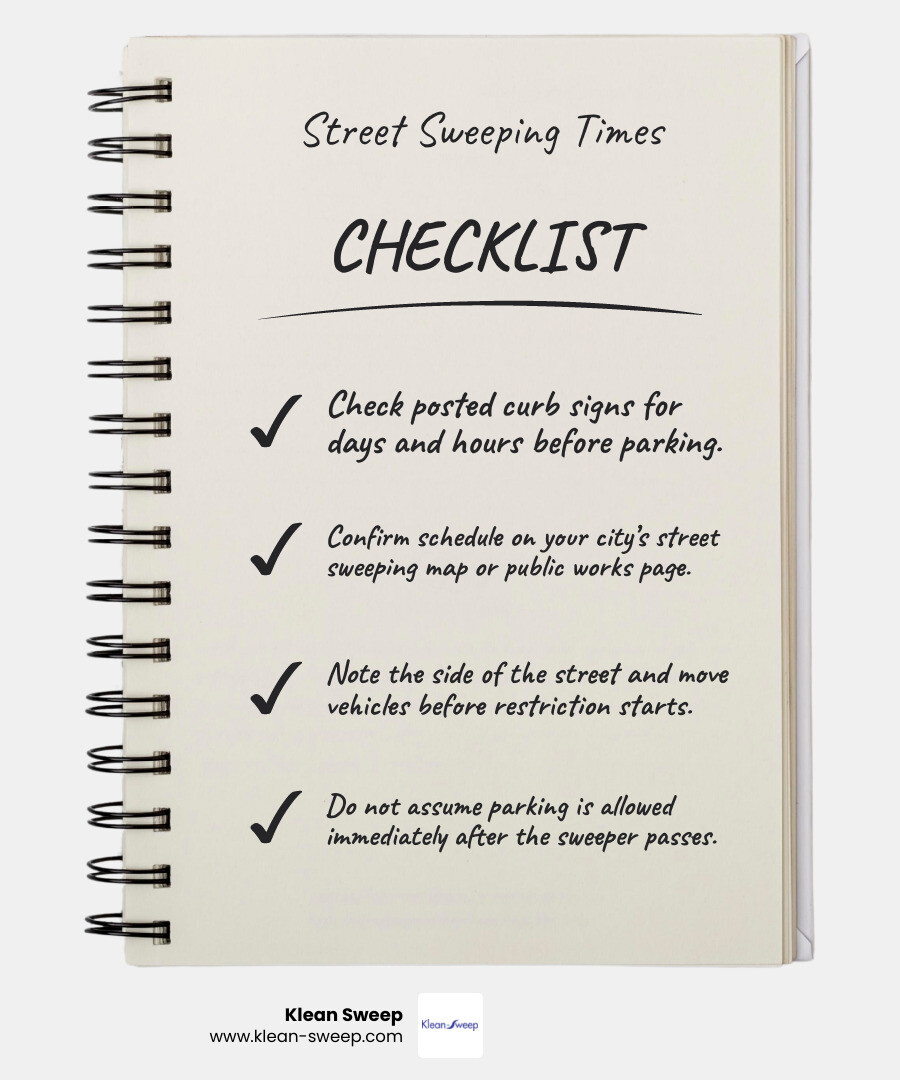
Must-know sweeping the street terms:
Understanding Municipal Regulations and the Role of Sweeping the Street
Municipal street sweeping serves as a front-line defense for urban infrastructure and local ecosystems. Far from being merely a cosmetic chore, regular street cleaning is mandated under federal and state clean-water regulations, including the National Pollutant Discharge Elimination System (NPDES) and Municipal Separate Storm Sewer System (MS4) permits.
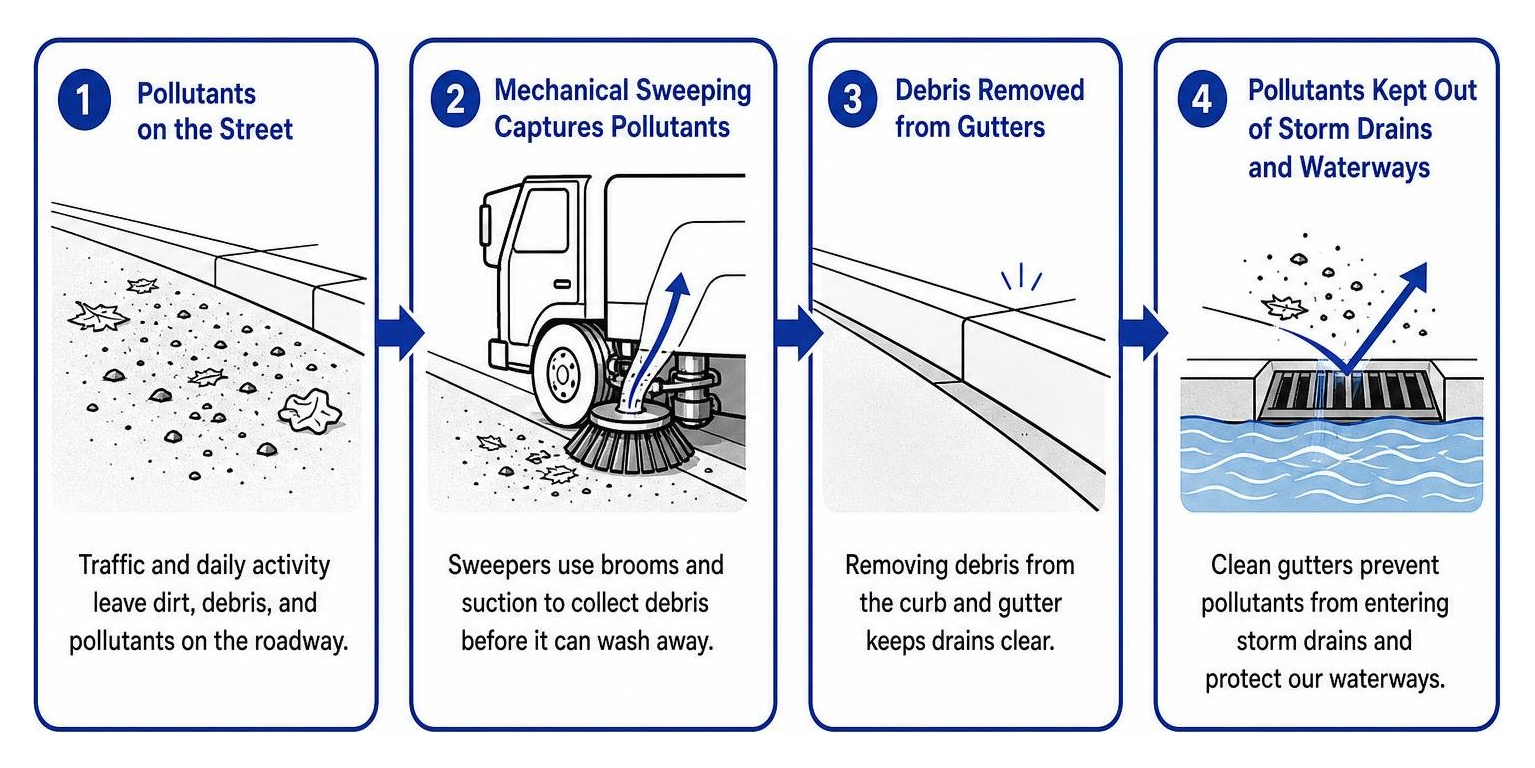
When vehicles, commercial traffic, and daily operations deposit heavy metals, engine oils, tire dust, and fine sediment onto paved corridors, rain washes those untreated contaminants directly into catch basins. By systematically removing these materials, cities reduce phosphorus loads and organic debris that would otherwise choke waterways. In fact, comprehensive municipal operations, such as the programs coordinated under the City of Chicago :: Street Sweeping 2026 guidelines, demonstrate how vital mechanical street care is to urban maintenance frameworks.
Beyond regulatory mandates, sweeping removes substantial physical trash before it reaches subterranean storm lines. When gutters fill with leaves, discarded packaging, and gravel, storm drains back up during heavy downpours, leading to localized street flooding and structural pavement deterioration. Investing in proactive sweeping keeps these drainage paths open and operating at maximum capacity. We have long documented that clean streets represent one of the most cost-effective methods to protect municipal water networks, as detailed in our guide on clean water environmental impacts.
How Sweeping the Street Protects Stormwater Systems and Marine Habitats
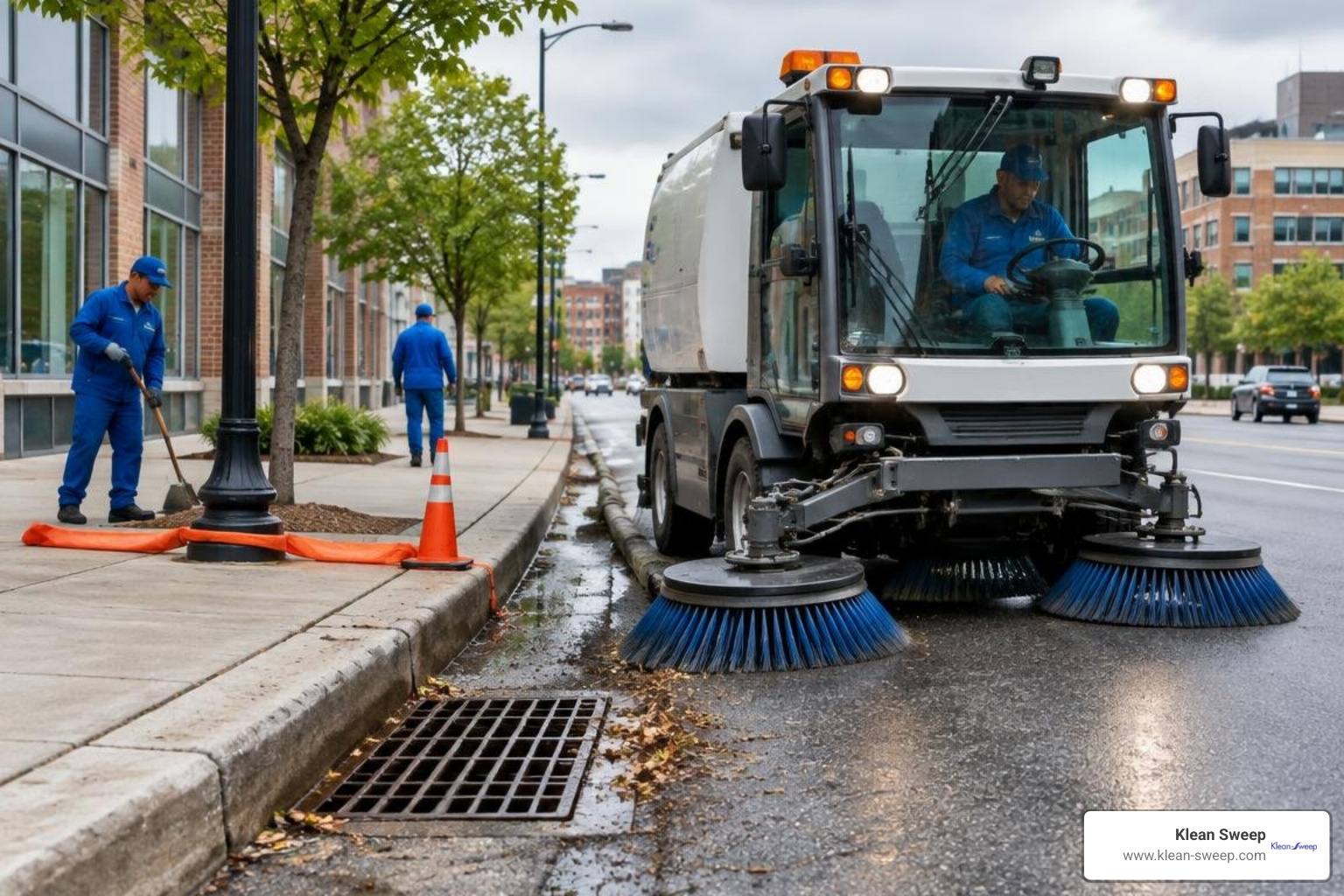
Curb gutters act as the direct funnel to local rivers, bays, and ocean coastlines. In Southern California, untreated runoff from municipal streets flows straight into our coastal marine sanctuaries. Following large storm events, tons of accumulated petroleum hydrocarbons, toxic heavy metals, brake dust, and plastic trash wash down to our beaches unless mechanical sweepers capture them at the curb line first.
Operating specialized broom and regenerative-air machines requires precise techniques. Crews must maintain specific vehicle speeds, brush angles, and dust-suppression water sprayers to dislodge compacted gutter grit without dispersing fine particulate matter into the air. Understanding these complex operational parameters is essential for commercial operators, which we outline thoroughly in our overview of street sweeper operational standards.
Key Municipal Frequencies Across Major Cities
Street sweeping frequencies vary widely depending on traffic density, municipal zoning, and geographic location. Commercial corridors, shopping centers, and central business districts with heavy foot and vehicular traffic require daily or weekly attention, whereas outlying industrial zones and lower-density areas follow extended rotations.
The table below compares sweeping schedules, routing tiers, and seasonal operational windows across major municipalities:
| Municipality / District | Frequency Tier | Typical Schedule Window | Seasonal Operations | Enforcement Status |
|---|---|---|---|---|
| Los Angeles & Greater LA | Daily to Bi-Weekly | 8:00 AM – Noon / Noon – 4:00 PM | Year-Round | Active (Signage posted per CVC § 22507.6) |
| Pasadena Commercial | Weekly / Bi-Weekly | Early Morning Routes | Year-Round | Enforced via Pasadena Street Sweeping |
| Beverly Hills Business Corridors | Daily to Weekly | Early Morning Off-Peak | Year-Round | Enforced via Beverly Hills Program |
| Torrance Industrial & Commercial | Bi-Weekly / Monthly | Morning & Afternoon Shifts | Year-Round | Enforced via Torrance Cleaning Schedule |
| Carson Logistics Routes | Bi-Weekly | Specific Weekday Windows | Year-Round | Active via Carson Schedule |
| Chicago Core & Wards | Daily to Monthly | Ward Rotations (East/West, North/South) | April 1 – Fall | Enforced seasonally |
How to Find Your Local Schedule and Track Sweeper Routes
Navigating sweeping schedules requires checking localized public works databases and reading on-street parking signs carefully. Most Southern California cities place distinct metal signs roughly every 250 feet along commercial corridors and secondary streets, detailing the specific days of the month (such as the 1st and 3rd Tuesday) and the exact restricted hours.
Understanding how cities alternate cleaning from one side of the road to the other is crucial to avoiding costly citations. We break down these alternating systems in our comprehensive review of alternate side parking rules. For broader municipal calendars, you can also consult our guide on navigating municipal sweeping calendars.
Locating Sweeper Trackers and Local Calendars for Sweeping the Street
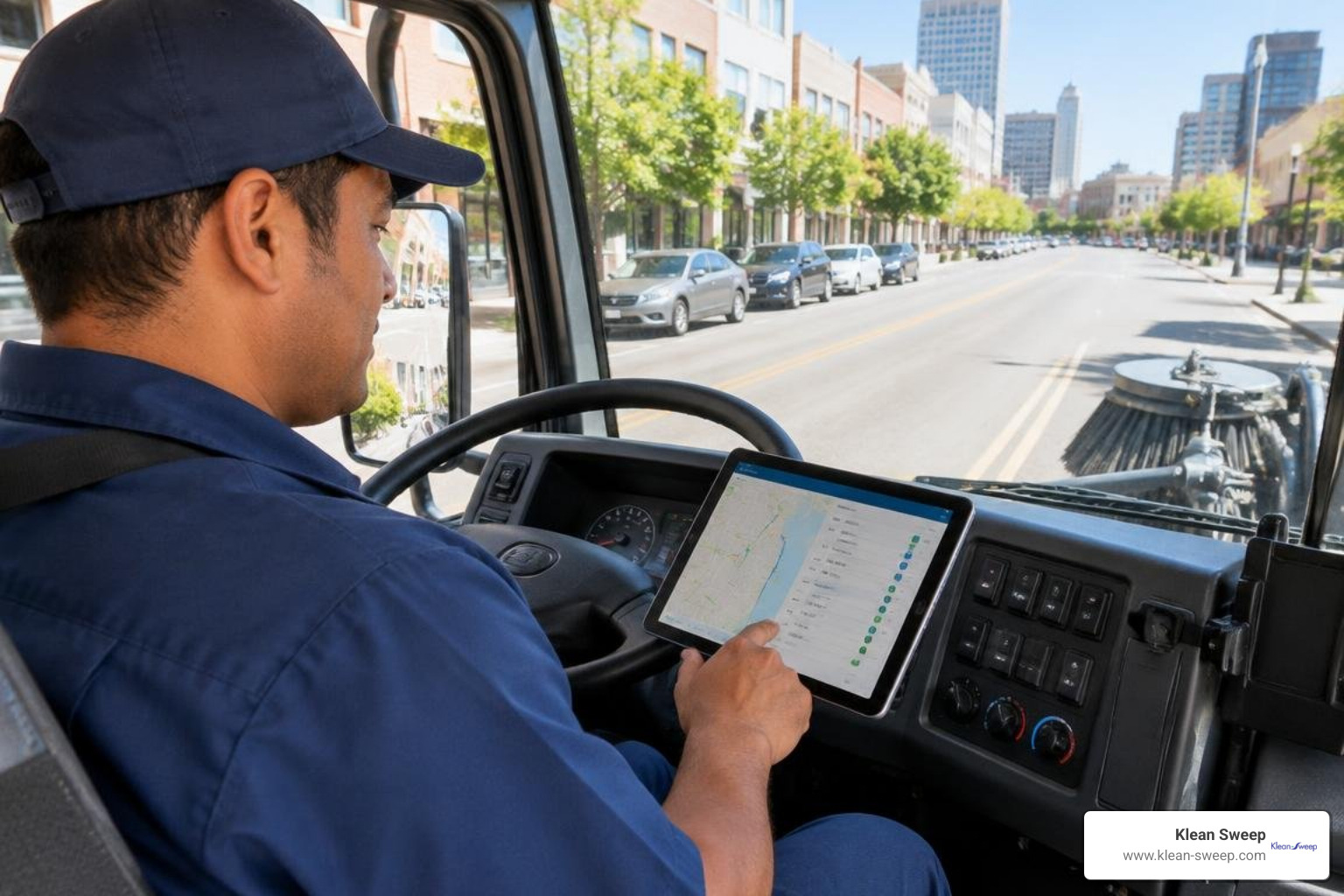
Many modern cities now offer interactive GIS mapping tools and live route finders to help property managers, business owners, and drivers stay ahead of cleaning crews. These online dashboards allow you to input a commercial property address or commercial parcel number to find the exact route schedule, the assigned service crew, and any upcoming seasonal adjustments.
To streamline this process, drivers can rely on digital tools detailed in our guide on locating municipal sweepers. If you manage properties or park across Southern California, we provide targeted resources for pinpointing your route, including our walkthrough on finding local sweeping schedules.
Holiday Suspensions and Weather-Related Cancellations
Street sweeping schedules adjust during official government holidays and extreme weather conditions. As a general rule, when city offices close for recognized national holidays—such as New Year’s Day, Martin Luther King Jr. Day, Memorial Day, Labor Day, Thanksgiving, or Christmas—street sweeping is suspended, and parking enforcement for sweeping violations is paused.
However, holiday enforcement rules are strictly limited to the observed day itself. Normal enforcement resumes immediately the following business day. For an in-depth breakdown of these holiday schedules, check our guide on scheduled holiday suspensions.
Weather events also dictate operations. While light rain is manageable, atmospheric rivers and severe storms usually cause cities to ground mechanical sweeping fleets due to reduced visibility, saturated road debris, and the inability of broom equipment to collect heavy slurry effectively. In most jurisdictions, missed routes caused by holiday or storm suspensions are not rescheduled; rather, regular cleaning resumes on the next scheduled calendar cycle.
Parking Rules, Citations, and Vehicle Exemptions
Parking compliance is essential for effective street cleaning. When a vehicle remains parked along a curb during posted sweeping hours, the sweeper must maneuver around the obstruction. This leaves a 20-to-30-foot swath of uncollected trash, sand, and hazardous fluids directly adjacent to the storm drain inlet.
To ensure roads are properly cleared, municipalities actively enforce no-parking zones during scheduled maintenance windows. For property owners managing off-street commercial facilities, establishing clear parking regulations is equally critical, as highlighted in our article on parking lot sweeping safety. Drivers looking to safeguard their vehicles against unexpected fines can review practical strategies in our guide to avoiding parking citations.
Citation Timelines, Appeals, and Enforcement Realities
If you receive a street sweeping parking citation, time is of the essence. In most California cities, citations issued under California Vehicle Code (CVC) § 22507.6 carry strict processing windows:
- 21-Day Response Window: You must pay the fine or submit a formal administrative appeal within 21 calendar days of the citation issue date. Failing to do so results in substantial late penalties, DMV registration holds, or collections fees.
- The “Post-Pass” Misconception: A common misconception among drivers is that it is legal to park along the curb once the sweeper has driven past. In reality, parking restriction signs dictate an enforceable time block (e.g., 8:00 AM to 10:00 AM). Parking enforcement officers may issue tickets at any point within that designated window, even if the cleaning vehicle has already passed through.
- Appeals Process: Contesting a citation requires documented evidence. If you believe a ticket was issued erroneously—such as missing or obstructed signage, incorrect time stamps, or an unposted emergency route change—gather timestamped photographs of the curb and your vehicle, and submit an appeal online through the municipal citation portal.
Disabled Vehicle Exemptions and Special Circumstances
Vehicles that become mechanically disabled or immobilized along a commercial street sweeping route are generally not exempt from parking citations unless official procedures are followed immediately:
- Immediate City Notification: If your commercial or fleet vehicle breaks down along a posted sweeping zone, contact the local city public works or parking enforcement division immediately to report the disabled vehicle.
- Emergency Repair Towing: Municipalities expect broken-down vehicles to be towed or repaired before the posted sweeping window begins. Leaving a vehicle unattended without informing authorities will result in a standard citation or an impound tow.
- Mobility and Construction Waivers: Properties undergoing permitted exterior utility work, commercial concrete floor repairs, or major infrastructure maintenance may apply for temporary parking moratoriums through the city public works department. These permits temporarily exempt specific curb zones while commercial operations proceed.
Frequently Asked Questions About Street Sweeping
How do I find out when street sweeping occurs near my commercial property?
You can identify your sweeping schedule by checking the posted metal signs installed along the curb line of your commercial corridor, which indicate the exact days of the week, weeks of the month, and hours of restriction. Additionally, you can visit your local municipality’s public works website or GIS map portal and enter your commercial property address to view interactive route schedules, zone assignments, and holiday moratoriums.
Can commercial vehicles park immediately after the street sweeper passes?
No. Parking restrictions remain legally enforceable for the entire duration listed on the posted sign, regardless of whether the mechanical sweeper has already cleaned the block. Sweepers may make a secondary pass to collect stubborn debris, or parking enforcement officers may patrol the route independently of the cleaning vehicle. You should only park commercial or fleet vehicles along the curb once the posted time window has completely expired.
Are street sweeping operations suspended during holidays or severe weather?
Yes. Street sweeping operations and their associated parking restrictions are typically suspended on official city-observed holidays, such as New Year’s Day, Memorial Day, Independence Day, Labor Day, Thanksgiving, and Christmas. During periods of heavy rainfall or severe weather events, mechanical operations are often cancelled because waterlogged debris and flooding prevent equipment from operating effectively. Check your city’s service alerts to confirm cancellations.
Conclusion
Maintaining clear, clean exterior corridors is essential for protecting urban stormwater networks, complying with state environmental standards, and preserving property appeal. Whether you manage a busy commercial retail plaza, a logistics hub, or an industrial complex, coordinating proper sweeping practices ensures that runoff stays clean and operations remain compliant.
At Klean Sweep, we have proudly served Torrance, Pasadena, Beverly Hills, Carson, and the broader Southern California region since 1969. As a family-owned commercial property maintenance provider, our team delivers high-performance exterior solutions, including regenerative-air sweeping, heavy-duty pressure washing, stormwater catch-basin cleaning, day porter support, and concrete floor care. For a detailed reference on municipal cleaning days and enforcement schedules across the region, explore our complete guide to street sweeping schedules.