

The Environmental Impact of Street Sweeping on Water Quality
Street sweeping is one of the most overlooked tools commercial property managers have for keeping the environment clean and safe.
Here’s what you need to know at a glance:
| What | Why It Matters |
|---|---|
| Removes debris and pollutants from streets and lots | Prevents runoff from carrying contaminants into local waterways |
| Clears storm drains and catch basins | Reduces flooding risk and infrastructure damage |
| Required for stormwater compliance | Helps commercial properties meet EPA and local regulations |
| Keeps parking lots and commercial areas clean | Protects property value and curb appeal |
| Performed on regular schedules | Frequency varies by property type and location |
While often viewed as a routine municipal task, professional street sweeping is a critical operational requirement for commercial facilities. Every time a sweeper rolls through a commercial district or parking structure, it’s pulling heavy metals, fine particles, litter, and organic debris off the pavement before the next rainstorm washes it all into the nearest storm drain.
For commercial and industrial property managers in the greater Los Angeles area, this isn’t just an environmental concern. It’s a compliance issue, a liability issue, and a curb appeal issue — all rolled into one.
I’m Jana Hanson, and I’ve spent my career growing Klean Sweep, the Los Angeles-area street sweeping company my father Norm Basmajian founded in 1969, into one of the region’s most trusted exterior maintenance providers. Street sweeping has been at the core of what we do for over 55 years, and I’ve seen how much of a difference a consistent, professional sweeping program makes for commercial and industrial properties. In this guide, I’ll walk you through everything you need to know — from how sweeping protects water quality to how to stay compliant with local schedules and rules.
Commercial vs. Industrial Street Sweeping Operations
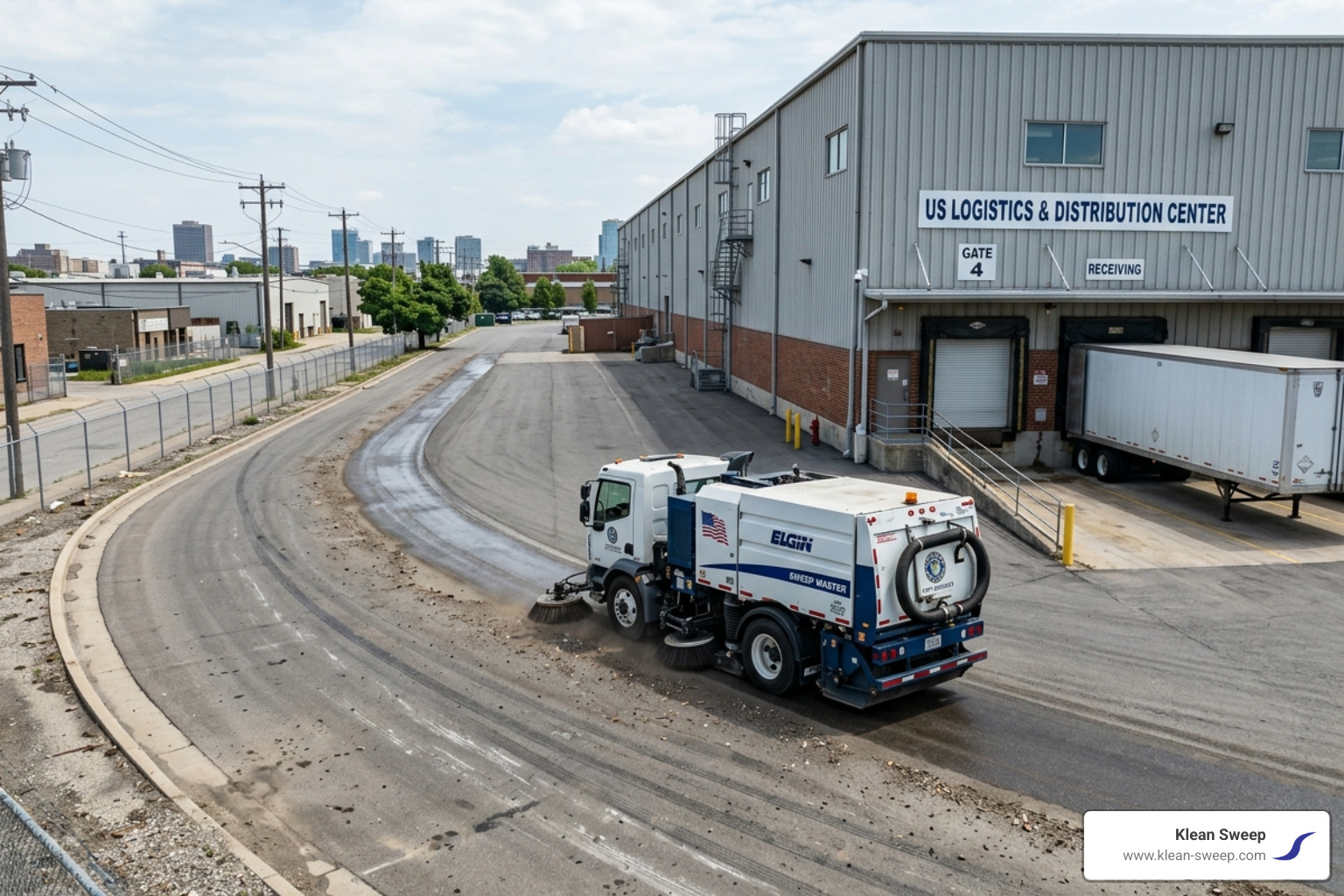
Not all pavement is created equal. A quiet commercial cul-de-sac in Brea has very different needs than a high-traffic industrial logistics center in Carson. Understanding these differences is key to maintaining a safe and professional environment.
In the greater Los Angeles area, while municipal agencies handle public roads, the responsibility for private commercial and industrial sites falls entirely on the property owner.
Commercial Sweeping typically focuses on:
- Retail Centers and Malls: High turnover of customers means more litter and food-related debris.
- Parking Structures: These require specialized, low-profile equipment to navigate tight turns and height restrictions.
- Office Parks: Aesthetics are the priority here, ensuring a “white glove” look for tenants and visitors.
Industrial Sweeping is a different beast entirely. Sites like warehouses, distribution centers, and construction zones deal with “heavy” debris. This includes gravel, metal scraps, and thick dust that can become a respiratory hazard if left to blow around. As noted by the Street Sweeping – City of Longmont , industrial areas often require sweeping at night or during off-peak hours to minimize disruption to heavy machinery and shipping schedules. For more on the specific services we offer for these high-intensity environments, visit our Sweeping service page.
Specialized Equipment for Industrial Street Sweeping
To handle industrial-grade grime, we don’t just use a broom and a dustpan. We utilize state-of-the-art technology tailored to the debris type.
- Vacuum Sweepers: These act like giant vacuum cleaners, perfect for removing the fine dust and microscopic pollutants that “stick” to the pavement.
- Regenerative Air Sweepers: These use a closed-loop system of air to blast the pavement and suck up debris, making them incredibly efficient for large, flat surfaces like parking lots and runways.
- Mechanical Broom Sweepers: Best for “heavy” lifting, such as construction site cleanup where we need to move sand, gravel, and large debris.
Operating this equipment requires a high level of skill. We take pride in our team, and you can see what it takes to join our ranks by looking at the roles for a Street Sweeper Driver In Torrance Ca or a Street Sweeper Driver 2.
Navigating Schedules, Parking Rules, and Enforcement in Street Sweeping
For commercial property managers, the primary logistical challenge is ensuring the pavement is clear of vehicles during service hours. A sweeper cannot clean the curb line or gutter if a vehicle is sitting on top of it. In fact, most of the debris on a property naturally migrates to the curb due to the “crown” (the slight curve) of the pavement and the wind generated by traffic.
Enforcement and Compliance Logistics
Enforcing parking rules on sweeping days is vital for a successful clean. If your lot is full of unauthorized or overnight parked cars during our scheduled sweep, you aren’t getting the full value of the service.
| Property Type | Typical Sweeping Frequency | Enforcement Method |
|---|---|---|
| Retail/Commercial | 1–4 times per week | Posted signage, security patrol |
| Industrial/Logistics | Weekly or Bi-weekly | Internal scheduling, gate control |
| Parking Structures | Monthly/Quarterly | Temporary barricades, email alerts |
In high-traffic commercial districts, sweeping is often scheduled between the hours of 2:00 a.m. and 11:00 a.m. to avoid peak business hours. If you are managing a property in Southern California, it is essential to check your local municipal code or contract with us to ensure you are meeting the expected standards for your zone.
Seasonal Challenges and Operational Logistics
The calendar plays a massive role in how we manage street sweeping. While Southern California doesn’t deal with the snow and ice that cities like Ottawa face, we have our own unique seasonal “events.”
Leaf Season (November to January): This is the busiest time of year for our crews. When deciduous trees drop their leaves, the volume of debris in the gutters can double or even triple. During this time, one pass of the sweeper might not be enough. As documented by the City of Ottawa , heavy leaf buildup often requires crews to return to the same location multiple times to ensure the pavement is actually visible.
Holiday Impact: Many sweeping programs adjust during holidays. For example, some facilities may close for holidays like César Chávez Day, which can shift schedules. Always keep a copy of your 2026 facility maintenance schedule handy to avoid confusion.
Maximizing Street Sweeping Effectiveness for Commercial Properties
To get the most out of your sweeping contract, property owners should follow these pro tips:
- Tree Trimming: Ensure that all trees overhanging the parking lot or access roads are trimmed to a height of at least 14 feet. Mechanical sweepers are tall, and low-hanging branches can damage the equipment or prevent the driver from getting close to the curb. Street Sweeping | San Leandro, CA emphasizes that this is a key responsibility for property owners.
- No Piling: Never blow or rake leaves into large piles in the path of the sweeper. Sweepers are designed to pick up a uniform layer of debris, not a three-foot-high mound. Piles can hide heavy objects that damage vacuum systems.
- Clear the Curb: Move trash bins, shipping pallets, and any temporary equipment. If the sweeper has to swerve around an object, a 20-foot section of the gutter remains unswept.
Frequently Asked Questions about Street Sweeping
Does street sweeping occur on rainy days or holidays?
This is a common question for facility managers. On rainy days, the answer is: it depends. If it’s a light drizzle, we usually keep rolling. However, if there is heavy rain or flooding, the sweepers become ineffective. Wet debris turns into a “slurry” or mud that the vacuum systems cannot lift. Furthermore, in areas where temperatures might drop significantly, using water-assisted sweeping can create dangerous ice patches. According to the Mechanical Street Sweeping and Street Cleaning Schedule | Public Works in San Francisco, property users are still often required to move their vehicles even on rainy days unless a formal cancellation is announced, because the service may attempt to sweep as soon as the rain stops.
Why was the area in front of my commercial property missed?
There are usually three culprits:
- Parked Vehicles: If a vehicle was parked there when the sweeper passed, the driver had to go around it.
- Obstructions: Low-hanging trees or trash containers blocked access.
- Equipment Maintenance: Occasionally, a machine needs an emergency repair. If you are in a city like San Jose, you can use their online City of San José lookup tool to report a missed sweep or check for service delays.
Can sweepers pick up large debris or landscaping piles?
No. Street sweeping machines are precision instruments designed for litter, dust, and natural debris. They are not “all-purpose” trash collectors. Large items like palm fronds, long branches, or construction lumber can jam the intake or break the broom bristles. As noted by the Street Sweeping | City of Torrance , property owners are responsible for disposing of large debris in the appropriate waste containers.
Conclusion
At the end of the day, street sweeping is about more than just a clean-looking parking lot. It is a vital piece of our urban infrastructure that protects our air, our water, and our community health.
At Klean Sweep, we’ve been the “unsung heroes” of Southern California’s pavement since 1969. As a family-owned business based in Torrance, we combine a legacy of personal service with a state-of-the-art fleet that can handle everything from a boutique parking structure in Beverly Hills to a massive industrial complex in Carson. We don’t just sweep; we provide comprehensive exterior maintenance including stormwater cleaning, pressure washing, and day porter services to keep your property in peak condition.
Ready to see the difference a professional sweep can make? More info about professional sweeping services is just a click away. Let us help you stay compliant, stay clean, and protect our local waterways.