

What Is a Street Sweeping Schedule and How Do You Find Yours?
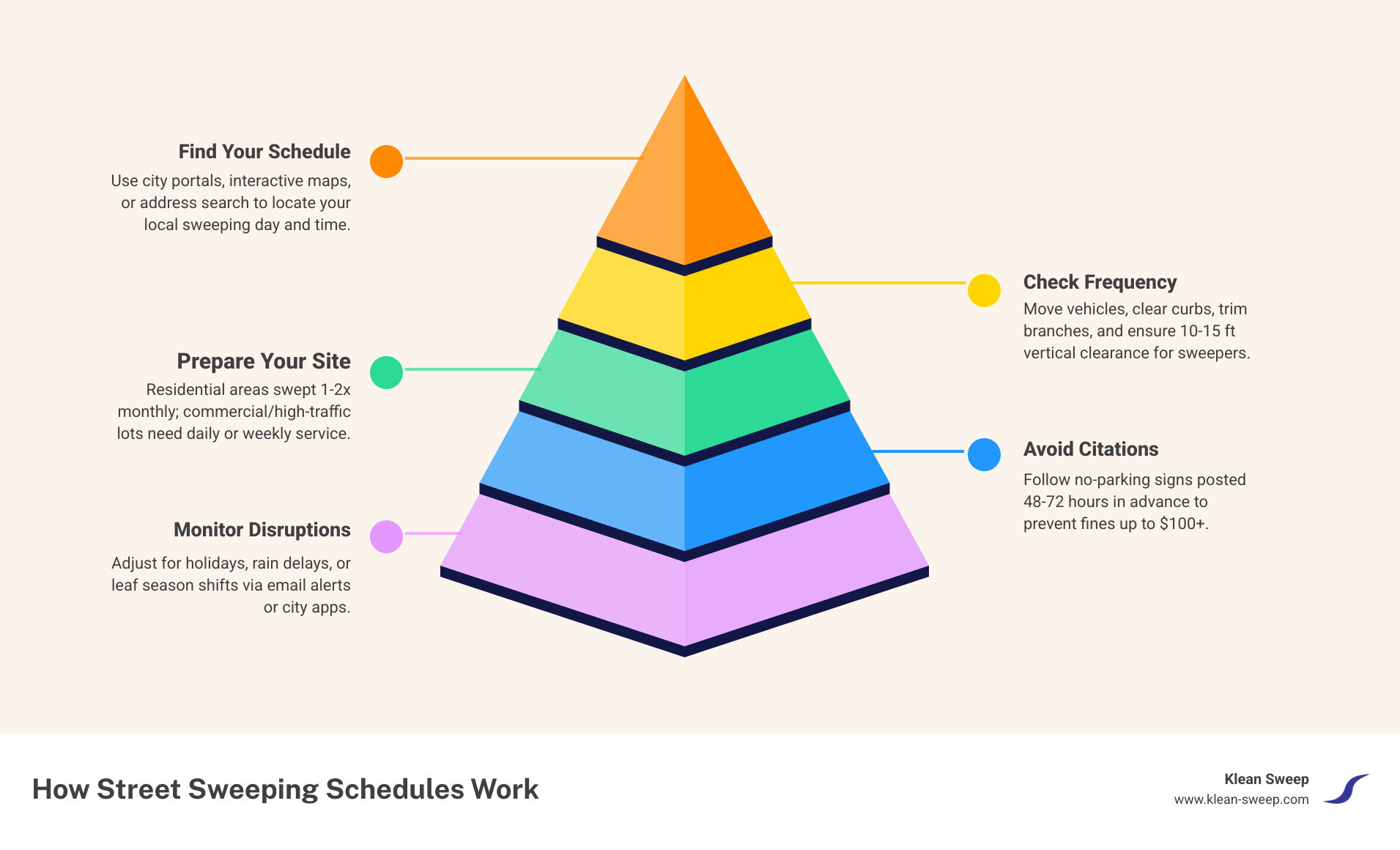
A street sweeping schedule tells you exactly when sweepers will service your street or property — and knowing it helps you stay compliant, avoid citations, and keep your site clean.
Here’s how to quickly find your local schedule:
| Location Type | How to Find Your Schedule |
|---|---|
| Los Angeles, CA | StreetsLA interactive map — sign up for 24/48-hour email alerts |
| Chicago, IL | Search by ward at the City of Chicago Street Sweeping portal |
| Phoenix, AZ | Use the City of Phoenix schedule map — residential streets swept quarterly |
| New Haven, CT | Check your route via the New Haven interactive map — season runs April 1–October 31 |
| Other cities | Search “[your city] street sweeping schedule” + visit your city’s Public Works webpage |
Street sweeping isn’t just about keeping things tidy. It protects storm drains, prevents flooding, and keeps pollutants from reaching local waterways — and for commercial and industrial property managers in the greater Los Angeles area, it’s also a matter of regulatory compliance.
Whether you manage a parking structure, an industrial lot, or a high-traffic commercial site, understanding how public and private sweeping schedules work is essential for maintaining curb appeal and meeting environmental standards.
I’m Jana Hanson, and I’ve spent over a decade growing Klean Sweep into one of the largest exterior maintenance companies in the Los Angeles area — which means I’ve helped hundreds of commercial property managers navigate exactly this kind of street sweeping schedule complexity. In this guide, I’ll walk you through everything you need to know, from finding your local schedule to making sure your property is ready when the sweeper arrives.
Why a Consistent Street Sweeping Schedule Matters for Commercial Properties
For a commercial property, a clean exterior is your first handshake with a customer. But beyond the aesthetics, maintaining a consistent street sweeping schedule is a critical operational necessity. When we talk about “the curb,” we aren’t just talking about a concrete edge; we’re talking about the frontline of your property’s environmental defense system.
In Southern California, our storm drains lead directly to the ocean. There is no filter in between. Every piece of litter, every drop of motor oil, and every bit of brake dust sitting on your asphalt is one rainstorm away from hitting the Pacific. This is why The Importance of Street Parking Lot Sweeping for Clean and Safe Environments cannot be overstated. Regular sweeping prevents these pollutants from entering the stormwater system, helping you stay in the good graces of the National Pollutant Discharge Elimination System (NPDES) permits.
Furthermore, debris buildup is the primary cause of localized flooding. When leaves, silt, and trash clog your catch basins, water has nowhere to go but up — often into your parking structures or storefronts. By sticking to a schedule, we manage the debris volume before it becomes a disaster.
How Commercial Needs Dictate a Frequent Street Sweeping Schedule
Unlike residential streets that might see a sweeper once or twice a month, commercial properties have much higher “loading” rates. Think about a shopping center in Torrance or a warehouse in Carson; the sheer volume of traffic means more trash, more tire wear, and more oil leaks.
Our Sweeping Services are often tailored to these high-traffic realities. While a city might sweep a major arterial every few weeks, a private commercial lot might require daily service to maintain safety and curb appeal. Industrial lots, specifically those involving heavy machinery or construction, often need a power broom or vacuum sweeper at the end of every shift to comply with local track-out ordinances.
| Area Type | Typical Municipal Frequency | Commercial/Industrial Recommendation |
|---|---|---|
| Residential Streets | Biweekly to Quarterly | N/A |
| Main Thoroughfares | Weekly to Biweekly | Daily to 3x Weekly |
| Industrial Lots | Monthly | Daily or Per Shift |
| Parking Structures | Monthly | Weekly to Daily |
Environmental Impact and Regulatory Compliance
We often hear from property managers who are surprised by a notice from the city regarding stormwater quality. The Street Sweeping – Bureau of Street Services (StreetsLA) program is a great example of how cities use sweeping to meet federal and state clean water regulations. In Los Angeles alone, more than 4,700 curb miles are posted for regular sweeping.
By removing heavy metals, oils, and trash from the pavement, we are essentially performing “source control.” It is much cheaper to sweep up a gallon of oil-soaked sand than it is to remediate a contaminated storm drain system. For businesses in Beverly Hills or Pasadena, following a strict street sweeping schedule is the most cost-effective way to ensure environmental compliance and avoid the heavy fines associated with illegal discharge into the “blue pipes.”
How to Find Your Local Street Sweeping Schedule
Finding your street sweeping schedule shouldn’t feel like a treasure hunt, but with different cities using different systems, it can get confusing. In Southern California, the “gold standard” for finding this info is the municipal Public Works or Street Services portal.
Cities like Los Angeles use a biweekly system — often the first and third or second and fourth weeks of the month. If you are managing a property in Torrance or Carson, you’ll notice that signs are typically posted every 250 feet along main streets. These signs are the law of the land; they override any online map if there’s a discrepancy.

For 2026, many cities are moving toward “Target Projections.” This means that while they have a set schedule, factors like emergency storm debris removal can shift the date by a day or two. Checking the Street Sweeping Schedule | City of Phoenix or your local LA-area equivalent is the best way to see these real-time adjustments.
Using Interactive Maps to Locate Your Street Sweeping Schedule
The days of paper calendars are largely over. Most major metros now offer interactive GIS maps. For example, the City of Chicago :: Street Sweeping 2026 portal allows users to see exactly which side of the street is being swept on which day.
In our neck of the woods, StreetsLA offers a similar tool. You can type in your commercial address and see the exact route assigned to your block. Some advanced systems even offer real-time “Sweeper Trackers” using GPS tools, so you can see if the sweeper has already passed your property or if it’s running behind. This is incredibly helpful for property managers who need to coordinate gate openings or move fleet vehicles.
Notification Services and Mobile Apps
The best way to avoid a ticket (or a missed sweep) is to let the technology do the work for you. Many cities now offer email or SMS alerts. In New Haven, CT, for instance, residents and businesses can sign up for “New Haven Alerts” to get a reminder the day before the sweeper arrives.
In Los Angeles, you can register multiple locations for notifications 24 and 48 hours in advance. For a property manager overseeing sites in Pasadena, Brea, and Carson, these digital compliance tools are lifesavers. They ensure you have enough time to notify tenants to move their vehicles or to have your day porter clear the curb of any loose debris that might hinder the sweeper’s brushes.
Navigating Holiday and Weather Disruptions to Your Street Sweeping Schedule
If there’s one thing that throws a wrench into a perfectly planned street sweeping schedule, it’s Mother Nature — or a bank holiday. It’s a common misconception that sweepers don’t run in the rain. In reality, most professional sweepers can handle light rain and wind without an issue. In fact, a little moisture can actually help with dust control!
However, heavy rain is a different story. If there is significant water buildup or flooding, the sweeper’s vacuum system can’t effectively pull up debris, and the brushes just end up pushing wet mud around. In these cases, service is usually canceled and rescheduled.
2025 and 2026 Holiday Schedule Adjustments
Holidays are the most frequent cause of schedule shifts. Most municipal services in Southern California, including those in Street Sweeping | Brea, CA – Official Website, do not operate on major holidays like New Year’s Day, Martin Luther King Jr. Day, or Cesar Chavez Day.
What gets tricky is the “citation exemption” rule. On some “minor” holidays, the city might still sweep the streets, but they won’t issue parking tickets. This is often the case on days like Farmworkers Day in certain jurisdictions. Always check your local 2025 and 2026 holiday calendar to see if your Monday route is being pushed to Tuesday or skipped entirely for the month.
Impact of Inclement Weather and Seasonal Debris
Seasonality plays a huge role in how effective a sweep will be. During “Leaf Season” (typically November through January in Southern California), the volume of debris can double or even triple. This is when schedules often become “flexible.” As noted by the Street Sweeping Schedule & FAQs | City of Tacoma, fixed schedules can be hard to maintain when sweepers have to stop every hour to dump a full hopper of leaves.
Another factor to watch for is “Slurry Seal” or paving projects. If your street was recently resurfaced, it usually won’t be swept for at least one month to allow the material to cure. If you see a construction crew move in, expect the street sweeping schedule to be suspended until the project is complete and the contractors have cleared their equipment.
Avoiding Citations and Maximizing Sweeping Effectiveness
For many, the first time they think about a street sweeping schedule is when they find a bright orange envelope tucked under their windshield wiper. Citations are a “last resort” for cities, but they are necessary to ensure the sweepers can actually reach the curb. If a car is parked in the way, the sweeper has to swerve around it, leaving a “debris island” that eventually washes into the storm drain.
Understanding Parking Enforcement and Fines
In cities like Torrance, parking enforcement is strictly tied to the posted signs. According to the Street Sweeping | City of Torrance guidelines, vehicles must be clear of the curb during the entire posted window — usually a four-hour block.
If you do get a ticket, most cities give you 21 days to pay or contest it. Some cities even offer “disabled vehicle exemptions” if you call their dispatch line before the sweeper arrives, though this is rare and usually requires proof of a tow-in. To avoid these headaches, we always recommend that property managers include sweeping schedules in their tenant handbooks or lease agreements for commercial units.
Preparation Tips for Property Managers
As a Street Sweeper Driver 2, our team sees what prevents a good clean. To get the most out of your street sweeping schedule, a little preparation goes a long way.
First, consider your “vertical clearance.” Modern sweepers are tall and require at least 14 feet of clearance to operate without damaging the vehicle or your property’s trees. Low-hanging branches are the number one reason sweepers skip a curb line.
Second, check the Street Sweeping | San Leandro, CA best practices: move your trash and recycling bins back from the curb on sweeping days. If a sweeper has to navigate a “slalom course” of bins, they can’t get the suction close enough to the gutter where the heavy pollutants settle.
Pro-tip for Property Managers:
- Trim those trees: Keep branches at 14ft height.
- Clear the “Furniture”: Remove portable ramps, basketball hoops, or temporary signage.
- Blow it out: Have your day porter blow debris from the sidewalks and corners into the path of the sweeper about 30 minutes before the scheduled arrival.
Frequently Asked Questions about Street Sweeping
How often are commercial districts swept compared to residential areas?
Commercial districts and high-traffic industrial areas are typically swept much more frequently — often weekly or even daily. Residential streets in cities like Phoenix or parts of LA might only see a sweeper once a month or quarterly. Because commercial areas generate more litter and automotive pollutants, the street sweeping schedule must be tighter to prevent environmental violations.
What happens if a scheduled sweep is missed due to a holiday?
In most Southern California municipalities, if your sweeping day falls on a holiday, the service is not “made up” the next day. Instead, it is usually skipped until the next scheduled cycle. However, some private contracts (like those we handle at Klean Sweep) allow for holiday rescheduling to ensure your property never goes too long without a cleaning.
Who should I contact for special sweeping exemptions or missed service?
For municipal streets, you should contact your city’s Department of Public Works or Bureau of Street Services. If you are in a private commercial complex, you should contact your property management office or the sweeping contractor directly. For missed sweeps in LA, you can often report the issue via the MyLA311 app.
Conclusion
At the end of the day, a street sweeping schedule is more than just a date on a calendar; it’s a commitment to the health of our local community and the longevity of your property. Since 1969, our family-owned team at Klean Sweep has been dedicated to providing state-of-the-art exterior maintenance that keeps Southern California beautiful.
From our home base in Torrance, we serve the entire greater Los Angeles area with a fleet of environmentally friendly sweepers, pressure washers, and stormwater cleaning tools. We understand the local regulations in Carson, the aesthetic standards of Beverly Hills, and the high-traffic demands of Pasadena.
If you’re tired of tracking the city’s schedule and want a customized, reliable plan for your commercial property, we’re here to help. Whether you need a Street Sweeper Driver in Torrance, CA or a full-scale stormwater compliance audit, our team has the expertise and the equipment to get the job done right.
Ready to take the guesswork out of your maintenance? More info about professional sweeping services is just a click away. Let’s keep our streets clean, our drains clear, and our oceans blue — together.