
What Does Graffiti Removal Cost for Commercial Properties?
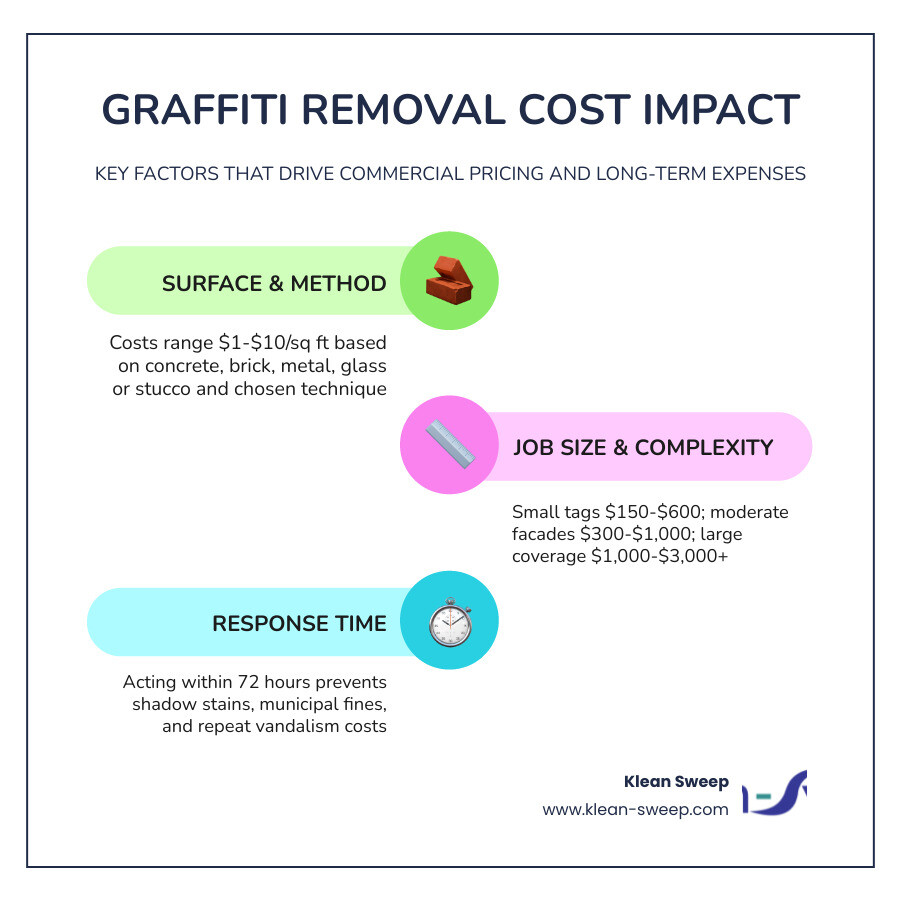
Graffiti removal cost for commercial properties typically falls between $1 and $10 per square foot, depending on surface type, removal method, and job complexity. Most standard jobs range from $300 to $1,000, though large-scale or specialized work can run significantly higher.
Here’s a quick-reference breakdown:
| Job Size | Typical Cost Range |
|---|---|
| Small (single tag, signage, window) | $150 – $600 |
| Moderate (building facade, wall section) | $300 – $1,000 |
| Large (extensive wall coverage) | $1,000 – $3,000+ |
| Specialized (historic, delicate surfaces) | $500 – $2,500+ |
Graffiti on a commercial property isn’t just an eyesore. It signals neglect, invites repeat vandalism, and can put you at odds with local code enforcement. In Los Angeles, property owners can face mandatory removal deadlines — and the cost of ignoring graffiti almost always exceeds the cost of acting quickly.
The U.S. spends over $12 billion annually on graffiti cleanup. For commercial property managers, that number hits close to home — especially when a single unaddressed tag can trigger a cycle of repeat incidents that compounds your costs over time.
I’m Jana Hanson, and I’ve been managing exterior maintenance operations across the greater Los Angeles area for over a decade through Klean Sweep — which means graffiti removal cost is something our commercial clients ask about constantly. In the sections below, I’ll walk you through everything that affects your price, so you can budget accurately and make smart decisions for your property.
Understanding the Average Graffiti Removal Cost
When we look at the big picture of commercial property maintenance, managing vandalism is an ongoing operational reality. At Klean Sweep, we have spent decades helping property managers navigate these unexpected expenses. Understanding how professional services structure their pricing is the first step toward keeping your maintenance budget under control.
Professional contractors utilize several distinct pricing models to estimate a job. Rather than a one-size-fits-all approach, the final invoice is shaped by the physical scale of the damage, the hours of labor required, and the specialized equipment needed to safely restore the surface. For a foundational look at how basic washing services operate, our Beginners Guide to Pressure Washing provides excellent context on the labor and machinery involved in commercial exterior cleaning.
To give you a clear view of how these pricing structures function in the commercial sector, we have compared the primary pricing models below:
| Pricing Model | When It Is Used | Relative Cost Impact | Key Advantage for Owners |
|---|---|---|---|
| Per Square Foot | Large facades, retaining walls, extensive surface areas | Highly predictable for large budgets | You only pay for the exact physical area treated. |
| Hourly Rate | Complex, multi-surface jobs or delicate historic brick | Varies based on labor intensity | Ensures the technician takes the necessary time to avoid surface damage. |
| Minimum Call-Out Fee | Small isolated tags, single-car parking garage pillars | Baseline cost for mobilization | Covers travel, equipment setup, and immediate rapid response. |
| Maintenance Retainer | High-risk urban properties, retail centers, parking structures | Highly cost-effective over time | Keeps your property continuously clean with predictable monthly operational costs. |
Average Graffiti Removal Cost by Surface Type
The material beneath the paint plays a massive role in determining your final graffiti removal cost. Different building materials react uniquely to pigments, binders, and the cleaning methods required to dissolve them.
- Concrete: Unsealed concrete is highly porous. It acts like a hard sponge, pulling aerosol paint deep into its microscopic pores. Removing paint from concrete requires specialized chemical softeners combined with high-pressure hot water. To understand how we handle tough concrete cleanups without compromising the material, read our guide on how to Stop the Grime with a Power Washed Concrete Floor.
- Brick and Porous Masonry: Much like concrete, brick absorbs paint deeply. However, older or historical brick is far more fragile. Standard high-pressure washing can easily blast away the outer face of the brick or erode the mortar joints. This delicate balance requires gentler chemical dwell times and low-pressure steam, which increases labor time and overall cost.
- Metal: Non-porous metal surfaces, such as steel utility boxes, metal doors, and aluminum window frames, do not absorb paint. This makes cleanup significantly faster and more cost-effective, often requiring only mild chemical wipes or light pressure washing.
- Glass: Glass is highly resilient to chemical solvents, making paint removal relatively straightforward. However, vandals frequently transition from spray paint to “scratchiti” (using acid-etching creams or carbide scribes), which permanently damages the glass and requires complete pane replacement rather than cleaning.
- Stucco: Stucco is highly textured and incredibly fragile. Abrasive blasting or aggressive pressure washing will tear the stucco right off the wall. Safe removal requires highly specialized, gentle chemical gels and low-pressure rinsing, making it one of the more labor-intensive surfaces to clean.
How Pricing Models Shape Your Total Graffiti Removal Cost
The pricing model your contractor selects directly impacts your bottom line. For minor vandalism, a flat-rate minimum call-out fee is standard. This baseline covers the mobilization of specialized equipment, eco-friendly chemical agents, and the technician’s travel time to your property.
For larger commercial properties, flat-rate pricing shifts toward square footage or hourly rates. If a vandal targets a massive concrete retaining wall in a parking structure, a per-square-foot rate ensures you pay a fair price proportional to the actual coverage.
However, emergency dispatch services or after-hours call-outs (to ensure a clean storefront before business hours) will naturally carry premium rates. Conversely, commercial properties that bundle graffiti abatement into a comprehensive exterior maintenance contract — alongside services like parking lot sweeping or day porter duties — benefit from significantly lower per-incident costs.
Key Factors That Influence Commercial Graffiti Removal Pricing

No two graffiti incidents are identical. To provide an accurate estimate, professional technicians must evaluate several on-site variables that dictate the complexity of the cleanup.
- Paint and Marker Type: Vandals use a wide variety of mediums. Standard aerosol spray paints are highly common, but oil-based enamels, industrial permanent markers, and specialty asphalt-based paints present unique challenges. Markers and enamels often require multiple rounds of chemical solvents to break down the pigments completely.
- Location and Accessibility: A tag at ground level on a flat sidewalk is simple to access. A large piece of graffiti painted high up on a parking structure facade, a stairwell, or an elevated pedestrian bridge requires specialized access equipment. The need for scissor lifts, boom lifts, or scaffolding immediately increases operational costs.
- Traffic Control and Safety: For commercial properties located on busy thoroughfares in cities like Los Angeles, Pasadena, or Carson, working near public right-of-ways requires strict safety compliance. Setting up pedestrian detours, traffic cones, and safety barriers adds coordination time to the project.
- Municipal Bylaws: Local Southern California cities enforce strict guidelines regarding property maintenance and vandalism. For instance, cities like Beverly Hills maintain aggressive enforcement programs to keep commercial corridors pristine. You can read more about these strict local expectations on the Graffiti Abatement | Beverly Hills, CA portal. Staying compliant with these local ordinances means property owners must act swiftly to avoid municipal fines.
The Cost of Delay: Why Response Time Matters
When it comes to graffiti, time is your greatest enemy. Fresh spray paint is much easier to dissolve and wash away because the binders in the paint have not yet fully cured.
If graffiti is left baking in the hot Southern California sun for days or weeks, the UV rays accelerate the curing process. The pigments chemically bond with the underlying masonry. When this happens, removing the paint without leaving a permanent “shadow stain” or “ghost image” becomes incredibly difficult. Removing cured paint requires stronger chemical solutions, longer dwell times, and repeated cleaning passes, which dramatically drives up labor costs.
Furthermore, leaving graffiti on your property acts as an open invitation to other vandals. Studies show that properties that remove tags within 24 to 72 hours experience a dramatic reduction in repeat vandalism. Removing the visual reward quickly deters taggers from returning.
Can You Just Paint Over Commercial Graffiti?
It is incredibly tempting to grab a leftover can of paint and simply roll over the offending tag. While this seems like a quick, low-cost fix, it often backfires on commercial properties.
First, aerosol paint is highly prone to “bleed-through.” Standard latex paints will not seal the oils and solvents in spray paint, causing the dark graffiti to slowly ghost back to the surface over time. To prevent this, you must apply specialized, expensive stain-blocking primers before painting.
Second, painting over a section of a wall creates a highly visible “patchwork quilt” effect. Unless you repaint the entire wall from corner to corner, the fresh patch of paint will not perfectly match the weathered paint around it. This patchy appearance looks unprofessional and can hurt your business’s curb appeal just as much as the original graffiti. Over time, building up multiple layers of paint on exterior masonry traps moisture, leading to peeling, bubbling, and accelerated surface degradation.
Comparing Commercial Removal Methods and Expenses
Selecting the appropriate removal method is a delicate balance of cost, speed, and protecting the integrity of your building’s exterior. At Klean Sweep, we utilize state-of-the-art equipment to match the right technique to your specific surface. To explore how professional pressure washing fits into a broader commercial property management plan, take a look at The Ultimate Guide to Commercial Pressure Washing Services.
Here is how the most common professional methods compare:
Pressure Washing and Steam Cleaning
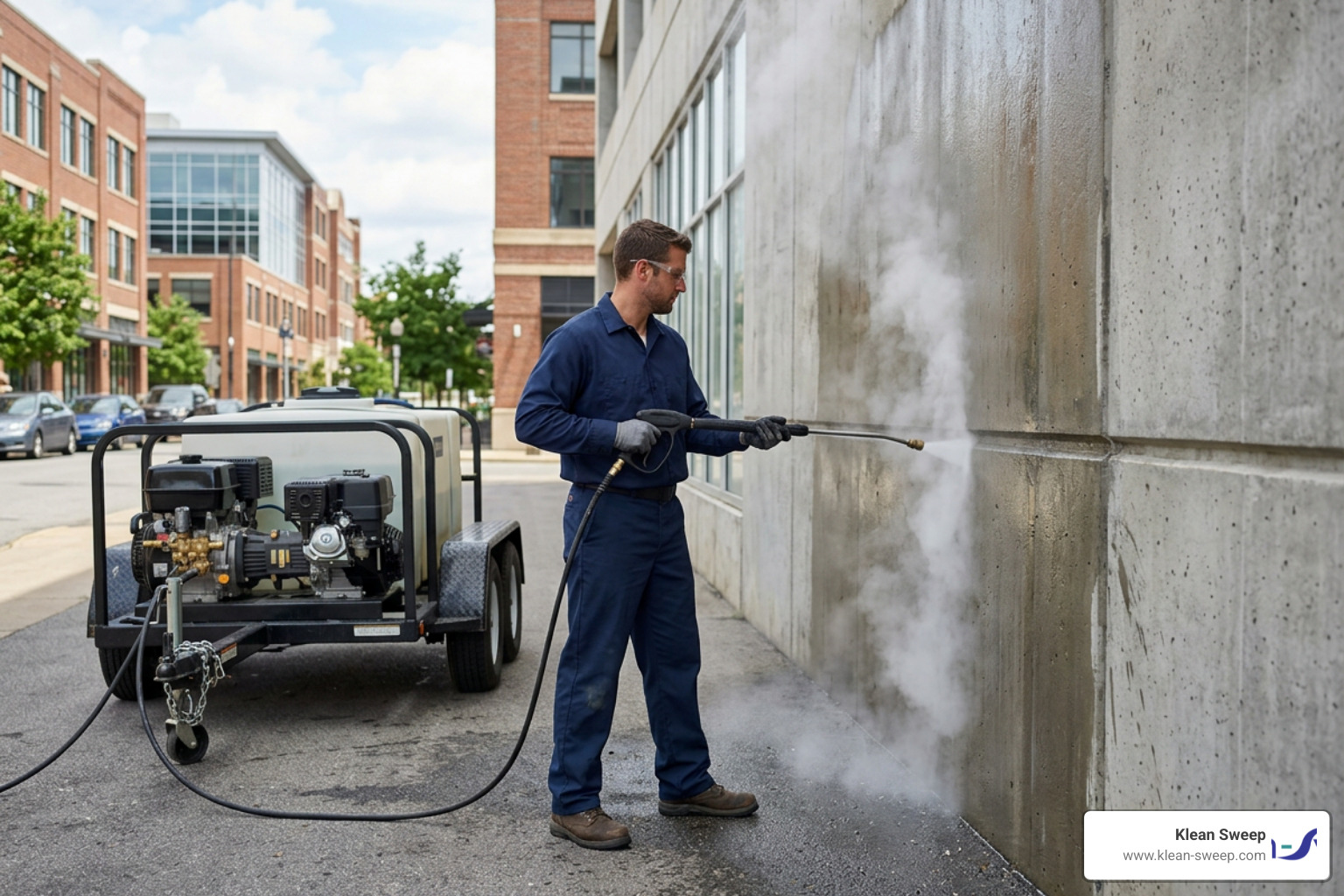
Using high-pressure hot water (often heated to temperatures exceeding 150°F to 300°F) is the most common and cost-effective commercial removal method. The intense heat melts the plastic binders in the spray paint, allowing the high-pressure water to flush the pigments out of the surface pores. This method is highly efficient for concrete, stone, and durable masonry. It is also highly eco-friendly, minimizing the need for harsh chemical agents.
Chemical Solvents and Gel Removers
For delicate or vertical surfaces where water pressure must be kept low, we apply specialized chemical solvents. Modern commercial paint removers are formulated as thick, gel-based compounds. This allows the product to cling to vertical walls without running off, giving the active ingredients time to break down the paint chemistry. Once the paint is dissolved, it is rinsed away with low-pressure water.
Abrasive and Dustless Blasting
When dealing with heavily layered graffiti or exceptionally tough paints on durable surfaces like steel or heavy concrete, abrasive blasting is highly effective. Using media like soda, sand, or crushed glass, this mechanical method strips away the paint. However, it requires highly skilled technicians to avoid etching or permanently damaging the underlying substrate.
Hidden and Long-Term Costs of Commercial Graffiti
Beyond the immediate labor and equipment expenses, commercial property owners must account for several hidden costs associated with graffiti abatement.
- Environmental Runoff and Wastewater Capture: In Southern California, environmental regulations regarding wastewater are exceptionally strict. When cleaning graffiti, technicians cannot allow chemical residues, paint chips, and wash water to flow freely into municipal storm drains. Professional services must utilize specialized vacuum recovery systems to capture, filter, and properly dispose of all runoff. Failing to comply with these environmental laws can result in massive regulatory fines for the property owner.
- Anti-Graffiti Protective Coatings: Applying a protective barrier to vulnerable walls is an upfront investment that pays massive dividends. Sacrificial coatings form a clear, temporary barrier over the surface; when tagged, the paint is easily washed away along with the coating, which is then reapplied. Permanent coatings are hydrophobic and oleophobic, preventing the spray paint from bonding to the wall at all. This allows future graffiti to be wiped away with simple water, reducing future cleanup costs by up to 80%.
- Repeat Vandalism and Insurance Deductibles: If your property is located in a high-risk area, recurring incidents can quickly drain your maintenance budget. While commercial property insurance policies do cover vandalism, high deductibles mean that most standard graffiti cleanups are paid entirely out-of-pocket to avoid premium increases.
To see how specialized surface care and preventative maintenance tie into your overall property value, read our insights on how to Stop Being Dull with These Top Polished Concrete Cleaners.
Frequently Asked Questions about Graffiti Removal
Managing commercial property maintenance comes with plenty of logistical questions. Here are the answers to the most common questions we hear from property managers regarding vandalism and budgeting.
Is commercial graffiti removal covered by property insurance?
Yes, most standard commercial property insurance policies include coverage for vandalism, which encompasses graffiti damage. However, because professional removal costs for standard incidents are typically lower than your policy’s deductible, filing a claim is rarely financially practical. Property managers usually pay for these cleanups out-of-pocket to avoid the risk of rising insurance premiums.
How do municipal ordinances affect commercial cleanup costs?
Municipalities across Southern California, including Los Angeles, Pasadena, Beverly Hills, and Brea, enforce strict property maintenance codes. Property owners are legally required to remove unauthorized graffiti within a mandatory window — often within 10 days of receiving a official notice. If you fail to act, the city may dispatch public works crews to remove the graffiti and bill the property owner directly for the cleanup, often accompanied by heavy compliance fines.
What is the most cost-effective way to prevent recurring graffiti?
The most reliable way to lower your long-term costs is a combination of rapid removal, anti-graffiti protective coatings, and physical security measures. Installing motion-sensor security lighting, high-definition cameras, and planting dense, thorny landscaping (like bougainvillea or climbing ivy) along vulnerable walls physically deters vandals from targeting your property.
Conclusion
Managing your building’s exterior appearance is essential for protecting its long-term market value and keeping tenants happy. While an unexpected act of vandalism is always frustrating, understanding how graffiti removal cost is calculated allows you to make informed, proactive decisions that save you money and protect your surfaces.
At Klean Sweep, we have been family-owned and operated since 1969. Based in Torrance, CA, we proudly serve the greater Los Angeles area, including Carson, Pasadena, Beverly Hills, and Brea. Our highly trained teams utilize state-of-the-art equipment and eco-friendly practices — including full wastewater reclamation — to keep commercial properties, retail centers, and parking structures looking their absolute best.
If your property has been targeted by vandals, do not let the paint cure and invite further damage. Contact us today to learn more about our rapid-response services, or explore our specialized options for Steam Cleaning and Pressure Washing in Torrance CA to restore your building’s curb appeal immediately.