

Why the Best Way to Clean Polished Concrete Floors Matters for Commercial Properties
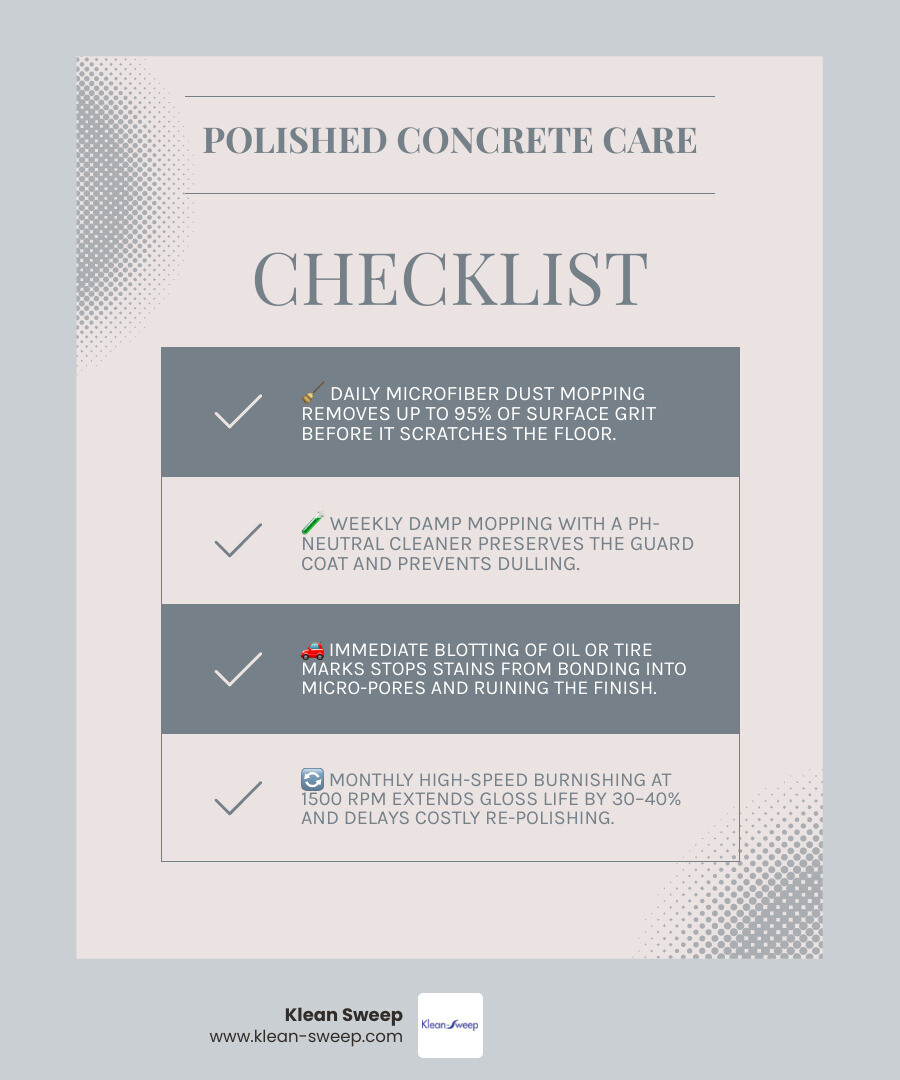
The best way to clean polished concrete floors comes down to four consistent habits: daily microfiber dust mopping, weekly damp mopping with a pH-neutral cleaner, immediate spill response, and periodic professional burnishing.
Here’s a quick-reference summary:
| Step | Frequency | Method |
|---|---|---|
| Dust mop | Daily | Microfiber flat mop |
| Wet mop | Weekly | pH-neutral cleaner, wrung-dry mop |
| Spill cleanup | Immediately | Blot, then wipe with neutral solution |
| Burnishing | Monthly (commercial) | High-speed buffer, soft pad |
| Professional service | Annually | Guard reapplication, re-polish |
There’s a common misconception that polished concrete is a “set it and forget it” floor. It isn’t.
Low maintenance is not the same as no maintenance. Dirt tracked in from outside acts like sandpaper underfoot — slowly grinding away the surface’s gloss with every step. Left unchecked, what starts as a mirror-like finish turns flat and dull over months.
This is especially true in commercial settings: open-air plazas, parking structures, transit hubs, and industrial facilities where foot traffic, vehicle movement, and outdoor debris are constant. The stakes are higher, the floor takes more abuse, and the cost of neglect — including expensive professional re-polishing — adds up fast.
The good news? With the right routine, polished concrete is one of the most cost-effective, durable surfaces you can maintain.
I’m Jana Hanson, and overseeing exterior and concrete floor maintenance across commercial properties in the greater Los Angeles area for over a decade has given me a clear picture of what actually works — and what quietly destroys a polished floor. In this guide, I’ll walk you through the best way to clean polished concrete floors in commercial environments, from daily dust control to annual restoration.
Related content about best way to clean polished concrete floors:
The Best Way to Clean Polished Concrete Floors in Commercial Spaces
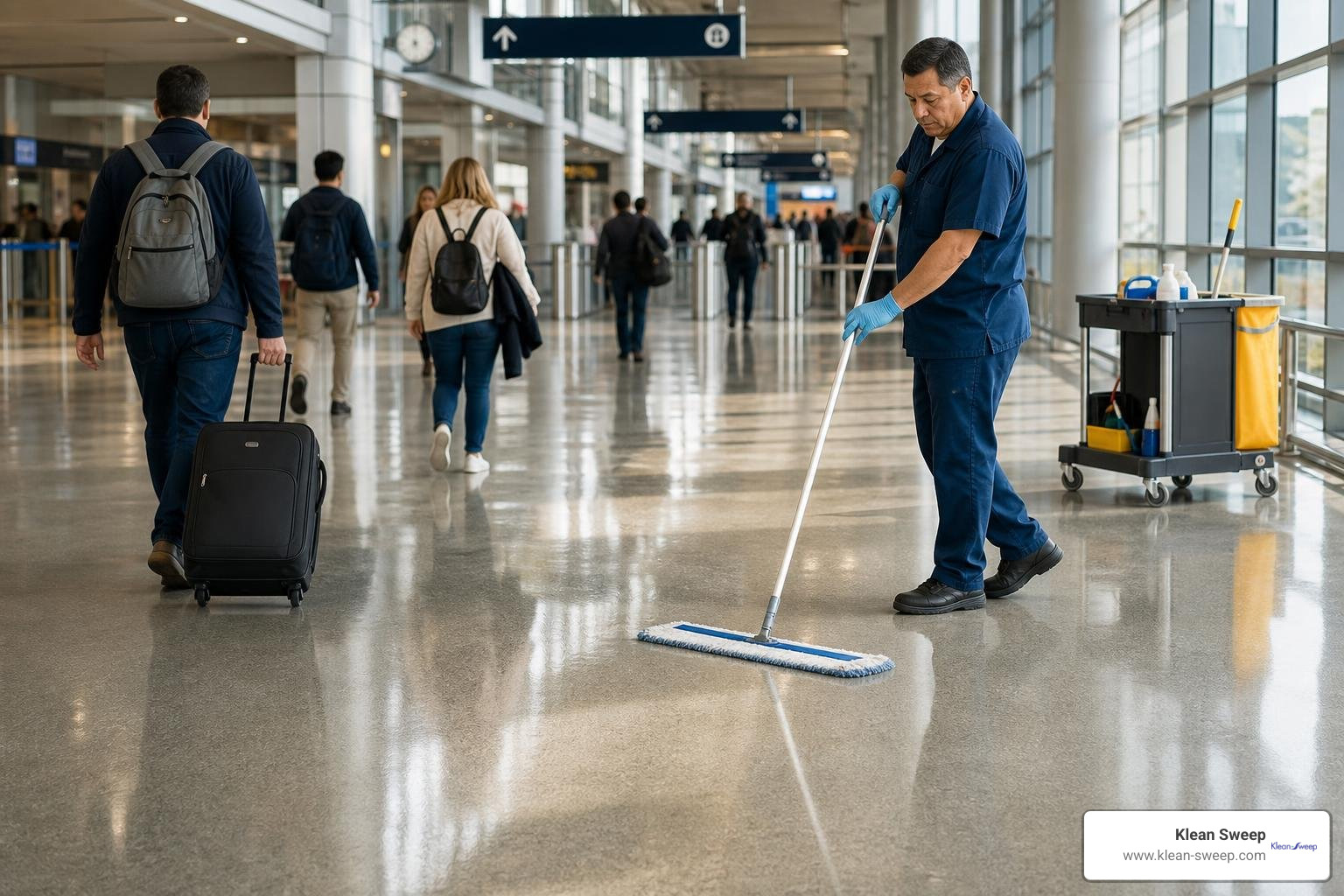
Commercial and industrial spaces present unique challenges for floor care. Unlike residential settings, commercial concrete floors in parking structures, transit hubs, and open-air plazas are exposed to heavy foot traffic, windblown sand, vehicle tires, and environmental pollutants. To protect your investment and maintain a safe, slip-resistant surface, we must implement a structured maintenance program.
Daily Dust Control and the Best Way to Clean Polished Concrete Floors
The absolute foundation of preserving a high-gloss polished concrete finish is daily dust control. Fine grit, sand, and dust act as abrasive agents. Every time a pedestrian walks across the floor or a vehicle drives over it, these tiny particles grind into the surface, micro-scratching the polished finish and slowly wearing down the protective guard coat.
To prevent this, we recommend daily sweeping using a clean microfiber dust mop. Microfiber flat mops are highly effective because they utilize static electricity to attract and hold fine dust particles rather than merely pushing them around.
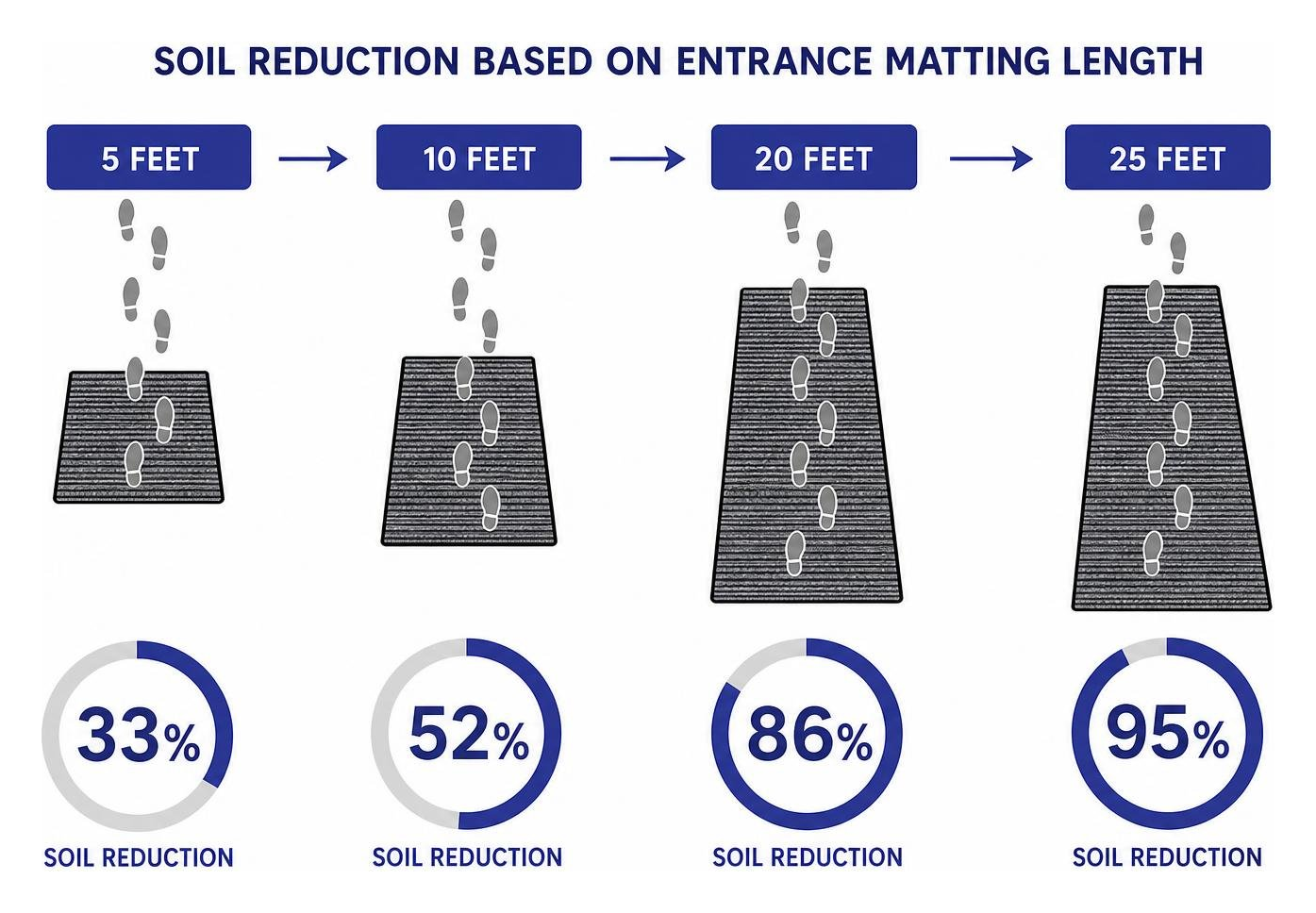
For large commercial properties, preventing soil from entering the facility in the first place is the most cost-effective strategy. This is where an engineered entrance matting program becomes essential. The length of your walk-off mats directly correlates to the amount of dirt trapped before it ever reaches your polished concrete:
- 5 feet of matting results in a 33% soil reduction.
- 10 feet of matting results in a 52% soil reduction.
- 20 feet of matting results in an 86% soil reduction.
- 25 feet of matting results in a 95% soil reduction.
In industrial spaces like distribution centers or transit parking decks, failing to control dust does more than just ruin the floor’s aesthetic. Abrasive dust and grit can migrate into forklift wheels and bearings, causing premature mechanical wear. Replacing a set of forklift wheels or bearings due to grit damage can cost around $1,000 per occurrence. Implementing a daily dust control routine is a critical step in preserving concrete floor durability.
Weekly Wet Mopping and the Best Way to Clean Polished Concrete Floors
While daily dust mopping removes loose grit, weekly wet cleaning is required to lift bound soils, oils, and environmental film. For smaller commercial walk-up areas, a manual mop-and-bucket approach works well, provided you use the correct technique.
Never use a traditional string mop and a single bucket of water. This simply moves dirty water across the floor, leaving behind a cloudy residue. Instead, use a two-bucket system: one bucket filled with your diluted cleaning solution and a second bucket filled with clean water for rinsing your mop head. Always wring your microfiber flat mop thoroughly so it is damp, not dripping wet. Flooding the floor with excess water can lead to mineral spotting, especially in areas with hard water.
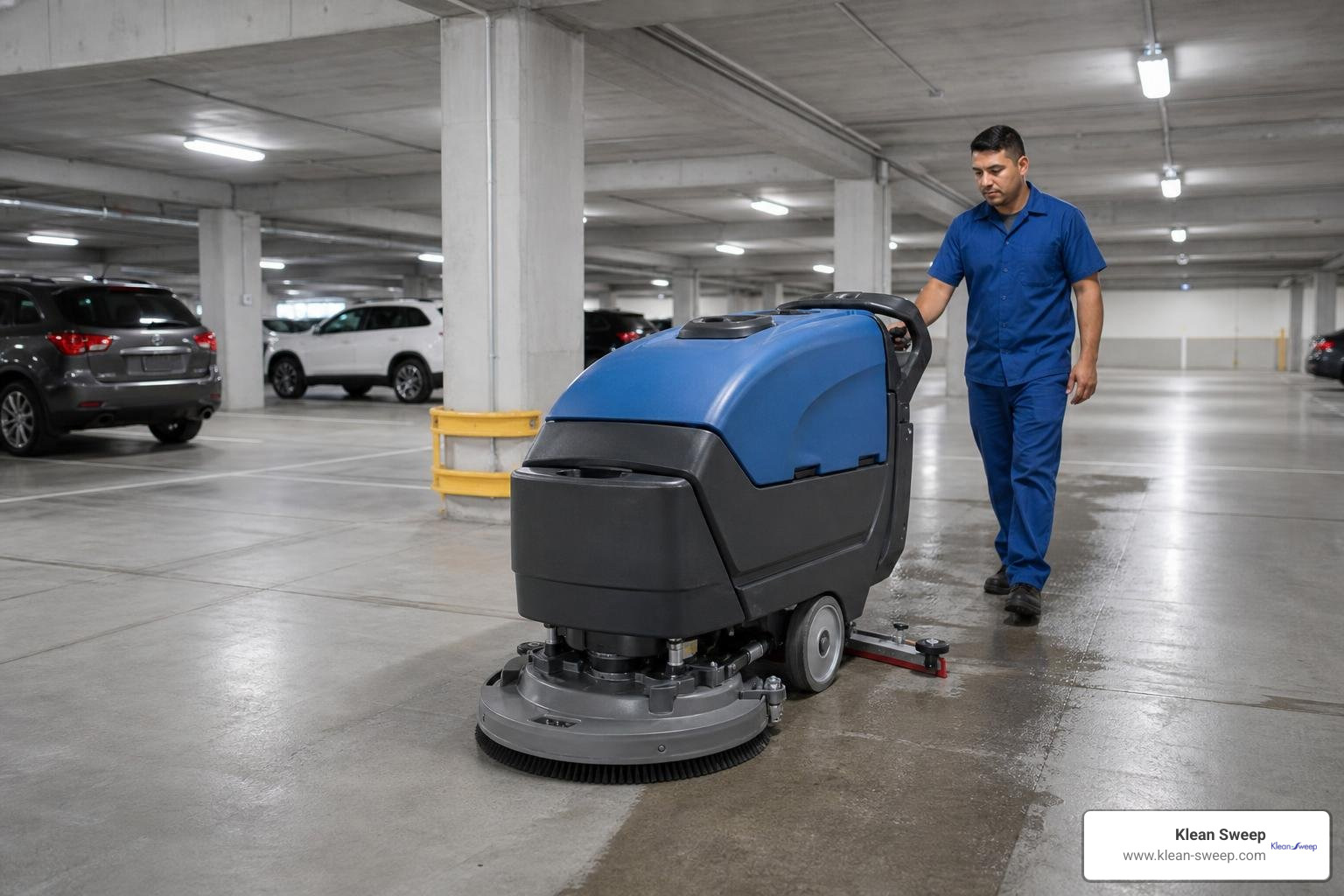
For larger commercial areas, such as expansive open-air plazas or parking structures, manual mopping is inefficient. In these settings, we utilize automatic floor scrubbers. When using an auto-scrubber, ensure it is equipped with soft, non-abrasive pads (such as white or red pads) or soft-bristled brushes. Heavy-duty black or green scrubbing pads will scratch and dull the polished surface.
Whether mopping manually or using an auto-scrubber, the cleaning solution must be a specialized, pH-neutral formula. Using the wrong chemicals will strip the protective guard coat and etch the concrete. To learn more about selecting the right cleaning agents, consult our pH-neutral cleaning guide.
Safe Chemistry vs. Common Mistakes to Avoid
Understanding the chemistry of concrete is vital for its long-term preservation. Concrete is naturally alkaline and highly susceptible to chemical etching from acidic substances. Selecting the wrong cleaning product can permanently damage the floor’s reflectivity, requiring a costly mechanical re-polishing process.
Approved Cleaning Products and pH-Neutral Solutions
The best way to clean polished concrete floors without damaging the surface is to use a cleaner specifically formulated for densified and polished concrete. These cleaners should have a neutral pH (typically between 7 and 9).
Many commercial-grade pH-neutral cleaners do more than just clean; they actively maintain the floor. Look for specialized formulas containing lithium silicates. As you clean, these silicates react with the free calcium in the concrete, helping to maintain the floor’s chemical density and prolonging its shine.
Additionally, avoid cleaners that contain heavy surfactants, waxes, or silicones. These ingredients leave behind a sticky, microscopic film that actually attracts dirt and grime over time, causing the floor to look dull and tacky. For a detailed breakdown of compatible products, check out our list of the top polished concrete cleaners.
Why Steam Mops and Abrasive Tools Must Be Prohibited
We often receive questions about using steam mops on polished concrete. While steam cleaning is highly effective for tile or unfinished concrete, it must be strictly prohibited on polished concrete.
The combination of high-temperature steam and localized pressure causes thermal shock. This heat breaks down the topical guard coat and opens the micro-pores in the densified concrete. Over time, steam cleaning will cause the protective sealer layer to peel, flake, or fail completely, leaving the concrete vulnerable to deep stains.
Similarly, abrasive cleaning tools must never touch polished concrete. This includes:
- Steel wool or wire brushes.
- Stiff-bristled sweeping brooms.
- Green, brown, or black aggressive scrubbing pads.
- Scouring powders.
These tools create microscopic scratches that scatter light rather than reflecting it, quickly turning a high-gloss finish into a matte, hazy surface. For tips on safe agitation methods, read our guide on scrubbing concrete without streaks.
Removing Tough Stains from Commercial Concrete Surfaces
In commercial parking structures and transit hubs, spills are inevitable. Common contaminants include motor oil, transmission fluid, tire marks, and acidic liquids like soda or coffee. Because concrete is naturally porous—even when polished and densified—immediate spill response is critical.
Acidic spills do not just stain; they cause immediate chemical etching. If soda, coffee, or citrus juices are left on the floor, they will eat away the polished finish within minutes, leaving a permanent dull spot. Always blot spills immediately with a clean, dry microfiber cloth. Avoid rubbing, which can push the contaminant deeper into the concrete matrix.
For stubborn oil and grease stains, we recommend applying a specialized, pH-neutral commercial degreaser diluted precisely to the manufacturer’s instructions. For deeply embedded stains, a poultice can be created using a mixture of baking soda and a pH-neutral cleaner. Apply the paste to the stain, let it sit for 30 minutes to draw out the oil, gently scrub with a soft-bristled brush, and rinse thoroughly with clean water.
Tire marks can be removed by applying a specialized concrete cleaner diluted at a 1:10 ratio, letting it dwell for a few minutes, and gently agitating the area with a soft white pad. For severe or widespread staining, it is best to rely on professional concrete floor scrubbing services to restore the surface safely.
Commercial Maintenance Schedules and Restoring Lost Shine
To keep your polished concrete looking its best in high-traffic commercial environments, we recommend adhering to a structured maintenance timeline. Below is a recommended schedule for commercial and industrial facilities:
| Frequency | Action Item | Target Area / Tools |
|---|---|---|
| Daily | Microfiber dust mopping | All walkable and drivable zones |
| Daily | Clean and inspect entrance mats | Entryways, transitions |
| Weekly | Damp mop or auto-scrub | Low-to-medium traffic areas |
| 2-4x Weekly | Damp mop or auto-scrub | High-traffic transit zones, commercial pathways |
| Monthly | High-speed burnishing | High-traffic retail, transit lobbies |
| Quarterly | Reapply topical guard (high traffic) | Entryways, vehicle pathways |
| Annually | Professional deep clean & reseal | Entire polished concrete footprint |
Monthly Burnishing and Guard Reapplication
Over months of heavy foot traffic and equipment movement, even the most meticulously cleaned floor will begin to lose some of its luster. In commercial settings, monthly high-speed burnishing is the secret to extending the life of your floor’s finish.
Burnishing involves using a high-speed floor machine (operating between 1,500 and 2,000 RPM) fitted with a specialized diamond-impregnated pad or a soft buffing pad. The friction heat generated by the rapid rotation of the pad temporarily softens and reactivates the topical guard coat, smoothing out microscopic scratches and restoring a deep, mirror-like gloss.
Regular monthly burnishing in commercial settings can extend the life of your guard coat by 30% to 40%. Before burnishing, always ensure the floor is completely clean and dry. Any grit left on the surface during burnishing will act like sandpaper, severely scratching the floor. If the guard coat has worn thin, a fresh layer of penetrating guard should be misted onto the floor and burnished to lock in the protection.
Annual Professional Maintenance and Cost Breakdown
While daily and weekly maintenance keeps the floor clean, commercial polished concrete eventually requires professional intervention to rebuild its protective barrier. Depending on the traffic volume, most commercial facilities should schedule professional maintenance once every 12 to 18 months.
During a professional maintenance service, technicians will deep-clean the floor using industrial-grade sweepers and scrubbers, chemically strip any worn topical guard, apply a fresh industrial-strength densifier and stain protector, and high-speed burnish the surface to restore maximum reflectivity.
Annual professional maintenance for polished concrete floors typically costs between $0.35 and $0.85 per square foot. For example, a facility manager overseeing a 2,000-square-foot commercial floor should budget approximately $700 to $1,700 for an annual maintenance polish. Compared to the cost of replacing worn epoxy coatings or restoring a completely ruined concrete slab—which can run thousands of dollars more—preventative professional maintenance is highly cost-effective.
Frequently Asked Questions about Polished Concrete Maintenance
Can you use a steam mop on polished concrete floors?
No, you should never use a steam mop on polished concrete floors. The intense heat and moisture generated by steam mops can cause thermal shock, leading to micro-pores opening in the concrete and causing the protective guard coat or topical sealer to peel, flake, and fail. Stick to microfiber damp mops and pH-neutral cleaners instead.
How often should commercial polished concrete floors be wet mopped?
The frequency depends entirely on traffic volume. High-traffic commercial environments, such as transit hubs, busy parking structure walkways, and open-air plazas, should be wet mopped or auto-scrubbed two to four times per week. Moderate-to-low traffic areas can be wet cleaned once per week, provided they are dust-mopped daily.
What is the best way to restore shine to a dull concrete floor?
For minor dullness, the best way to restore shine is to thoroughly clean the floor and buff it using a high-speed burnisher (1,500–2,000 RPM) with a soft diamond-impregnated pad. This process generates friction heat that reactivates the guard coat. If the floor is severely worn or etched, professional restoration involving fine-grit diamond grinding pads and a fresh application of densifier and guard is required.
Conclusion
Maintaining the beauty and durability of polished concrete floors does not require complex or harsh chemicals. By establishing a consistent daily dust control routine, utilizing pH-neutral cleaning agents, protecting entryways with proper matting, and scheduling periodic professional burnishing, you can keep your commercial floors looking showroom-ready for years.
Since 1969, Klean Sweep has been a family-owned provider of environmentally friendly commercial property maintenance services. Equipped with state-of-the-art sweeping, scrubbing, and pressure washing equipment, our team in blue uniforms is ready to keep your Southern California property looking its absolute best.
Whether you manage an open-air plaza in Pasadena, a parking structure in Torrance, or a transit hub in downtown Los Angeles, we are here to help. Contact us today to schedule your Professional Concrete Floor Cleaning in Torrance, CA and surrounding areas.