

Why Caring for Polished Concrete Floors Is More Important Than You Think
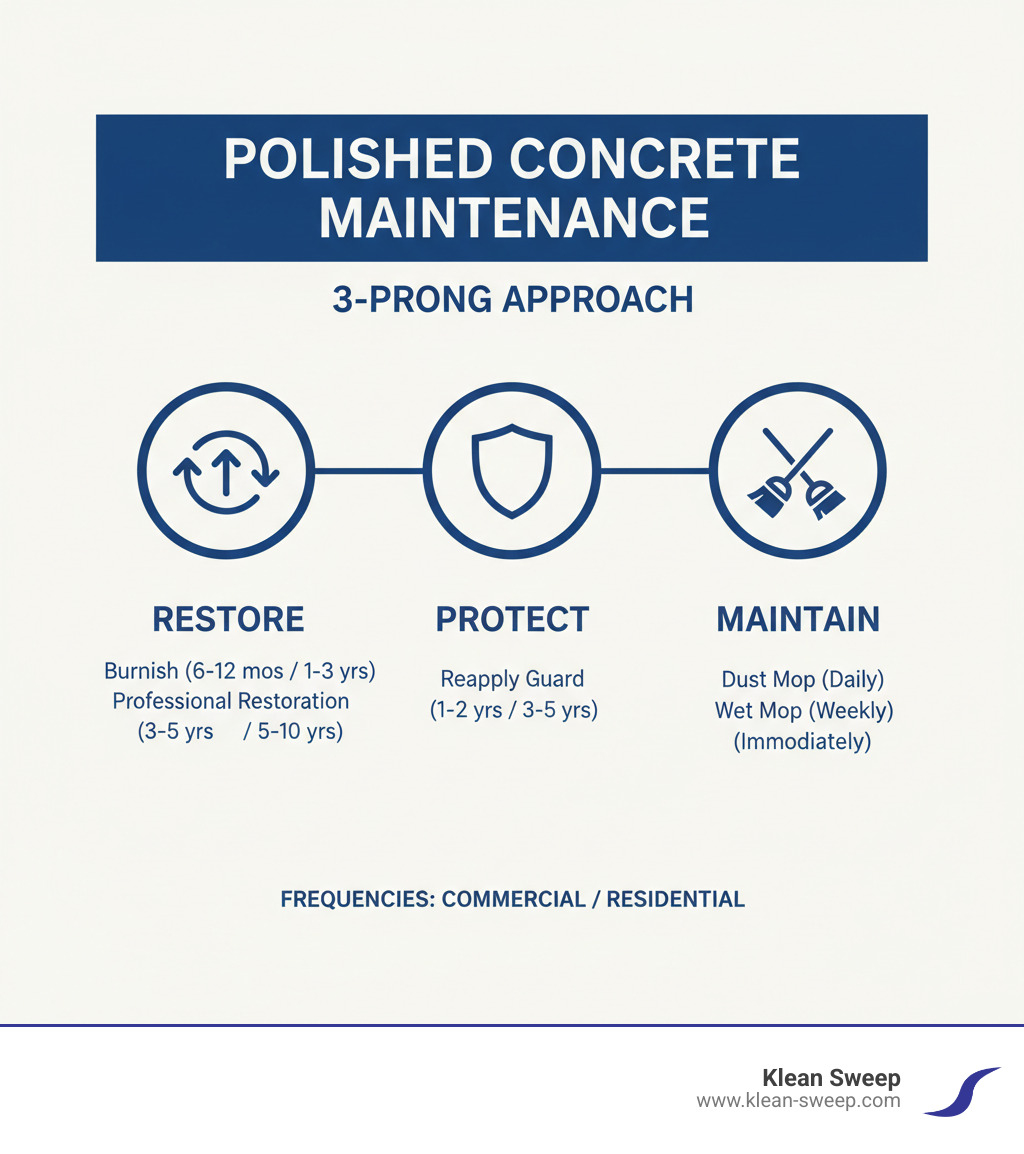
Caring for polished concrete floors doesn’t have to be complicated — but it does have to be consistent. Here’s a quick summary of what it takes:
| Task | Frequency |
|---|---|
| Dust mop with microfiber pad | Daily |
| Weekly wet mop with pH-neutral cleaner | Weekly |
| Clean spills immediately | As they happen |
| Burnish to restore shine | Every 6–12 months (commercial) / 1–3 years (residential) |
| Reapply penetrating guard | Every 1–2 years (commercial) / 3–5 years (residential) |
| Professional restoration | Every 3–5 years (commercial) / 5–10 years (residential) |
The three pillars of a solid maintenance plan are simple: Restore, Protect, and Maintain.
Polished concrete has a well-earned reputation for being durable and attractive. It’s a top choice for commercial spaces, warehouses, and retail facilities across Los Angeles. But there’s a common misconception worth clearing up right away — polished concrete is low-maintenance, not no-maintenance.
Dirt tracked in from outside acts like sandpaper on the surface. Acidic spills — think soft drinks, pickle juice, or citrus — can etch the finish if left unaddressed. And without periodic burnishing and guard reapplication, even the most beautifully polished floor will lose its shine over time.
The good news? With a straightforward routine, a well-maintained polished concrete floor can last 20 to 30 years or more.
I’m Jana Hanson, and I’ve spent years growing Klean Sweep — the exterior and facility maintenance company my father Norm founded in 1969 — into one of the largest maintenance operations in the Los Angeles area, where caring for polished concrete floors across commercial and industrial properties is part of what we do every day. Let’s walk through exactly what that care looks like in practice.
The Daily and Weekly Essentials for Caring for Polished Concrete Floors
When we talk about caring for polished concrete floors, the most important tool in your arsenal isn’t a high-tech machine; it’s a simple microfiber dust mop. In a busy Southern California facility, dust and grit are the primary enemies of a high-gloss finish.
The Daily Dust Mop: Your First Line of Defense
Think of dirt and sand as microscopic shards of glass. Every time someone walks across your floor, those particles are ground into the surface, creating micro-scratches that eventually dull the shine. This is often referred to as the “sandpaper effect.”
We recommend using a microfiber dust mop daily. Why microfiber? Unlike traditional cotton mops, microfiber pads use an electrostatic charge to trap and hold onto small dust particles rather than just pushing them around. For high-traffic commercial spaces in Los Angeles, you might even need to do this once per shift to keep the “grit” at bay.
Weekly Wet Mopping and the pH-Neutral Rule
While daily dusting keeps the floor from being scratched, weekly wet mopping removes the stubborn soils that a dry mop can’t catch. However, this is where many people make a critical mistake.
Concrete is naturally alkaline. If you use an acidic cleaner (like vinegar) or a highly alkaline one (like bleach), you are essentially starting a chemical reaction that will eat away at the concrete’s surface, leading to a dull, “meltdown” look. Always use a pH-neutral cleaner specifically formulated for polished concrete. These cleaners are designed to suspend dirt particles so they can be easily wiped away without leaving a film or damaging the mechanical polish.
For larger facilities, an automatic scrubber is the way to go. It applies the cleaning solution, scrubs with a non-abrasive pad, and vacuums up the dirty water all in one pass. This prevents dirty water from settling into the pores of the concrete. For more on the technical side of this, check out How to Clean Polished Concrete Floors + Maintenance Tips or our guide on Concrete Floor Cleaning for Long-Lasting Durability.

Immediate Spill Response and Stain Management
One of the biggest myths about polished concrete is that it is “bulletproof.” While it is incredibly dense, it is still a reactive surface. If you spill something acidic or oily and leave it there, it will eventually penetrate the guard and leave a permanent mark.
The Danger of Acidic Etching
In caring for polished concrete floors, acidic substances are the ultimate villains. This includes:
- Pickle juice (the high vinegar content is a floor-killer)
- Soft drinks and fruit juices
- Mustard and ketchup
- Wine
When these liquids sit on the floor, they “etch” the surface. This isn’t just a stain; it’s a physical change in the concrete’s texture that removes the shine. If you see a spill, blot it immediately with a soft cloth. Don’t wipe or scrub aggressively, as this can spread the substance further into the pores.
Dealing with Oil and Grease
For warehouses and automotive facilities in Torrance, oil spills are a common headache. Oil doesn’t etch the floor like acid does, but it can leave a dark, unsightly shadow. We suggest using an absorbent material to soak up as much oil as possible first.
If a stain has already set in, you can sometimes use a “poultice” method. This involves mixing a pH-neutral cleaner or baking soda with water to create a thick paste. Apply it to the stain, cover it with plastic wrap, and let it sit for 24 hours. The paste draws the oil out of the concrete as it dries. For more specialized advice, see these 7 Easy Tips on How to Maintain Polished Concrete for a Pristine Finish.
Periodic Restoration: Burnishing and Guard Reapplication
Even with perfect daily care, the “pop” of a polished floor will eventually start to fade. This is where periodic restoration comes in. This doesn’t necessarily mean you have to re-grind the whole floor; often, a good burnishing session is all you need.
The Magic of High-Speed Burnishing
Burnishing is the process of using a high-speed machine (typically 1500+ RPM) equipped with diamond-impregnated pads. The friction from the high-speed rotation generates heat, which actually “re-melts” and tightens the molecular structure of the surface guard. This restores that deep, mirror-like reflectivity without the need for additional chemicals.
Penetrating Guards vs. Topical Sealers
During the original polishing process, a “guard” or “stain protector” was likely applied. Unlike a wax or a topical sealer that sits on top like a piece of plastic, a guard penetrates into the surface. Over time, foot traffic and cleaning wear this layer down.
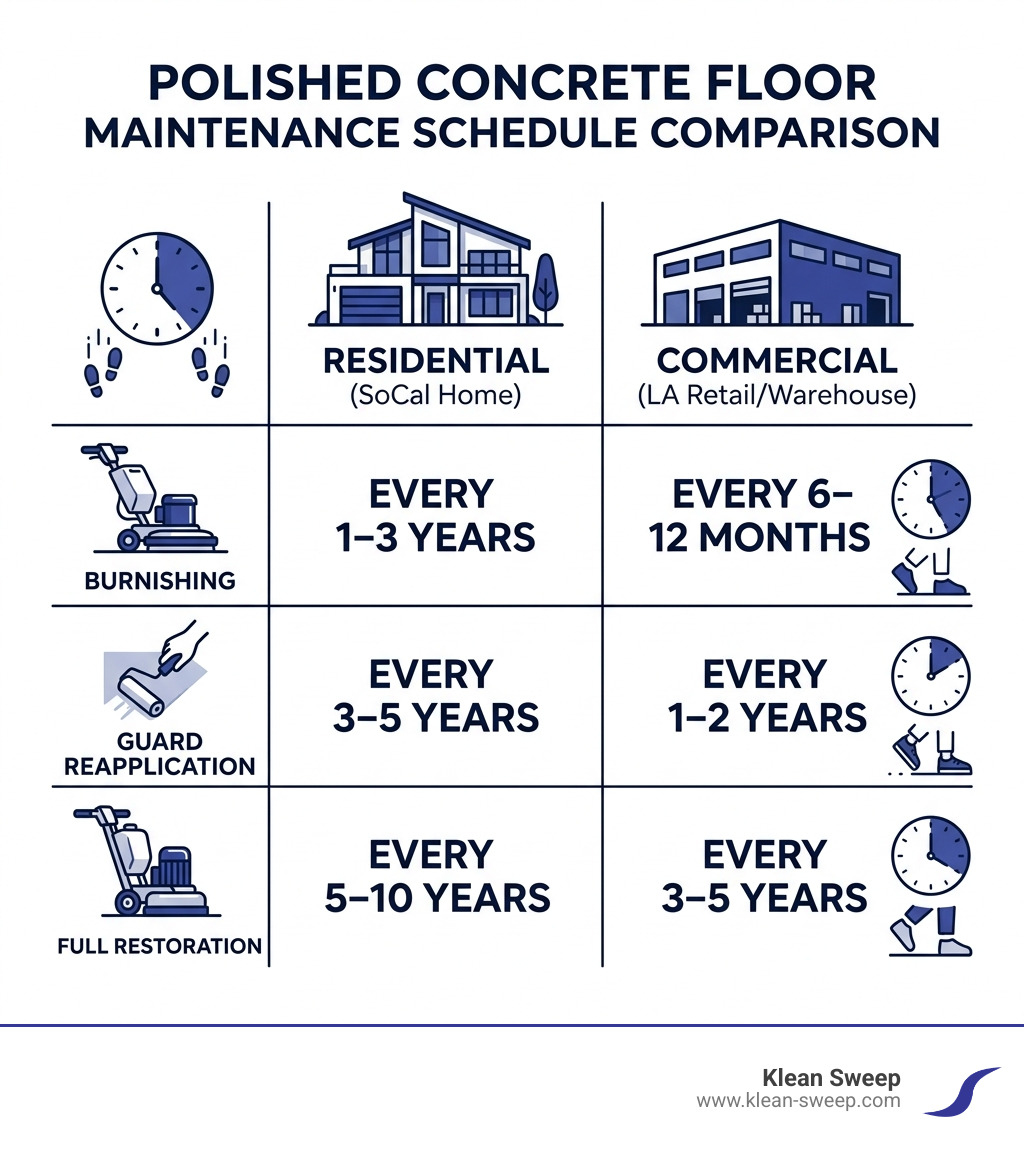
| Maintenance Level | Residential (SoCal Home) | Commercial (LA Retail/Warehouse) |
|---|---|---|
| Burnishing | Every 1–3 years | Every 6–12 months |
| Guard Reapplication | Every 3–5 years | Every 1–2 years |
| Full Restoration | Every 5–10 years | Every 3–5 years |
Reapplying a guard is a proactive step in caring for polished concrete floors. It ensures that when that next soda spill happens, you have a window of time to clean it up before it hits the actual concrete. You can find more details on this process in this Guide to Polished Concrete Floor Maintenance That Leaves a Lasting Shine.
Common Pitfalls and Preventive Measures
Sometimes, the best way to care for a floor is to stop damage before it even reaches the lobby. Preventive maintenance is often the most cost-effective part of any facility manager’s budget.
The Power of Walk-Off Mats
We cannot overstate the importance of high-quality entry mats. Research shows that most of the dirt that damages a floor is tracked in from the first 15 to 20 feet of an entrance. By placing mats at every door, you capture the grit, moisture, and de-icing salts (if you’re in the rare parts of Southern California that see frost) before they can act like sandpaper on your polished surface.
What NOT to Do
When caring for polished concrete floors, there are a few “absolute nos” that we see all the time in the Los Angeles area:
- No Steam Cleaners: The high heat can cause the concrete to expand and contract too quickly, leading to micro-cracking or “spalling.”
- No Wax: Polished concrete doesn’t need wax to shine. Wax actually creates a dull film that traps dirt and makes the floor harder to clean.
- No Dragging: If you’re moving heavy equipment in a warehouse, use dollies with soft rubber wheels. Dragging metal or hard plastic across the floor will leave deep scratches that require professional honing to fix.
Staff training is also vital. Make sure your janitorial team knows exactly which chemicals are safe. A single night of cleaning with the wrong “all-purpose” acidic cleaner can undo years of shine. For more “don’ts,” check out these Tips for Polished Concrete Floor Maintenance.

Frequently Asked Questions about Caring for Polished Concrete Floors
How often should I reapply sealer when caring for polished concrete floors?
This depends entirely on your traffic levels. For a quiet residential basement in Torrance, you might go 5 years without needing a new coat of guard. However, for a high-traffic retail store in Los Angeles, we recommend reapplying the guard every 1 to 2 years. You’ll know it’s time when the floor begins to look “thirsty” or when water no longer beads on the surface. For a deeper dive, read How to Maintain Polished Concrete Floors: The Complete Guide.
Can I repair minor scratches while caring for polished concrete floors?
Yes, minor surface scratches can often be buffed out using diamond-impregnated pads (DIPs) on a standard floor machine. These pads have microscopic diamonds that gently hone the surface back to a shine. However, if you can feel the scratch with your fingernail, it’s likely too deep for a DIY fix and will require professional honing. More info can be found at MAINTAINING YOUR POLISHED CONCRETE FLOOR.
When should I call a professional for maintenance?
If your floor has lost its luster and a standard burnishing doesn’t bring it back, or if you have deep etching from an unaddressed acidic spill, it’s time to call the experts. Large-scale restoration usually involves a multi-step mechanical grinding process that most in-house teams aren’t equipped for. Most commercial floors in Southern California benefit from a professional assessment every year. If you’re in our neck of the woods, you can look at our Concrete Floor Cleaning in Torrance, CA page for local assistance.
Conclusion
Caring for polished concrete floors is an investment in the longevity of your facility. When handled correctly, these floors offer a 20 to 30-year lifespan, making them one of the most sustainable and cost-effective flooring options available today.
At Klean Sweep, we’ve been part of the Southern California business community since 1969. We understand that your facility’s appearance reflects your brand’s standards. Whether you’re managing a massive warehouse in Los Angeles or a boutique retail space in Torrance, our family-owned team is here to help you navigate the “Restore, Protect, Maintain” cycle with state-of-the-art equipment and eco-friendly practices.
Don’t let your floors have a meltdown. Keep them cool, clean, and pH-neutral. If you’re ready to see the difference professional care can make, explore our Professional Concrete Floor Cleaning Services and let’s keep your floors shining for decades to come.