

How to Find and Navigate Your Municipal Street Cleaning Schedule
Navigating city cleaning calendars requires checking public records alongside physical conditions at the curb. Municipalities deploy specialized sweeper fleets to clean commercial avenues, industrial corridors, and public access roads. To avoid costly parking tickets and ensure sweepers have full access to gutter lines, commercial drivers and property operators need a reliable strategy to verify service times.
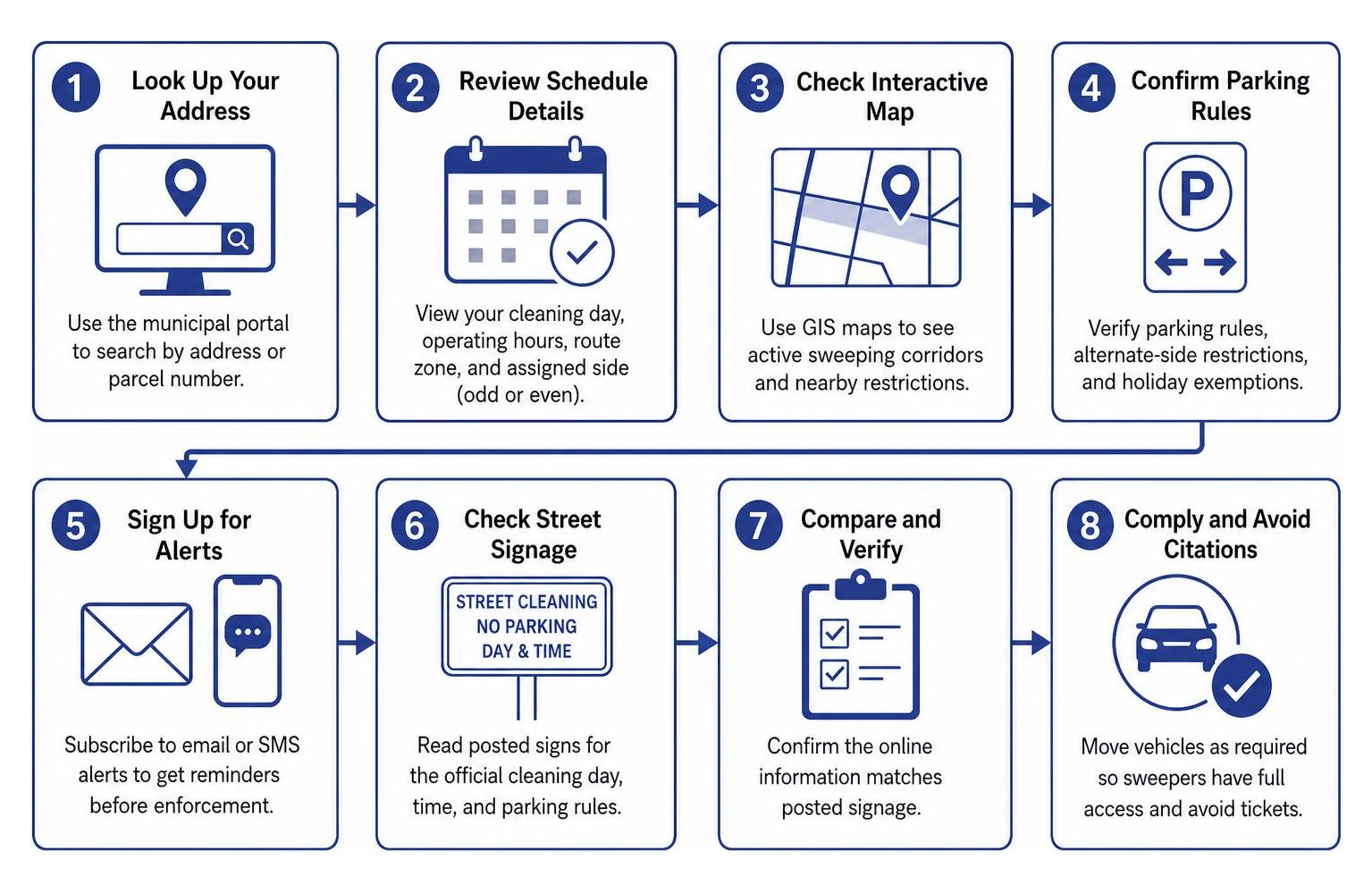
Modern municipal portals provide digital lookup tools. You can enter an address or commercial parcel number into an online database to display your designated cleaning window, route zone, and assigned side of the street (such as odd or even address numbers). For example, the Street Sweeping Lookup from the City of Boston lets commercial fleet operators confirm sweeping days by street name and district.
Many cities also integrate interactive GIS mapping layers. These allow business owners, fleet operators, and facility managers to view active sweeping sectors in real time. If you manage transport fleets, delivery vans, or corporate parking facilities, knowing where to find local sweeper routes prevents operational delays and avoids parking citations.
Digital Tools and Alerts to Track a Street Cleaning Schedule
Municipalities provide automated digital tools to communicate route times to the public:
- Address-Based Search Portals: Public works websites feature direct lookup forms. Entering a street name or business district instantly returns your cleaning day, operating hours, and enforcement status.
- Automated Notification Systems: Many city portals offer subscription services that send automated email or SMS notifications before enforcement begins. These tools alert fleet dispatchers and property directors to clear vehicle loading zones.
- Open Data & A-Z Road Indexes: Some agencies maintain comprehensive directories where streets are cataloged alphabetically alongside their service frequency. The London Borough of Richmond upon Thames street cleaning schedules provide an example of an A-Z lookup organized by road name.
- Interactive Parking & GIS Maps: Digital road maps visually highlight active sweeping corridors, complete with holiday exemptions and alternate-side parking restrictions.
Understanding Posted Signage: Regulatory vs. Advisory Signs
Online databases are helpful, but posted physical street signs always serve as the legal authority for parking enforcement. If an online calendar conflicts with a physical sign on a commercial corridor, parking enforcement officers will issue citations based on the posted metal placard.
Understanding the difference between regulatory and advisory signage is critical:
- Regulatory Signs: These are legally enforceable traffic control signs featuring red and white lettering (e.g., “No Parking: Tuesday 8:00 AM – 10:00 AM for Street Maintenance”). Parking in these zones during posted hours leads to immediate citations, and in many jurisdictions, direct vehicle impoundment. Missed service runs in regulatory zones cannot be rescheduled because cities cannot legally clear curbs without re-posting advance notices.
- Advisory Signs: These provide maintenance notifications without active parking penalties. They serve as courtesy notices asking commercial operators to clear curbs for scheduled maintenance. In advisory corridors, missed maintenance days due to severe weather can often be rescheduled for the following business week.
Comparing Sweeping Frequencies and Operations Across Major Cities
Street cleaning operations vary significantly across major metropolitan regions. Municipalities configure their maintenance schedules based on traffic volume, seasonal weather patterns, commercial density, and environmental runoff regulations.
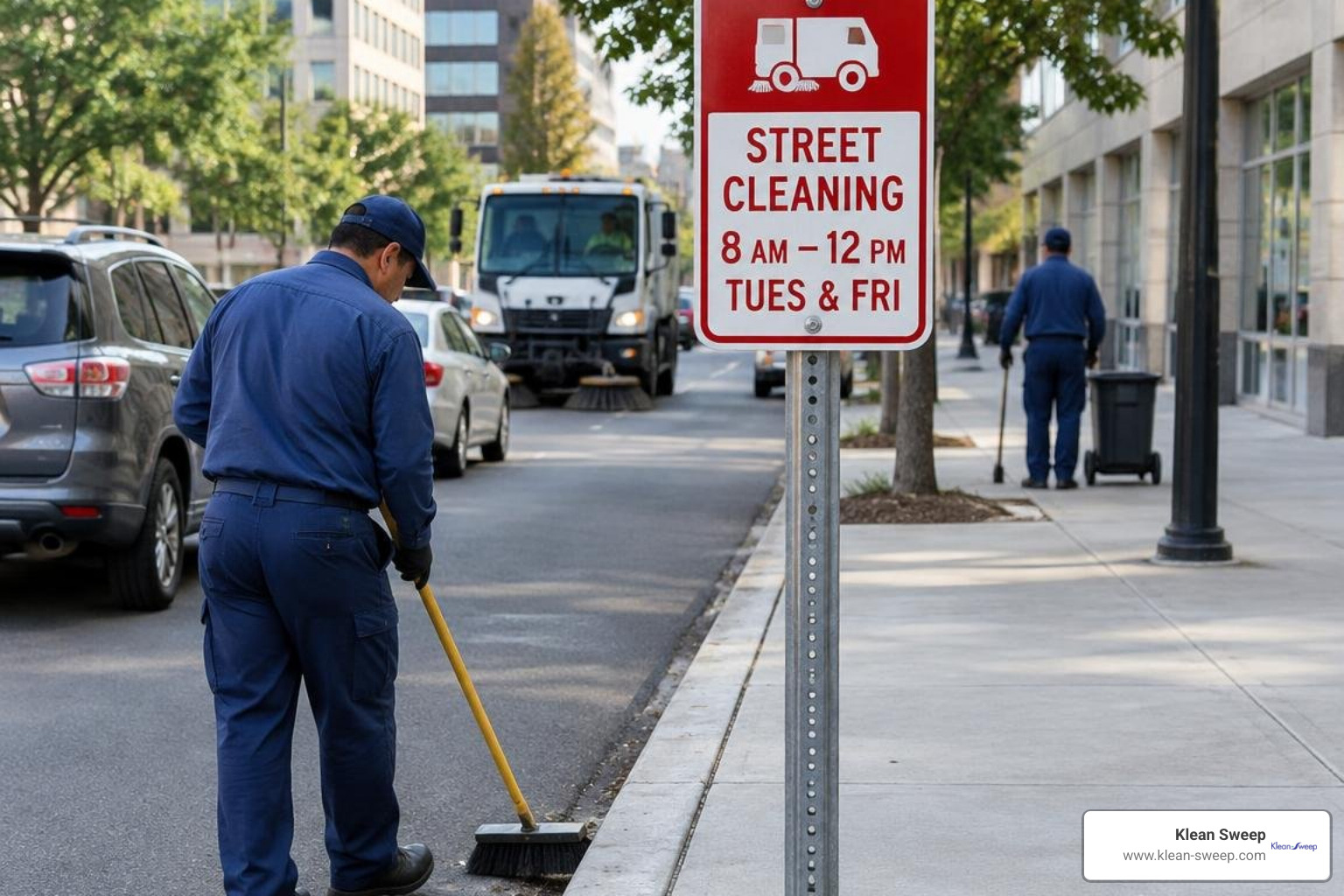
Commercial corridors, downtown business districts, and transit hubs demand higher service frequencies than low-density industrial parks. High-traffic centers often require overnight sweeping or daily curb-line clearing to capture litter, heavy metals, and particulate sediment before debris enters the municipal stormwater network.
Operational Frequencies and Route Coverage
Operating frequency is directly tied to the commercial and environmental needs of each district:
- High-Density Commercial Zones: Swept daily or several times per week during late-night or early-morning windows (typically midnight to 7:00 AM) to maintain curb drainage and prevent traffic bottlenecks.
- Mid-Density Corridors & Arterials: Cleaned on a weekly or fortnightly (every two weeks) cycle. These routes frequently rely on street sweeping schedules and alternate side parking rules to clear one side of the street at a time.
- Industrial & Outlying Commercial Parks: Typically maintained on a monthly schedule, focusing on heavy sediment removal and industrial runoff containment.
Municipalities manage massive physical infrastructure. Sweeping operations routinely cover thousands of lane-miles annually, requiring coordinated routing software, dedicated mechanical sweepers, and strict enforcement windows.
Handling Schedule Disruptions from Holidays, Weather, and Maintenance
Municipal sweeping schedules are subject to unexpected delays. Knowing how public works departments handle disruptions helps commercial facilities manage perimeter parking and loading docks:
- City Holidays: Municipal maintenance operations pause on official federal and local holidays. On designated holiday sweeping policies dates, sweeping runs are suspended, and parking enforcement is waived.
- Severe Weather Events: Heavy rain, standing floodwaters, and freezing temperatures halt sweeper operations. Gutter brooms cannot collect saturated sediment efficiently, and wet materials can clog mechanical intake hoppers.
- Equipment and Fleet Maintenance: Specialized sweepers require ongoing mechanical maintenance. When a vehicle undergoes repairs, non-enforced routes may be postponed, whereas high-priority regulatory avenues are serviced by backup sweepers.
Parking Enforcement, Fines, and Vehicle Impound Policies
Parking enforcement during scheduled cleaning is designed to ensure sweeping brooms can access the curb line where debris naturally collects. When parked vehicles block gutter lines, brooms are forced into travel lanes, leaving accumulated contaminants behind.
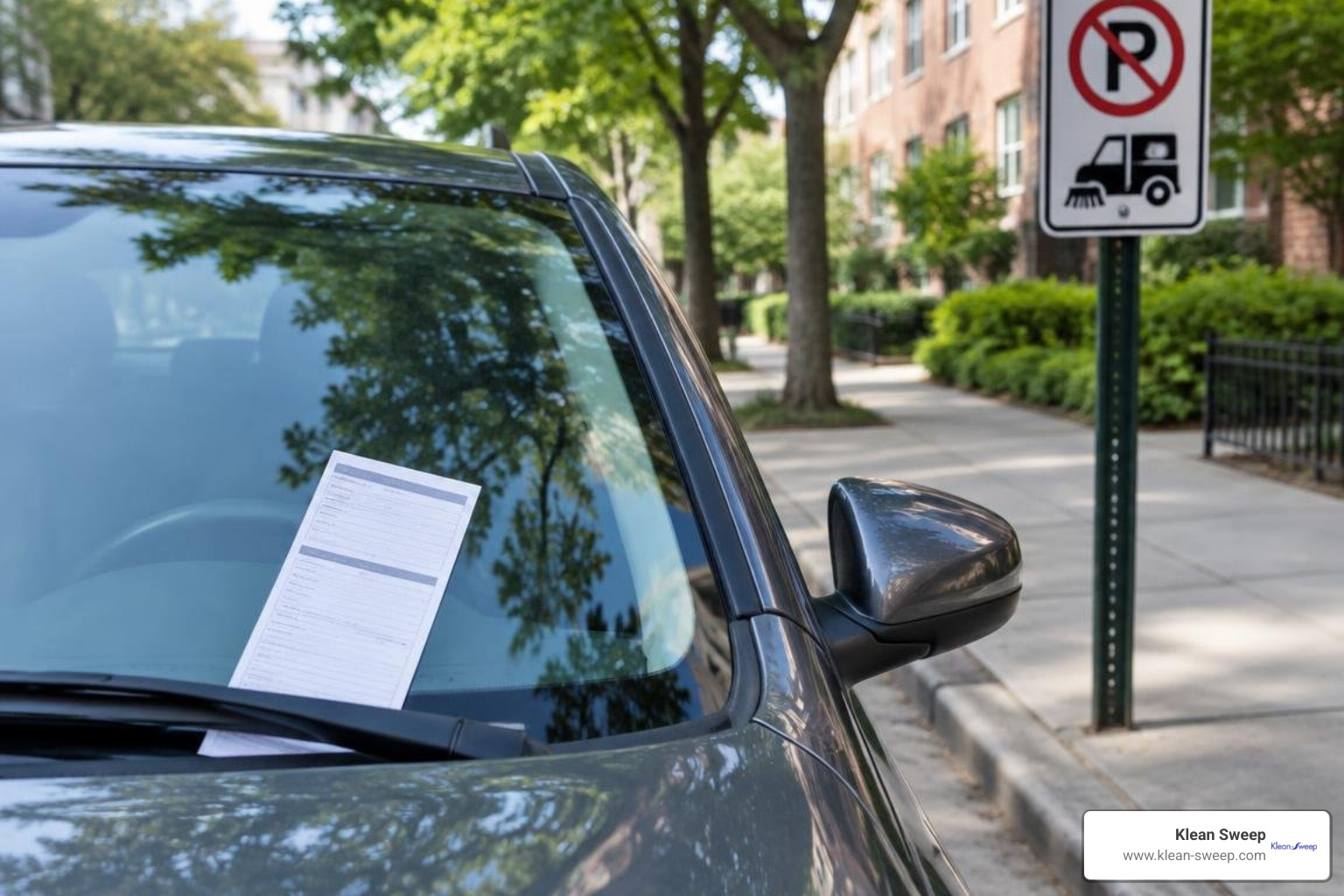
Cities take parking enforcement during cleaning hours seriously. Penalties range from basic municipal citations to immediate vehicle impoundment.
Financial Penalties Associated with a Missed Street Cleaning Schedule
Non-compliance penalties have increased across metropolitan areas. Municipal data shows that eliminating vehicle towing leads to a steep decline in compliance. In cities that tested citation-only enforcement without towing, parking violations jumped by as much as 93%, forcing agencies to dramatically increase fine amounts to keep curbs clear.
Fines for parking in an active cleaning zone often reach $100 per violation. In areas with active towing enforcement, fleet operators also face tow dispatch fees, impound administrative costs, and daily storage charges. Understanding local regulations is the most reliable way to avoid parking fines and related expenses.
Vehicle Retrieval Protocols and Citation Contesting
If a commercial vehicle or fleet truck is impounded during a maintenance operation, reclaiming it requires specific administrative steps:
- Locate the Impound Lot: Contact the local police department’s non-emergency dispatch or access the city’s online vehicle impound database to verify vehicle location.
- Provide Required Documentation: Bring valid government-issued identification, proof of current vehicle registration, and valid commercial insurance.
- Clear Outstanding Fines: Pay the parking citation along with all municipal towing and storage fees.
Contesting an Improper Citation: If you receive a ticket improperly, you can contest it through an administrative review. Valid grounds for dismissal include:
- Missing, damaged, or unreadable regulatory signage.
- Signage obscured by tree overgrowth or construction walls.
- Official municipal cancellation of the service route (such as weather cancellations announced through public alerts).
Submit clear photographic evidence of obscured signage and street context along with your administrative hearing appeal.
The Environmental Purpose of Street Sweeping and Stormwater Protection
Street sweeping is an essential environmental control measure designed to protect watershed ecosystems and manage urban stormwater systems.
Impermeable asphalt and concrete surfaces collect heavy deposits of non-point source pollution. When left unattended, rain washes tire dust, engine oils, chemical residues, brake linings, and solid waste directly into catch basins and municipal drainage systems. This untreated runoff flows straight into local waterways, rivers, and coastal ocean basins.
Pollutant Interception and Flood Risk Mitigation
Large-scale municipal sweeping operations prevent thousands of tons of hazardous debris from entering regional water resources each year. Regular sweeper runs provide direct environmental and structural benefits:
- Contaminant Capture: High-efficiency vacuum sweepers collect microscopic particulate matter, heavy metal residue, and petroleum hydrocarbons before they dissolve into runoff water.
- Drain Blockage Prevention: Clearing leaves, litter, and construction grit keeps storm drain grates open, dramatically reducing localized street flooding during severe storms.
- Infrastructure Protection: Removing abrasive gravel and road debris reduces surface wear on asphalt and concrete gutters.
For commercial and municipal managers, understanding the role of street sweeping in water quality highlights why routine sweeping is a necessary environmental practice.
Commercial Exterior Maintenance and Parking Lot Sweeping
Municipal street sweepers clean only public roads. Commercial property managers, industrial park operators, and retail facility directors are responsible for maintaining their own parking lots, access lanes, loading docks, and parking garages.
Commercial parking assets experience heavy vehicle traffic, delivery wear, and surface debris. Unmaintained parking lots quickly track dirt into commercial interiors, degrade catch basins, and create safety risks. Professional commercial property maintenance combines routine parking lot sweeping with day porter services, stormwater drain cleaning, high-pressure steam washing, and industrial concrete floor scrubbing.
Investing in regular commercial parking lot maintenance helps business properties stay compliant with regional stormwater regulations while providing a safe, clean environment for customers and tenants.
Frequently Asked Questions About Municipal Sweeping
Can I park on the street after the street sweeper passes?
No. You should not park on the street until the posted enforcement window has fully expired. Sweeping crews frequently operate in tandem or make multiple passes to clear heavy debris lines. Parking enforcement officers can still cite your vehicle if it is parked at the curb before the end of the posted restriction time.
What happens if street sweeping falls on a city holiday?
When a scheduled route coincides with an official municipal holiday, sweeping operations are typically suspended for the day, and parking enforcement is waived. In non-regulatory commercial zones, public works departments may shift the missed service run to the following business day or next regular schedule cycle.
How do street sweepers handle streets with parked cars or construction?
When parked vehicles, roll-off dumpsters, or construction zones block the gutter line, sweeper operators must steer around the obstacle. The sweeper logs the blockage, and parking enforcement officers are dispatched to issue citations in regulatory zones. Obstructions leave uncleaned curb lines that gather debris until the next service cycle.
Conclusion
Staying on top of city sweeping calendars requires checking online public works tools, monitoring automated municipal alerts, and reading posted curb signs before parking. Keeping curbs clear allows sweepers to operate efficiently, avoids costly vehicle impound fees, and prevents hazardous road debris from washing into municipal waterways.
For commercial property owners, distribution facilities, and parking structure operators, clean curbs and well-maintained lots protect your property’s value and keep you compliant with local runoff rules. Klean Sweep has delivered comprehensive commercial exterior maintenance solutions—including industrial sweeping, stormwater management, power washing, and day porter services—across Southern California since 1969.
Explore our comprehensive street sweeping schedules and commercial sweeping services to keep your commercial property clean, compliant, and operating smoothly year-round.