
How to Get Crystal-Clear Results Without Damaging Commercial Surfaces
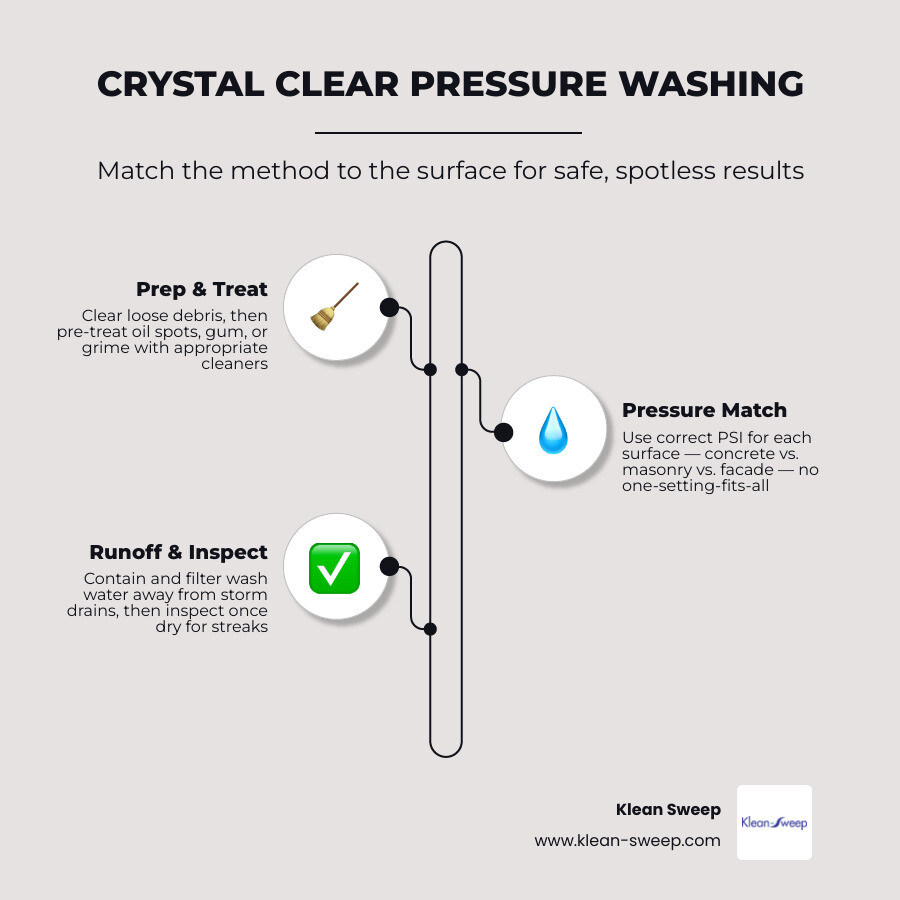
For a clean commercial exterior, match the cleaning method to the surface. Remove loose debris first, treat oil or gum where needed, then use pressure suited to the concrete, masonry, or facade. Keep wash water out of storm drains and check the surface after it dries. More pressure is not always better; the wrong setting can damage a finish.
I’m Jana Hanson, and I’ve led Klean Sweep since 2012, building on my family’s more than 55 years in Southern California exterior maintenance. This guide draws on that experience to explain crystal clear pressure washing techniques for commercial properties, from walkways to parking structures.
Crystal clear pressure washing terms made easy:
Commercial property managers in Los Angeles, Torrance, Pasadena, Beverly Hills, Carson, and Brea often ask how to get spotless concrete, loading docks, and building facades without etching the surface or violating stormwater rules. The answer starts with a simple site walk: identify the substrate, note the main contaminants, and select a water temperature and pressure range that removes the soil without eroding the material. For example, a coated architectural facade may need only 500 to 1,000 PSI with warm water, while a grease-saturated dumpster pad may require 3,500 to 4,000 PSI with high-heat steam. Skipping that assessment is how crews leave zebra striping on concrete or force moisture behind EIFS panels. The sections below explain how to apply that same surface-by-surface logic across the most common commercial exterior assets.
Core Benefits of Crystal Clear Pressure Washing for Commercial Properties
Commercial facilities face constant exposure to vehicle emissions, heavy foot traffic, grease, atmospheric soot, and industrial fallout. Maintaining exterior hardscapes across busy commercial centers in Los Angeles, Pasadena, Torrance, and Beverly Hills requires proactive asset protection rather than reactive scrubbing.
When facility managers invest in systematic surface cleaning, they protect the physical structure and reduce operating liabilities. Clean grounds signal high standards, security, and professionalism to corporate tenants, retail shoppers, and commercial visitors.
Protecting Structural Integrity and Safety
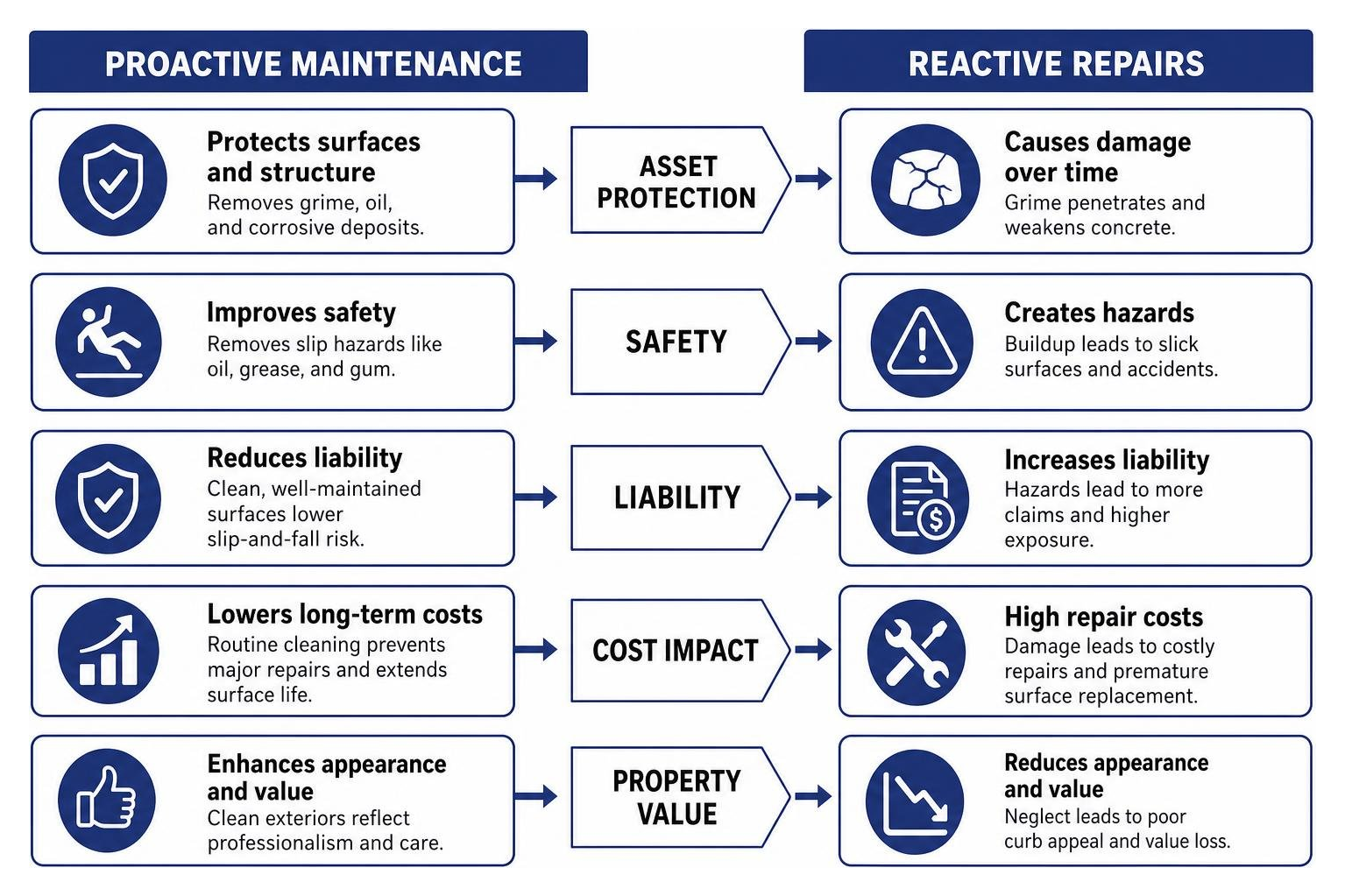
Grime is not merely an aesthetic eyesore—it is an active hazard. Motor oil, fluid leaks, cooking grease tracking, and discarded chewing gum present significant slip hazards on walkways, loading bays, and multi-level parking structures. Over time, these petroleum-based deposits penetrate porous concrete, weakening the aggregate and leading to premature spalling, micro-cracking, and expensive surface repairs.
Implementing routine commercial pressure washing services removes corrosive chemicals, eliminates slick biological films, and restores aggregate traction. Regular degreasing keeps commercial accessways safe for employees, freight handlers, and pedestrians while shielding property owners from avoidable slip-and-fall claims.
Enhancing Commercial Curb Appeal and Value
First impressions dictate foot traffic, customer retention, and commercial leasing rates. A clean facade, pristine entryway, and spotless parking plaza project credibility. When retail plazas or office complexes display stained concrete, oil-slicked parking stalls, or mildewed overhangs, customer confidence drops.

Surface sanitization revitalizes dull architecture and protects building coatings, extending the life of sealants and paints. Well-maintained properties command higher lease values and retain quality tenants across competitive Southern California commercial corridors. For property owners, that means exterior cleaning is not a discretionary expense but a form of asset preservation: every dollar spent removing embedded contaminants from a parking structure or storefront entry helps delay costly resurfacing, repainting, or slip-and-fall litigation. The same principle applies to industrial parks, where clean loading docks and dumpster pads reduce pest pressure and keep service corridors functional for daily operations.
Professional Standards for Industrial and Retail Surfaces
Industrial parks, logistics hubs, and retail shopping centers endure distinct types of wear. A warehouse loading dock encounters heavy forklift tires and industrial hydraulic fluids, whereas a retail promenade faces foot traffic, soda spills, and dropped food. Treating these diverse spaces requires calibrated equipment, hot-water systems, and customized cleaning techniques.
Implementing Crystal Clear Pressure Washing Across Concrete Walkways and Loading Docks
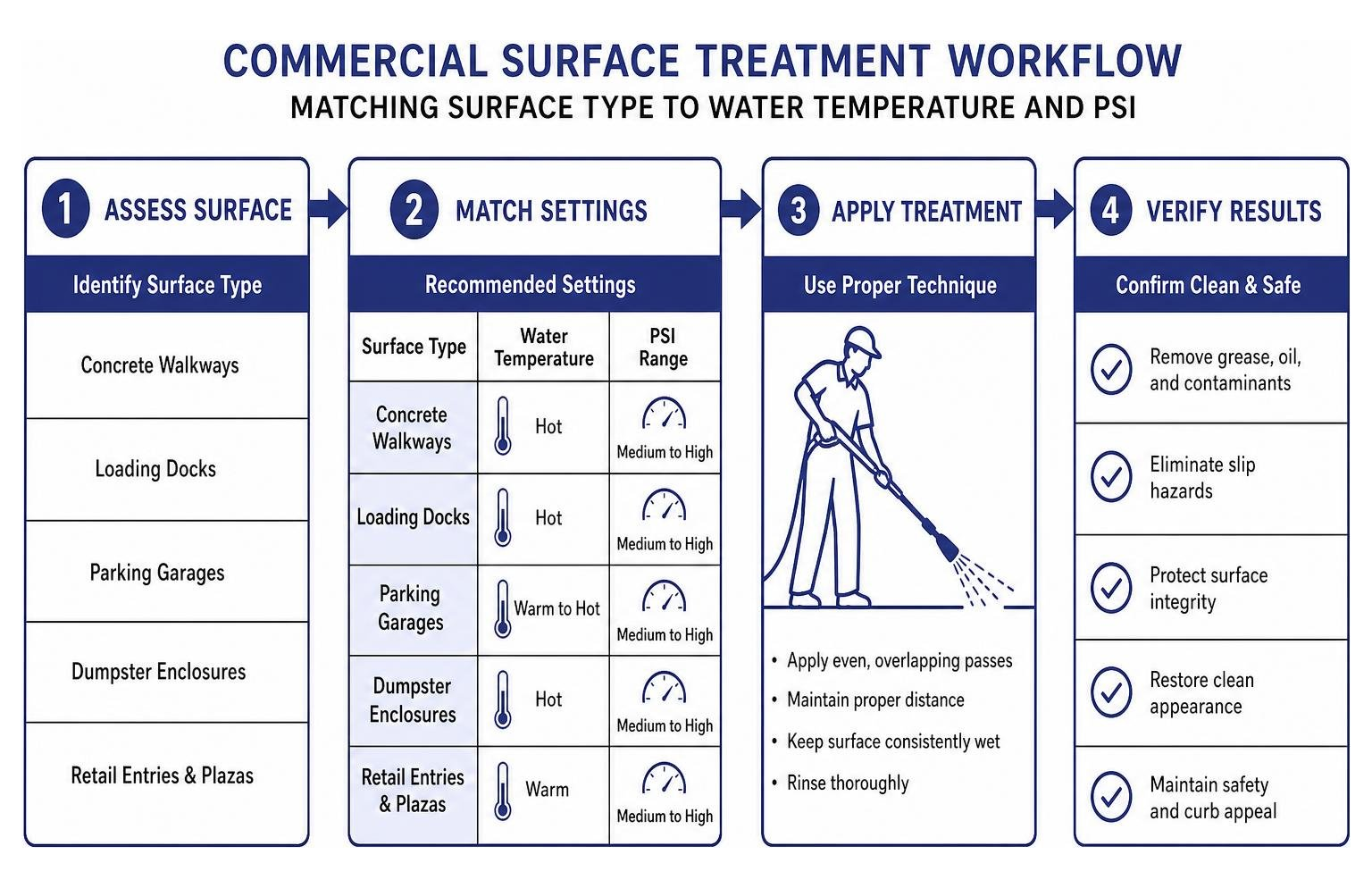
High-traffic concrete requires specialized rotary surface cleaners that deliver uniform pressure across wide swaths, eliminating the dreaded “zebra striping” left by inexperienced wand operators. Managing exterior health also involves power washing dumpster enclosures to stop grease buildup, neutralize foul odors, and prevent pests from infiltrating service corridors.
Inside industrial logistics hubs and parking garages, maintaining power washed concrete floors prevents tire dust and abrasive grit from damaging commercial sealers.
The table below outlines standard pressure settings, temperature ranges, and application zones for typical commercial materials:
| Commercial Surface | Recommended PSI Range | Water Temperature | Primary Target Contaminants |
|---|---|---|---|
| Reinforced Concrete Pavements | 3,000 – 4,000 PSI | Hot Water / Steam (180°F–200°F) | Embedded motor oil, tire marks, heavy industrial grime |
| Dumpster Enclosure Pads | 3,500 – 4,000 PSI | High-Heat Steam (200°F+) | Animal fats, food grease, biological slime, odors |
| Retail Walkways & Entryways | 2,000 – 2,500 PSI | Warm to Hot (140°F–180°F) | Discarded chewing gum, beverage spills, surface dirt |
| Architectural Brick & Masonry | 1,000 – 1,500 PSI | Warm Water (120°F–140°F) | Atmospheric pollution, efflorescence, biological growth |
| EIFS & Coated Facades | 500 – 1,000 PSI | Ambient to Warm Water | Airborne soot, dust, light mildew, mold spores |
Low-Pressure Steam Cleaning vs. High-PSI Water Jetting
A common misconception in exterior maintenance is that brute mechanical pressure solves every cleaning problem. Blasting delicate surfaces with excessive water pressure erodes mortar, etches decorative concrete, strips protective sealants, and forces moisture behind facade insulation.
Low-pressure steam cleaning uses thermal energy rather than raw force. High temperatures (often exceeding 200°F) melt stubborn hydrocarbon chains, grease deposits, and chewing gum quickly. The thermal action cleans deeply within porous stone and brick, eliminating embedded mold and algae spores at their root without chewing up the underlying substrate.
For facility managers, the practical difference is visible after the first dry-down. A high-PSI wand can leave a clean-looking surface that is actually micro-scarred, making it more porous and faster to resoil. Low-pressure steam, by contrast, preserves the original surface profile while removing the contaminants that cause discoloration and odor. That is why experienced commercial crews pair hot-water units with surface cleaners on concrete but switch to soft-wash or steam systems on architectural masonry, coated facades, and older brick. The goal is not to see how much pressure the surface can survive; it is to remove the soil completely while leaving the asset intact for its full service life.
Sustainable Practices and Stormwater Regulatory Compliance
In Southern California communities like Torrance, Carson, and Brea, environmental regulations strictly monitor commercial runoff. Property owners are legally responsible for all wash water generated on their premises. Directing dirty wash water, chemical detergents, or oil residues down municipal storm drains violates local ordinances and federal Clean Water Act standards, carrying heavy financial penalties.
Water Reclamation and Runoff Management
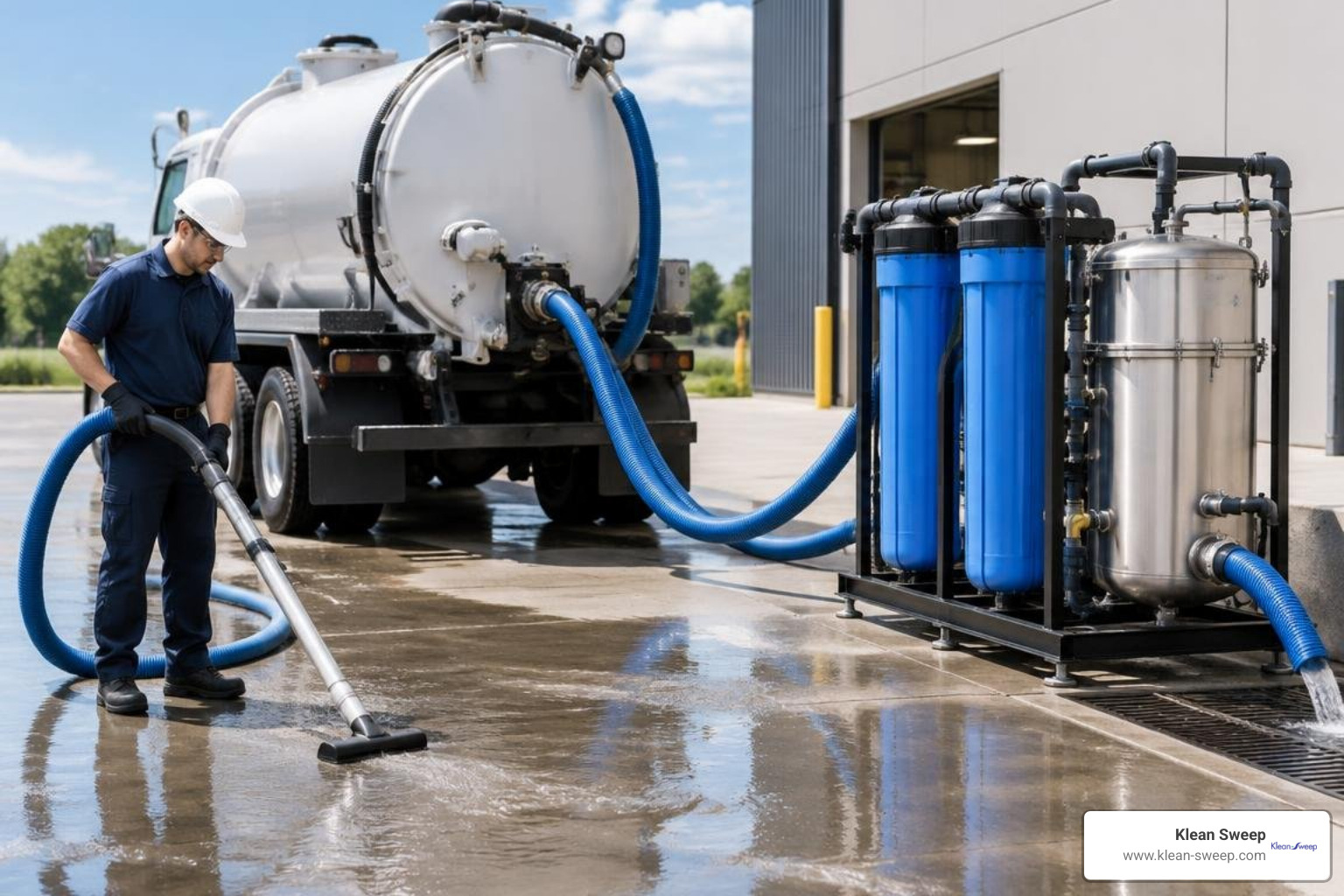
Eco-friendly operations isolate wash areas using specialized containment booms, drain covers, and vacuum recovery berms. Industrial vacuum recovery systems capture 100% of wastewater right at the surface, pumping it into onboard filtration units or dedicated holding tanks for lawful off-site disposal.
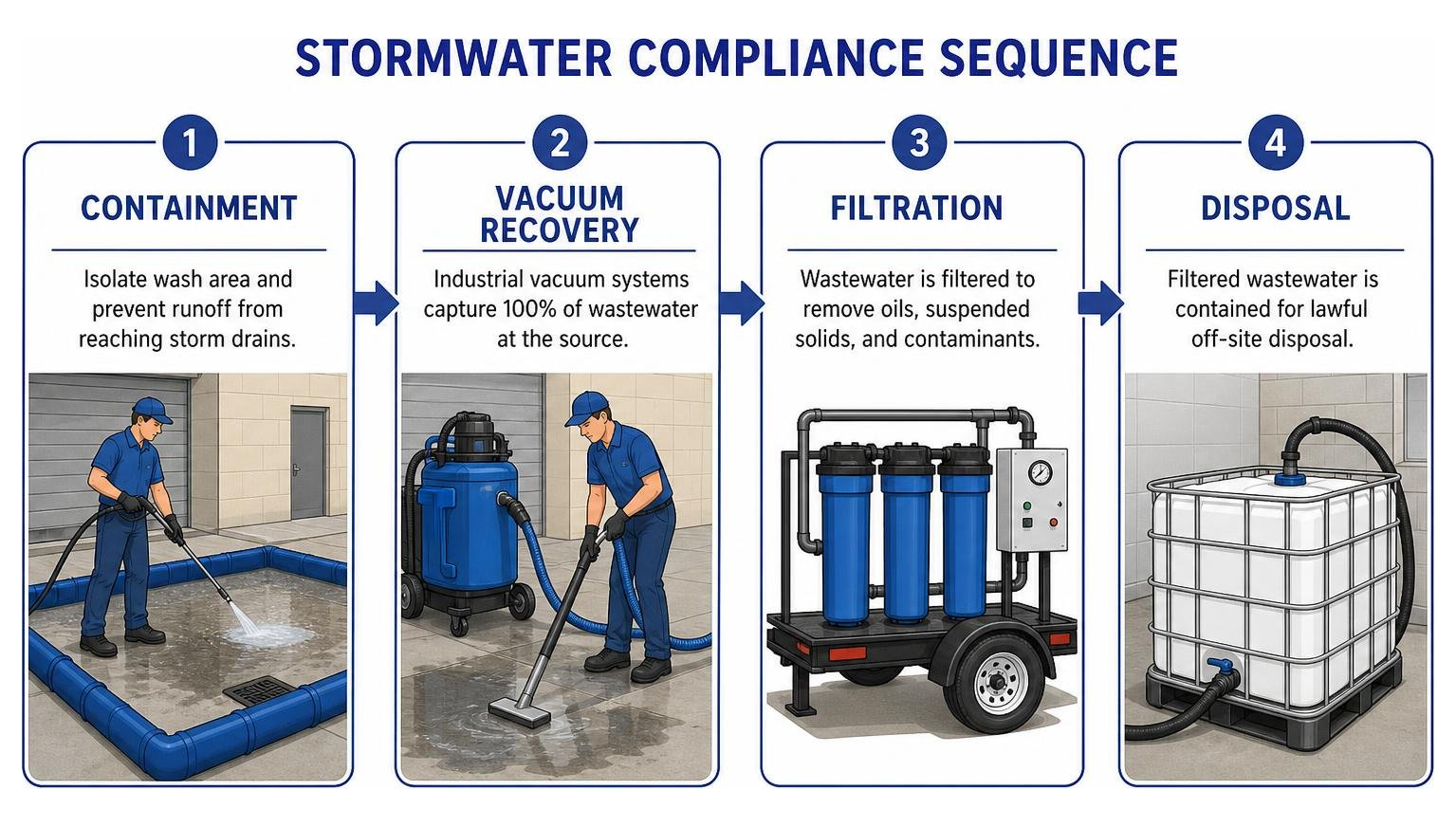
By capturing oils, suspended solids, and heavy metals before they reach local waterways or the Pacific Ocean, property managers protect regional stormwater infrastructure and keep their facilities in full compliance with municipal environmental health codes. The U.S. Environmental Protection Agency’s National Pollutant Discharge Elimination System program sets the federal framework for these requirements, and local agencies in Los Angeles County enforce additional watershed-specific rules. A compliant cleaning plan therefore includes a pre-wash inspection of all nearby drains, placement of temporary berms or drain mats, and a documented wastewater disposal route. For multi-tenant commercial properties, that documentation also provides a useful record if a tenant or regulatory inspector asks how exterior cleaning is managed.
Eco-Friendly Rinsing and Detergent Practices
Modern exterior cleaning relies on biodegradable, phosphate-free cleaning agents and heated pure-water rinsing. Following commercial power washing standards in 2026, professional crews treat surfaces using specialized soft-wash chemistry that breaks down soils naturally.
Using purified, demineralized water for final rinses prevents hard water mineral spotting on adjoining commercial glass, polished granite, and architectural metal trim, leaving a spotless finish across every facade. The same pure-water approach reduces the need for aggressive detergents on lightly soiled surfaces, which means less chemical residue entering the wash water stream. When detergents are required, crews select products that are formulated for the specific contaminant—citrus-based degreasers for food service areas, neutral pH cleaners for coated facades, and alkaline pre-treatments for heavy petroleum deposits—then rinse thoroughly before the solution dries. This surface-specific chemistry, combined with proper wastewater capture, keeps commercial exteriors clean without trading one environmental problem for another.
Frequently Asked Questions About Commercial Surface Cleaning
How Often Should Facilities Schedule Crystal Clear Pressure Washing?
Cleaning frequency depends on daily foot traffic, vehicle volume, and regional climate exposure:
- High-Volume Retail Promenades & Restaurants: Monthly to bi-monthly service to manage spilled food, drinks, and discarded gum.
- Commercial Parking Structures & Loading Docks: Quarterly to semi-annual deep steam cleaning to eliminate automotive fluid buildup and tire rubber.
- Corporate Office Parks & Industrial Campuses: Semi-annual or annual exterior maintenance to remove seasonal dust, airborne smog, and winter grime accumulation.
Is High-Pressure Washing Safe for Every Commercial Facade?
No. High pressure should never be used on synthetic stucco (EIFS), aged historical brick, painted wood, or glass curtain wall systems. These sensitive surfaces require calibrated low-pressure wash methods combined with specialized foaming cleaners. Professional crews assess substrate density, mortar strength, and architectural finishes before selecting nozzle sizes and pressure settings.
What Factors Determine Commercial Pressure Washing Costs?
Commercial surface cleaning proposals depend on several site variables rather than a simple flat fee:
- Total Surface Area: Overall square footage of concrete, pavers, or vertical walls.
- Level of Contamination: The presence of heavy oil saturations, aged paint, graffiti, or embedded chewing gum requiring thermal treatment.
- Water Access & Drainage Layout: Proximity to water sources and complexity of required wastewater containment and reclamation systems.
- Operational Scheduling: Off-hours or overnight scheduling requirements designed to prevent disrupting business operations, tenant traffic, or customer parking.
How Can Property Managers Prepare for a Commercial Cleaning Visit?
A short pre-service checklist helps the crew work efficiently and safely. Property managers should identify any known chemical spills or heavily saturated areas, confirm which entrances and loading docks must remain accessible, and notify tenants about the scheduled service window. If the site has storm drain locations that are not obvious from the parking area, marking them in advance speeds up containment setup. For facilities with sensitive landscaping or outdoor dining areas, a quick walkthrough with the cleaning supervisor ensures those zones are protected or avoided. These steps reduce downtime and help the crew deliver consistent results without interrupting daily business operations.
Conclusion
Sustaining spotless, safe, and code-compliant commercial surfaces requires modern equipment, trained crews, and an uncompromising commitment to environmental protection. Since 1969, Klean Sweep has delivered dependable commercial property maintenance across Torrance, Los Angeles, Beverly Hills, Carson, Pasadena, and Brea.
Whether your facility requires parking lot sweeping, day porter care, stormwater remediation, or professional steam cleaning and pressure washing services, our family-owned team brings the state-of-the-art machinery and deep regional experience needed to keep your exterior assets pristine. Contact our team today to schedule an on-site property evaluation.