

How to Pressure Wash Dumpster Pads Without Spreading Grease
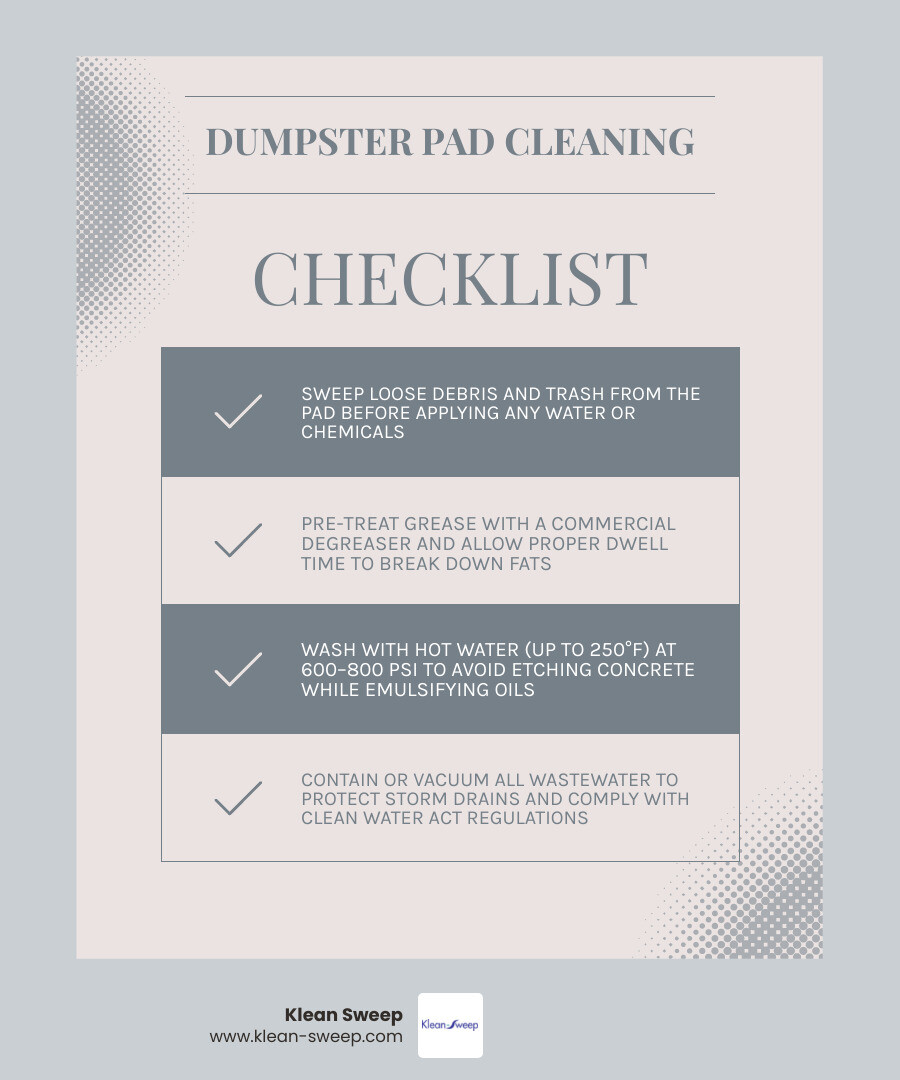
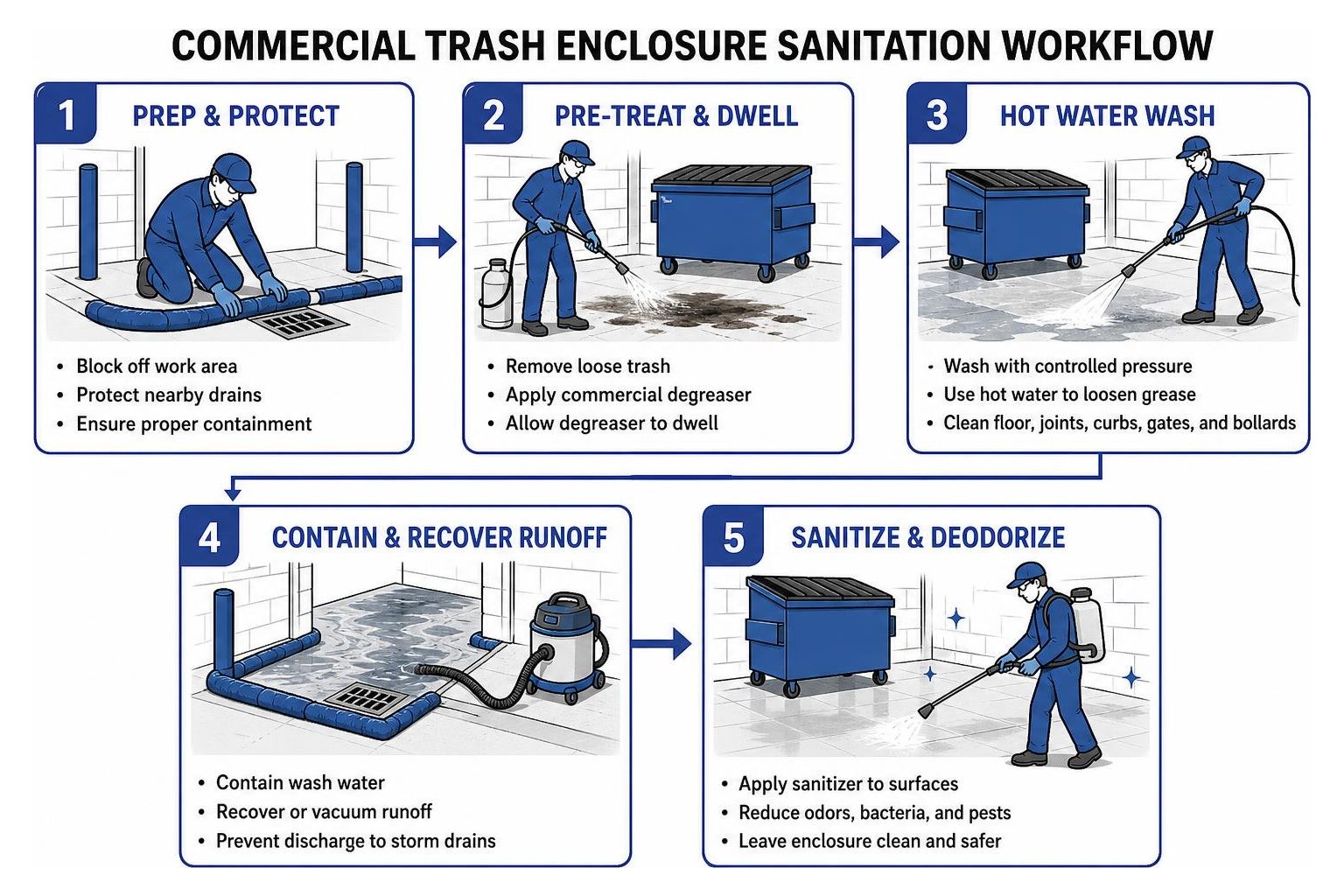
To clean a commercial dumpster pad effectively, first remove loose trash, pre-treat grease with a commercial degreaser, allow it to dwell, then wash with controlled hot-water pressure. Do not simply blast the area with maximum PSI. Concrete can etch, and greasy wash water can reach storm drains without proper containment.
A sound process also includes:
- Blocking off the work area and protecting nearby drains.
- Cleaning the concrete, expansion joints, bin wheel tracks, curbs, gates, and bollards.
- Using hot water to loosen fats and food residue while keeping pressure appropriate for concrete.
- Containing or recovering wastewater so grease and cleaning solution do not enter the stormwater system.
- Sanitizing the enclosure to reduce odors, bacteria, and pest activity.
Dumpster enclosures collect more than visible trash. Cooking oil, leaking bags, food waste, and standing liquid soak into porous concrete and joints. In Greater Los Angeles, warm weather can speed up odors and organic buildup, making routine pressure washing dumpster pads an important part of commercial exterior maintenance, safety, and curb appeal.
I am Jana Hanson, and I lead Klean Sweep, a family-owned exterior maintenance company built on more than 55 years of serving Southern California commercial properties. Our experience with pressure washing dumpster pads, sweeping, and exterior cleaning helps property managers maintain cleaner, safer waste areas before buildup becomes a larger site problem.
Must-know pressure washing dumpster pads terms:
Why Commercial Trash Corrals Require Routine Sanitation
Commercial trash enclosures handle heavy daily waste, making them vulnerable to rapid soil buildup, slip hazards, and foul odors. When garbage bags tear or grease containers leak, liquid waste—known as leachate—seeps across the concrete floor. Over time, this fluid embeds deep within the pores of the slab. Without intervention, these areas become breeding grounds for bacteria, create persistent foul smells, and attract rodents, flies, and birds.
Regular exterior sanitation helps facility teams stop the grime with a power washed concrete floor, preventing slick residues from putting employees, haulers, or visitors at risk of a slip-and-fall injury. Routine cleaning also prevents leachate from pooling around the enclosure perimeter, ensuring your commercial property meets municipal sanitation standards and local environmental codes.
Why Pressure Washing Dumpster Pads Protects Concrete and Compliance
Commercial waste corrals absorb heavy loads of animal fats, used cooking oils, and acidic food residues. These chemical compounds break down the concrete matrix, degrading the paste that bonds the aggregate together. Expansion joints and saw cuts are particularly vulnerable; once grease settles into joint seams, it softens joint sealants and accelerates spalling and cracking.
In our commercial power washing guide 2026, we detail how hot-water washing dissolves these corrosive organic compounds before they cause structural failure. Routine industrial washing maintains the load-bearing integrity of the pad—vital for supporting 4-yard bins and heavy commercial waste collection trucks—while preventing regulatory fines related to uncontrolled waste runoff.
Climate, Temperature, and Grease Breakdown Factors
The Southern California climate directly impacts how waste behaves on exterior slabs. In communities across Los Angeles, Carson, and Pasadena, summer heat frequently drives surface temperatures above ambient levels. High heat accelerates the anaerobic decomposition of discarded organic waste, generating strong odors and releasing volatile organic compounds (VOCs).
When warm weather combines with slow or stagnant drainage, fats and greases bake into the porous surface of older concrete slabs. Cold-water rinsing alone cannot loosen these heat-set oils. Addressing these baked-on residues requires targeted hot-water equipment and professional-grade degreasers that break down animal fats at the molecular level.
Step-by-Step Process for Pressure Washing Dumpster Pads
Achieving a clean, safe, and deodorized dumpster enclosure requires an orderly, systematic approach. Following a structured procedure prevents grease migration to adjacent parking structures, ensures proper chemical reaction times, and keeps wash water out of local storm drains.
- Conduct a Pre-Service Site Assessment: Inspect the enclosure area, note grease accumulation levels, locate nearby storm drains, and check utility hookups.
- Set Up a Safe Work Zone: Place high-visibility cones, safety signage, and barricades to keep foot and vehicle traffic clear of the wash area.
- Roll Bins and Sweep Dry Debris: Move mobile trash bins forward to access the entire slab. Sweep up all loose trash, broken glass, pallets, and large solids, disposing of them in the main bin.
- Deploy Drain Protection: Seal nearby catch basins, install absorbent filter booms, or set up temporary berms to control runoff pathways.
- Apply Heavy-Duty Commercial Degreaser: Spray an alkaline or enzyme-based degreasing solution across the concrete floor, expansion joints, and perimeter curbs.
- Allow Chemical Dwell Time: Let the degreaser penetrate the surface for 10 to 15 minutes without allowing the chemical to dry on the slab.
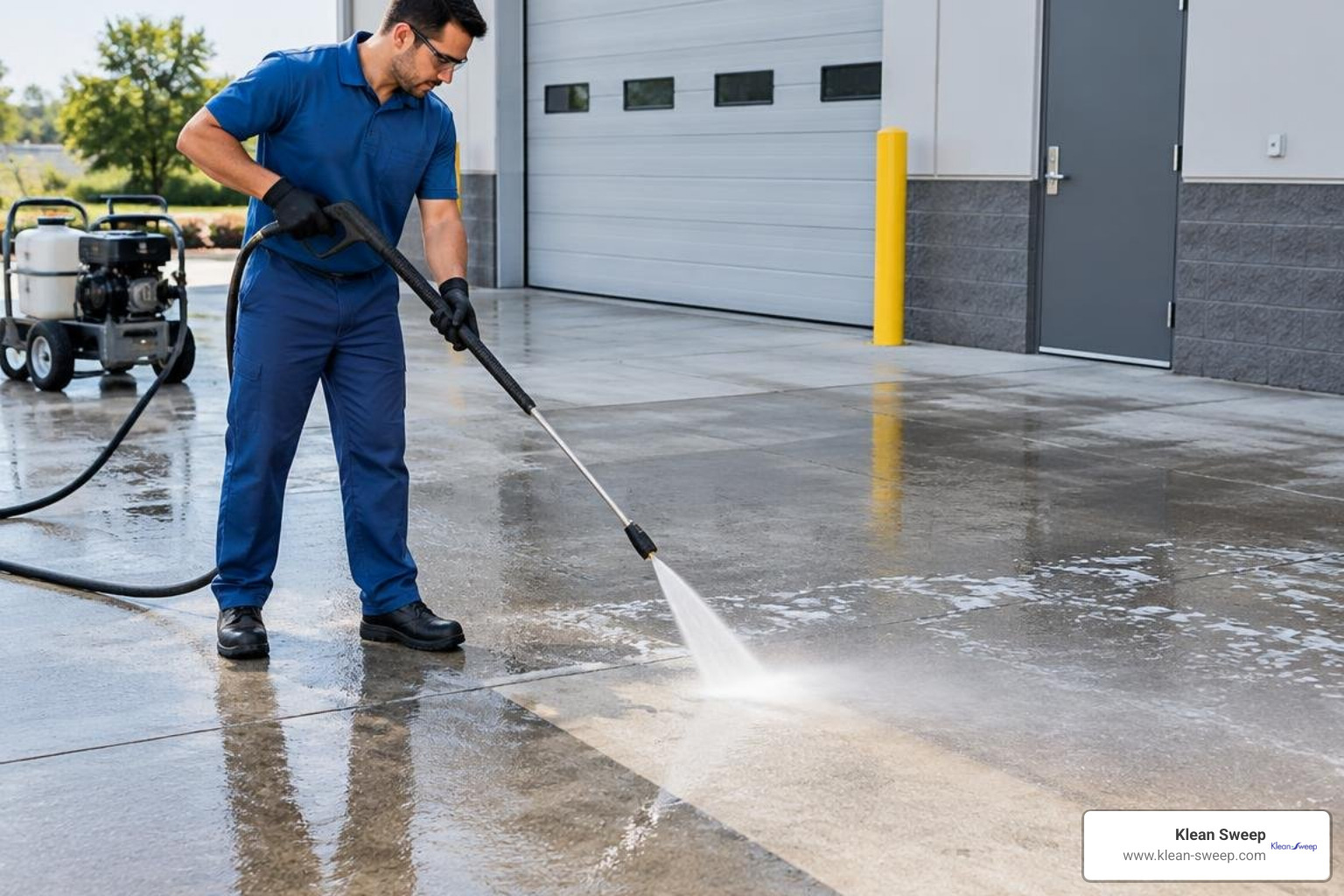
- Execute Hot-Water Wash: Using rotary surface cleaners and hot-water equipment, clean the concrete slab, enclosure walls, bollards, and bin travel lanes.
- Rinse and Contain Wastewater: Direct the emulsified grease and water to a designated collection point, using vacuum recovery systems to extract wash water.
- Apply Deodorizer and Sanitizer: Spray a commercial-grade antimicrobial sanitizing treatment across the slab and high-touch touchpoints to neutralize residual bacteria.
- Final Inspection and Re-staging: Return all bins to their proper positions, secure enclosure gates, remove safety barriers, and complete a final visual walkthrough.
When managing deep-set oils, many property owners consult specialized steam cleaning pressure washing services near you to lift stubborn grease without wearing down the slab’s finish.
Equipment Required for Pressure Washing Dumpster Pads Safely
Cleaning commercial waste corrals safely requires commercial-grade hardware configured to avoid concrete damage:
- Detuned Pressure (600 to 800 PSI): High-pressure blasting above 1,000 PSI can score, pit, or etch concrete. Detuning equipment to 600–800 PSI cleans deep into pores using water volume rather than destructive force.
- Hot Water Systems (Up to 250°F): Professional mobile burners produce hot water up to about 250°F to melt baked-on grease, animal fats, and sticky syrups. For general washing and operator safety, hot water is maintained below 140°F.
- Buffer Water Supply Tanks (325 Gallons): Commercial service trucks equipped with a 325-gallon buffer tank maintain a consistent water supply without starving high-flow pumps or relying on low-flow commercial spigots.
- High Water Volume (5 to 8 GPM): Delivering 5 to 8 gallons per minute ensures sufficient flushing volume to float suspended solids toward recovery equipment.
- Dual-Action Rotary Surface Cleaners: Enclosed rotary scrubbers provide an even, streak-free clean while containing overspray from dirty walls or fences.
Selecting the right equipment settings is outlined further in the ultimate guide to commercial pressure washing services.
Environmental Runoff Control and Wastewater Containment
Under the federal Clean Water Act and California stormwater regulations, allowing greasy, soapy wash water into municipal storm drains is strictly prohibited. Unlike sanitary sewers, storm drains flow directly into local channels, rivers, and the Pacific Ocean without treatment.
Property teams must implement containment methods such as weighted polyurethane drain covers, sandless berms, or inflatable pipe plugs before spraying. Once contained, the greasy slurry is collected using mobile wet-vacuums or vacuum recovery arches and directed to an approved sanitary sewer cleanout or oil-water separator. Our guide to exterior cleaning Los Angeles top local services highlights how compliant wastewater reclamation keeps commercial centers clear of costly municipal fines.
Key Waste Enclosure Components Beyond the Concrete Slab
A comprehensive dumpster pad wash extends well beyond the flat concrete footprint. Waste oils, food scraps, and bacteria collect on every vertical and metal fixture inside the enclosure.
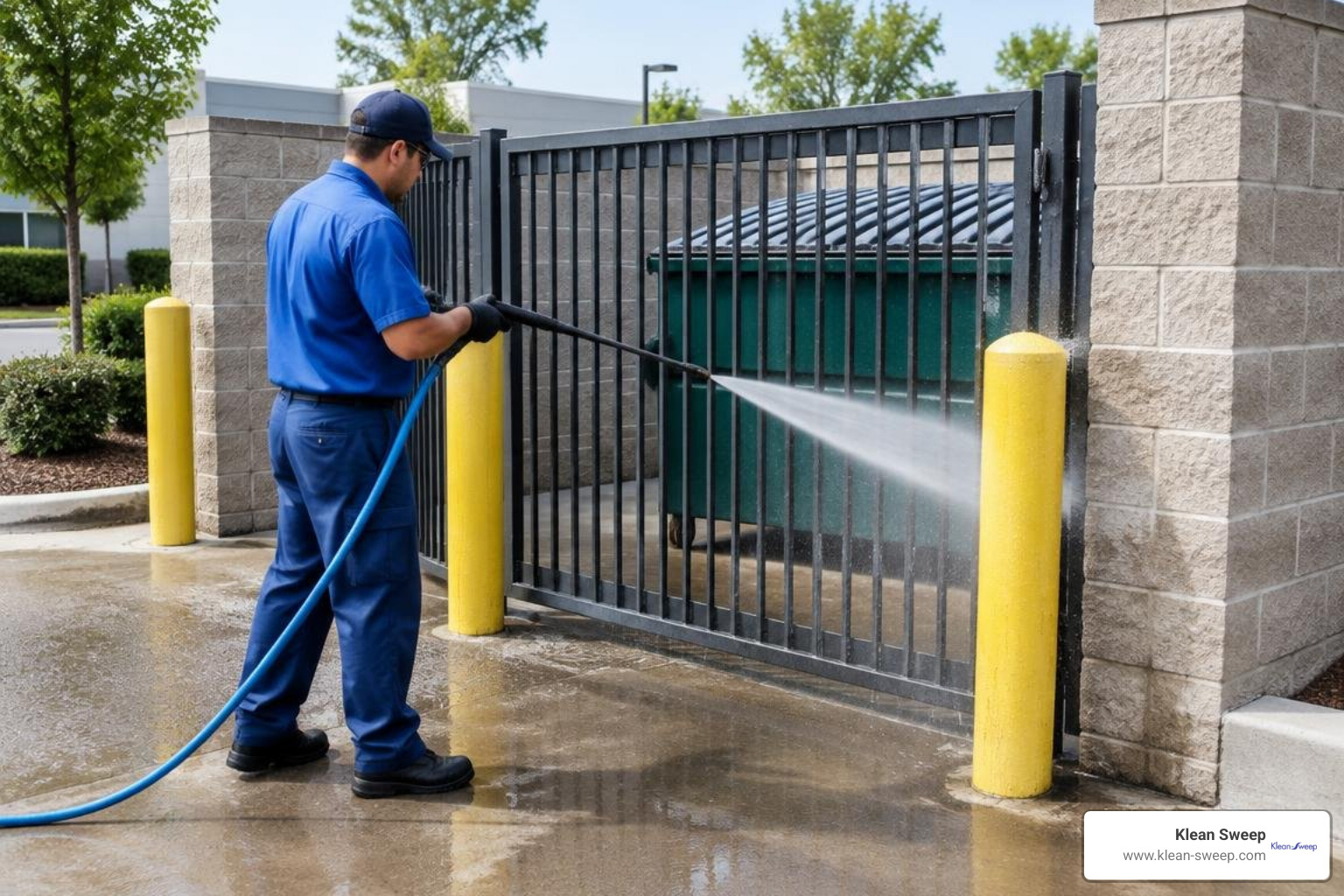
- Metal Corral Gates and Hardware: Splatters and grease mist coat gate frames, drop rods, and hinges. Routine washing cleans away corrosive residues that cause premature rust and latch failure.
- High-Touch Latches and Handles: Gate latches are handled daily by maintenance staff, porters, and waste haulers. Washing and sanitizing these touchpoints prevents cross-contamination and bacterial transfer.
- Protective Steel Bollards: Structural bollards prevent garbage trucks and bins from striking exterior walls. Cleaning removes built-up grime, tire scuffs, and road film, keeping their safety paint visible.
- Perimeter Concrete Curbing: Liquids frequently pool along enclosure edges. Curb washing removes dark lines of mildew, food residue, and weed growth.
- Bin Wheel Travel Tracks: Rolling heavy dumpsters out to the street creates visible grease pathways across parking lots and loading bays, requiring wash passes that extend outward to maintain visual consistency.
| Commercial Facility Type | Primary Contaminants | Recommended Cleaning Frequency | Runoff Risk Level |
|---|---|---|---|
| High-Volume Restaurants | Animal fats, fryer oil, protein residues, beverage syrups | Biweekly to Monthly | High (Heavy grease and oil load) |
| Grocery & Supermarkets | Produce decay, dairy spills, meat juice leachate, pallet grit | Monthly | High (Organic decomposition) |
| Retail Shopping Centers | Mixed consumer waste, light beverage spills, dirt tracks | Every 4 to 6 Weeks | Moderate (Litter and traffic grime) |
| Corporate Offices & Schools | Paper waste, packaging, light food containers, dust | Every 6 to 8 Weeks | Low (General dust and minor spills) |
| Industrial & Distribution Hubs | Forklift wheel grease, hydraulic fluid, pallet wood debris | Every 4 to 8 Weeks | Moderate to High (Petroleum oils) |
Recommended Maintenance Schedules for Commercial Properties
Establishing the right cleaning cadence depends on waste volume, local climate, foot traffic, and proximity to customer-facing zones.
For high-volume restaurants, grocery stores, and food courts in Beverly Hills, Torrance, or Brea, biweekly to monthly washing prevents severe grease crusting and pest harborage. Retail plazas, commercial office parks, and educational campuses generate less greasy waste and can maintain clean enclosures with washing every 6 to 8 weeks.
Before locking in a maintenance plan, facility managers benefit from an on-site walkthrough to assess pad porosity, drainage slope, and corral dimensions.
Frequently Asked Questions About Dumpster Enclosure Cleaning
How often should commercial dumpster pads be professionally cleaned?
Most restaurant and grocery waste corrals require monthly cleaning—or biweekly service during hot summer months—to control odors and meet health codes. Low-grease commercial sites, such as office buildings and corporate parks, typically maintain cleanliness with service every 6 to 8 weeks.
What water temperature and pressure settings protect commercial concrete?
Concrete dumpster pads should be cleaned using water heated up to 250°F to emulsify animal fats and oils, combined with detuned pressure between 600 and 800 PSI. Pressures exceeding 1,000 PSI can etch the concrete surface, while water below 140°F is standard for general rinsing and safety.
How is oily wash water managed near storm drains?
Before washing begins, crews install physical drain seals, berms, or absorbent socks around storm drain inlets. Greasy wastewater is contained and collected using vacuum recovery systems, ensuring no untreated wash water enters the municipal stormwater system.
Conclusion
Maintaining a clean, sanitary dumpster corral is essential for odor control, safety, and long-term asset protection. Left unchecked, food grease, animal fats, and leaking leachate break down concrete, create serious slip-and-fall hazards, and attract pests. By combining detuned pressure, hot-water cleaning, and EPA-compliant wastewater recovery, commercial facility teams preserve curb appeal while safeguarding local waterways.
Since 1969, Klean Sweep has delivered dependable exterior maintenance solutions across Los Angeles, Torrance, Beverly Hills, Carson, Pasadena, and Brea. From hot-water pressure washing and day porter services to industrial street sweeping, we help commercial facilities run cleanly and smoothly.
Keep your entire exterior clean, compliant, and well-maintained by reviewing our comprehensive commercial property maintenance and street sweeping schedule in Los Angeles to coordinate your property maintenance services.