

Find the Right Road Cleaning Schedule for Your Commercial Property
To find a road cleaning schedule for a commercial or industrial site, start with the city or county public works website. Search by street address, confirm the posted curb signs, and sign up for email or text alerts when available. Then plan vehicle storage, loading access, and dumpster placement around the posted cleaning window.
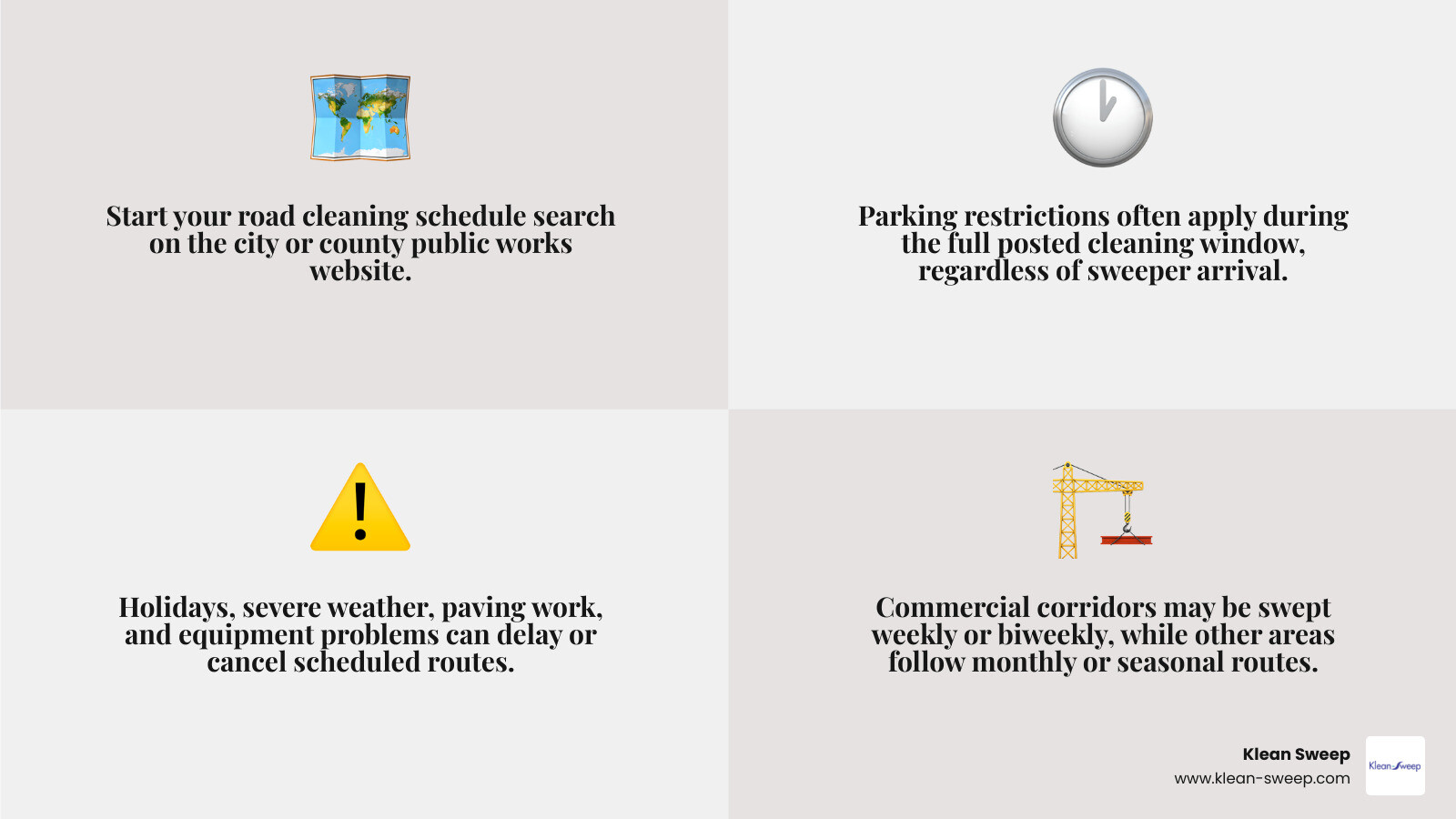
Municipal routes vary widely. A commercial corridor may be swept weekly or biweekly, while other areas follow monthly or seasonal routes. Parking restrictions can apply during the full posted window, and enforcement may include citations or towing. Holidays, severe weather, paving work, and equipment problems can also delay a route, so check official alerts before assuming restrictions are suspended.
For property managers, the goal is bigger than avoiding a parking issue. Clear curbs, parking lots, and catch basins help reduce debris, protect stormwater drains, support curb appeal, and keep delivery areas usable. Municipal sweeping covers public streets; a separate commercial sweeping plan can keep private lots, parking structures, and loading zones maintained between city visits.
I am Jana Hanson, and I lead Klean Sweep, a Southern California exterior maintenance company founded in 1969. Our decades of experience with commercial sweeping help us understand how a reliable road cleaning schedule supports cleaner, safer properties.
Terms related to road cleaning schedule:
How Municipalities Structure a Road Cleaning Schedule
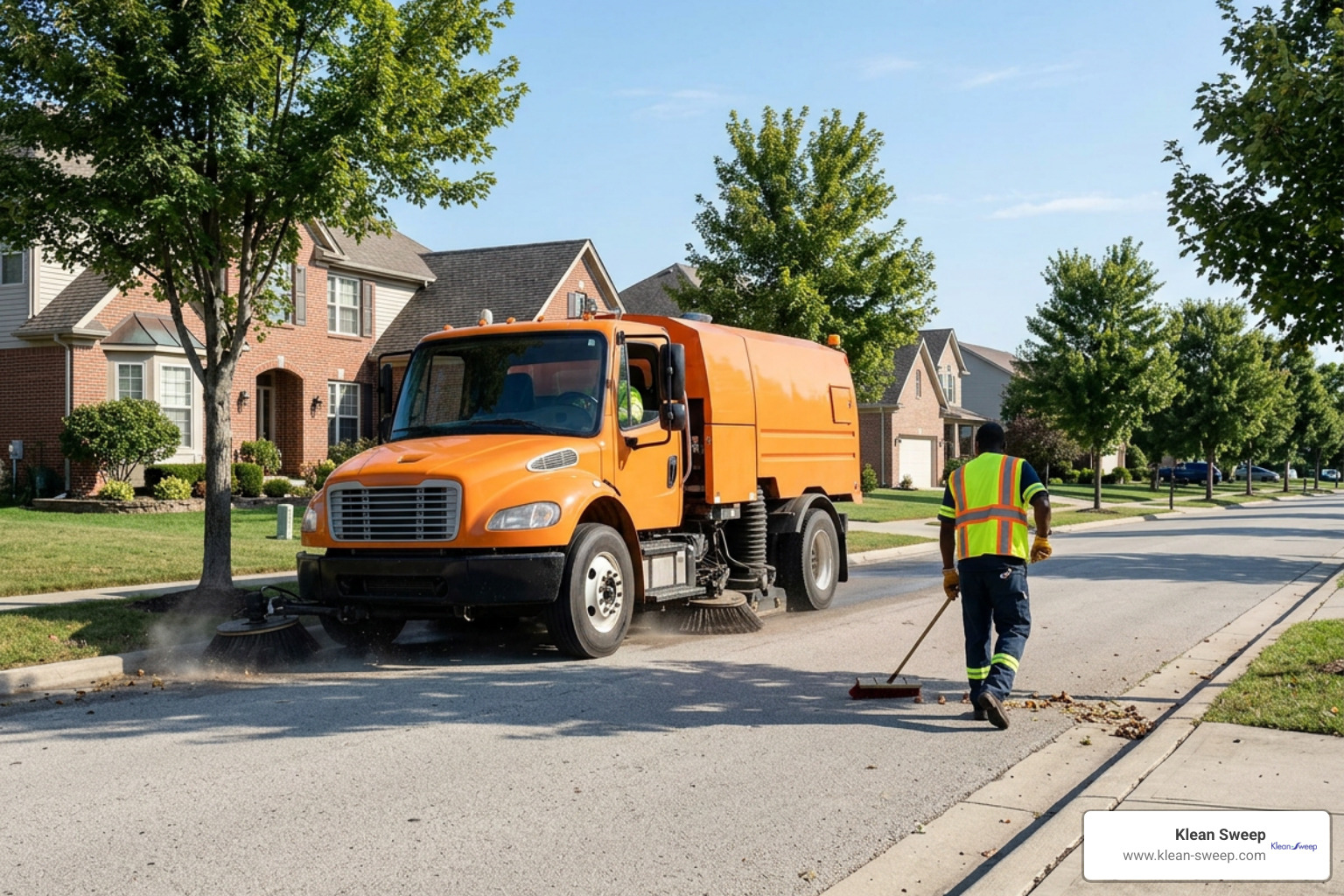
Municipalities build their road maintenance routes around traffic density, commercial density, and environmental runoff requirements. Across Southern California and major metropolitan business hubs, public works departments map thousands of curb miles into organized zones to keep infrastructure clean and functional.
For instance, there are more than 4,700 curb miles in the City of Los Angeles posted for regular sweeping operations. Managing a network of that scale requires dividing corridors into precise geographic routes and service days. Agencies like the StreetsLA Street Sweeping Services coordinate these mechanical operations so high-traffic thoroughfares remain clear of heavy sediment, industrial debris, and roadway litter.
To understand how these programs operate, facility managers must look at how municipal routes balance routine frequencies with seasonal shifts.
Routine Frequencies Across Commercial and Industrial Corridors
Commercial and industrial corridors usually receive more frequent municipal attention than quiet perimeter roads. High vehicle traffic generates higher volumes of brake dust, tire rubber, and fugitive trash that settle along the gutter line.
- Weekly Sweeping: Dense business districts, urban retail centers, and high-turnover logistics zones are frequently scheduled for weekly sweeps. This regular cleaning keeps gutters clear and prevents heavy commercial traffic from grinding particulate matter into the asphalt.
- Bi-Weekly Sweeping: Many industrial parks and commercial business centers operate on bi-weekly intervals, such as cleaning the first and third weeks of the month, or the second and fourth weeks. When commercial property operators track where is the sweeper, confirming these odd/even week patterns prevents unexpected vehicle citations.
- Night and Early Morning Shifts: To avoid interrupting business operations, city sweepers often run along primary arterial thoroughfares during overnight windows (such as 12:01 AM to 7:00 AM) or early mornings before delivery fleets arrive.
Seasonal Adjustments in the Annual Road Cleaning Schedule
While core routes run year-round in Southern California, municipal schedules often adjust for seasonal demands and environmental conditions.
During fall and winter, leaf drop and storm preparation demand intensified sweeping to prevent gutter blockages. In regional programs like the City of Boston Public Works seasonal calendar, daytime street cleaning runs from April 1 through November 30 to target high-debris months, pausing during freezing winter cycles.
In warmer, dry climates like the Los Angeles basin, seasonal adjustments focus heavily on pre-storm basin clearing. Removing accumulated silt and trash before the rainy season arrives ensures commercial gutters do not overflow into private property entrances during sudden flash downpours.
Understanding Alternate Side Parking and Commercial Curb Regulations

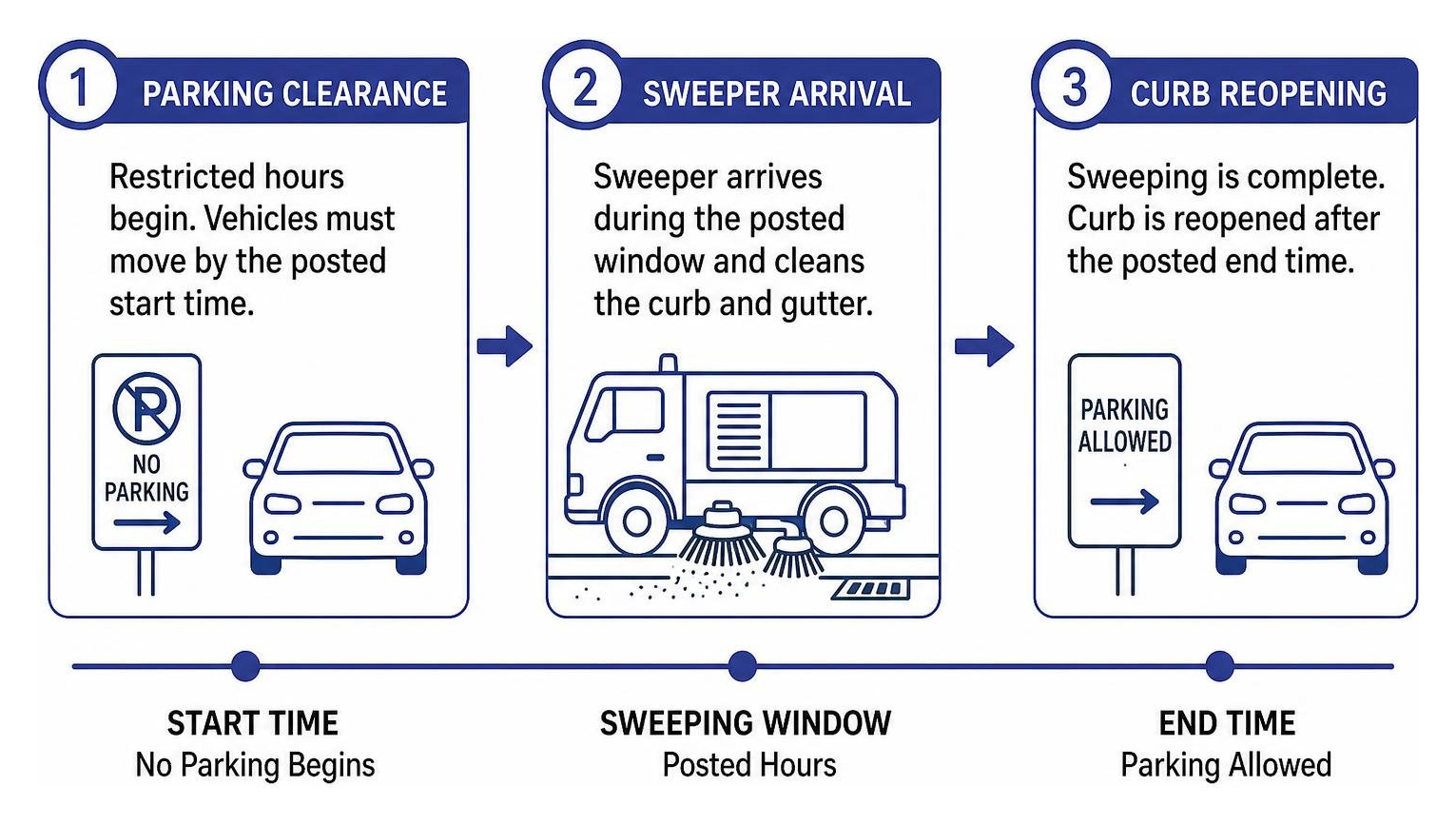
Alternate Side Parking (ASP) and time-restricted curb rules allow heavy mechanical sweepers full access to the gutter line where 90% of roadway debris settles. When vehicles, service vans, or cargo trailers remain parked against the curb, the sweeper must maneuver around them, leaving unsightly and hazardous debris behind.
Cities enforce these rules through strict regulatory signage indicating designated sweep days, hours, and tow-away zones. Understanding these restrictions is critical for logistics directors, warehouse operators, and commercial fleet managers.
Compliance Strategies to Avoid Penalties and Towing
Commercial properties managing frequent contractor visits, employee parking, or transport fleets must take proactive measures to avoid penalties. A single ignored street sweeping sign can result in steep municipal fines or immediate impoundment.
- Audit Surrounding Curb Signage: Review all municipal signs along property frontages. Verify exact restricted hours and day combinations (e.g., “No Parking Tuesdays 7 AM to 10 AM”).
- Establish Fleet Staggering Protocols: When commercial facilities have limited on-site parking bays, create internal staging schedules so staff and fleet vehicles shift to internal parking structures or private lots before municipal enforcement starts.
- Understand Grace Periods and Delivery Windows: While certain jurisdictions like New York City implement a formal 5-minute grace period before issuing ASP citations, most California cities enforce restrictions the moment the posted time window begins. Proactively managing your parking avoids the hassle of preventing parking violations and costly tickets.
- Coordinate Vendor Deliveries: Inform third-party freight carriers and delivery contractors of posted sweep times to ensure heavy trucks do not stage in active street cleaning zones.
Holiday Suspensions and Weather Disruptions
Street sweeping enforcement is routinely paused during major municipal holidays and severe weather events. On recognized non-enforcement days, parking restrictions are lifted, and mechanical sweepers do not operate.
Common holiday suspensions include:
- New Year’s Day
- Memorial Day
- Independence Day
- Labor Day
- Thanksgiving Day
- Christmas Day
Commercial facility managers should review the official city holiday schedule to anticipate route pauses. Additionally, heavy rain, localized flooding, or high-wind storm events often ground municipal sweeper fleets because sweeping wet, saturated mud slurry can smear contaminants across the road rather than collecting them.
When a municipal holiday or storm cancels a sweep, public works departments typically resume operations on the next regularly scheduled cycle rather than deploying makeup crews to every commercial route.
Environmental and Stormwater Benefits for Commercial Facilities
Street sweeping is an essential environmental best management practice (BMP). For commercial and industrial facilities, keeping exterior roadways and access corridors clear is a frontline defense for stormwater quality and regulatory compliance.
Municipal data illustrates the sheer scale of debris capture. For example, public works initiatives by the City of Norfolk Public Works collect approximately 6,682 tons of debris per year through routine sweeping, preventing massive volumes of pollutants from entering local watersheds.
Stormwater Management and Runoff Protection
Commercial properties generate unique roadway contaminants, including microscopic heavy metal residues from truck braking systems, leaked motor oil, hydraulic fluids, and fine packaging waste. When dry weather prevails, these pollutants settle in gutter lines and access roads.
During heavy rainfall, uncollected debris washes directly into storm drains, carrying harmful toxins straight to local rivers, bays, and oceans. Understanding why street sweeping is vital for clean water and runoff prevention helps commercial properties meet National Pollutant Discharge Elimination System (NPDES) standards and prevents costly municipal storm drain clogs.
Aligning Facility Maintenance with a Local Road Cleaning Schedule
While municipal sweeping covers public streets, commercial facilities must manage their private exterior footprint. A comprehensive maintenance strategy combines public road cleaning schedules with tailored on-site services.
Integrating routine street and parking lot sweeping ensures that private drive aisles, concrete loading docks, and multi-level parking structures remain free of debris. When private property maintenance is synchronized with city schedules, debris does not blow back and forth between public streets and private commercial lots.
Our team at Klean Sweep supports commercial property managers across Southern California with complete exterior maintenance, including:
- Commercial Street and Parking Lot Sweeping: Advanced regenerative-air and mechanical sweepers to remove fine dust, gravel, and heavy litter.
- Stormwater Catch Basin Cleaning: Clearing interior sumps, trench drains, and filtration inserts before sediment causes backups.
- Day Porter Services: On-site management of perimeter litter, trash receptacle servicing, and entryway detailing.
- Power Washing and Concrete Cleaning: High-pressure steam cleaning to remove industrial grease, tire marks, and oil stains from loading bays and parking decks.
How Commercial Properties Can Access Real-Time Route Schedules
To keep operations running smoothly, commercial facility operators should use municipal digital tools to track sweeping zones, enforcement windows, and schedule changes.
The table below outlines common schedule tracking tools across major metropolitan areas:
| Municipality / Metro Agency | Schedule Lookup Method | Route Frequency | Notification & Alert Systems |
|---|---|---|---|
| City of Los Angeles (StreetsLA) | Online Address Portal / Route Maps | Bi-Weekly (1st/3rd or 2nd/4th week) | Email / SMS alerts (24h & 48h advance notice) |
| City of Torrance | Interactive GIS Street Sweeping Map | Weekly / Bi-Weekly zones | Public Works seasonal web notices |
| City of Carson | Public Works Street Cleaning Schedule | Bi-Weekly rotating routes | Online zone schedules and posted signs |
| City of Pasadena | Street Sweeping Service Lookup | Weekly routes (specific weekdays) | Citizen Service Center updates & alerts |
| City of Beverly Hills | Public Works Address Locator | Weekly morning windows | Municipal text and email service alerts |
| City of Brea | Zone-Based Sweeping Map & Schedule | Weekly (following trash collection) | City web portal and social alerts |
Using these digital tools allows facility directors to program automated calendar reminders for their maintenance and operations staff, eliminating guesswork around curb access.
Frequently Asked Questions About Street Sweeping Rules
How do commercial facilities coordinate loading dock access during sweeping hours?
Commercial facilities should plan heavy freight schedules outside posted municipal sweeping windows whenever possible. If an industrial driveway crosses a public curb lane during active sweep hours, staging delivery trucks on private apron space rather than on the public street prevents access obstruction and parking tickets.
What happens when municipal street sweepers miss a scheduled route?
If a municipal sweeper misses a commercial route due to mechanical breakdowns, routing delays, or road construction, public works crews generally do not issue citations for that specific missed pass. Sweeping resumes on the next scheduled calendar day for that route. If excessive debris accumulates, facility managers can contact their local municipal public works dispatch to request an off-schedule sweep.
Are parking restrictions strictly enforced during inclement weather?
In many jurisdictions, sweeping and associated parking restrictions are officially suspended during intense downpours because sweepers cannot effectively pick up water-logged silt. However, never assume enforcement is paused unless the city’s parking bureau or public works portal explicitly issues an inclement weather suspension notice.
Keep Your Commercial Property Pristine and Compliant
Keeping up with a municipal road cleaning schedule is an important first step in maintaining accessible curbs and clear storm drains around your facility. However, municipal sweepers only service the public street. Maintaining a safe, compliant, and professional commercial property requires dedicated care for your private parking lots, loading docks, concrete structures, and stormwater systems.
At Klean Sweep, we have delivered reliable, environmentally responsible commercial property maintenance across Los Angeles, Torrance, Beverly Hills, Carson, Pasadena, Brea, and throughout Southern California since 1969. Whether you need nightly parking structure sweeping, commercial pressure washing, day porter care, or stormwater drain servicing, our fleet is ready to help.
Explore our complete municipal sweeping schedules and contact our team today to build a tailored exterior maintenance program for your commercial property.