

What to check when evaluating commercial pressure washing
If you’re evaluating commercial pressure washing for a commercial property, start with four checks: insurance, the right cleaning method for each surface, control of dirty runoff, and scheduling that works around site traffic. Ask how the crew will handle oil-stained concrete and keep wash water out of storm drains. Clean pavement matters, but so do safety and the way the job is done.
I’m Jana Hanson, and I’ve led my family’s Los Angeles-area exterior maintenance business since 2012. That experience shapes how I assess commercial pressure washing for the commercial sites this review focuses on.
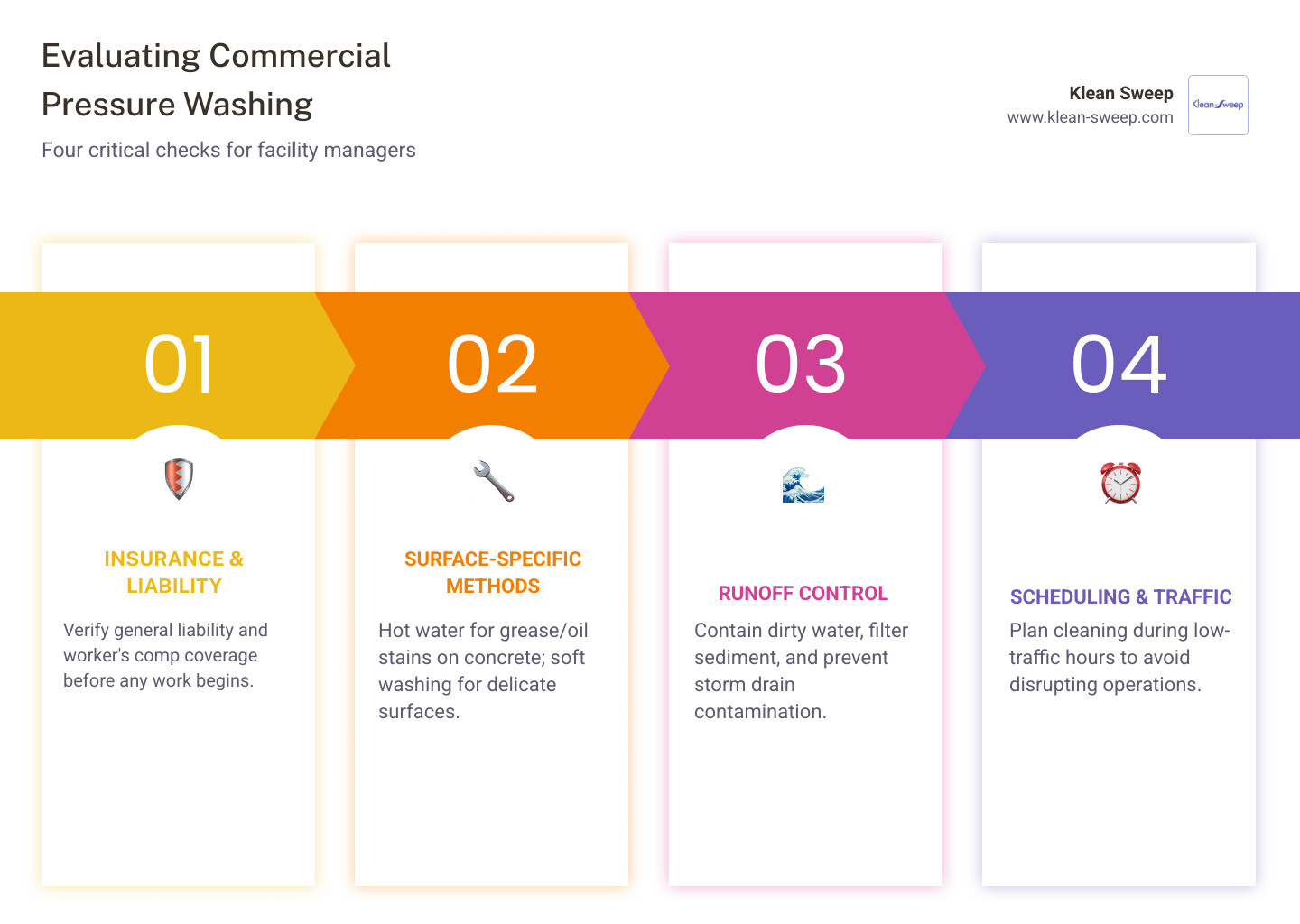
Key commercial pressure washing vocabulary:
Evaluating Commercial Pressure Washing Standards and Heavy-Duty Equipment
Commercial exterior cleaning requires industrial-grade machinery that delivers precise water volume and calibrated thermal output. Standard consumer equipment cannot break down petro-chemical residues, heavy industrial grease, and carbon staining that accumulate across commercial footprints. When assessing high-tier operational standards, property supervisors must look at pressure calibration, water flow rates (gallons per minute), and temperature stability. Maintaining commercial pavements requires establishing rigorous commercial power washing standards that protect surface integrity while stripping surface grime.
Cold water pressure washers rely entirely on physical force (measured in pounds per square inch) to displace dirt. While mechanical impact clears loose silt and top-layer dust, it often fails against oily films, embedded motor oil, and hydraulic fluid. In contrast, heavy-duty commercial thermal units introduce hot water and saturated steam, breaking the molecular bond between hydrocarbons and porous surfaces like concrete or asphalt.
| Equipment Specification | Cold Water Pressure Washing | Commercial Hot Water Steam Cleaning |
|---|---|---|
| Operating Temperature | Ambient (50°F – 70°F) | 180°F – 250°F (Steam Stage) |
| Primary Cleaning Mechanism | Kinetic force (PSI impact) | Thermal breakdown + surfactant emulsification |
| Grease & Oil Removal | Low efficiency; spreads petroleum films | High efficiency; liquefies and lifts hydrocarbons |
| Chemical Requirement | Heavy reliance on harsh solvents | Minimal; utilizes biodegradable surfactants |
| Substrate Impact | Risk of concrete etching from high PSI | Low surface abrasion due to thermal assistance |
| Runoff Management | Requires broad chemical neutralization | Standard filtration and oil-water separation |
Thermal Power and Hot Water Steam Units
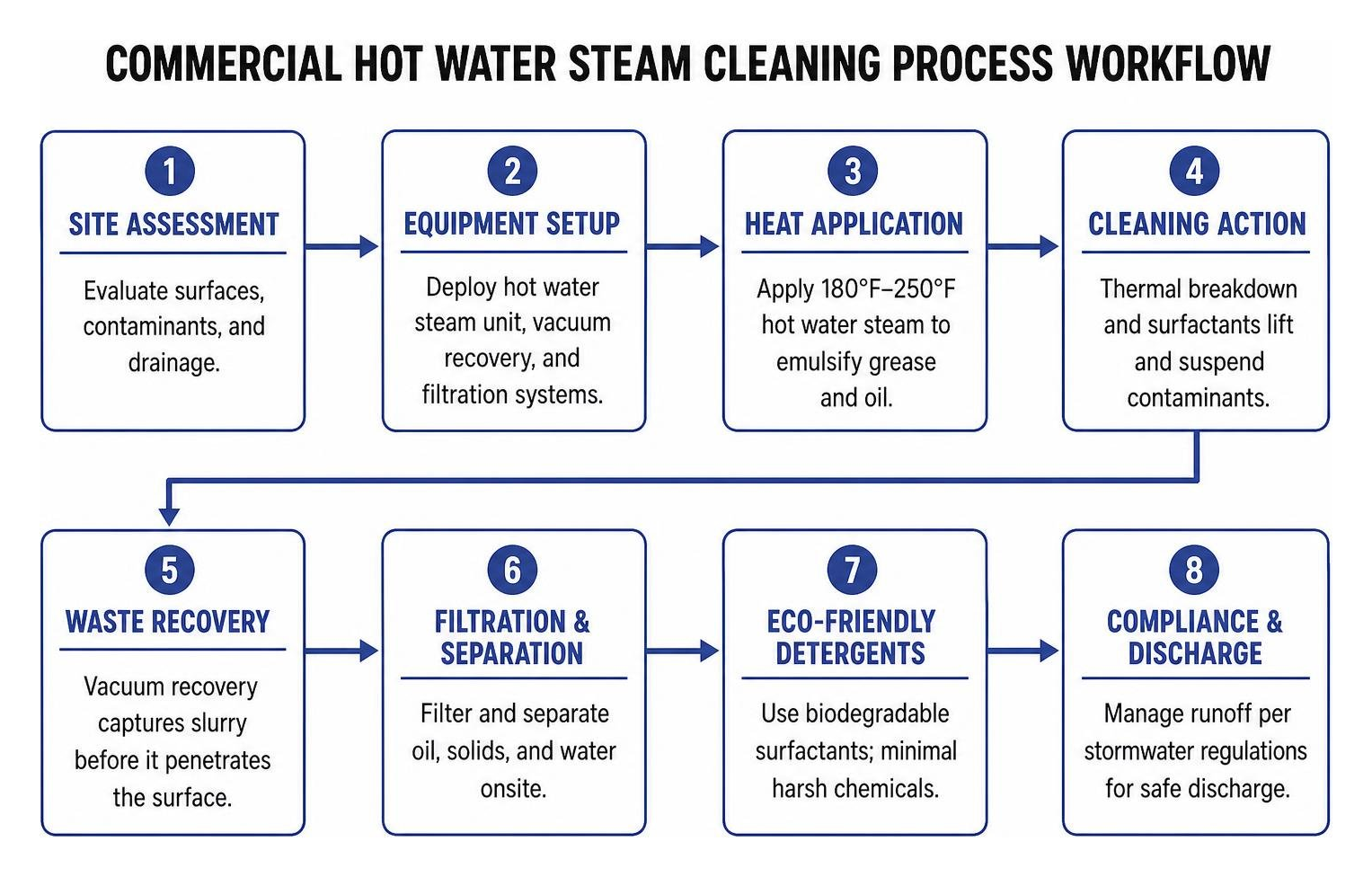
Commercial kitchens, loading bays, and multi-deck parking facilities generate high volumes of stubborn, polymerized grease. High-temperature steam units operating between 200°F and 250°F emulsify these petroleum and food-grade oils on contact. Once heat liquefies the oil, commercial-grade vacuum recovery systems capture the slurry before it can soak deeper into the substrate.
Using thermal delivery reduces the mechanical pressure required to clean a slab. Blasting delicate masonry or older concrete with excessive PSI can etch the surface, creating micro-fissures that trap moisture and accelerate structural deterioration. By applying heat to dissolve tough grime, operators execute thorough hot-water concrete floor cleaning without degrading the concrete matrix.
Eco-Friendly Detergents and Stormwater Compliance
Commercial property washing requires strict adherence to environmental regulations. Industrial runoff cannot enter municipal storm sewers untreated. Professional operations combine specialized vacuum recovery booms, drain berms, and filtration units to capture wastewater directly at the wash site.
Along with wastewater containment, operators must use certified biodegradable cleaning agents. Environmentally safe, water-based degreasers break down contaminants without leaving toxic residues that threaten local waterways or violate regional water quality mandates. Professional contractors follow documented protocols to maintain strict environmental compliance on every job site.
Commercial Exterior Solutions and Facility Applications
Maintaining a commercial site requires tailored cleaning methods for different building zones. High-traffic entryways, logistics loading docks, storefront walkways, and industrial floors all face unique wear patterns and contaminant buildups. Applying the wrong pressure, chemical wash, or water temperature can damage corporate assets and create slip-and-fall hazards for employees and patrons.

Routine commercial washing removes deep-set soot, airborne exhaust particles, tire rubber transfer, and food spills from high-traffic flatwork. Clean, well-kept exterior flatwork protects your capital investment and directly enhances tenant satisfaction and client foot traffic.
Deep Cleaning for Parking Facilities and Multi-Level Structures
Parking structures present distinct maintenance challenges. Multi-level garages accumulate motor oil, transmission fluids, corrosive brake dust, and cooling system leaks daily. If left untreated, these acidic chemicals eat through concrete sealers, penetrate the slab, and corrode structural rebar.
When evaluating regional service options or comparing dedicated commercial fleets, property managers must look closely at equipment capabilities and compliance standards. Property owners often try to cut costs by using cut-rate cleaning crews, only to discover the hidden costs of budget power washing. Inexperienced operators often use insufficient pressure or improper runoff recovery, pushing oily wash water into expansion joints, staining lower levels, or violating stormwater runoff laws. Thorough parking garage cleaning uses high-volume hot water surface spinners paired with continuous vacuum extraction to lift oil without damaging expansion seals.
Commercial Surface Maintenance Across Industrial Properties
Industrial sites, freight terminals, and distribution warehouses experience heavy machinery traffic that leaves thick tire tracks, hydraulic spills, and chemical staining on outdoor concrete pads. Dumpster pads require consistent sanitation to eliminate rancid organic residues, control pest vectors, and neutralize foul odors.
Facility managers regularly schedule washing dumpster enclosures to stop grease accumulation before dangerous slip hazards form or runoff enters public drains. Keeping concrete clean prevents structural surface breakdown, preserves safety striping visibility, and maintains sanitary conditions across active logistics zones.
Operational Reliability and Best Practices for Facility Managers
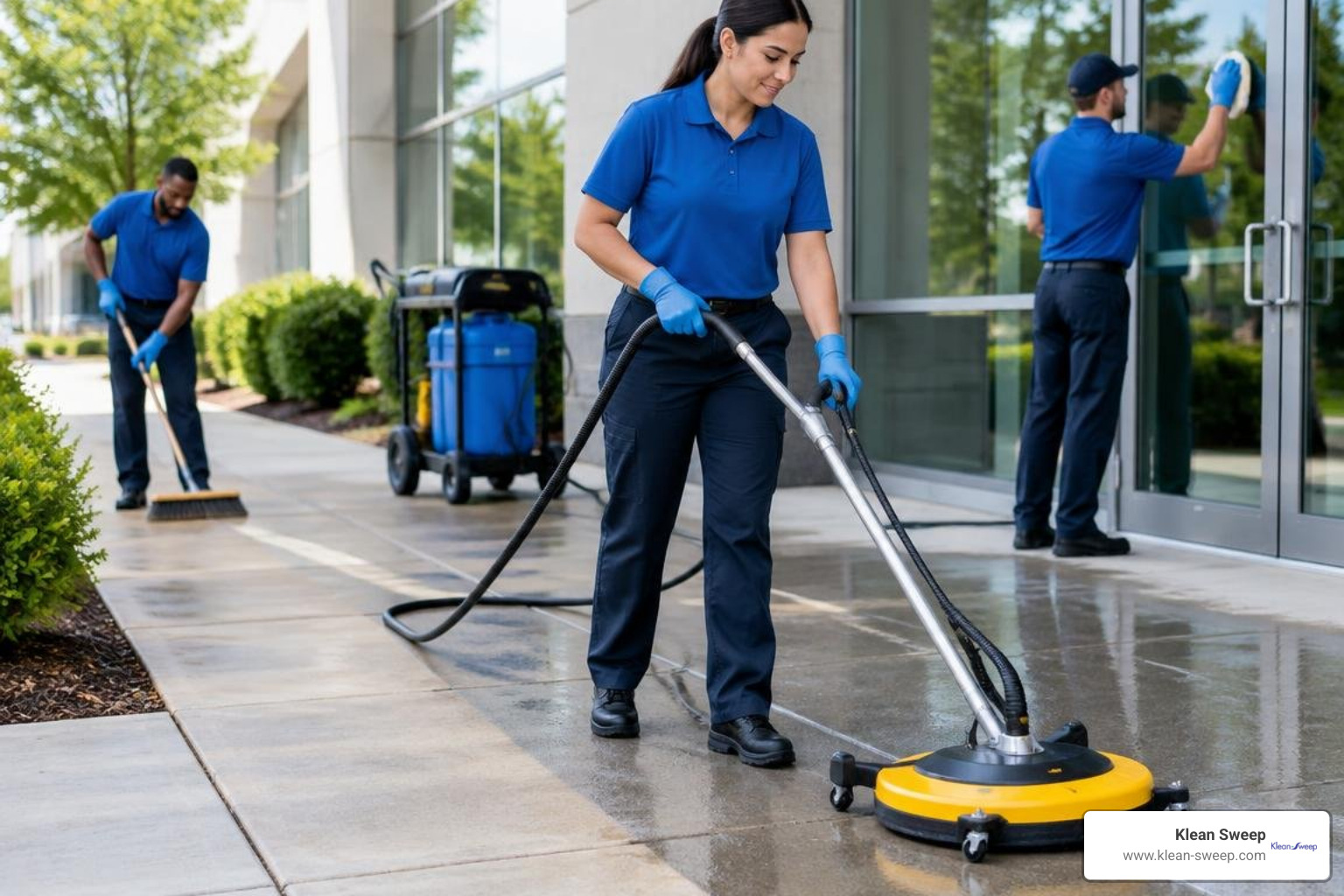
Hiring an exterior cleaning contractor requires evaluating risk management, workplace safety, and consistent operational standards. An unlicensed or underinsured pressure washing crew puts commercial property owners at substantial financial risk from property damage, slip-and-fall claims, and environmental regulatory fines.
Facility supervisors must confirm that service providers follow local and federal stormwater requirements, including the Stormwater Best Management, Practice, Vehicle Maintenance and Washing protocols established by the EPA. These guidelines mandate active wash water containment, surface discharge prevention, and proper disposal into approved sanitary sewer access points.
Vetting Credentials and Insurance for Commercial Pressure Washing Projects
Before allowing high-pressure machinery on a commercial property, managers should verify all contractor credentials. A reliable commercial cleaning provider must present complete, active coverage:
- Comprehensive General Liability Insurance: Minimum $2,000,000 aggregate coverage to protect structures, storefront glass, and exterior utilities.
- Workers’ Compensation Coverage: Full policy documentation protecting all active crew members on the property.
- Environmental & Pollution Liability: Specialized coverage addressing accidental chemical spills or wastewater breaches.
- Better Business Bureau (BBB) Standing: Verified performance history, dispute resolution metrics, and client satisfaction ratings.
Property managers comparing Chris’s Pressure Washing with other commercial exterior cleaning providers can inspect independent reviews to assess reliability, scheduling flexibility, and on-site professionalism before signing a multi-location service contract.
Comparing Standard Power Washing with Full Facility Maintenance
While routine pressure washing is essential, top-performing facilities treat it as part of an integrated, comprehensive exterior maintenance plan. Relying solely on occasional high-pressure cleaning allows trash, abrasive road grit, and fine debris to collect between wash cycles, wearing down pavement coatings and concrete sealers.
Property executives partner with established facility service teams who offer structured solutions, evaluating reliable exterior service providers across multiple operational categories:
- Scheduled Street and Parking Lot Sweeping: Removing abrasive grit, loose trash, and fine sediment before they wash into catch basins or scratch decorative surfaces.
- Dedicated Day Porter Services: Providing ongoing litter sweeps, trash receptacle management, visual safety checks, and immediate spill cleanups during standard operating hours.
- Stormwater Drainage & Catch Basin Maintenance: Clearing sediment, leaf matter, and sludge from subterranean drainage lines to eliminate standing surface water.
- Targeted Hot-Water Steam Extraction: Performing scheduled, high-temperature deep cleanings on high-visibility concrete walkways, retail entry points, and loading dock bays.
- Concrete Protective Sealing: Applying industrial silane-siloxane or polyurethane sealers over freshly cleaned concrete to repel oil penetration and moisture intrusion.
Frequently Asked Questions About Commercial Exterior Washing
How does hot-water commercial washing eliminate grease from concrete?
Hot-water commercial cleaning uses thermal energy to reduce the viscosity of heavy oils and petrochemicals. When water heated to 200°F–240°F strikes a grease stain, it liquefies the hardened fats and hydrocarbons. Combined with targeted eco-friendly surfactants, the wash water emulsifies the oily residue, lifting it out of the porous concrete capillaries so it can be vacuumed away.
What environmental regulations govern commercial stormwater runoff?
The primary federal mandate governing commercial exterior washing is the Clean Water Act, overseen by the EPA alongside regional water quality control boards. These regulations strictly prohibit industrial, chemical-laden, or sediment-heavy wash water from entering public storm drains, which lead directly to local waterways. Professional commercial cleaners must use physical blockades, storm drain covers, and vacuum recovery units to route wastewater into dedicated containment tanks or authorized sanitary sewers.
How often should high-traffic commercial properties be pressure washed?
High-density commercial hubs, such as shopping center walkways, fast-food drive-thrus, and busy parking structures, generally require hot-water pressure washing on a monthly or quarterly schedule. Loading docks and industrial pads should be deep-cleaned at least quarterly to keep grease from building up. Less trafficked commercial perimeters, such as exterior perimeter walls and rear service lanes, can be washed semi-annually or annually to control atmospheric dust and mold growth.
Conclusion
Protecting the aesthetic appeal, environmental compliance, and structural integrity of a commercial facility requires a reliable, disciplined maintenance strategy. Selecting the right exterior cleaning contractor means looking beyond low bids to evaluate actual mechanical capabilities, hot-water thermal capacity, insurance coverage, and stormwater compliance systems.
Since 1969, Klean Sweep has delivered dependable, environmentally responsible commercial property maintenance across Southern California, including Los Angeles, Torrance, Beverly Hills, Carson, Pasadena, and Brea. Our fleet of industrial sweeping trucks, dedicated day porter personnel, and high-temperature mobile wash units helps property owners keep their sites clean, safe, and fully compliant. Contact our team to book dedicated steam cleaning and pressure washing in Torrance and throughout the greater Los Angeles area.