

Why Oil Stains on Commercial Concrete Are Harder to Remove Than You Think
The best way to get oil off of concrete depends on one critical factor: how long the oil has been sitting there.
Here is a quick answer before we dive deeper:
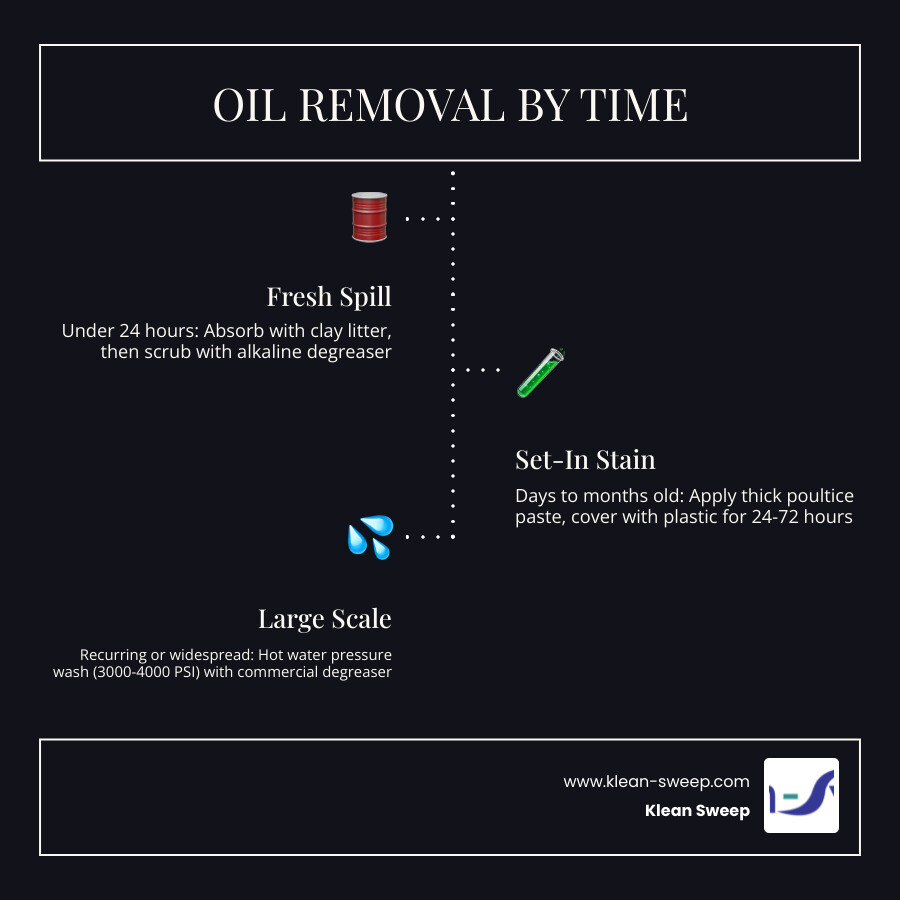
- Fresh spill (under 24 hours): Cover immediately with clay-based cat litter or an absorbent material. Let it sit for at least 2-3 hours, sweep it up, then scrub with a concentrated alkaline degreaser and rinse.
- Set-in or embedded stain (days to months old): Apply a poultice cleaner as a thick paste, cover with plastic film, and let it draw the oil out over 24-72 hours before scraping and rinsing.
- Large-scale or recurring stains: Use hot water pressure washing (3,000-4,000 PSI) combined with a commercial-grade degreaser — or call a professional concrete cleaning service.
Oil does not just sit on top of concrete. Concrete is highly porous, containing microscopic capillary channels that pull liquids downward. Once oil reaches that pore network, it bonds to the concrete surface and begins to oxidize and polymerize — essentially becoming part of the structure. The longer it sits, the harder it is to extract.
On commercial surfaces like parking structures, loading docks, and industrial flatwork, this problem compounds fast. Vehicle traffic, ongoing leaks, and large surface areas mean that a single spill can spread, darken, and create a stormwater compliance issue if left untreated.
I’m Jana Hanson, and over more than a decade leading Klean Sweep — the Los Angeles-area exterior maintenance company my father Norm Basmajian founded in 1969 — I’ve seen how the best way to get oil off of concrete on a commercial site is rarely a one-product fix. In this guide, I’ll walk you through exactly what works, what makes stains worse, and when to call in professionals.
Basic best way to get oil off of concrete vocab:
- commercial concrete floor stain removal
- power wash commercial concrete floor
- best mop for commercial garage floors
Understanding Commercial Concrete and Oil Contamination
To understand why oil is so incredibly stubborn, we have to look at the physical makeup of concrete. Typical commercial concrete contains about 15% to 25% air voids. This means that beneath that solid, grey exterior lies a massive network of microscopic capillaries.
When a vehicle leaks fluid onto an unsealed parking deck, the concrete doesn’t just act as a floor — it acts like a giant, stone sponge. Through capillary action, liquid hydrocarbons are pulled deep down into the substrate.
Once inside, the chemical nature of the oil changes. As it ages, it undergoes oxidation and polymerization. This is a fancy way of saying the oil molecules combine, harden, and chemically bond to the calcium-based binders within the cement.
Different fluids present unique challenges:
- Motor Oil: This is the most common culprit in parking structures. It is thick, dark, and contains combustion byproducts that leave behind heavy carbon shadows.
- Transmission Fluid: Usually dyed red, this fluid is highly mobile and will quickly wick deep into the concrete’s pores if not treated.
- Hydraulic Fluid: Often found around commercial loading docks and waste compactors, hydraulic fluid is a complex synthetic ester. It undergoes rapid oxidative hardening when exposed to air and concrete, making it exceptionally difficult to lift once dried.
To understand how these chemical bonds develop and how specialized products break them down, you can read more about How oil bonds to concrete.
Why Oil Type and Concrete Texture Matter
The texture of your commercial slab dictates how you must approach the cleaning process.
- Smooth Troweled Concrete: Commonly found in enclosed parking garages and warehouses, this surface is dense and resists deep penetration better than rough concrete. However, because it is smooth, any residual oil creates a major slip-and-fall hazard.
- Broom-Finished Concrete: Standard for outdoor parking lots, access ramps, and walkways in commercial plazas from Torrance to Pasadena. The rough texture provides excellent traction, but those deep grooves trap oil and dirt. When scrubbing broom-finished surfaces, you must agitate the cleaning agents along the direction of the broom pattern so the chemistry can reach the lowest points of the grooves.
- Exposed Aggregate: This surface features exposed stones and deep pockets. It has a massive surface area that traps oil in hard-to-reach recesses, making manual scrubbing almost entirely ineffective.
The Best Way to Get Oil Off of Concrete: Fresh vs. Embedded Stains
Before we grab the scrubbing brushes, we must divide the parking structure or loading dock into distinct “cleaning zones” based on stain depth. Treating a fresh, wet puddle of transmission fluid the same way you treat a three-month-old polymerized motor oil shadow is a recipe for wasted time and money.
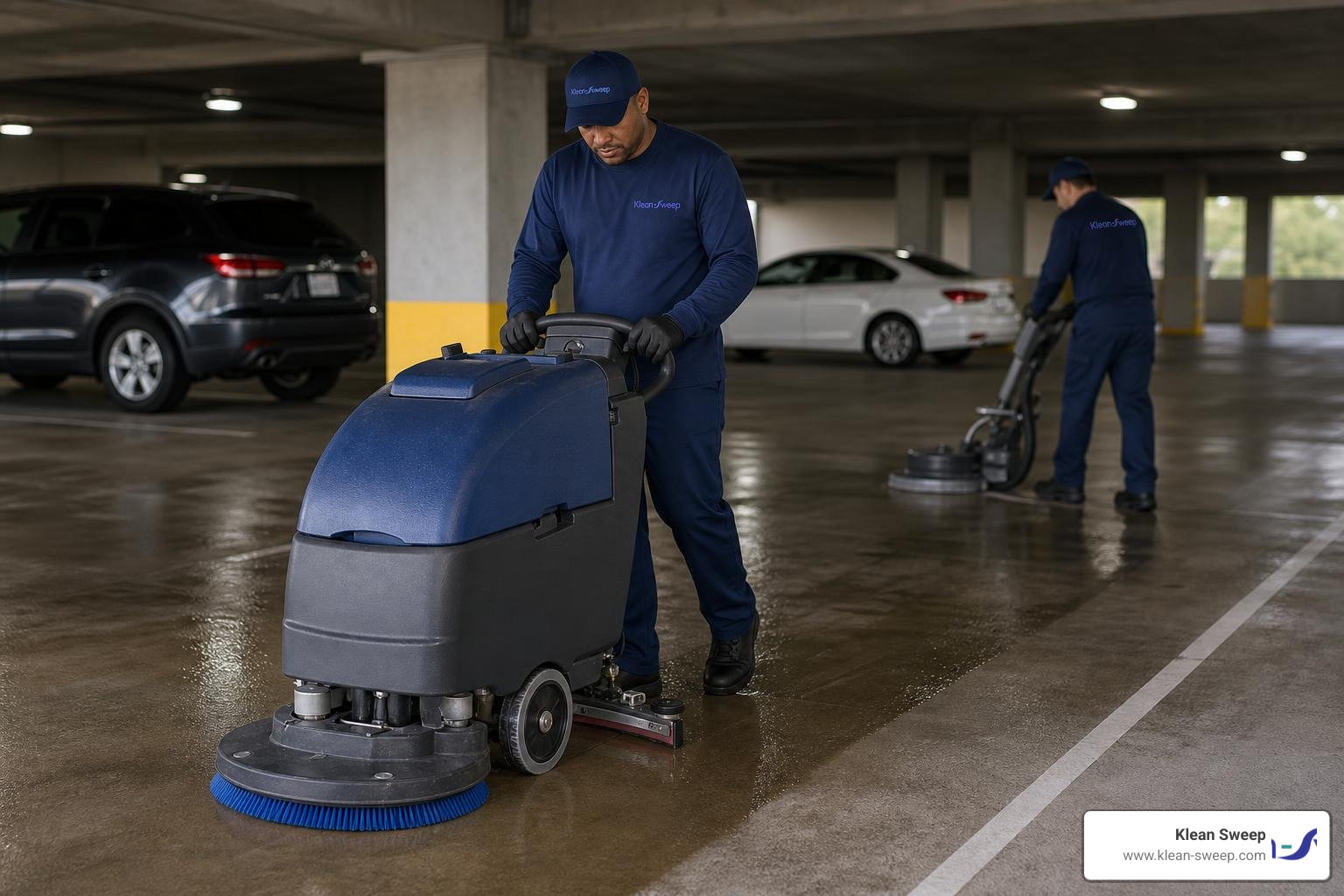
For active commercial properties, regular maintenance is key to preventing these fluids from settling. Utilizing professional concrete floor scrubbing services ensures that surface-level films are removed before they can travel down into the capillary network.
The Best Way to Get Oil Off of Concrete When It Is Fresh
If a delivery truck blows a hydraulic line on your loading dock, you have a golden window of about 24 hours to act before that fluid begins to chemically bond with the concrete.
The absolute golden rule for a fresh spill is: Blot — do not rub, and do not blast it with water!
Wiping a fresh oil puddle with a rag or spraying it immediately with a cold-water pressure washer will only spread the contamination, forcing the oil outward to create a massive, light-colored “halo” stain. Even worse, it pushes the oil deeper into the open pores.
Instead, follow this immediate spill-response protocol:
- Contain and Absorb: Immediately cover the spill with an absorbent material. Clay-based cat litter, sawdust, or commercial oil-dry compounds are the gold standards. For heavy synthetic fluids, you can follow specialized steps on How to absorb hydraulic fluid. Use approximately 2 cups of cat litter or absorbent material for every moderate spill.
- Grind It In: Put on your safety boots and gently grind the clay absorbent into the concrete surface to maximize contact with the pores.
- Dwell Time: Let the absorbent sit undisturbed for at least 2 to 3 hours (or overnight for massive spills) to draw up the bulk of the liquid.
- Sweep and Contain: Sweep up the contaminated powder. In Southern California, environmental regulations are incredibly strict. Contaminated absorbents must be disposed of properly and never swept into storm drains or standard municipal trash bins.
The Best Way to Get Oil Off of Concrete When It Is Deeply Embedded
What happens when you are dealing with a dark, matte oil shadow that has been baking under the Southern California sun for three months? The oil is no longer a liquid; it has oxidized and polymerized deep within the slab.
At this stage, simple scrubbing with soap and water will only clean the very top layer, leaving a massive reservoir of oil untouched beneath the surface. To lift these deeply embedded hydrocarbons, you must use poultice cleaners.
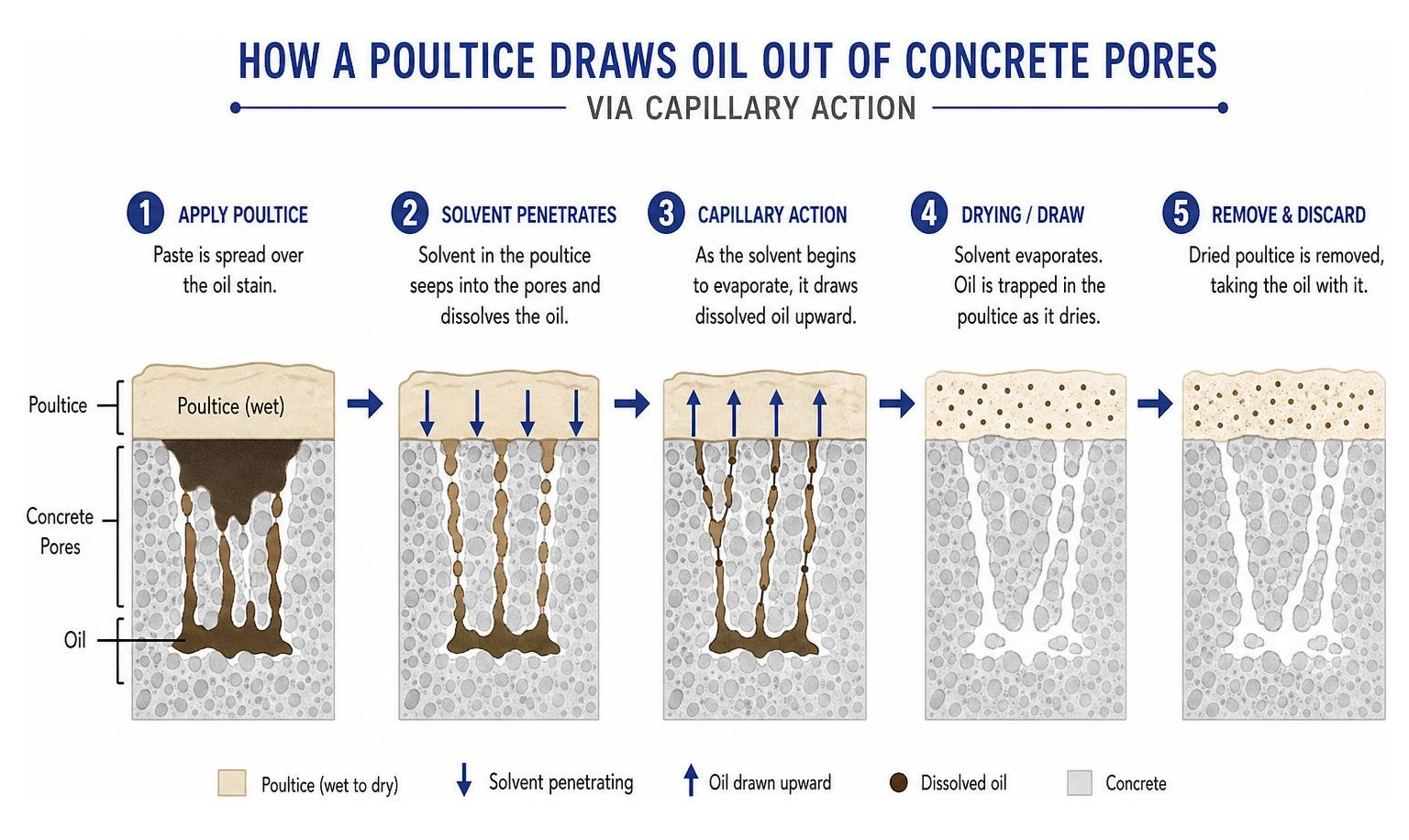
A poultice works on the principle of chemical osmosis. You apply a thick, wet paste containing an absorbent powder (like diatomaceous earth or dry cement) and a active solvent. As the solvent penetrates the concrete, it dissolves the hardened oil. Then, as the paste dries, it creates a chemical gradient that draws the dissolved oil upward out of the concrete pores and locks it into the powder.
For property managers dealing with older, neglected commercial slabs, understanding this process is crucial. You can dive deeper into the science of lifting these stubborn marks in this guide on concrete floor stain removal.
Step-by-Step Commercial Oil Stain Removal Methods
When managing commercial properties in areas like Carson, Brea, or Beverly Hills, you need reliable, repeatable workflows to keep your concrete looking pristine and compliant. Below, we compare the three most effective commercial methods.
Table: Commercial Oil Stain Removal Methods Compared
| Method | Best For | Key Chemistry / Equipment | Dwell Time | Pros | Cons |
|---|---|---|---|---|---|
| 1. Hot Water Pressure Washing & Degreaser | Large areas, surface films, parking decks | Alkaline surfactants, 4,000 PSI / 3.5 GPM hot-water rig | 10–20 minutes | Extremely fast, covers massive square footage | Requires wastewater reclamation to prevent runoff |
| 2. Poultice Extraction | Deep, localized, stubborn oil shadows | Solvent-based paste, plastic film | 24–72 hours | Pulls oil from deep pores, no scrubbing needed | Slow process, limited to spot treatments |
| 3. Bio-Enzymatic Cleaners | Eco-sensitive zones, landscaping borders | Live oil-eating microorganisms | 24–48 hours (must stay damp) | Zero environmental impact, self-cleaning | Slow acting, requires warm and damp conditions |
Method 1: Commercial Degreasers and Hot Water Pressure Washing
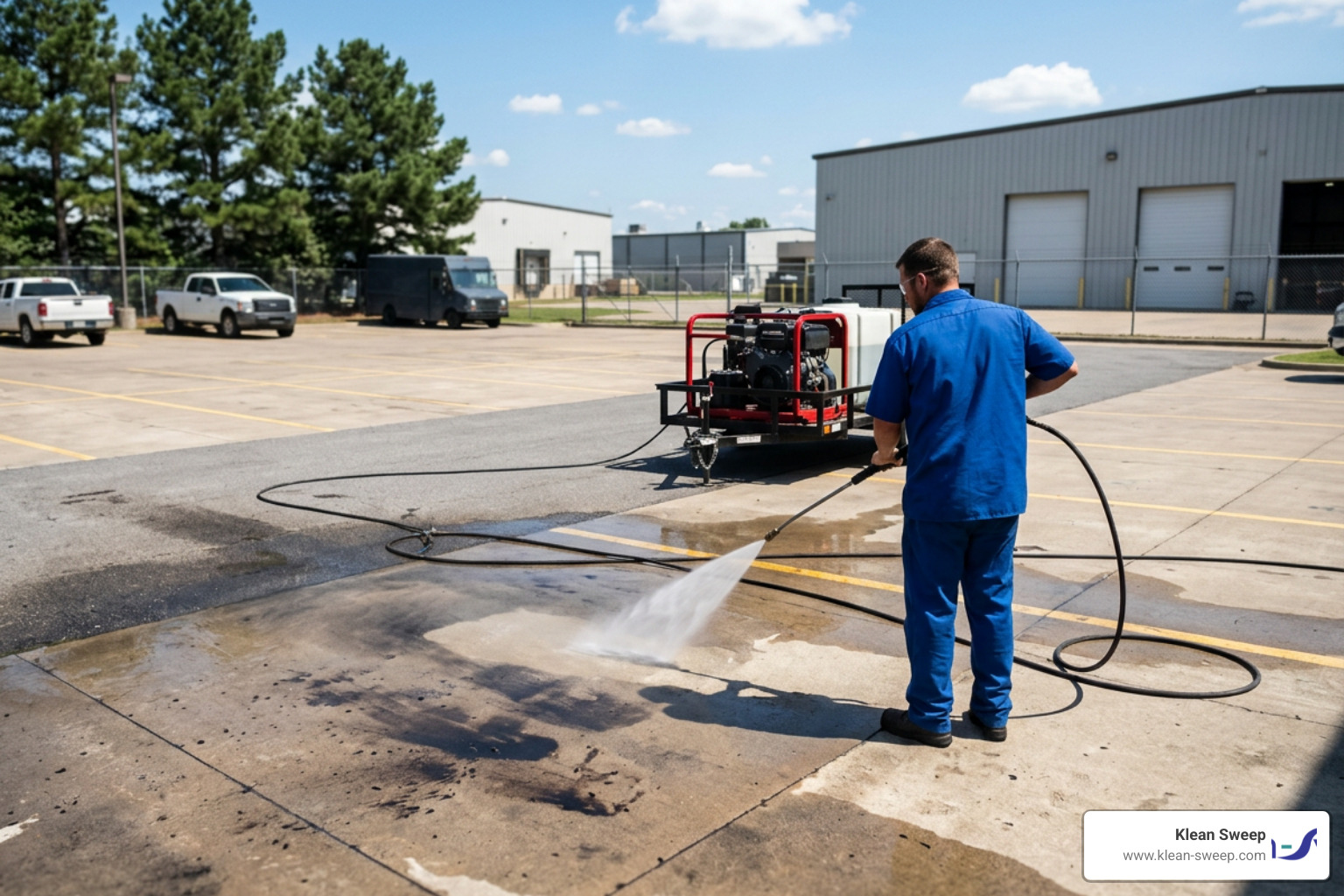
For large-scale commercial exterior maintenance, nothing matches the efficiency of professional hot-water pressure washing combined with industrial alkaline degreasers.
Alkaline cleaners are highly effective because their high pH breaks down the acidic components of petroleum, emulsifying the grease so it can be suspended in water. When combined with hot water (which thins the viscosity of the oil), the cleaning power is multiplied.
Our step-by-step workflow for commercial properties:
- Prep the Surface: Sweep away all loose debris, dirt, and sand. Ensure the concrete is dry, as standing moisture will dilute your chemical cleaners.
- Apply Degreaser: Apply a high-quality commercial degreaser (such as Oil Eater Original or Simple Green Industrial) diluted according to the severity of the stain. For heavy, set-in grease, apply at full strength using a garden sprayer.
- Dwell and Agitate: Let the degreaser dwell on the concrete for 10 to 20 minutes. Do not let it dry on the surface! While it is dwelling, scrub the area vigorously using a stiff-bristled nylon deck brush.
- Hot Water Blasting: Wash the area using a professional pressure washer rated at 3,000 to 4,000 PSI with a water flow rate of at least 3.5 GPM. A high-speed rotating turbo nozzle is highly recommended to physically strip the emulsified grime out of the concrete’s pores.
- Reclaim Wastewater: In Southern California, you cannot let this oily runoff flow into storm drains. Professional crews must use recovery systems to vacuum up and filter the wash water.
To understand the equipment requirements and environmental controls needed for this process, read our ultimate guide to commercial pressure washing services.
Method 2: Poultice Extraction for Deep Hydrocarbon Pull
When a localized oil stain refuses to budge even after pressure washing, a poultice is the ultimate weapon. You can use commercial poultice products like PROSOCO’s Oil & Grease Stain Remover or CHOMP! Pull It Out.
Here is the proper step-by-step application process:
- Prepare the Paste: If using a dry-mix poultice, blend the absorbent powder with your solvent to create a smooth paste with the consistency of peanut butter. If using a pre-mixed liquid poultice, shake the bottle thoroughly before pouring to prevent clumping.
- Apply to the Stain: Pour or spread the paste directly over the dry concrete stain, extending it about 1 inch beyond the edges of the mark. The layer should be 1/4 to 1/2 inch thick.
- Seal and Protect: Cover the wet paste with a sheet of plastic film. Tape down the edges with painter’s tape to lock in the moisture. This slows down the evaporation of the solvent, giving it time to penetrate deep into the concrete.
- Wait for the Draw: Let the covered poultice sit for 24 hours. Then, remove the plastic film and let the paste dry completely (another 24 to 48 hours). As the solvent evaporates, it draws the dissolved oil upward into the powder.
- Sweep Up: Once the poultice has dried completely into a dry, white powder, gently scrape it up using a plastic putty knife and sweep it into a dustpan.
- Evaluate: Rinse the area with clean water. Wait for the concrete to dry completely before evaluating. If a light shadow remains, a second cycle may be required.
Sometimes, even after a successful poultice treatment, the stain seems to mysteriously reappear days later. To understand why this happens and how to stop it, check out this guide on Why some stains return.
Method 3: Bio-Enzymatic and Microbe-Based Cleaners
For commercial properties with strict environmental mandates, or those located near sensitive landscaping and public parks, bio-enzymatic concrete cleaners are an incredible innovation.
These products contain live, non-pathogenic microorganisms that literally eat hydrocarbons. When applied to an oil stain, these microbes consume the petroleum molecules, converting them into harmless carbon dioxide and water.
The trick to using bio-remediation cleaners is keeping them alive. Microbes require warmth and moisture to work.
- Apply the cleaner in the evening when the hot Southern California sun won’t dry it out instantly.
- Lightly mist the treated area with water to activate the microbes.
- Cover the area with a damp tarp to keep the environment humid for 24 to 48 hours.
- As long as the area stays slightly damp and warm, the microorganisms will continue to digest the oil deep within the concrete matrix, leaving zero chemical residue behind.
Safety, Environmental Regulations, and Common Mistakes to Avoid
Cleaning commercial concrete in the greater Los Angeles area isn’t just about aesthetics — it is a matter of strict legal compliance.
Under California law, any industrial wastewater, chemical runoff, or contaminated cleaning material is classified as hazardous waste. Sweeping oily cat litter into a storm drain or letting degreaser runoff flow into public waterways can result in massive EPA fines.
When executing any concrete cleaning project, always keep these safety and environmental protocols in mind:
- Wastewater Containment: Use storm drain berms, vacuum booms, and reclamation tanks to capture 100% of your wash water.
- Proper Disposal: Take all recovered motor oil, spent chemical solvents, and contaminated absorbents to a designated Los Angeles County S.A.F.E. (Solvents, Automotive, Flammables, and Electronics) collection center.
- Personal Protective Equipment (PPE): Ensure your maintenance crew wears chemical-resistant gloves, wrap-around safety goggles, and respirators when working with concentrated commercial degreasers in enclosed parking garages.
- pH Neutralization: If you must use strong alkaline cleaners, ensure the surface is neutralized and rinsed properly. For a deeper understanding of concrete pH management, consult our pH neutral concrete cleaning guide.
Critical Mistakes That Damage Commercial Concrete
In our decades of service at Klean Sweep, we’ve seen well-meaning property managers accidentally ruin expensive concrete slabs by using the wrong methods. Avoid these critical mistakes:
- Using Metal Wire Brushes: High-tensile steel wire brushes will scratch and gouge the concrete finish, leaving permanent scratch marks and exposing the aggregate underneath. Always use stiff-bristled nylon or polypropylene brushes.
- Applying Water Too Early: If you spray a fresh oil spill with water before applying an absorbent, you will lock the grease beneath a layer of moisture, making it twice as hard to remove.
- Using Harsh Acids (Muriatic Acid): Acid does not dissolve oil. Acid etches concrete. If you apply muriatic acid to an oil stain, it will eat away the surrounding cement binder, permanently altering the texture and leaving a bright, damaged white spot that cannot be repaired.
- Using Household Bleach: Bleach is a strong oxidizer, not a degreaser. It will only mask the color of the stain temporarily while doing nothing to break down the actual oil molecules.
Frequently Asked Questions about Commercial Concrete Oil Removal
Why do oil stains reappear on concrete after cleaning?
This is a physical phenomenon known as capillary wicking or “ghosting.” When you clean a concrete slab, you are often only removing the oil from the top 1/8 inch of the surface. Deep within the concrete’s capillary network, a massive reservoir of oil remains.
As the concrete dries, or when humidity rises, moisture moves upward through the pores to evaporate. This rising moisture carries the subsurface oil along with it, depositing it back onto the surface and making the dark shadow reappear. The only solution is to perform multi-cycle extraction treatments using a poultice or bio-enzymatic cleaner to empty the subsurface reservoir completely.
Can you use pressure washing alone to remove oil stains?
No. High water pressure alone cannot break the chemical bonds that oil forms with the concrete’s calcium binders. In fact, blasting a fresh oil stain with a pressure washer without a pre-treatment degreaser will actually drive the oil deeper into the pores, permanently setting the stain. You must always pre-treat, dwell, and agitate with a specialized surfactant or degreaser before rinsing.
Should commercial concrete be sealed after oil stain removal?
Absolutely. Once you have successfully extracted the oil, the concrete’s pores are completely open and highly vulnerable to the next leak. Applying a high-quality, penetrating silane or siloxane sealer is the single best way to protect your investment.
Unlike topical sealers (which can make commercial parking decks dangerously slippery when wet), penetrating sealers soak into the pores, chemically reacting with the concrete to form a hydrophobic barrier. This barrier prevents oil and water from wicking into the capillaries, keeping future spills on the surface where they can be easily wiped away. For high-traffic commercial areas, concrete should be re-cleaned and re-sealed every 2 to 5 years.
Conclusion
Finding the best way to get oil off of concrete doesn’t require magic — it requires the right combination of chemistry, physical agitation, and patience. Whether you are dealing with a fresh hydraulic leak on a loading dock or decades of slow motor oil drips in a multi-level parking structure, understanding the porous nature of concrete is the key to restoring your property’s curb appeal and maintaining environmental compliance.
At Klean Sweep, we’ve been keeping Southern California’s commercial properties clean, safe, and compliant since 1969. Headquartered in Torrance, CA, our family-owned business uses state-of-the-art hot water pressure washers, advanced floor scrubbers, and eco-friendly wastewater reclamation systems to handle everything from minor spot treatments to massive multi-acre parking structures.
If you want the job done right without the hassle of chemical disposal and runoff regulations, let our highly trained team handle the heavy lifting. Schedule professional concrete floor cleaning in Torrance CA and the greater Los Angeles area today.