

Remove Rust From Commercial Concrete Without Damaging It
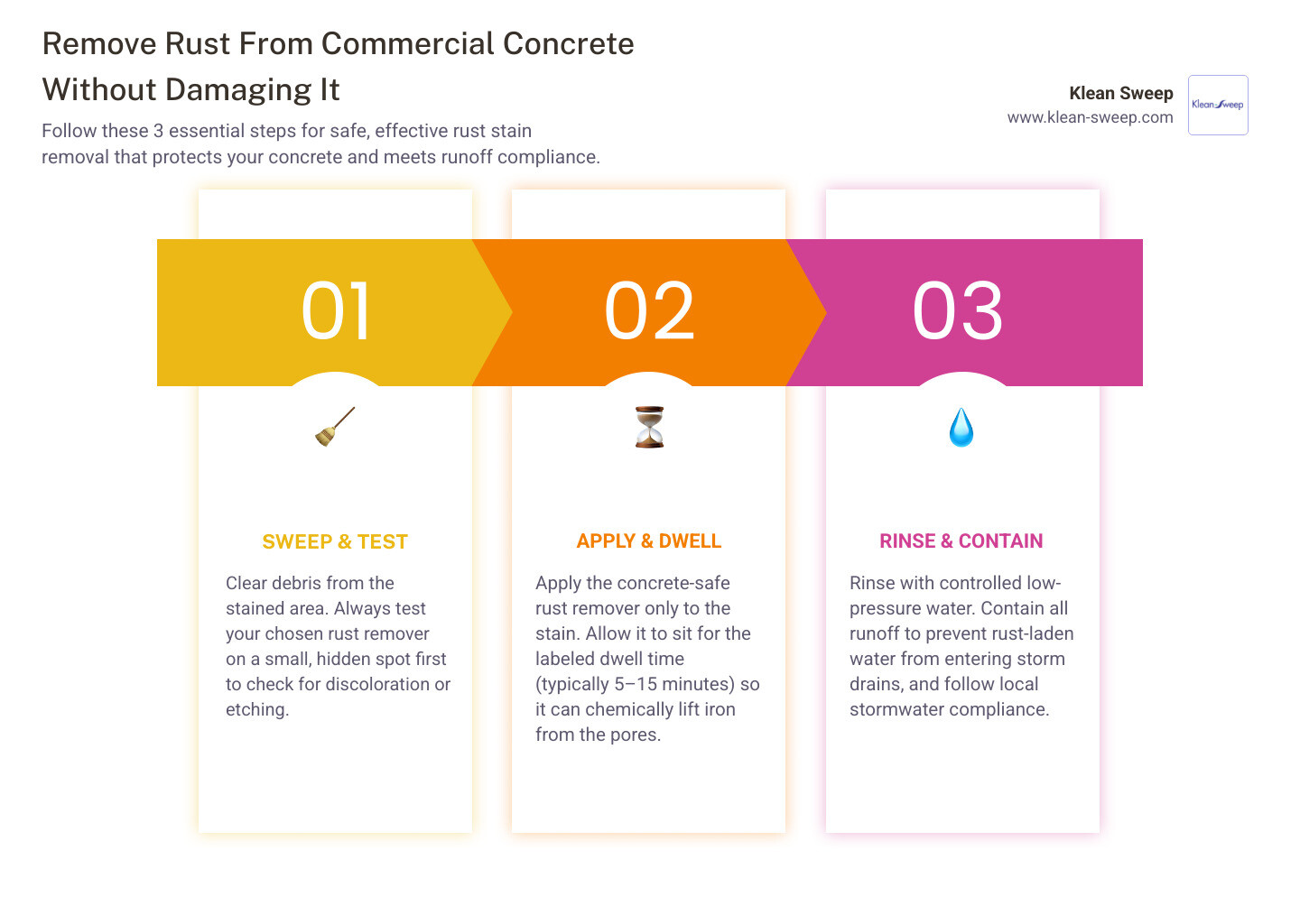
To remove rust from commercial concrete, sweep away debris, test a concrete-safe rust remover on a small hidden spot, apply it only to the stain, allow the labeled dwell time, then rinse with controlled low-pressure water. Rust remover concrete products work by dissolving or chemically lifting iron deposits that pressure washing alone cannot remove.
Rust stains usually come from metal fixtures, irrigation overspray with iron, fertilizer, equipment leaks, or battery-related staining. Because concrete is porous, iron particles can settle below the surface and leave stubborn orange-brown marks on parking areas, loading pads, sidewalks, and parking structures.
Choose a product made for concrete, not a harsh general-purpose acid. Acidic cleaners can lighten, etch, or weaken the cement paste if used incorrectly. For commercial sites, runoff control matters too: protect storm drains, keep rinse water contained, and follow local stormwater requirements.
Jana Hanson leads Klean Sweep, a family-owned exterior maintenance company serving Southern California commercial properties for decades. Her team understands that choosing and applying the right rust remover concrete treatment is part of protecting curb appeal, pavement condition, and drainage compliance.
Primary Causes of Rust Stains on Commercial Concrete Pavement
Rust stains on commercial pavement are rarely just a cosmetic annoyance; they are a sign of active chemical oxidation taking place right within the substrate. Concrete may look solid and impenetrable, but under a microscope, it resembles a hard sponge filled with microscopic capillary pores. When dissolved iron washes over the surface, capillary suction pulls the mineral particles deep into the top layer of the slab.
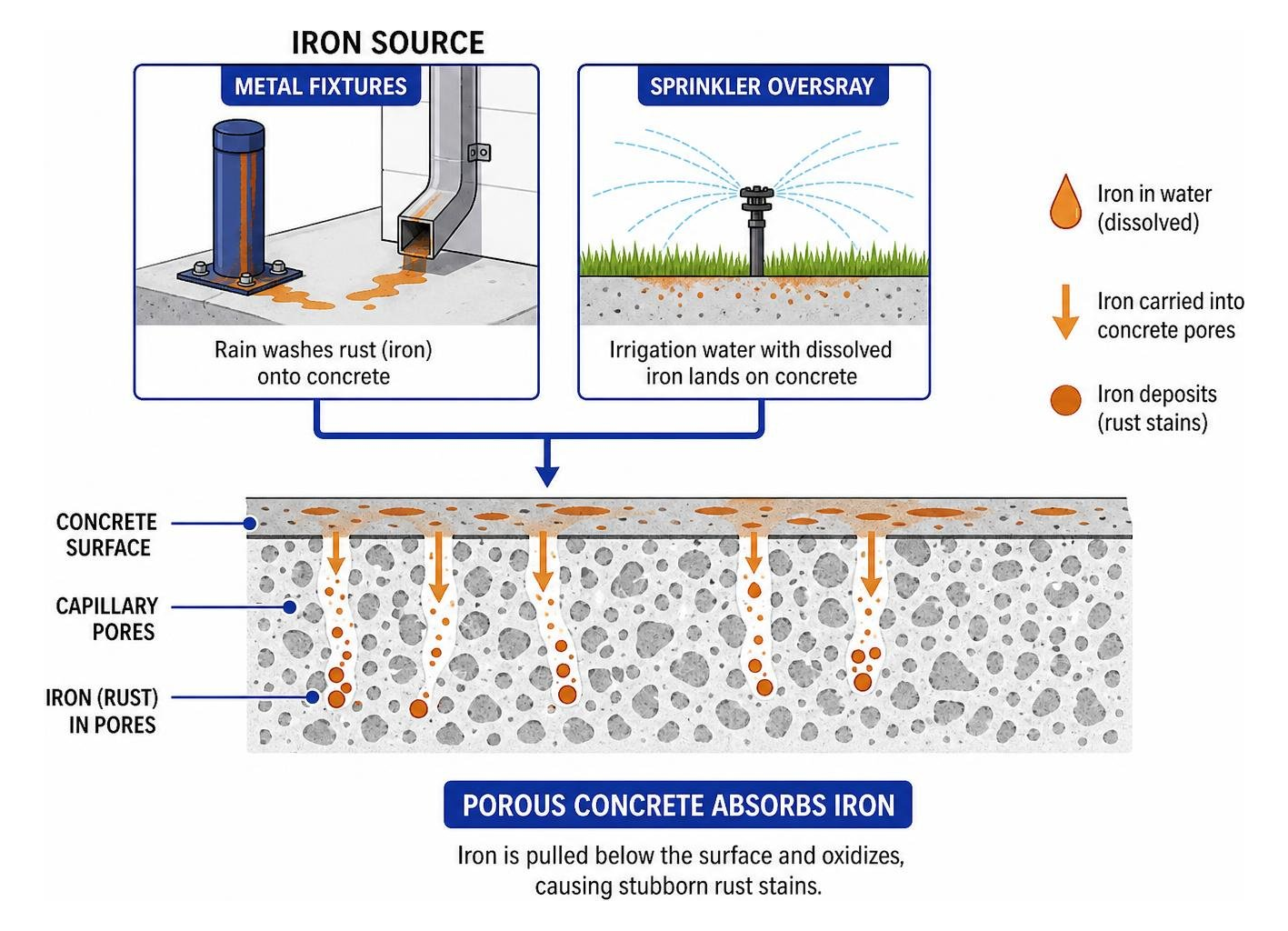
Commercial properties face several major sources of iron oxidation:
- Irrigation Overspray: Well water or hard municipal irrigation systems often contain soluble ferrous iron. When sprinkler heads strike commercial sidewalks or retaining walls, evaporation leaves iron minerals behind. Daily cycling oxidizes these minerals into insoluble ferric oxide.
- Metal Fixture Runoff: Uncoated steel bollards, dumpster enclosures, loading dock plates, outdoor metal benches, and roof drain downspouts continually shed oxidized particles during wet weather.
- Fertilizer Iron Deposits: Commercial landscape maintenance teams frequently broadcast granular fertilizers containing iron sulfate to keep turf green. When stray granules land on walkways and get wet, they burst into concentrated orange spots.
- Battery Acid Burns: Industrial golf carts, floor scrubbers, and delivery vehicles can leak sulfuric acid onto parking structures and loading bays. These orange battery acid burns look identical to standard rust but alter the concrete chemistry differently.
Property managers dealing with busy exterior corridors can implement effective rust stain removal strategies for shopping mall walkways to resolve these issues before iron locks deep into the concrete cream. Most exterior rust deposits do not penetrate deeper than 1/16 of an inch into the concrete surface. While 1/16-inch depth sounds minimal, that microscopic zone is the durable cement paste protecting structural aggregate.
Understanding how to remove rust stains from concrete involves chemically dissolving these embedded particles rather than attempting to blast away the slab itself.
How to Select the Right Rust Remover Concrete Chemical for Your Property
Selecting the wrong chemical for concrete rust removal can turn a localized orange stain into permanent structural aggregate damage. Concrete is naturally alkaline, with a pH usually between 12 and 13. When aggressive, unbuffered acids strike the pavement, they react violently with the calcium hydroxide in the cement matrix, creating rough aggregate exposure and chalky white patches.
Modern chemical engineering offers specialized choices that lift iron without destroying the surrounding pavement:
| Chemical Category | Active Ingredients | Concrete Safety | Dwell Time | Best Commercial Use Case |
|---|---|---|---|---|
| Non-Acid Chelating Gels | Neutral chelating agents | High (pH-neutral, zero etching) | 5–15 minutes | Architectural pavers, decorative slabs, parking structures |
| Buffered Acid Restorers | Proprietary specialty blends | High to Moderate (restores gray color) | 2–10 minutes | Large-scale fertilizer stains, severe battery acid burns |
| Organic Acid Concentrates | Oxalic acid, Glycolic acid | Moderate (can lighten surface if unmixed) | 10–20 minutes | Light irrigation stains, general parking area spot cleaning |
| Traditional Mineral Acids | Muriatic (Hydrochloric) acid | Very Poor (etches paste, exposes aggregate) | Rapid / Uncontrolled | Not recommended for finished commercial concrete |
For properties adjacent to landscape beds or municipal waterways in cities like Torrance, Carson, and Pasadena, choosing phosphate-free, biodegradable formulas is critical. These modern formulations lift stains while mitigating runoff liability and protecting municipal storm systems.
Chemical Action of a Rust Remover Concrete Gel
Viscosity plays a massive role in stain eradication. Liquid cleaners applied to vertical concrete walls or sloped parking ramps quickly run down the grade, leaving the upper stain untreated while pooling at the bottom.
Specialty gel formulations solve this by clinging to both vertical and horizontal surfaces. The gel matrix keeps the active lifting agents suspended over the embedded iron deposits, maximizing dwell time without drying out prematurely.
Many advanced chelators utilize an active chemical indicator that turns deep purple upon contacting oxidized iron. This color change visually demonstrates that the iron ions are being encapsulated and pulled from the substrate pores, allowing technicians to verify that the chemical reaction is complete before rinsing. This controlled process highlights the most effective methods on how to remove rust from concrete without surface damage.
Comparing Acidic Cleaners vs. Non-Acidic Formulations
Standard muriatic acid should never be used as a routine concrete cleaner. While it may strip the rust color, it does so by dissolving the cement paste around the stain, leaving permanent micro-pitting that collects future dirt and moisture.
Non-acidic formulations and buffered specialty cleaners work via selective chelation. They target the iron oxide molecules exclusively, leaving the calcium silicate hydrate matrix of the concrete untouched. For commercial properties, this approach helps maintain a rust-free concrete floor without the surface damage associated with harsh acids.
Step-by-Step Commercial Rust Stain Removal Process
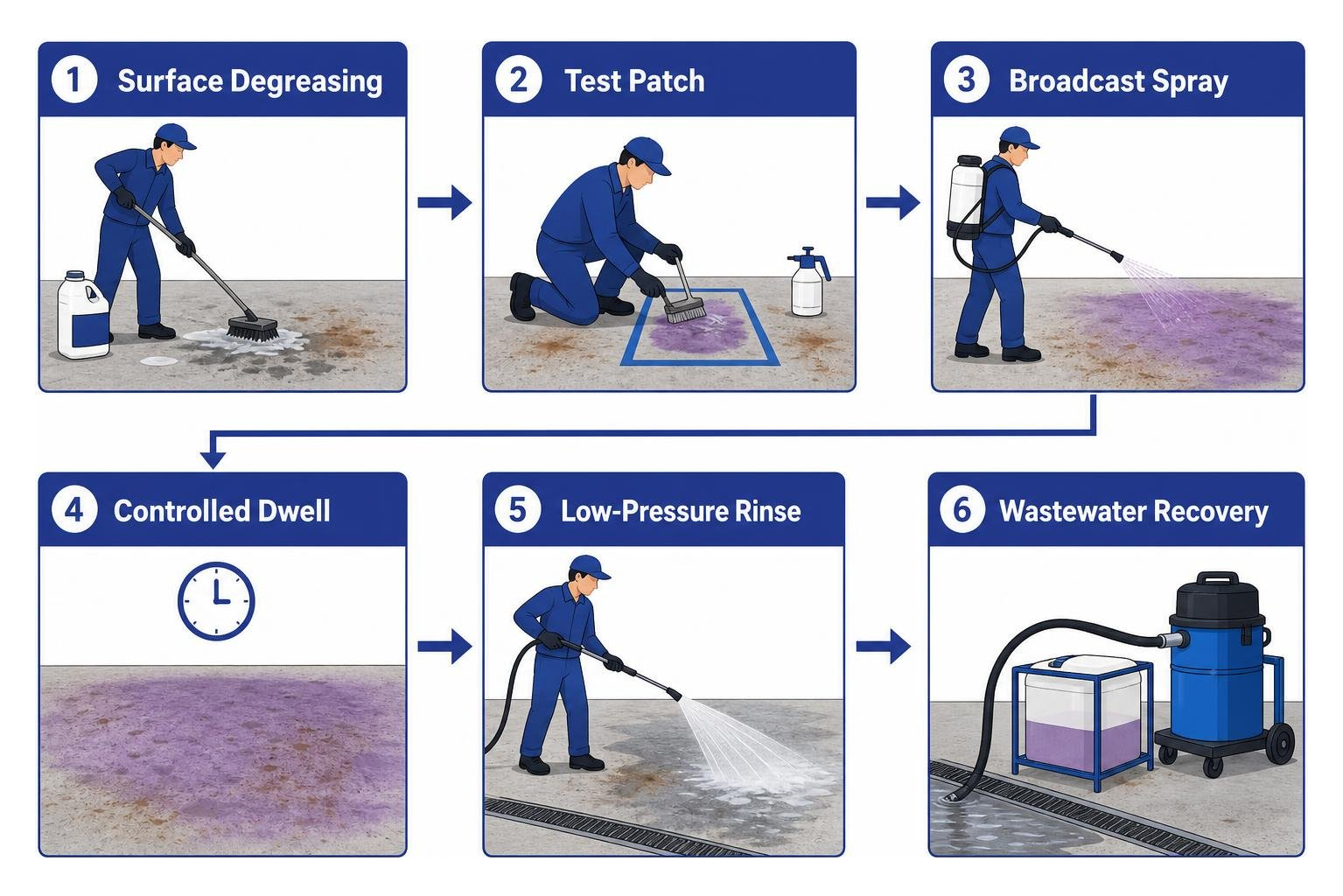
Achieving uniform, spot-free results on commercial concrete requires a disciplined sequence of surface preparation, measured chemical application, and controlled wastewater recovery.
Step 1: Surface Preparation and Degreasing
Chemical rust removers cannot penetrate concrete pores blocked by motor oil, grease, or atmospheric dirt. Begin by sweeping away all loose aggregate and grit. If vehicular oils are present, pre-treat the slab with a commercial degreaser or alkaline detergent, wash thoroughly, and let the concrete dry completely. Applying rust removers to bone-dry concrete ensures maximum capillary draw of the active ingredients into the stained pores.
Testing a Commercial Rust Remover Concrete Formula Before Full Application
Always execute a controlled test patch in an inconspicuous area of the facility. Concrete mixes vary widely across Southern California properties based on the sand, aggregate, and curing compounds used during original installation.
- Apply the selected chemical at your planned dilution rate to a 1-square-foot test zone.
- Monitor the reaction over a 10-minute window to observe lifting power and surface compatibility.
- Rinse and inspect the test spot once dry. If the spot looks noticeably brighter than the surrounding pavement, adjust your plan from an isolated spot treatment to a wider feathered broadcast to maintain color consistency across the entire bay.
Application, Dwell Times, and Low-Pressure Rinsing
Once testing confirms compatibility, apply the solution evenly using a chemical-resistant pump sprayer or soft-wash application system at 60 to 70 PSI, maintaining a uniform overlapping spray pattern.
- Dwell Time Management: Allow the product to work for 5 to 15 minutes. Never allow the chemical solution to dry completely on the slab, as dried product residues can leave white salt rings.
- Non-Destructive Agitation: For heavy fertilizer streaks or deep metal burns, gently work the cleaner into the pores using a stiff, non-wire nylon brush. Never use carbon or wire steel brushes, which break off microscopic metal bristles that oxidize into brand-new rust spots within days.
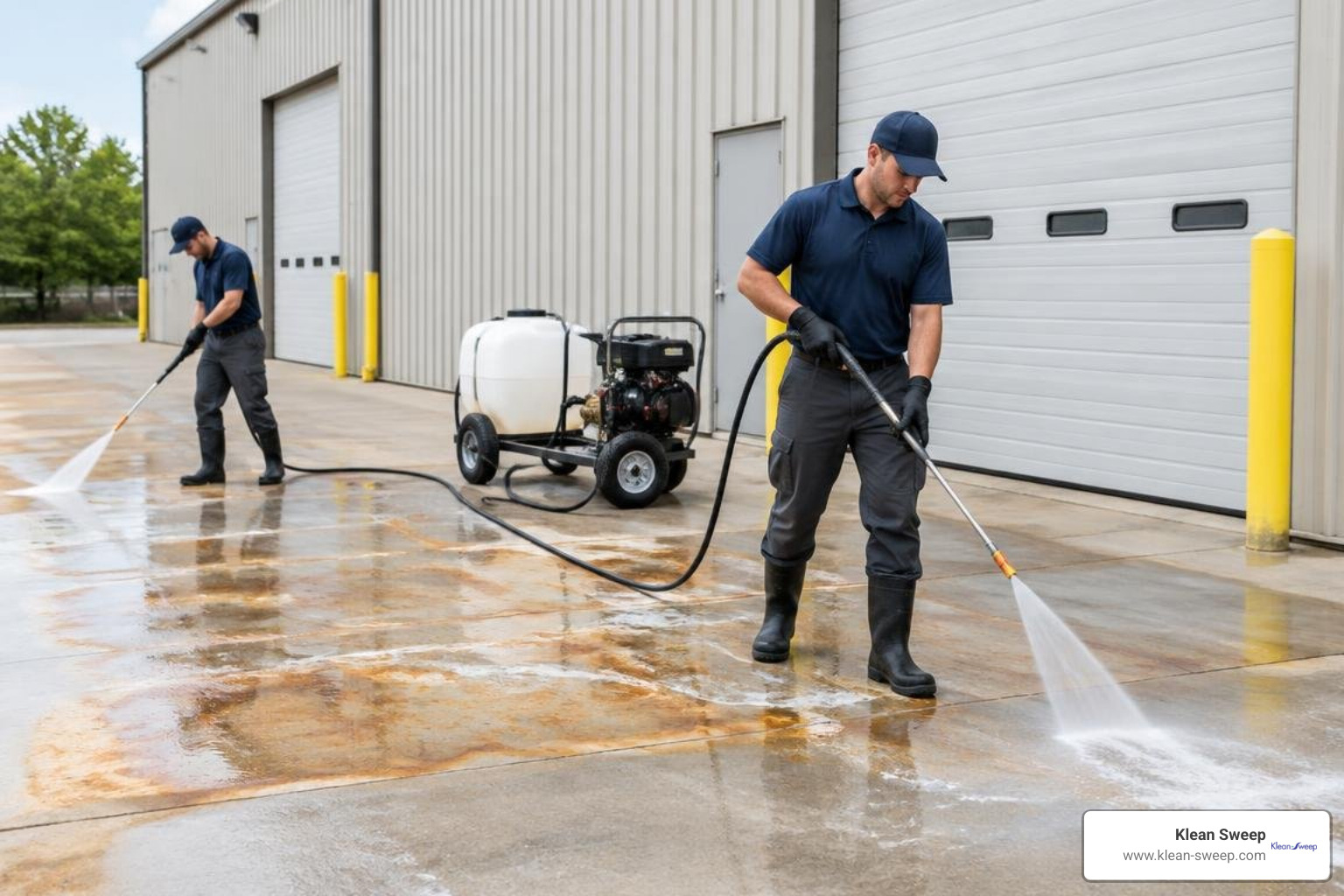
- Controlled Rinsing & Containment: Rinse the treated area using low-to-moderate pressure water. Use surface vacuums, berms, and recovery filtration to capture wash water, ensuring total compliance with regional stormwater regulations across commercial hubs like Los Angeles and Beverly Hills.
Long-Term Prevention Strategies to Keep Concrete Rust-Free
Removing stubborn iron stains restores property aesthetics, but a proactive maintenance program keeps the concrete clean permanently.

- Apply Penetrating Sealers: Once concrete is completely clean and dry, treat high-risk areas with a breathable, penetrating silane-siloxane sealer. Penetrating sealers line the concrete pores without creating a slippery film, repelling water and preventing iron-bearing moisture from soaking into the aggregate matrix.
- Adjust Landscape Sprinkler Trajectories: Conduct monthly irrigation audits. Re-aim sprinkler heads so hard water never sprays directly across commercial walkways, curbs, or retaining walls.
- Coat Metal Infrastructure: Inspect metal bases, light poles, dumpster hardware, and handrails. Coat exposed carbon steel with rust-inhibiting industrial primers and polyurethane topcoats to stop rust at the source.
- Schedule Regular Sweeping Routines: Fertilizer pellets, metallic shavings, and construction debris cause the most damage when left sitting on concrete through heavy dew or rain cycles. Implementing routine property care, such as commercial concrete floor cleaning for long-lasting durability, sweeps away reactive metals before they oxidize.
Frequently Asked Questions About Commercial Concrete Rust Removal
Will pressure washing alone remove rust stains from commercial slabs?
No. Standard pressure washing relies solely on mechanical kinetic force. Because rust stains are chemically bonded iron oxides resting inside microscopic concrete capillaries, water pressure alone cannot dissolve the bond. Blasting concrete with excessive PSI only strips away the durable top layer of cement paste, permanently etching the slab while leaving the deep orange iron stain intact. Chemical lifting agents are essential to break the molecular bond.
Can rust removers harm nearby commercial landscaping and stormwater drains?
Traditional, unbuffered acids can severely damage landscaping turf and violate local environmental regulations if allowed into catch basins. However, modern commercial maintenance teams utilize phosphate-free, biodegradable chelating formulas. By setting up physical containment berms, using neutralizing agents, and recovering rinse water with industrial vacuums, exterior cleaning operations remain fully compliant with strict municipal runoff mandates and EPA stormwater guidelines.
Why do some rust removers leave white haze or etched spots on concrete?
White haze and chalky patches occur when strong, unbuffered mineral acids (such as raw muriatic acid) dissolve the alkaline calcium hydroxide within the concrete paste. This reaction creates insoluble calcium salts and exposes bare aggregate. Utilizing pH-neutral chelators or properly buffered specialty cleaners eliminates acid burn, maintaining the natural gray appearance of commercial pavement.
Restore and Protect Your Commercial Concrete Surfaces
Rust stains compromise the clean, professional appearance of shopping centers, business parks, industrial facilities, and parking structures. Letting iron deposits sit untreated allows corrosion to settle deeper into the slab, creating long-term aesthetic and maintenance challenges.
Klean Sweep has helped facility managers across Torrance, Carson, Pasadena, Brea, and the greater Los Angeles area protect and maintain their exterior pavement assets since 1969. Discover our proven methods and explore our commercial rust removers for your concrete surfaces to keep your commercial property pristine, compliant, and welcoming year-round.