Why First Impressions Start at the Curb
A commercial pressure washing service is one of the most effective ways to protect your property, stay compliant with local regulations, and keep tenants and customers coming back.
If you’re short on time, here’s what you need to know:
What commercial pressure washing does for your property:
- Removes oil, grease, mold, algae, and grime from exterior surfaces
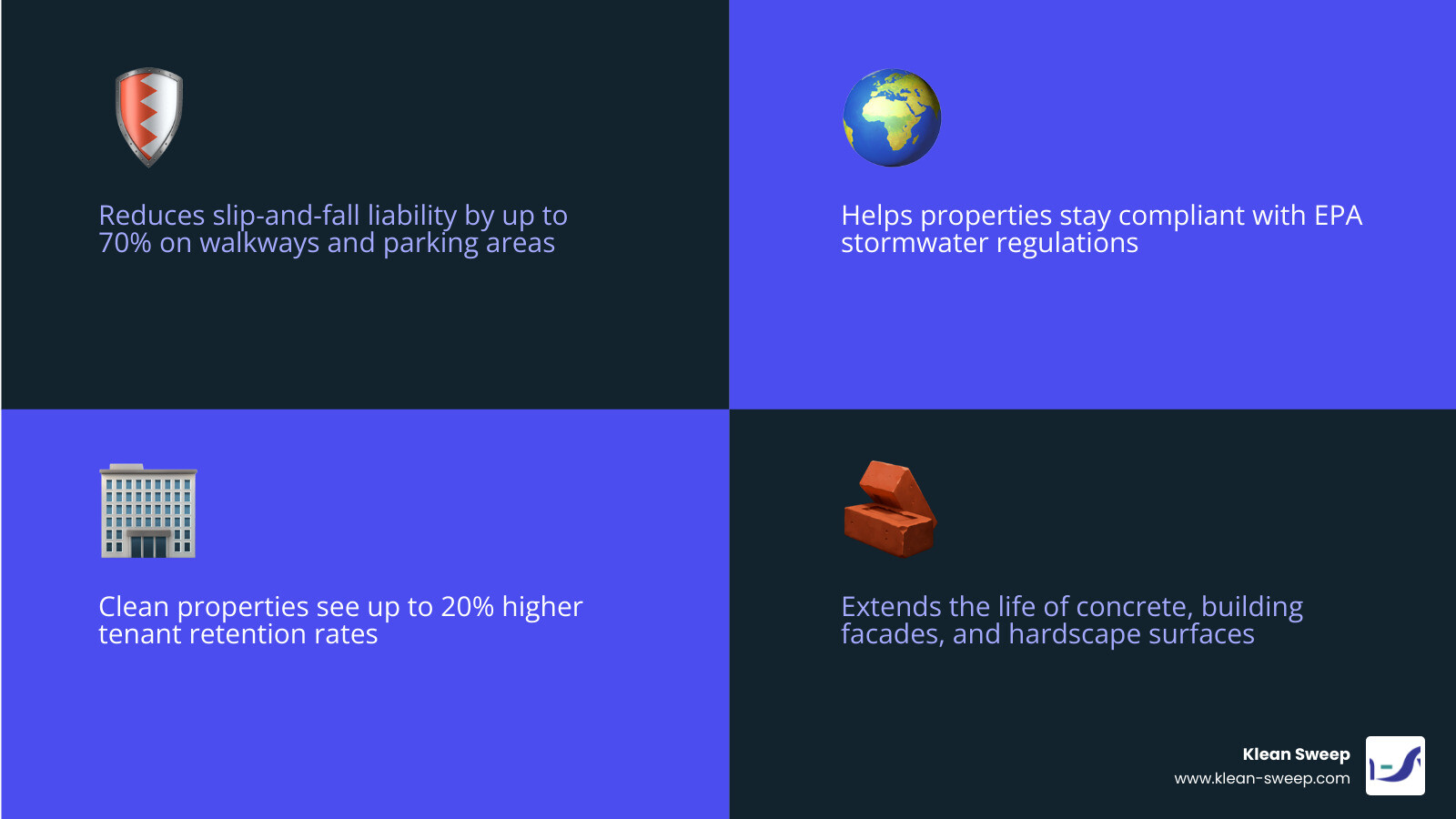
- Reduces slip-and-fall liability by up to 70% on walkways and parking areas
- Helps properties stay compliant with EPA stormwater regulations
- Extends the life of concrete, building facades, and hardscape surfaces
- Supports tenant retention — clean properties see up to 20% higher retention rates
- Can be scheduled after hours or on weekends to avoid disrupting operations
Dirt, oil stains, and organic buildup don’t just look bad. They create safety hazards, accelerate surface deterioration, and signal to tenants and customers that a property isn’t well managed. For commercial and industrial sites in the greater Los Angeles area, where stormwater compliance and curb appeal standards are both high, regular exterior cleaning isn’t optional — it’s essential.
I’m Jana Hanson, and I’ve been running Klean Sweep since 2012, growing it into one of the largest exterior maintenance companies in the Los Angeles area. Our team delivers commercial pressure washing services as part of a full suite of exterior maintenance solutions — and in this guide, I’ll walk you through everything you need to know to make smart decisions for your property.
What is a Commercial Pressure Washing Service?
At its core, a commercial pressure washing service is the specialized application of high-pressure water, heat, and tailored cleaning solutions to restore the exterior surfaces of commercial, industrial, and municipal properties. Commercial pressure washing is designed to handle heavy-duty industrial grime—such as vehicle fluids, heavy foot traffic staining, chewing gum, and carbon emissions buildup—on a massive scale.
Whether you are managing a sprawling shopping center in Pasadena or a busy logistics warehouse in Carson, professional exterior maintenance is what keeps your physical assets looking sharp and structurally sound. To understand how these systems work on different materials, you can check out our Beginner’s Guide to Pressure Washing for a foundational breakdown.
Commercial-Grade Equipment and Safety Standards
Commercial-grade exterior cleaning requires heavy-duty, industrial-strength equipment. Our professional systems generate water pressures up to 4,000 PSI with water flow rates ranging from 8 to 10 GPM. More importantly, commercial units utilize hot-water burners to heat the water to temperatures exceeding 200°F. This thermal energy is essential for breaking down complex petroleum bonds in oil and grease stains.
Furthermore, commercial technicians must undergo rigorous safety training. Operating high-powered machinery around active business entrances, overhead utility lines, and heavy vehicle traffic requires strict adherence to safety protocols. If you are researching local service options, you can browse through Yelp’s top 10 pressure washers in Torrance, CA to see what businesses in our home base are looking for when hiring commercial-grade professionals.
Key Methods: Soft Washing, Hot Water, and Surface Cleaners
A professional commercial pressure washing service is never a one-size-fits-all job. Applying the exact same high pressure to every surface is a recipe for property damage. Instead, we match the cleaning method to the specific surface material:
- Soft Washing: This method uses low water pressure (typically under 1,000 PSI) combined with specialized, biodegradable cleaning solutions. It is designed to target organic growth like mold, mildew, and algae on delicate surfaces such as stucco, dry-vit, EIFS, wood, and awnings. The cleaning solutions kill the organic growth at the root, ensuring the results last up to three to five times longer than high pressure alone.
- Hot Water Pressure Washing: This is the heavy artillery of exterior cleaning. By heating water to over 200°F, we can melt away grease, oil, and chewing gum from hard surfaces. Hot water cuts through industrial grime up to 40% faster than cold water methods, minimizing chemical usage and cleaning time.
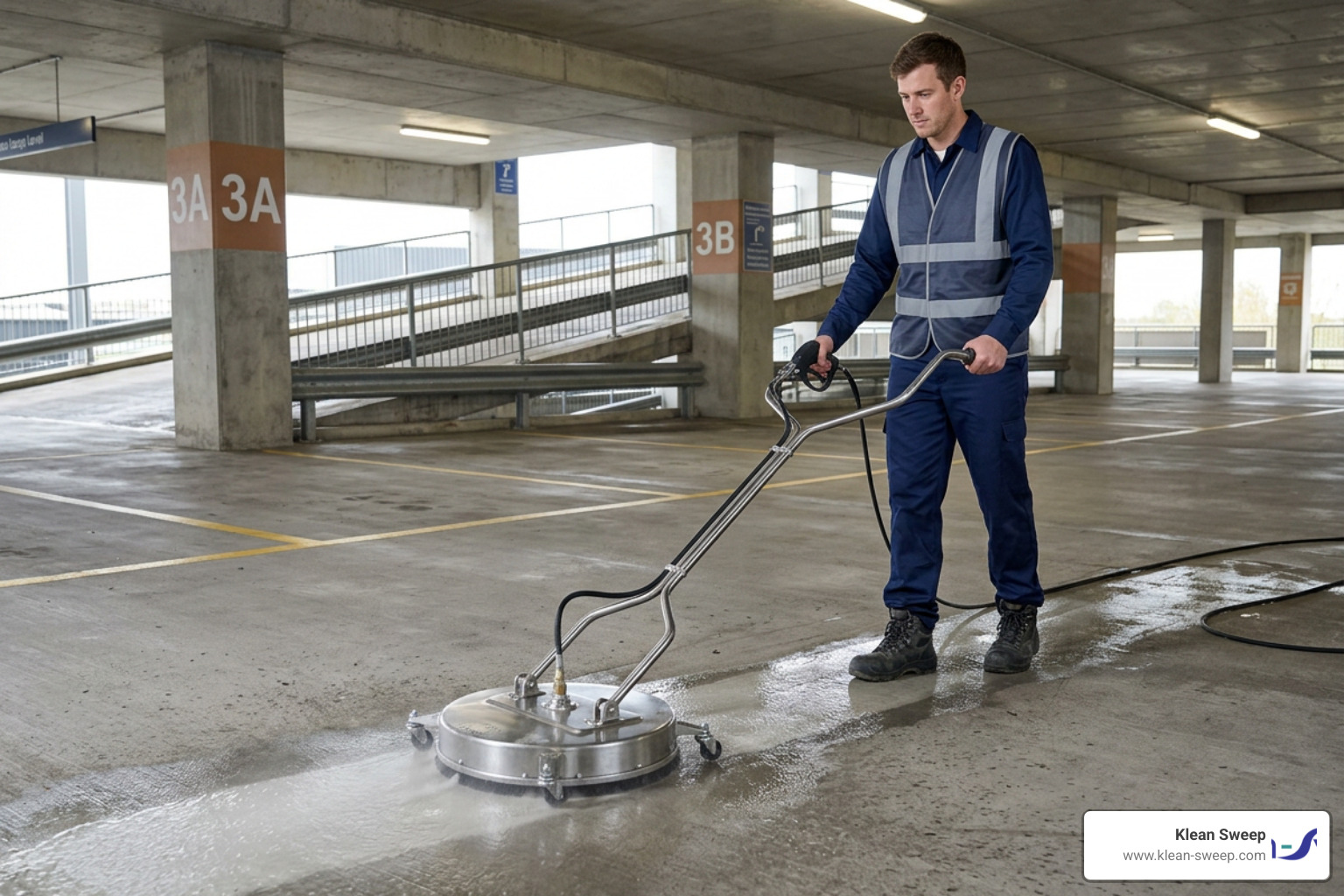
- Flat Surface Cleaners: To clean large expanses of concrete quickly and evenly without leaving unsightly “tiger stripes,” we use flat surface cleaners. These are walk-behind dome units housing a rotating bar with multiple spray nozzles, covering up to 20 inches in a single, uniform pass.
| Cleaning Method | Typical Pressure (PSI) | Best Suited For | Key Benefit |
|---|---|---|---|
| Soft Washing | 500 – 1,000 PSI | Stucco, EIFS, awnings, roofs, delicate facades | Kills mold/algae at the root without surface damage |
| Hot Water Washing | 3,000 – 4,000 PSI | Dumpster pads, loading docks, drive-thrus | Melts heavy grease and petroleum stains 40% faster |
| Surface Cleaners | 2,500 – 3,500 PSI | Parking structures, sidewalks, plazas | Delivers fast, streak-free cleaning of large concrete areas |
Key Areas and Properties That Benefit from Professional Cleaning
Every square inch of your property’s exterior tells a story to your visitors. Over time, environmental pollutants, vehicle emissions, and heavy foot traffic take their toll. To find a team equipped for these diverse challenges, you can look into Steam Cleaning & Pressure Washing Services Near You to locate commercial experts who understand how to treat these distinct zones.
High-Traffic Surfaces: Parking Structures, Sidewalks, and Dumpster Pads
Commercial properties contain several distinct zones that require specialized cleaning protocols:
- Parking Structures and Garages: These areas accumulate massive amounts of engine oil, transmission fluid, tire marks, and brake dust. Regular hot-water pressure washing prevents these chemicals from eating into the concrete and causing premature degradation.
- Sidewalks and Plazas: Walkways are the first physical touchpoint for your customers. They easily collect spilled drinks, discarded food, and black spots of flattened chewing gum. Keeping these clean is vital for maintaining an inviting atmosphere.
- Dumpster Pads and Loading Docks: These utility zones are breeding grounds for bacteria, foul odors, rodents, and severe grease buildup. Regular sanitization with hot water and heavy-duty degreasers is necessary to prevent health code violations and pest infestations.
- Gas Stations and Drive-Thrus: Spilled fuel, oil drips, and heavy vehicle idle zones require constant, specialized concrete degreasing to remain safe and presentable.
Commercial Properties Requiring Regular Maintenance
Different industries face unique exterior maintenance challenges. A retail shopping center in Beverly Hills has different aesthetic demands than an industrial warehouse in Carson. We customize our approach for a wide variety of commercial spaces:
- Retail Centers and Storefronts: High-end retail zones require pristine facades and spotless entryways to attract shoppers. If you manage a retail space in Beverly Hills, maintaining a clean exterior is essential to match local luxury standards and attract high-value clientele.
- Office Campuses: Corporate centers benefit from clean plazas, sparkling windows, and pristine parking garages to maintain a professional, corporate image.
- Industrial Warehouses and Factories: These facilities often deal with heavy manufacturing residue, soot, and chemical spills that require industrial-strength cleaning. Industrial properties in Carson and across Los Angeles rely on heavy-duty hot water washing to keep loading docks and warehouse floors safe and compliant.
- HOA and Multi-Family Communities: Property managers must keep common walkways, pool decks, and building siding free of mold and mildew to protect resident safety and property values. For those managing multi-family units in the San Gabriel Valley, you can refer to HomeGuide’s Pasadena pressure washing guide to understand regional property maintenance expectations.
The Business Benefits of Regular Exterior Maintenance
Investing in a recurring commercial pressure washing service is not just an aesthetic luxury; it is a smart financial strategy. Dirt, mold, and industrial pollutants act like sandpaper on your building’s exterior, slowly wearing down paint, sealants, and concrete over time.
By implementing a proactive maintenance plan, you can easily view Our Services to see how comprehensive exterior care protects your physical assets from long-term decay.
Maximizing Curb Appeal and Tenant Retention
Your building’s exterior is your first and most powerful marketing tool. Clean commercial properties enjoy higher foot traffic, project a professional image, and command higher lease rates.
Furthermore, clean commercial buildings show up to 20% higher tenant retention rates. Tenants want to operate their businesses out of properties that look well-maintained, safe, and professional. Regular pressure washing demonstrates to your tenants that you are actively invested in protecting the property and supporting their business image.
Mitigating Slip-and-Fall Risks and Property Damage
Slip-and-fall lawsuits are a major, costly headache for commercial property owners. When rain mixes with accumulated engine oil, grease, mold, or algae on walkways and parking decks, it creates an incredibly slick, dangerous surface.
Commercial pressure washing can reduce slip-and-fall liability claims by up to 70% by completely removing these slippery contaminants from pedestrian paths. Additionally, regular washing prevents mold and mildew from permanently etching into concrete or rotting wood structures, saving you thousands of dollars in premature replacement and repair costs.
Environmental Compliance and Wastewater Reclamation
In Southern California, environmental regulations surrounding commercial cleaning are exceptionally strict. You cannot simply wash grease, oil, and chemicals down the nearest storm drain. Doing so violates federal, state, and local laws, and can result in devastating fines for both the property owner and the cleaning contractor.
EPA Regulations and Stormwater Protection
Under the federal Clean Water Act and local municipal regulations, storm drains are designed to carry untreated rainwater directly into local rivers, lakes, and oceans. Unlike the sanitary sewer system, stormwater is not filtered or treated.
Therefore, discharging wash water containing oils, heavy metals, detergents, or grease into a storm drain is strictly illegal. Professional commercial washing companies must implement strict stormwater compliance measures on every job. This includes physically blocking storm drains with rubber mats or sandbags, containing all wastewater on-site, and vacuuming up the runoff before it can escape the property.
Water Reclamation Systems and Green Cleaning
To meet these strict environmental standards, we utilize advanced water reclamation and filtration systems. These state-of-the-art systems can recover up to 90% of wastewater generated during the pressure washing process.
The captured water is vacuumed up, pumped through a multi-stage filtration system to remove oils, solids, and hydrocarbons, and either recycled back into the washing system or discharged safely into the sanitary sewer system in full compliance with local municipal permits. Combined with our use of eco-friendly, biodegradable detergents, we ensure your property gets a superior clean with zero environmental footprint.
Choosing and Scheduling Your Exterior Maintenance
Selecting the right partner for your exterior maintenance is crucial. A cut-rate operator without the proper equipment or insurance can cause permanent surface damage, trigger massive environmental fines, or disrupt your daily business operations.
What to Look For in a Commercial Pressure Washing Service
When vetting a commercial pressure washing company, always verify the following qualifications:
- Comprehensive Licensing and Insurance: Ensure the company carries at least $2 million in general liability insurance, comprehensive commercial auto coverage, and full worker’s compensation insurance.
- Commercial-Grade Equipment: Ask if they use hot-water systems, water reclamation units, and flat surface cleaners. Underpowered or light-duty equipment is a major red flag.
- Experienced, Background-Checked Technicians: Technicians should be fully trained in surface identification, chemical safety, and aerial lift operations.
- Transparent Pricing Structure: Look for companies that utilize clear, honest pricing—such as a time + materials model—so you pay only for the actual time and resources dedicated to your property.
If you are looking for highly rated local service providers in the South Bay or surrounding areas, check out Yelp’s list of the best 10 pressure washers in Los Angeles, CA to compare local commercial capabilities.
Scheduling Your Commercial Pressure Washing Service Around Business Hours
The last thing you want is a loud pressure washing crew blocking your entrance or spraying water near your customers during peak business hours.
To prevent operational disruptions, we offer flexible, 24/7 scheduling. Most commercial cleanings are scheduled during off-hours—such as late evenings, early mornings, or weekends. This ensures your property is sparkling clean when your doors open, without a single customer or tenant being inconvenienced.
Frequently Asked Questions about Commercial Pressure Washing
How often should commercial properties schedule pressure washing?
While a general guideline is to pressure wash commercial building exteriors at least once a year, specific high-traffic zones require more frequent attention:
- Dumpster Pads and Loading Docks: Monthly or quarterly cleaning to manage odors, grease, and pests.
- Drive-Thrus and Gas Station Pump Islands: Monthly cleaning to keep oil buildup under control.
- Sidewalks and Retail Entryways: Quarterly or semi-annual washing to remove gum and heavy foot traffic stains.
- Parking Garages and Lots: Semi-annual or annual deep cleaning to clear away vehicle fluids and dirt.
What is the difference between pressure washing and power washing?
While the terms are often used interchangeably, the key difference is heat.
- Pressure washing relies solely on high-pressure cold water to blast away dirt and loose debris.
- Power washing (or hot water pressure washing) adds high heat to the equation. Power washing uses water heated to over 200°F, which is essential for melting grease, cutting through oil, and removing chewing gum up to 40% faster than cold water.
Is commercial pressure washing safe for all exterior building materials?
Yes, provided the technician matches the correct method to the surface. Hard concrete, asphalt, and structural steel can easily handle high-pressure power washing.
However, delicate materials like stucco, EIFS, painted brick, wood siding, and canvas awnings will be damaged by high pressure. For these surfaces, we utilize low-pressure soft washing techniques and specialized cleaning solutions to safely remove organic growth and dirt without harming the substrate. For properties in Brea and surrounding Orange County border areas, applying these delicate techniques is essential to protect building facades while achieving a thorough clean.
Conclusion
Keeping your commercial property clean, safe, and compliant is a major responsibility, but you don’t have to tackle it alone. Partnering with a professional, experienced exterior maintenance company ensures your physical assets are protected, your liability is minimized, and your curb appeal remains unmatched.
Since 1969, Klean Sweep has been a family-owned industry leader in Southern California. Based in Torrance, CA, and serving the greater Los Angeles area, we utilize state-of-the-art, environmentally friendly equipment to handle all your commercial exterior maintenance needs—including street sweeping, day porter services, stormwater cleaning, concrete floor cleaning, and hot-water pressure washing.
Ready to transform your property’s exterior? Contact us today to learn more about our comprehensive Steam Cleaning and Pressure Washing in Torrance CA and let us build a customized maintenance plan tailored to your business.