

Why Debris Buildup in Parking Lots Is a Bigger Problem Than It Looks
Knowing how to prevent debris buildup in parking lots can save you from costly repairs, stormwater fines, and liability headaches — here’s the short answer:
- Sweep regularly — at minimum before the wet season, and weekly in high-traffic zones
- Use dry cleaning first — sweeping and vacuuming before any wet washing
- Contain wash water — never let it reach storm drains
- Treat oil spills immediately — use absorbents before washing
- Add infrastructure — covered trash receptacles, anti-litter signage, and landscaping barriers
- Schedule seasonal cleanups — especially fall leaf removal and post-winter salt/grit removal
- Log your inspections — catch small problems before they become expensive ones
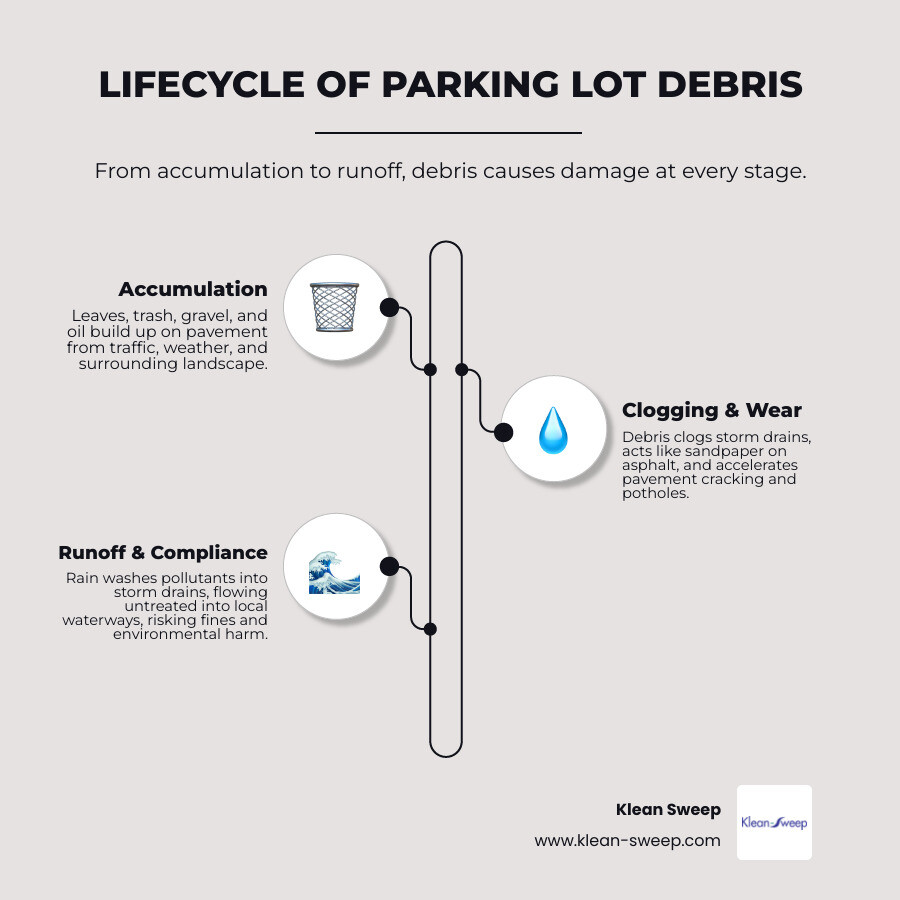
A parking lot is often the first thing a customer, commercial tenant, or inspector sees when they arrive at your property. But beyond first impressions, debris buildup is a real operational risk. Leaves, gravel, trash, oil, and sediment don’t just look bad — they clog storm drains, accelerate pavement breakdown, and can put your property out of compliance with California stormwater regulations. Left unchecked, debris acts like sandpaper on your asphalt surface, and anything that washes into a storm drain flows completely untreated into local waterways.
The good news: most of this is preventable with the right schedule and the right methods.
I’m Jana Hanson, and I’ve spent over a decade leading Klean Sweep — one of the largest exterior maintenance companies in the Los Angeles area — helping commercial property managers tackle exactly the challenge of how to prevent debris buildup in parking lots across some of Southern California’s highest-traffic sites. The strategies in this guide come directly from that experience.
Why Preventing Debris Accumulation Matters for Safety, Compliance, and Longevity
When you look at a parking lot covered in leaves, loose gravel, and scattered plastic cups, it is easy to dismiss it as a minor cosmetic issue. However, letting debris sit on your commercial pavement triggers a chain reaction of structural and environmental damage.
Preserving Your Pavement Lifespan
A well-maintained asphalt parking lot can last between 20 and 30 years with proper maintenance. However, when dirt, sand, and organic debris are left to accumulate, they act like an abrasive sandpaper under the heavy weight of vehicles. Every car driving over your lot grinds these fine particles into the asphalt binder, slowly wearing it away.
Furthermore, organic debris like fallen leaves and grass clippings retains moisture. When water sits on the surface of your asphalt, it begins to penetrate the pavement base layer. This water intrusion causes the base layer to lose stiffness, leading to a structural “snowball effect” of cracking under traffic loads. Once water enters, you will quickly see alligator cracking (a chicken-wire pattern indicating base failure) and potholes.
To keep your pavement in optimal condition, parking lots should be seal-coated every 2 to 3 years. The cost to reseal a parking lot ranges from 14 to 28 cents per square foot, which is a highly cost-effective preventative measure. However, applying a sealcoat over a dirty, cracked surface is like painting a commercial building with a leaking roof—it simply will not hold. This is why crack sealing is considered one of the highest-ROI preservation actions; it stops water from entering the pavement structure in the first place. You can read more about structured upkeep schedules in the Parking Lot Maintenance Checklist (2026) | TruTec Blog .
Environmental and Stormwater Compliance
In Southern California, what happens on your pavement does not stay on your pavement. Municipalities in Los Angeles, Torrance, Carson, and Pasadena enforce strict stormwater regulations. Because storm sewer systems flow completely untreated into local water bodies—like our beaches and rivers—parking lots are heavily targeted as major pollution sources.
Parking lots and storage areas can contribute trash, suspended solids, hydrocarbons, oil, grease, and heavy metals to receiving waters via stormwater runoff. Under California’s Best Management Practices (BMPs), property managers are legally responsible for preventing these pollutants from entering the storm drain system. Failing to maintain a clean lot can result in heavy municipal fines. Regular sweeping prevents these contaminants from ever reaching the storm drains, which we discuss in detail in The Importance of Street & Parking Lot Sweeping for Clean and Safe Environments.
Mitigating Safety Hazards and Liability
Loose gravel, wet leaves, and oily patches are prime culprits for slip-and-fall accidents. If a customer slips on a patch of wet leaves or loose gravel on your property, you could face costly liability claims. Keeping your pedestrian walkways, ADA ramps, and parking stalls clear of physical hazards is the easiest way to protect your business from legal risks.
How to Prevent Debris Buildup in Parking Lots: A Strategic Maintenance Schedule
Preventing debris buildup is not a once-a-year panic; it requires a systematic, calendar-driven approach. Depending on your property’s size and traffic volume, your schedule should range from daily porter check-ins to seasonal deep cleans.
An effective sweeping program can remove substantial debris, and spring sweeping in particular reduces pollutants from deicing materials, sand, and grit. For properties in Southern California, we highly recommend sweeping all parking lots at least once before the onset of the wet season to prevent dry-season debris from reaching storm drains during the “first flush” rains. To build a customized cleaning plan, you can explore our professional Sweeping options.
Daily and Weekly Tasks: How to Prevent Debris Buildup in Parking Lots
High-traffic commercial properties—such as shopping centers in Beverly Hills or busy distribution centers in Carson—require daily attention to stay ahead of litter.
- Daily Porter Services: A dedicated day porter can walk your property to empty trash receptacles, clear debris from walkways, clean up dumpster pads, and wipe down high-touch areas. This constant presence prevents small trash items from blowing into storm drains or landscaping. Learn how daily maintenance keeps your property compliant in Day Porter Services for Better Stormwater Management.
- Weekly Sweeping: Sweep high-traffic zones like main entrances, loading docks, and drive lanes at least once a week. This prevents heavy sediment and grit from grinding down your pavement markings and asphalt binder.
Seasonal and Annual Strategies: How to Prevent Debris Buildup in Parking Lots
Your maintenance priorities will shift depending on the time of year:
- Late Summer / Early Fall Prep: This is the most critical window in Southern California. Ensure your entire lot is thoroughly swept before the winter rains begin.
- Autumn Leaf Management: Heavy leaf drops can quickly cover parking stalls and clog drainage grates. Increase sweeping frequencies during these weeks to capture leaves before they rot and merge with oil deposits.
- Winter and Spring Grit Removal: Even if our local commercial properties do not experience heavy snow, vehicles traveling from mountain passes often bring back salt, sand, and road grit. Post-winter sweeping is essential to clear these abrasive materials from your pavement.
- Annual Drainage Inspections: Inspect and clear out catch basins, inlets, and drainage hardware annually to ensure your stormwater system is fully functional.
For detailed guidelines on commercial property standards, consult the official Parking/Storage Area Maintenance SC-43 handbook.
Dry vs. Wet Cleaning Methods for Commercial Pavement
When it comes to removing debris, choosing the right method is critical for both effectiveness and environmental compliance. Dry cleaning methods (sweeping, vacuuming) are always preferred over wet methods (pressure washing) to prevent the discharge of pollutants into the stormwater conveyance system.
| Cleaning Method | Best Used For | Environmental Impact | Equipment Used |
|---|---|---|---|
| Dry Sweeping & Vacuuming | Daily litter, leaves, sand, gravel, and loose dirt. | Excellent: Captures debris dry; prevents any pollutants from entering storm drains. | Regenerative air sweepers, mechanical broom sweepers, hand brooms. |
| Pressure Washing & Steam Cleaning | Stubborn oil stains, grease buildup, gum, and embedded grime. | High Risk: Requires strict containment, berming, and vacuuming of wash water to a sanitary sewer. | Industrial pressure washers, surface cleaners, water recovery vacuums. |
The Power of Dry Sweeping
Dry sweeping should always be your first line of defense. Using industrial-grade sweepers prevents loose dirt and small stones from being ground into the surface, which avoids long-term structural damage. Modern regenerative air sweepers use a closed-loop system to blast air onto the pavement, loosening fine dust and vacuuming it up without releasing PM10 particulate matter into the air.
When to Use Wet Cleaning (and How to Do It Legally)
Pressure washing is occasionally necessary to remove heavy oily deposits, grease, and vehicle fluid stains that dry sweeping cannot lift. However, you can never simply hose down a parking lot.
Any wash water generated during pressure washing must be captured using vacuums, berms, or drain covers, and disposed of in a sanitary sewer drain (with appropriate municipal permits)—never allowed to enter storm drains. If you plan to wash your pavement, you must block nearby storm drains with waterproof seals or “pigs” to guarantee zero runoff reaches the storm sewer.
Managing Oil Stains, Chemical Spills, and Stormwater Compliance
Commercial parking lots are hot spots for automotive fluid leaks. When motor oil, coolant, and brake fluid drip onto asphalt, they soften the binder, turning a hard surface into a soft, crumbly mess. Worse, these hydrocarbons are highly toxic to marine life when washed into storm drains.
The Correct Way to Clean Oil Spills
To clean up oil spots and chemical spills without violating stormwater regulations, follow this sequence:
- Apply Absorbents: Pour a generous amount of dry absorbent material (such as kitty litter, clay absorbents, or sawdust) directly onto the spill.
- Let It Sit: Allow the absorbent to fully soak up the liquid.
- Sweep It Up: Dry-sweep the saturated material and dispose of it in accordance with local hazardous waste regulations. Never wash the absorbent material down the drain.
- Spot Treat: Use specialized, environmentally friendly degreasers to break down any remaining stain, scrub with a stiff brush, and recover the residue.
Protecting Your Storm Drains
During routine maintenance and surface repairs, storm drains must be actively protected.
- Drain Inserts: Install temporary or permanent filter inserts inside your catch basins to catch sediment, trash, and oil droplets before they travel down the pipe.
- Stenciling: Stencil all storm drain inlets with highly visible warnings like “NO DUMPING – DRAINS TO OCEAN.” This acts as a psychological deterrent against illegal dumping by visitors or contractors.
- Physical Barriers: When performing asphalt repairs, crack sealing, or striping, cover nearby inlets with weighted rubber mats to prevent sealants or dust from entering.
To dive deeper into compliant cleaning techniques, read the Stormwater Best Management Practices for manual and explore our specialized Stormwater solutions. Regular drainage maintenance is also thoroughly explained in The Importance of Stormwater Cleaning for Protecting the Environment.
Infrastructure and Landscaping: Designing Out Debris
Sometimes, the best way to manage debris is to prevent it from entering your parking lot in the first place. Smart property design and landscaping choices can drastically reduce your cleaning workload.
- Strategic Trash Receptacle Placement: Place covered litter receptacles near high-traffic pedestrian areas, such as ADA parking stalls, cart returns, and building entrances. Ensure they are emptied regularly so they do not overflow. Covered lids are essential to keep wind from blowing trash across the asphalt.
- Anti-Litter Signage: Post clear “No Littering” signs around your property. It’s a simple step, but it sets a standard of cleanliness for your visitors.
- Landscape Barriers: High winds can blow mulch, soil, and leaves from your planter beds straight onto your parking spaces. Use concrete retaining borders, low-lying hedges, or heavy stone mulch to keep landscaping materials where they belong.
- Mowing and Landscaping Best Practices: Instruct your landscaping crew to sweep or blow grass clippings and granular fertilizers back onto grassy areas immediately after mowing. Grass clippings should never be blown onto the pavement or washed into storm drains, as they introduce excess nutrients into local waterways.
Professional Sweeping vs. DIY Parking Lot Maintenance
Many property managers wonder if they can handle parking lot cleaning in-house using basic push brooms or leaf blowers. While a DIY approach might work for a small storefront, large commercial properties in Southern California require professional intervention.
Why Professional Services Outperform DIY
- Industrial-Grade Equipment: Standard leaf blowers simply push dust and fine grit into the air, where it eventually settles back onto the pavement. Professional sweeping companies utilize regenerative air and vacuum sweepers that lift and contain fine particulates.
- Regulatory Compliance: Professional exterior maintenance teams understand the complexities of municipal stormwater regulations. We know how to block drains, recover wash water, and dispose of waste in full compliance with local laws.
- Holistic Maintenance: A professional service does not just sweep; they inspect your pavement for structural issues. They can identify early crack patterns, faded striping, or clogged storm drains before they escalate into major expenditures.
- Cost-Efficiency: Purchasing and maintaining industrial sweeping equipment is incredibly expensive. Outsourcing your sweeping to an established provider allows you to leverage state-of-the-art machinery without the overhead costs.
Frequently Asked Questions about Parking Lot Debris
How often should a commercial parking lot be swept?
The ideal sweeping frequency depends entirely on your traffic volume and surrounding environment. High-traffic retail centers, grocery stores, and industrial parks in busy areas like Torrance or Pasadena should be swept one to three times per week. Low-traffic office parks may only require bi-weekly or monthly sweeping. At an absolute minimum, every parking lot should be swept thoroughly at least once before the rainy season to prevent stormwater contamination.
What is the best way to clean oil spills without polluting storm drains?
Never hose an oil spill into a storm drain. The best practice is to use a dry clean-up method: apply an absorbent powder or kitty litter, allow it to absorb the fluid, sweep it up dry, and dispose of it properly. For remaining stains, apply an eco-friendly degreaser and recover the wash water using a wet-vacuum system.
Why is dry sweeping preferred over pressure washing for routine cleaning?
Dry sweeping is preferred because it removes litter, sand, and dust without generating polluted wastewater. Pressure washing without water recovery pushes heavy metals, hydrocarbons, and sediment directly into the storm drain system, which violates environmental regulations and can result in severe municipal fines.
Conclusion
Preventing debris buildup in your parking lot is a critical investment in your property’s lifespan, safety, and environmental compliance. From daily porter sweeps to seasonal wet-weather prep, a structured maintenance plan protects your pavement from premature deterioration and keeps your business in the good graces of local stormwater inspectors.
Since 1969, our family-owned team at Klean Sweep has provided premier, eco-friendly commercial exterior maintenance services across the greater Los Angeles area. Equipped with state-of-the-art sweeping trucks and water-recovery pressure washing systems, we help commercial property owners keep their facilities clean, safe, and fully compliant.
Ready to establish a worry-free sweeping and maintenance schedule for your property? Contact Us today for a customized quote, or learn more about how routine sweeping protects your assets by reading The Importance of Street & Parking Lot Sweeping for Clean and Safe Environments.