

Why Rust Stains on Concrete Are Harder to Remove Than You Think
Removing rust from concrete floor surfaces is one of the most common — and frustrating — maintenance challenges for property managers in Los Angeles.
Here’s a quick answer to get you started:
How to Remove Rust from a Concrete Floor (Quick Steps)
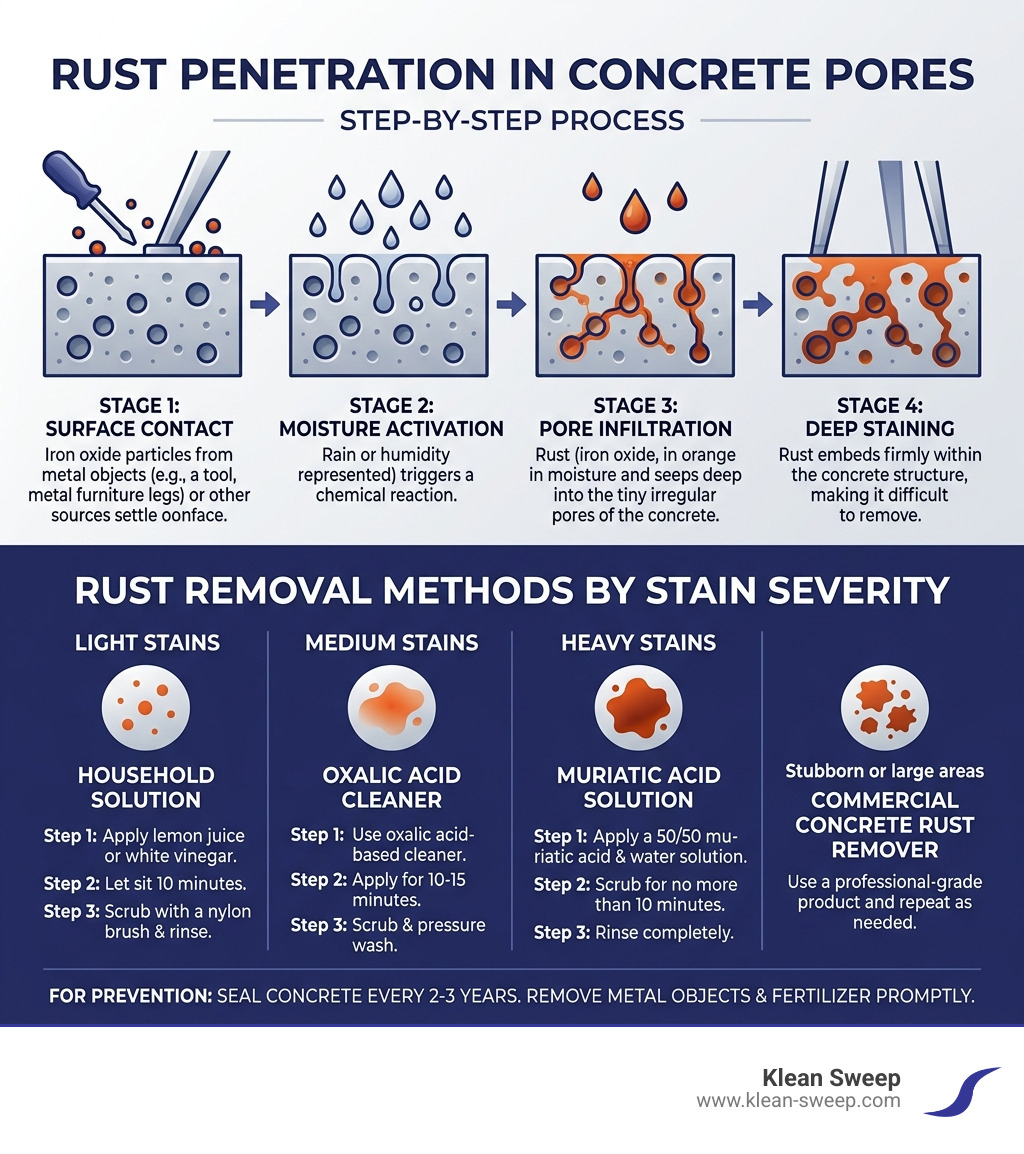
- Light stains — Apply lemon juice or white vinegar, let sit 10 minutes, scrub with a nylon brush, rinse thoroughly
- Medium stains — Use an oxalic acid-based cleaner, apply for 10–15 minutes, scrub, then pressure wash
- Heavy stains — Apply a 50/50 muriatic acid and water solution, scrub for no more than 10 minutes, rinse completely
- Stubborn or large areas — Use a commercial concrete rust remover (30 oz covers ~60 sq ft), repeat as needed
- Prevention — Seal concrete every 2–3 years and remove metal objects and fertilizer promptly
The reason rust is so hard to remove from concrete comes down to one thing: porosity. Concrete is full of tiny irregular pores, and rust — iron oxide — seeps right into them. The longer it sits, the deeper it goes.
And in a commercial setting, rust stains don’t just look bad. They signal neglect, which can affect your property’s curb appeal, tenant satisfaction, and even regulatory compliance.
I’m Jana Hanson, and through my work leading Klean Sweep’s exterior maintenance operations across the greater Los Angeles area since 2012, removing rust from concrete floor surfaces has been a recurring challenge we’ve solved for parking lots, industrial sites, and commercial properties of all sizes. In the sections below, I’ll walk you through every method — from simple household fixes to professional-grade solutions — so you can choose what’s right for your situation.
Common Causes of Rust Stains on Concrete
Before we dive into the “how,” it is vital to understand the “why.” If you don’t stop the source, you’ll be removing rust from concrete floor areas every few months like a frustrating game of whack-a-mole. In our experience across Torrance and Los Angeles, we see several recurring culprits:
- Metal Furniture and Tools: This is the most common cause. When metal patio chairs, tables, or garden tools like shovels and clippers are left on a damp concrete surface, the moisture triggers oxidation. The iron oxide then transfers directly into the concrete’s pores.
- Fertilizer Granules: Many homeowners and property managers are surprised to learn that high-quality fertilizers often contain iron. If these granules are scattered onto a driveway or walkway and then hit by rain or a sprinkler system, they bloom into tiny, orange rust spots overnight.
- Irrigation Systems: If your sprinkler water has a high iron content (common with well water), the constant “misting” of your concrete will eventually lead to a large, orange-brown haze.
- Corroding Rebar: Sometimes the problem comes from within. If the structural steel reinforcement (rebar) inside the concrete was placed too close to the surface or if the concrete has deep cracks, moisture can reach the metal. As it rusts internally, the stain bleeds outward to the surface.
- Leaky Gutters: Rusted gutters or downspouts can drip iron-rich water onto the same spot for years, creating a concentrated, deep-set stain.
According to How to Remove Rust Stains from Concrete – Concrete Network, identifying these sources is the first step toward a permanent solution.
Natural and Household Methods for Removing Rust from Concrete Floor
If you’re dealing with a relatively fresh or minor stain, you might not need heavy-duty chemicals. Many common pantry items possess the acidic properties necessary to break down iron oxide.
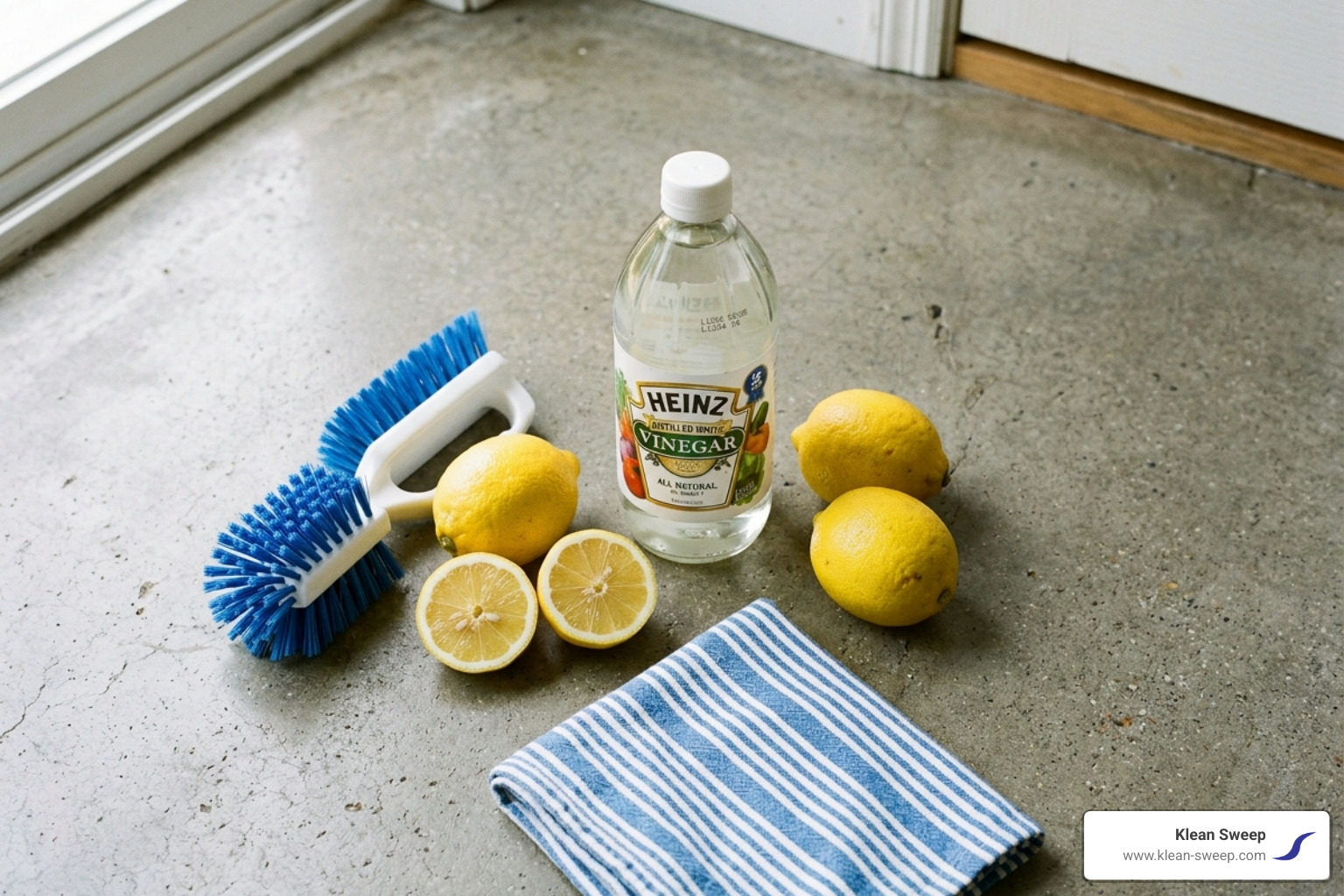
When using natural methods, the “secret sauce” isn’t just the liquid—it’s the dwell time and the scrubbing technique. You want the acid to sit long enough to react with the rust but not so long that it evaporates or damages the concrete. For the best results, use a nylon-bristled brush. Avoid metal-bristled brushes, as they can scratch the surface or leave behind tiny metal fragments that will eventually create new rust stains.
Using Lemon Juice and Vinegar for Removing Rust from Concrete Floor
Citric acid (found in lemons) and acetic acid (found in white vinegar) are surprisingly effective for removing rust from concrete floor surfaces.
- Preparation: Sweep the area to remove dirt and debris.
- Application: Pour undiluted lemon juice or white vinegar directly onto the stain. For vertical surfaces or to prevent evaporation, you can soak a dish towel in the liquid and lay it over the spot.
- Dwell Time: Let it sit for at least 10 to 20 minutes.
- Scrubbing: Use a stiff nylon brush. We recommend using varied scrubbing patterns—circular, side-to-side, and back-and-forth—to ensure the bristles reach into the irregular pores of the concrete.
- Rinse: Wash the area thoroughly with soapy water and then clean water.
For more detailed DIY tips, How to Remove Rust Stains From Concrete offers excellent guidance on handling these minor blemishes.
The Role of WD-40 and Baking Soda in Removing Rust from Concrete Floor
For workshop floors or garage surfaces where rust might be mixed with light grease, WD-40 can be a lifesaver. It acts as a penetrant that gets under the rust to loosen its grip on the concrete. Simply spray it generously, let it sit, and scrub.
Baking soda is often used as a mild abrasive. When mixed with a little water or vinegar to form a thick paste, it can be spread over a stain to provide extra “grit” during the scrubbing process. This is particularly useful for indoor concrete floors where you want to avoid harsh fumes.
Advanced Chemical and Commercial Solutions
When household remedies fail, it’s time to bring out the heavy hitters. Commercial rust removers are formulated to be more aggressive, which is often necessary for old, deep-set stains.
| Method | Best For | Pros | Cons |
|---|---|---|---|
| Natural Acids | Fresh, light stains | Eco-friendly, safe | Requires more elbow grease |
| Oxalic Acid | Medium to heavy stains | Very effective on rust | Needs careful handling |
| TSP (Trisodium Phosphate) | Rust + Grease/Oil | Deep cleaning power | Harsh on skin/environment |
| Muriatic Acid | Severe, old stains | Fastest results | Dangerous fumes; can etch concrete |
A common professional-grade option is a specialized Concrete Rust Remover. These often come as a powder concentrate. For example, a 30 oz. container of concentrate typically makes one gallon of solution, which covers approximately 60 square feet. For large-scale Los Angeles commercial properties, a 60 lb. drum is significantly more efficient, equaling more than 43 of those smaller containers.
Safety Precautions for Acid-Based Cleaners
Working with strong acids like muriatic acid requires extreme caution. Muriatic acid is a diluted form of hydrochloric acid and can easily cause chemical burns or respiratory distress if mishandled.
- PPE: Always wear safety goggles, acid-resistant gloves, a respirator mask, and protective footwear.
- Ventilation: Never use strong acids in an enclosed space without a high-powered fan and open doors.
- Dilution: Never exceed a 50/50 water-to-acid ratio. Always add acid to water, not water to acid, to prevent dangerous splashing.
- Protection: Pre-wet nearby grass and plants, and cover them with tarps to prevent chemical runoff from killing your landscaping.
- Dwell Time: Limit acid contact to 10 minutes or less to avoid “etching” or deteriorating the concrete surface.
For more on maintaining the integrity of your surfaces, see our guide on Concrete Floor Cleaning for Long-Lasting Durability.
Indoor vs. Outdoor Concrete Floor Considerations
Removing rust from concrete floor areas indoors (like a warehouse or garage) is different than working on a driveway. Indoors, you must be hyper-aware of drainage and fumes. You cannot simply hose down a garage floor if there isn’t a proper floor drain connected to a grease trap or treatment system.
Furthermore, if your indoor floor has an epoxy coating or is polished concrete, you must be very careful. Harsh acids can strip the shine or eat through the epoxy. In these cases, we recommend diluting your cleaning solutions significantly and using softer brushes.
Step-by-Step Guide to Pressure Washing Rust Stains
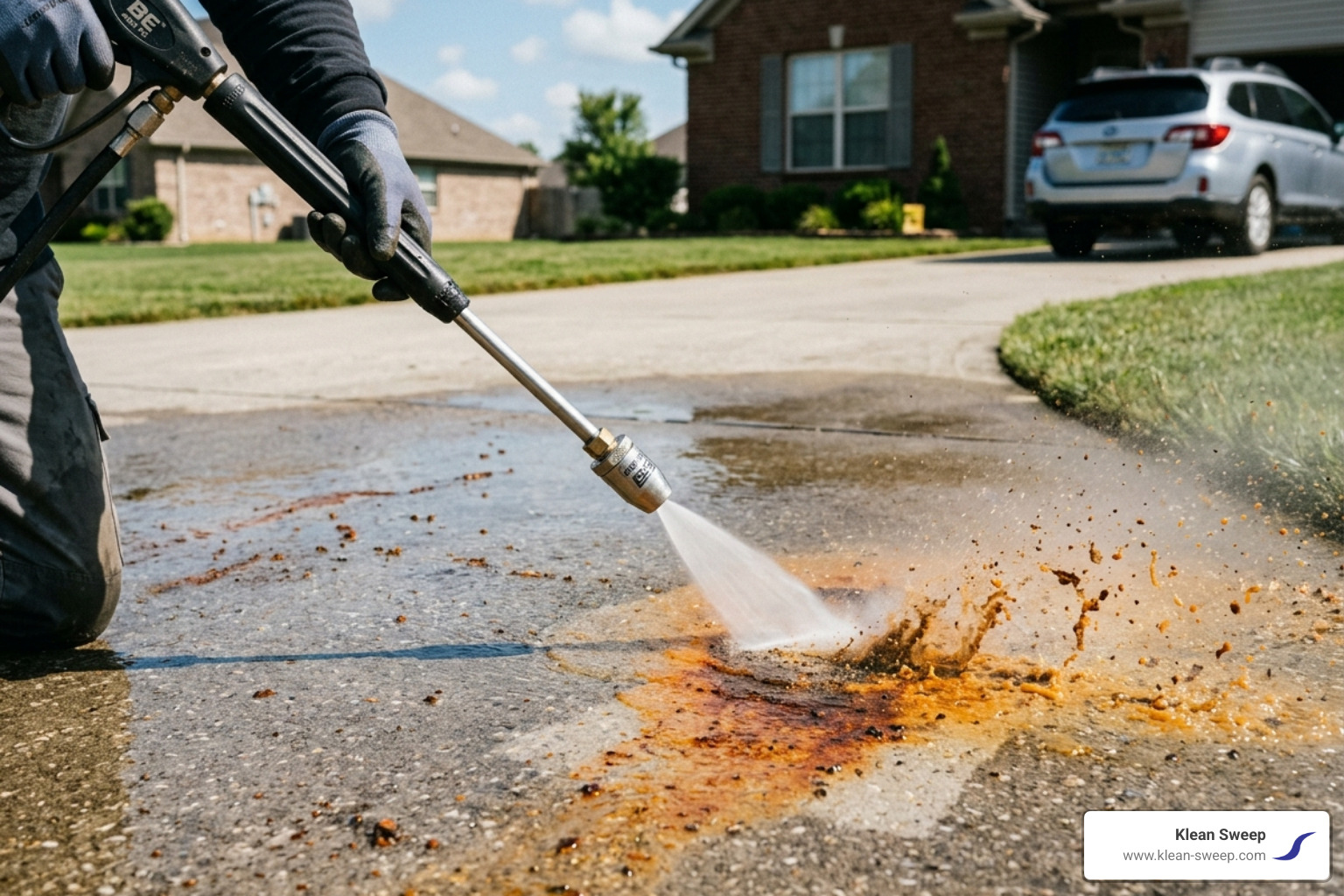
Pressure washing is one of the most effective ways to rinse away rust once it has been loosened by a cleaner. However, it requires a delicate touch to avoid “scarring” the concrete.
- Preparation: Clear the area and pre-wash the concrete with simple dish soap and water to remove surface dirt.
- Apply Treatment: Apply your chosen rust remover (lemon juice, oxalic acid, etc.) and let it dwell for the recommended time.
- Choose the Right Nozzle: We typically recommend a 15-degree nozzle (usually yellow). It provides enough force to lift the stain without being so narrow that it cuts into the concrete like a laser.
- Technique: Hold the wand about 12 inches from the surface. Use long, sweeping motions, overlapping each pass slightly to ensure even cleaning.
- Rinse: Once the stain is gone, rinse the entire slab to ensure no chemical residue remains.
If you’re in the South Bay area, our team provides expert Concrete Floor Cleaning in Torrance, CA using professional-grade equipment that balances power with surface protection.
Preventing Future Stains and Long-Term Maintenance
The best way to deal with rust is to never let it form. Here is how we help our Los Angeles clients keep their floors pristine:
- Concrete Sealing: This is the single most important step. A high-quality sealer fills the pores of the concrete, preventing rust and moisture from penetrating. We recommend resealing every 2–3 years, especially in high-traffic commercial areas.
- Crack Repair: Rust often starts when water gets into cracks and hits the rebar below. Keeping cracks filled prevents internal corrosion.
- Protective Barriers: Use plastic or rubber mats under metal furniture, grills, or potted plant stands.
- Immediate Cleanup: If you spill fertilizer, sweep it up immediately. Don’t wait for the next rainstorm.
Frequently Asked Questions about Rust Removal
Will rust removal damage my grass or nearby surfaces?
It can, especially if you use acids. To protect your Los Angeles landscaping, always pre-wet the grass and plants with fresh water before starting. This saturates the roots so they are less likely to soak up the runoff. Using biodegradable cleaners is also a safer bet for the environment.
Can I paint or stain over a persistent rust spot?
We don’t recommend it. Rust is “active”—if you paint over it, the rust will eventually cause the paint to peel, or the orange color will bleed through the new finish. It is always better to remove the stain first. If the concrete is permanently discolored, consider using an acid stain to camouflage the area, which blends the blemish into a new decorative design.
When should I call a professional for stubborn rust?
If you are dealing with a massive commercial parking structure, internal rebar corrosion (which looks like rust “bleeding” from a crack), or stains that have resisted multiple DIY attempts, it’s time to call in the pros. Large-scale removing rust from concrete floor projects require specialized equipment and chemical recovery systems to stay compliant with California’s strict environmental runoff regulations.
Conclusion
Removing rust from concrete floor surfaces doesn’t have to be a mystery. Whether you start with a simple lemon juice scrub or move up to commercial-grade oxalic acid, the key is patience, the right tools, and a focus on safety.
At Klean Sweep, we’ve been a family-owned fixture in the Torrance and Los Angeles community since 1969. We pride ourselves on using state-of-the-art, eco-friendly equipment to keep Southern California’s commercial properties looking their best. From pressure washing to comprehensive stormwater cleaning, we handle the heavy lifting so you don’t have to.

Ready to restore your property’s curb appeal? Request professional concrete floor cleaning from the experts at Klean Sweep today. Let us take the “work” out of your floor maintenance!