

Why Concrete Floor Stain Removal Is Harder Than It Looks
Concrete floor stain removal is one of the most searched home maintenance tasks — and for good reason. Here’s a quick answer if you need it fast:
Quick Guide: How to Remove Concrete Floor Stains
| Stain Type | Best Removal Method |
|---|---|
| Oil / Grease | Solvent degreaser + stiff brush, repeat as needed |
| Rust | Lemon juice or vinegar, let sit 10 min, scrub |
| Food / Organic | Warm water + liquid laundry detergent, mop clean |
| Paint | TSP scrub, scrape, then paint thinner overnight |
| Glue / Mastic | Scrape dry, then citrus-based cleaner |
| General dirt | pH-neutral cleaner, mop and rinse |
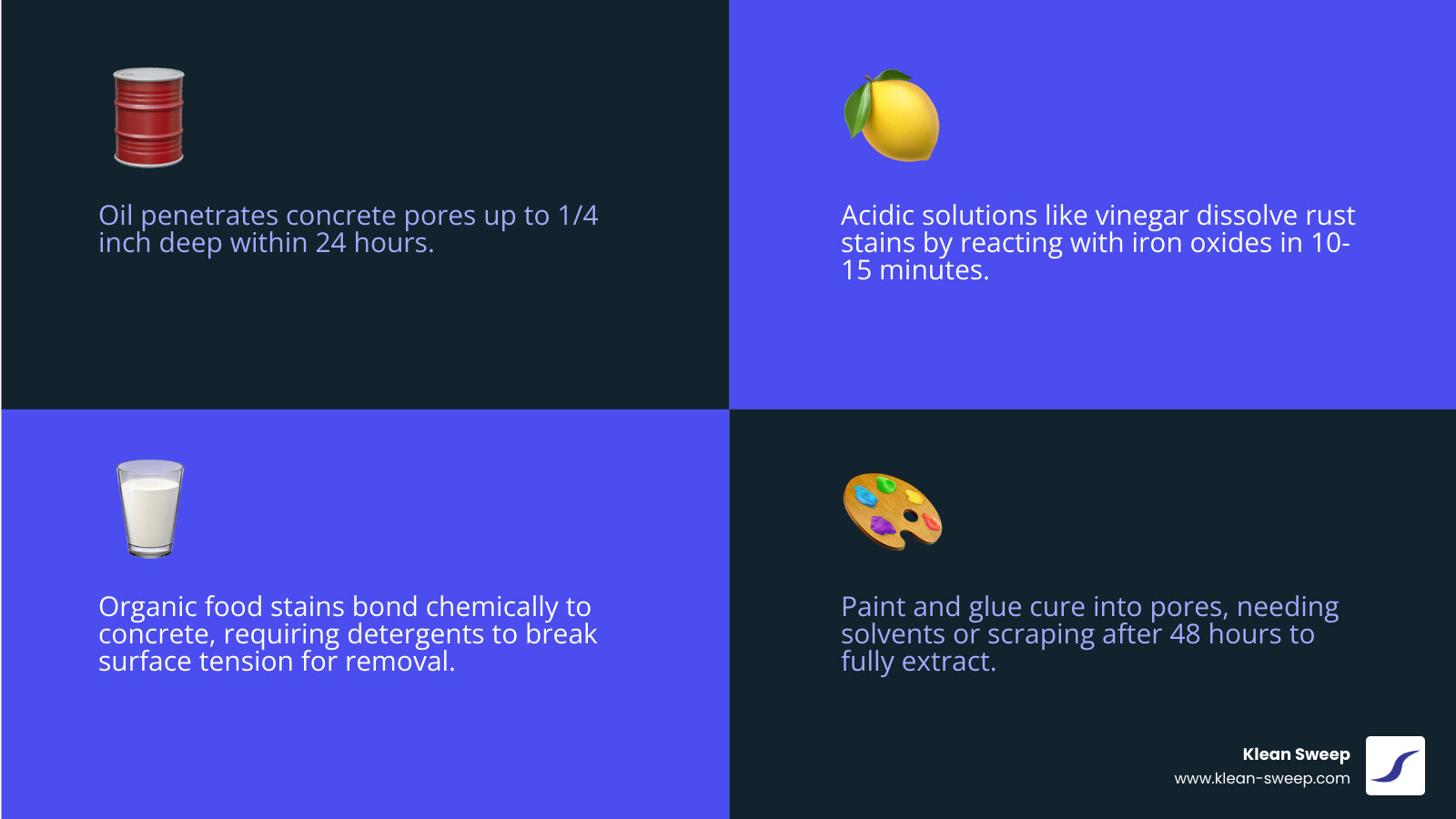
Concrete looks tough. And it is — but it’s also surprisingly porous. Liquids don’t just sit on the surface. They soak in fast, especially oils and greasy fluids. The longer a stain sits, the deeper it goes, and the harder it is to pull back out.
If you’ve got a garage floor that doubles as a gym, a playroom, or a workspace, you’ve probably dealt with this firsthand. Oil spots from an old car. Food and drink spills. Dried glue from a weekend project. Each one bonds into those tiny concrete pores, and no single cleaner works on all of them.
The good news? Most stains can be removed — or at least significantly reduced — with the right approach and the right products. And you don’t need a pressure washer or harsh chemicals to do it safely indoors.
I’m Jana Hanson, and I’ve spent years running Klean Sweep, a family-owned exterior maintenance company serving the greater Los Angeles area — which means concrete floor stain removal is something my team handles constantly, across all kinds of commercial and residential surfaces. In this guide, I’ll walk you through exactly what works, what doesn’t, and how to keep your floors clean without damaging them.
Identifying Common Indoor Concrete Stains
Before you grab a bucket and start scrubbing, you need to know exactly what you’re fighting. In our experience across Southern California, from Torrance to the heart of Los Angeles, we see a wide variety of “indoor” stains that occur when garages or basements are converted into living spaces or gyms.
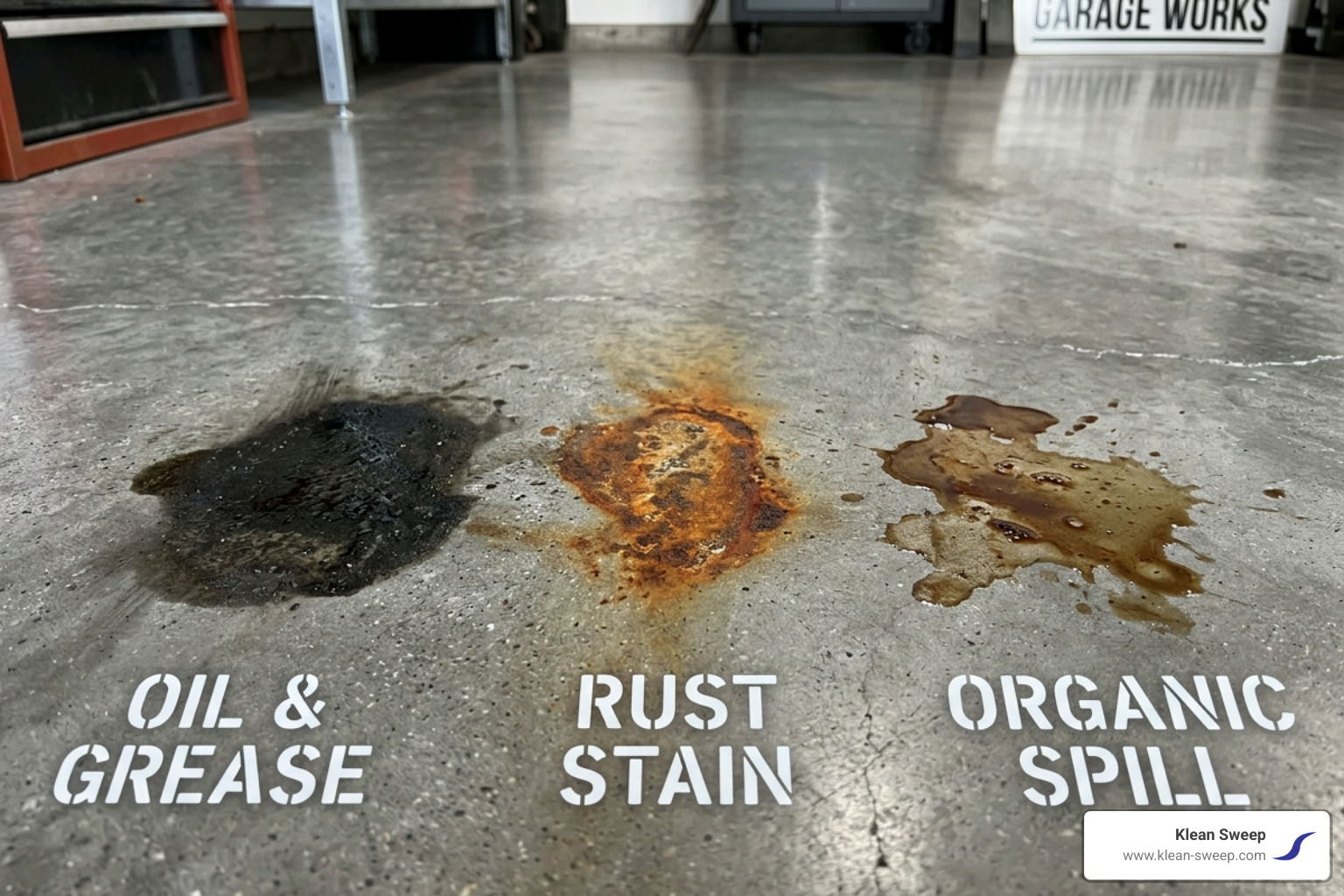
Identifying the stain correctly is 70% of the battle. If you treat a rust stain with bleach, for example, you might actually make it permanent by oxidizing the iron. Here are the usual suspects:
- Motor Oil and Transmission Fluid: These are the classic garage “eyesores.” They often appear as dark, Expanding rings. Because oil is a hydrocarbon, it bonds tightly to the concrete.
- Carpenter’s Glue: If you’ve been doing woodworking, you’ll find these amber-colored, hard drips. The good news is that these often sit on top of the finish rather than soaking in.
- Food and Drink Spills: Beer, soda, and greasy pizza drops are common in home gyms or “man caves.” These are organic stains that can usually be lifted with the right detergent.
- Rust: Often caused by metal gym equipment, toolboxes, or even rebar bleed-through. These look like stubborn orange or brown circular patterns.
For a deeper dive into specific chemical reactions, you can check out this Concrete Stain Removal: Oil, Rust & Efflorescence Guide | SlabCalc or follow the general steps in How to Remove Stains From Concrete.
Household Alternatives for Concrete Floor Stain Removal
You don’t always need to run to the hardware store for industrial chemicals. Many effective cleaners are already sitting in your pantry. In April 2026, we are seeing a major shift toward non-toxic, eco-friendly DIY solutions, especially for families with kids and pets.
- Lemon Juice and White Vinegar: These mild acids are fantastic for rust. The acidity dissolves the iron oxide without the harsh fumes of muriatic acid.
- Baking Soda: Mixed with a little water into a paste, baking soda is a gentle abrasive that can lift surface grime and neutralize odors from food spills.
- Liquid Laundry Detergent: This is our “secret weapon” for general mopping. It’s designed to break down oils and proteins in clothes, and it does the same for your floor.
- Cat Litter or Sawdust: These aren’t cleaners, but they are essential absorbents. If you have a fresh spill, cover it immediately and let it sit for 24 hours to pull the liquid out before it sets.
Safe Concrete Floor Stain Removal Without a Pressure Washer
A challenge homeowners face is cleaning a floor that has bolted-down equipment, like a power rack in a home gym or heavy cabinetry. You can’t exactly blast a pressure washer at 3,000 PSI inside your garage without ruining your drywall and soaking your gear.
Safety is paramount. When working in enclosed spaces, you must ensure proper ventilation. Open the garage door and use fans to circulate air. Even “mild” cleaners can create fumes that are unpleasant in a small space. Always wear appropriate PPE, including chemical-resistant gloves and safety goggles, especially if you are using a solvent degreaser.
| Cleaner Type | Safety Level | Best Use Case |
|---|---|---|
| Non-toxic Detergent | High (Child/Pet Safe) | General dirt, beer, food, light grease |
| Solvent Degreaser | Medium (Ventilation Req.) | Set-in oil and transmission fluid |
| Acid-Based Cleaners | Low (Corrosive) | Severe rust or mineral deposits (Use with caution) |
For long-term floor health, Concrete Floor Cleaning for Long-Lasting Durability suggests that consistent, gentle cleaning is always better than occasional, aggressive chemical treatments.
Step-by-Step Manual Scrubbing and Mopping
If you’re skipping the power tools, you need a process that relies on “dwell time” (letting the cleaner sit) and mechanical action (scrubbing).
- Clear and Prep: Sweep the area thoroughly. Use a putty knife to gently scrape off any dried carpenter’s glue or paint drips.
- Target the Oil: Apply a solvent degreaser directly to oil spots. Don’t just pour it on; work it in with a stiff-bristle brush. Let it sit for 15–20 minutes, but don’t let it dry completely.
- The Main Mop: Fill a bucket with warm water and a generous amount of liquid laundry detergent. Mop the entire floor, focusing on the stained areas.
- Scrub: Use a stiff-bristle brush (think of it as a giant toothbrush for your floor) to scrub the spots where the degreaser was applied. Close-bristled brushes have been shown to increase cleaning effectiveness by about 30%.
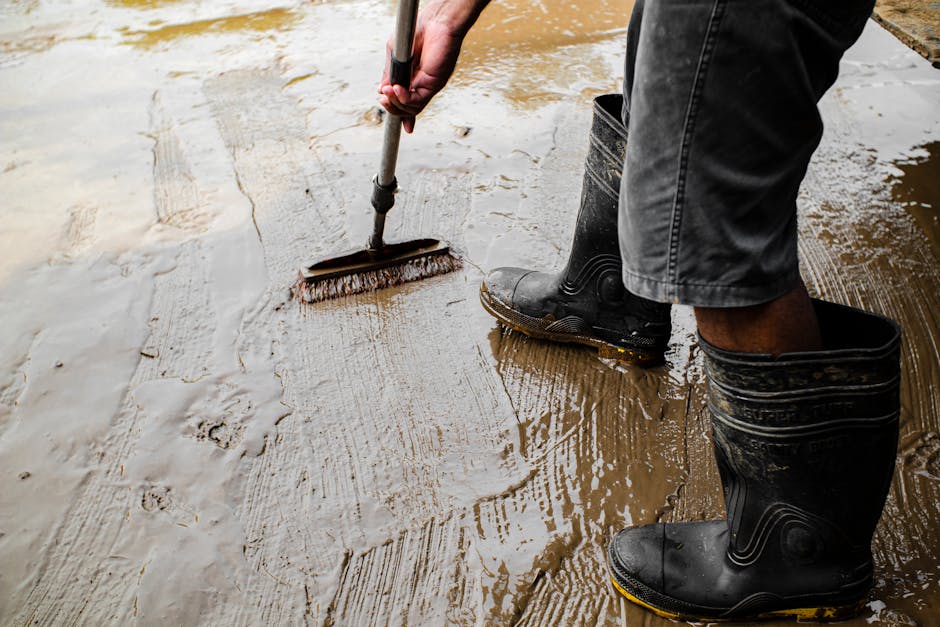
- Rinse and Dry: This is the most important step. Mop again with clean, fresh water. If you leave detergent residue behind, the floor will feel sticky and will actually attract more dirt over time. Use a microfiber mop for the final pass to soak up excess moisture.
Restoring the Waxy Finish and Ongoing Maintenance
Many indoor concrete floors, especially in older Los Angeles homes, were finished with a topical wax or acrylic sealer to give them a slight sheen and protect the surface. Harsh cleaning can sometimes “burn” through this finish, leaving dull spots.
If your cleaning process has stripped the shine, you may need to apply a hard floor wax. Before doing so, ensure all old, patchy wax is removed using a commercial wax remover. This ensures the new layer bonds evenly. You can find excellent tips on surface preparation at Learn How to Clean Concrete Stains or How to Remove Stains From Concrete – Concrete Network.
Maintaining Your Gym Concrete Floor Stain Removal Results
Once the floor is clean, the goal is to keep it that way. In a high-traffic area like a home gym, dirt and sweat can act like sandpaper on your finish.
- Weekly Maintenance: Vacuum or sweep at least once a week. Removing grit prevents it from being ground into the concrete pores.
- pH-Neutral Cleaners: For your regular mopping, use a pH-neutral cleaner. These won’t strip your wax or etch the concrete surface.
- Winter Care: Even in Southern California, we sometimes track in minerals. If you’re in a cooler area and use deicers, calcium chloride is much safer for concrete than traditional rock salt, remaining effective down to -25°F without causing as much surface scaling.
- Professional Coatings: If you’re tired of the DIY struggle, consider a professional coating. Modern systems like Penntek Evolution are 4x stronger than traditional epoxy and can be installed in just one day. These coatings make concrete floor stain removal as simple as wiping up a spill with a paper towel.
Frequently Asked Questions about Concrete Cleaning
Are acid-based cleaners safe for indoor use with kids?
Generally, we advise against using strong acids (like muriatic or sulfuric acid) indoors if children or pets are present. These chemicals can etch the concrete, creating a permanent texture change, and often leave behind a white powdery film if not neutralized perfectly. If you must use a mild acid like vinegar or a commercial rust remover, always neutralize the area afterward with a baking soda and water solution to stop the chemical reaction. For a guide on handling these reactions, see How To Remove Acid Concrete Stain: Step-by-Step Guide For A Fresh Look – ConcreteCaptain.com.
How do I test a new cleaner to avoid floor damage?
Always pick an inconspicuous area — like the corner behind a storage bin or under a piece of gym equipment. Apply the cleaner, let it sit for the recommended dwell time, and rinse it off. Check for discoloration, a change in texture (etching), or any damage to the waxy finish once it’s dry. If the concrete looks “brighter” or “whiter” than the rest of the floor, the cleaner might be too aggressive.
Can I remove set-in oil stains for under $35?
Absolutely. You don’t need a professional rig for every job. A gallon of solvent degreaser ($12), a bottle of liquid laundry detergent ($8), a bag of cat litter for fresh spills ($5), and a stiff-bristle brush ($8) will put you right around $33. This “budget kit” is surprisingly effective for the average homeowner dealing with typical garage stains.
Conclusion
Concrete floor stain removal doesn’t have to be a weekend-ruining chore. By identifying your stains early, using the right household or commercial cleaners, and sticking to a manual scrub-and-mop routine, you can keep your indoor concrete looking pristine and safe for the whole family.
At Klean Sweep, we’ve been a family-owned staple in the Torrance and Greater Los Angeles area since 1969. While we love a good DIY success story, we also know that some stains are just too stubborn for a mop and bucket. Whether you need a deep professional clean or you’re looking for long-term maintenance solutions for your commercial property, we’re here to help.
If you’re ready to take your floors to the next level, check out our specialized services for Concrete Floor Cleaning in Torrance, CA. Let us handle the heavy lifting so you can get back to enjoying your space.